
Our Expert in Switzerland
No results available
Whether you can film in public in Switzerland depends on a layered set of federal privacy protections, cantonal permit requirements, and, if you are flying a camera drone, aviation rules administered by the Federal Office of Civil Aviation (FOCA). Switzerland has no single “filming licence,” yet productions that ignore consent obligations, municipal permit thresholds or FOCA drone categories risk criminal complaints, civil injunctions and costly reshoots. This guide maps every obligation a production manager, location fixer or content creator must satisfy before rolling cameras on Swiss soil, covering the legal framework that applies nationwide and the practical variations between key cantons such as Zurich, Geneva and Basel-Stadt.
Quick compliance checklist, what this guide covers:
At the federal level, Switzerland protects every person’s image as part of their personality rights under the Swiss Civil Code (Articles 28 ff.). Filming in a public space is not prohibited per se, but capturing, publishing or commercially exploiting footage in which an individual is recognisable can constitute an infringement of those rights unless a justification, such as consent, a prevailing public interest or legitimate press reporting, applies. The Swiss Criminal Code adds a sharper layer: Article 179quater criminalises recording facts belonging to someone’s private domain without their consent, while Article 179bis targets the secret recording of private conversations.
The European Court of Human Rights has upheld that legitimate journalistic investigation, including, in narrow circumstances, the use of hidden cameras, can outweigh individual privacy where there is a strong public interest. However, that balancing exercise is strict, and Swiss courts apply it conservatively. For commercial productions that lack a press-freedom justification, the practical default is clear: obtain consent whenever individuals are recognisable in the footage.
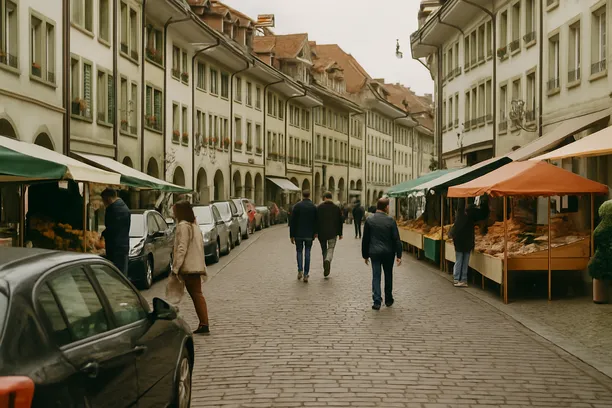
Swiss law generally treats a person filmed as part of a large, anonymous crowd differently from a person who is the identifiable focus of a shot. If your footage shows a bustling Bahnhofstrasse in Zurich and no single individual is singled out or rendered recognisable, consent is typically unnecessary. Accredited press and broadcast journalism also enjoy wider latitude under the public-interest balancing test, particularly when covering events of public significance. Industry observers expect courts to continue drawing a firm line, however, between genuine editorial reporting and commercial content dressed up as journalism.
Consent becomes mandatory once an individual is identifiable, whether by face, voice, distinctive clothing or contextual cues. This applies equally to bystanders caught on camera during a commercial shoot. Filming in semi-public spaces that carry a reasonable expectation of privacy (restaurant terraces, hospital grounds, school yards) further raises the threshold. For any footage intended for advertising, branded content or stock libraries, a signed model release is strongly recommended even where a legal argument for implied consent might exist, because the commercial purpose narrows the available justifications considerably.
Key takeaway: You can film in public in Switzerland without blanket permission, but the moment a recognisable person appears in commercial or non-news footage, you need consent.
Image rights in Switzerland are not codified in a standalone statute. Instead, they derive from the personality-rights provisions of the Swiss Civil Code (Articles 28–28l), supported by decades of Federal Supreme Court case law. A person whose image is captured, stored or published without justification may seek an injunction, damages and, if the infringement was wilful, satisfaction (moral damages). Consent is the most straightforward justification, but it must be informed, specific and freely given. Crucially, Swiss law permits a person to revoke consent if their legitimate interests have changed, although this does not necessarily entitle them to damages for use that was lawful at the time of consent.
The distinction between editorial and commercial use matters enormously. Editorial use tied to a matter of public interest enjoys the protection of press freedom and may override individual personality rights. Commercial use, advertising, branded content, stock footage, carries no such presumption and almost always requires an explicit release. Public figures tolerate greater scrutiny, but only in connection with their public role; a politician filmed off-duty at a private event retains the same image rights as any other individual.
| Use case | Consent required? | Notes |
|---|---|---|
| News / editorial reporting on a public-interest event | Generally no (press freedom balancing applies) | Must be proportionate; hidden cameras only in exceptional circumstances |
| Commercial shoot, advertising, branded content | Yes, signed release recommended | No press-freedom defence; consent must cover the specific commercial use |
| Stock footage with recognisable individuals | Yes, model release required by most agencies | Open-ended commercial licensing increases risk without a release |
| Documentary / non-fiction with identifiable subjects | Case-by-case (editorial purpose + public interest test) | Obtain releases where feasible; legal review advisable |
Street photography occupies a grey zone. Capturing the general atmosphere of a public place is lawful, but publishing a close-up portrait of a recognisable stranger, particularly in a commercial gallery or stock library, without consent risks a personality-rights claim. The safest practice is to obtain a verbal or written release, or to ensure individuals are not identifiable in the final image.
Filming minors requires the consent of a parent or legal guardian. For children old enough to understand the nature and consequences of being filmed, Swiss legal doctrine suggests that the child’s own assent should also be sought alongside parental consent. Vulnerable adults, individuals under guardianship or with diminished capacity, require consent from their legal representative. Productions should carry age-appropriate release forms and brief their crews to flag any shots involving minors before the footage enters post-production.
A workable Swiss release clause should cover, at minimum: the identity of the production company, the specific intended uses (broadcast, online, advertising), the territories of exploitation, and whether the consent is time-limited. A short-form on-set release might read:
“I hereby consent to the recording, reproduction and publication of my image and voice by [Production Company] for [stated purpose] in all media worldwide, for a period of [X years / unlimited]. I understand I may withdraw consent in writing, and that withdrawal will not affect the lawfulness of use prior to withdrawal.”
When a filmed individual revokes consent, the production should cease further publication of the relevant footage, assess whether existing uses were covered by the original consent, and document every step. Where footage is already embedded in a distributed work (broadcast programme, online advertisement), the likely practical effect will be a negotiated resolution, removal from future use, blurring or financial settlement, rather than a retrospective injunction against past broadcasts.
Key takeaway: Consent to be filmed in Switzerland must be specific to the intended use. Always use a written release for commercial purposes and have a documented process for handling revocation.
Switzerland has no federal filming permit for public-space shoots. The requirement to obtain a permit is determined at the cantonal and municipal level, and it is triggered not by the act of filming itself but by the impact of the shoot on public space, use of tripods, lighting rigs, track, closure of streets or pavements, and the number of crew and vehicles. Understanding these canton film permits is essential for any production planning a shoot outside a private studio.
Zurich is Switzerland’s largest production hub. The city operates a dedicated film office, Film Zurich, that serves as a single point of contact for location permits, road-closure coordination and police liaison. Productions that require exclusive use of public space, traffic diversions or night shoots must submit an application through the film office. Small-scale handheld shoots with no impact on pedestrian or vehicle traffic typically do not require a permit, but contacting the film office in advance is advisable to confirm. Permit decisions are usually issued within three to ten business days for straightforward requests.
Geneva’s film office processes permits for shoots in public spaces across the canton. Large-scale productions, those involving cranes, generators, significant crew numbers or road closures, should expect a longer lead time of five to fifteen business days. Geneva film office permits typically specify permitted hours, noise restrictions and restoration obligations. International productions shooting near UN or diplomatic premises face additional security coordination. Costs vary depending on the scope of impact; smaller shoots may incur only administrative fees, while major closures attract traffic-management and police-escort charges.
Beyond Zurich and Geneva, each canton maintains its own process. Basel-Stadt publishes clear municipal guidance for filming and photography in public spaces, with typical permit turnaround of three to seven business days. Cantons such as Vaud and Bern handle applications through their municipal police or public-works departments. As a rule, apply as early as possible, a minimum of seven to fifteen days for simple city shoots, and thirty or more days for complex shoots involving road closures, stunts or pyrotechnics.
| Canton | Typical permit required? | Typical lead time |
|---|---|---|
| Zurich | Yes, if the shoot impacts public space (tripod, closure, vehicles) | 3–10 business days |
| Geneva | Yes for large shoots; smaller shoots may need notification only | 5–15 business days |
| Basel-Stadt | Yes, per municipal guidelines (Tiefbauamt) | 3–7 business days |
Key takeaway: There is no single national filming permit in Switzerland. Check the specific canton and municipal requirements for every location, and apply well in advance, filming permit Switzerland requirements vary significantly by region.
Drone filming rules in Switzerland are governed by the Federal Office of Civil Aviation (FOCA, known in German as BAZL). Switzerland has aligned its drone regulations with the European Union Aviation Safety Agency (EASA) framework, meaning that operators must classify their drone operations into one of three risk-based categories, Open, Specific and Certified, and comply with the corresponding requirements.
| FOCA / EASA category | Risk level | Typical requirements |
|---|---|---|
| Open (A1 / A2 / A3) | Low | Pilot competency certificate; fly below 120 m AGL; keep visual line of sight; no flight over uninvolved assemblies of people (A1 subcategory restrictions apply) |
| Specific | Medium | Operational authorisation from FOCA or declaration under a standard scenario; risk assessment (SORA); trained pilot |
| Certified | High | Full FOCA certification; equivalent to manned-aviation oversight; used for large drones or high-risk environments |
Geo-zones restrict or prohibit drone flights near airports, military installations, nature reserves and certain federal buildings. FOCA publishes an interactive map identifying these zones. Third-party liability insurance is mandatory for all drone operations in Switzerland, regardless of category.
FOCA authorisation addresses airspace safety, while municipal permits address ground-level impact. A drone shoot in a Zurich park, for instance, requires both: compliance with the correct FOCA category (or an operational authorisation for Specific-category flights) and a municipal permit from the Film Zurich office or the relevant city department if the launch/landing affects public space. The two processes run in parallel and are not interchangeable.
Key takeaway: Drone filming in Switzerland demands dual compliance, FOCA aviation rules and cantonal/municipal filming permits. Budget time and fees for both.
Data protection filming in Switzerland is supervised by the Federal Data Protection and Information Commissioner (EDÖB). The EDÖB’s guidance on video surveillance by private individuals sets out the principles that apply whenever a camera, whether mounted on a building, held by a crew member or attached to a drone, captures footage of identifiable people. Key obligations include: a legitimate purpose, proportionality (film only what is necessary), transparency (notify data subjects through signage or announcements), and secure storage with defined retention periods.
Productions capturing footage of EU or EEA citizens may also need to consider the EU General Data Protection Regulation (GDPR), particularly where the footage is processed or distributed within the EU. Early indications suggest that cross-border co-productions are increasingly building GDPR-compliant data-handling protocols into their Swiss workflows as a precaution.
Article 179bis of the Swiss Criminal Code prohibits the recording of private conversations without the consent of all participants. Unlike some jurisdictions that permit one-party consent, Swiss law requires every person involved in the conversation to agree to the recording. Violations are prosecutable on complaint and can result in a custodial sentence of up to three years or a monetary penalty. For productions, this means that recording ambient dialogue, interviews or phone calls requires explicit consent from every speaker.
Footage containing identifiable individuals constitutes personal data under the Swiss Federal Act on Data Protection. Productions must define a retention period, store footage securely (encrypted where possible), restrict access to authorised personnel, and delete or anonymise data once the stated purpose is fulfilled. If a data breach occurs, for example, footage of non-consenting bystanders is published, the production should notify the affected individuals and, where applicable, the EDÖB, and take immediate steps to remove or blur the material.
Key takeaway: Swiss data-protection law and the Criminal Code impose strict obligations on filming and audio recording. Never record a private conversation without all-party consent, and treat all identifiable footage as personal data.
The following checklist distils the legal and administrative requirements covered above into a sequential workflow that production managers can follow from green-light to wrap.
For a straightforward city shoot (small crew, limited public-space impact), apply for municipal permits seven to fifteen days before the shoot date. Complex shoots involving road closures, stunts, pyrotechnics or Specific-category drone operations should allow thirty or more days. Some cantons are digitising their permit portals, which may shorten turnaround times, confirm current processing timescales directly with the relevant film office.
| Entity / activity | Permit required? | Key obligations |
|---|---|---|
| Small handheld reportage in public (no tripod, no closure) | Usually no | Respect privacy; get releases if individuals are recognisable |
| Commercial shoot with crew, tripod, props | Often yes (municipal) | Permit, insurance, traffic control if needed |
| Drone over crowd or stadium | Yes (FOCA + municipal) | FOCA permission, NOTAM, insurance, trained pilot |
Key takeaway: Start permit applications early, layer consent and data-protection steps into your production schedule, and never treat FOCA and municipal permits as a single process, they run in parallel.
Whether you can film in public in Switzerland ultimately depends on who and what you are filming, what you intend to do with the footage, and where in the country you are shooting. Swiss law offers genuine creative freedom, but it demands respect for personal privacy, compliance with cantonal permit processes and, for drone operators, rigorous adherence to FOCA aviation rules. Productions that build consent, permits and data protection into their planning from day one avoid costly disruptions and legal exposure. For case-specific guidance, seek qualified Swiss media-law counsel before your shoot date.
This article provides general information on filming in public spaces in Switzerland. It does not constitute legal advice. Readers should seek professional legal counsel for matters specific to their production or circumstances.
This article was produced by Global Law Experts. For specialist advice on this topic, contact Andreas D Blattmann at Quadra Attorneys At Law, a member of the Global Law Experts network.

posted 10 minutes ago
posted 13 minutes ago

posted 30 minutes ago
posted 1 hour ago

posted 1 hour ago
posted 2 hours ago

posted 2 hours ago

posted 2 hours ago
posted 3 hours ago

posted 3 hours ago
posted 3 hours ago
posted 4 hours ago
No results available
Find the right Legal Expert for your business

Send welcome message