
Our Expert in China
No results available
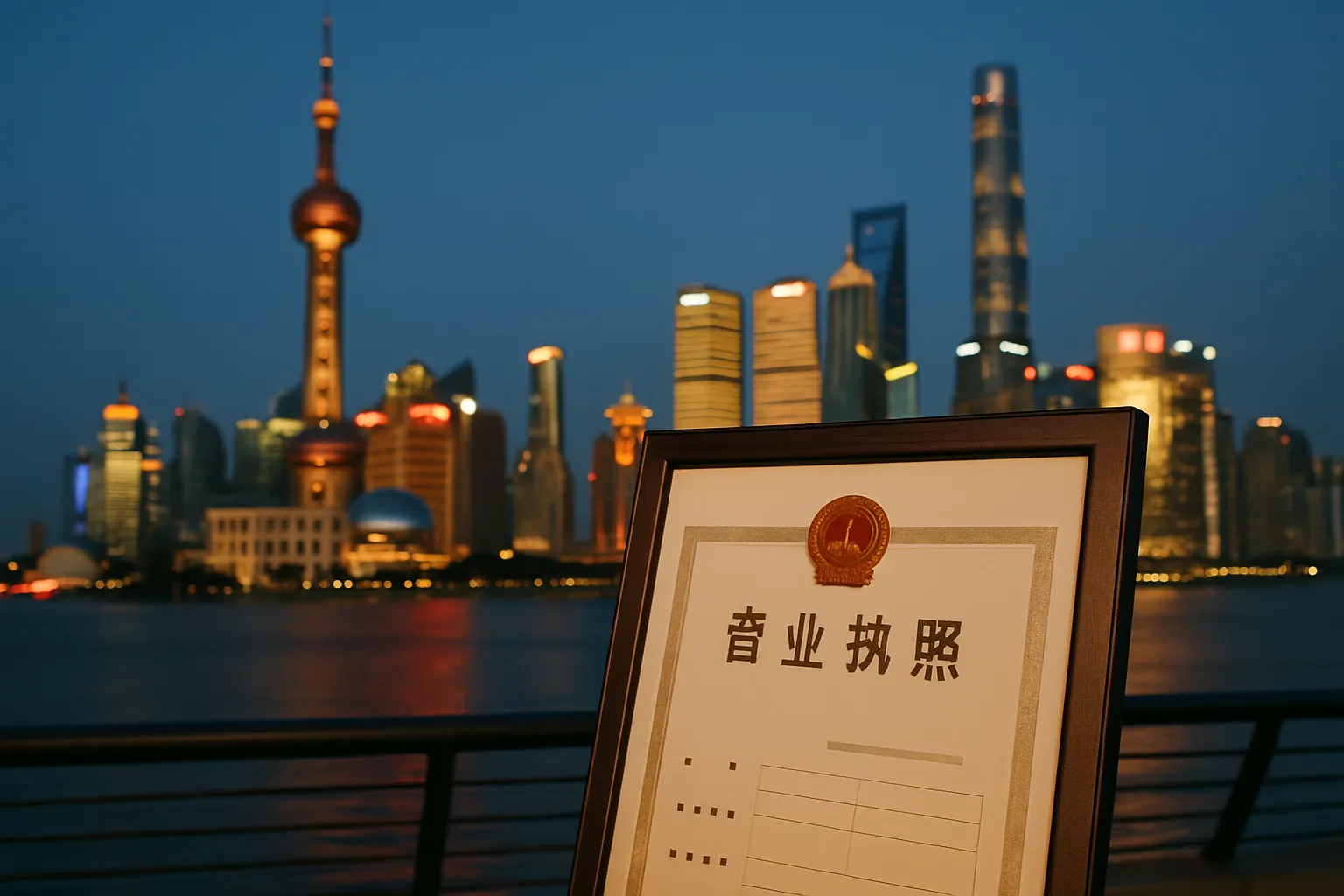
Business licences China procedures have entered a more demanding phase in 2026, and foreign companies entering regulated industries must plan their applications with far greater precision than before. Heightened scrutiny across pharmaceuticals, telecommunications, information technology, gaming and other strategic sectors means that the old assumption of a straightforward filing no longer holds. This guide sets out, step by step, how foreign investors and their advisers should approach entity selection, document preparation, regulator submission and post-approval compliance under the current framework. It is written for compliance officers, in-house counsel, foreign investors and advisers who need an actionable, procedural roadmap rather than a broad overview.
Who this is for: Compliance officers, in-house counsel, foreign investors and advisers planning market entry in regulated Chinese industries.
What it covers: eligibility, entity selection, step-by-step licence application procedures by sector (pharma, telecom, gaming, IT, retail), required documents, timelines, fees, 2026 regulatory changes, common pitfalls and mitigation.
Outcome: a ready-to-use checklist, timeline table and links to specialist follow-ups.
Last updated: August 26, 2026.
Operating in China’s regulated sectors requires two distinct layers of authorisation. The first is corporate: a business licence issued on registration of a legal entity. The second is sectoral: one or more industry permits that authorise the specific regulated activity. Confusing the two is a common structural error made by new entrants.
The regulatory architecture separates central approvals from provincial and municipal ones. Company registration is administered locally under the framework of the State Administration for Market Regulation (SAMR), while foreign investment eligibility is governed by the negative list issued jointly by the Ministry of Commerce (MOFCOM) and the National Development and Reform Commission (NDRC). Sectoral permits are issued by the relevant industry regulator, the National Medical Products Administration (NMPA) for pharmaceuticals, the Ministry of Industry and Information Technology (MIIT) for telecommunications, the Cyberspace Administration of China (CAC) for data and online services, and the National Radio and Television Administration (NRTA) for content and online entertainment.
The business licence is the certificate of legal existence issued when an entity completes registration with the local market regulation authority. It records the company name, registered capital, legal representative, scope of business and address. Crucially, the recorded scope of business must expressly cover the intended regulated activity; a mismatch between the scope and the sectoral permit sought will stall an application before technical review even begins. The business licence is a precondition to, but never a substitute for, an industry permit.
Foreign entrants must map two chains of authority in parallel. Local authorities handle entity formation, premises verification, tax registration and many operational permits. Central regulators control access to strategic sectors and issue the licences that matter most for regulated industries. Where an activity appears on the foreign investment negative list, central-level clearance or joint-venture structuring will be required before any local filing succeeds. The primary legislation underpinning this framework is the Foreign Investment Law of the People’s Republic of China, adopted by the National People’s Congress (NPC) and in force since 1 January 2020, together with its implementing regulations.
Before a single application document is drafted, foreign investors must resolve who will be the applicant. In most regulated sectors, the licence must be held by a Chinese-registered legal person. This makes entity selection a licensing decision, not merely a corporate one.
For any activity that involves ongoing operations, revenue generation or the holding of a sectoral permit, a foreign-invested enterprise is normally required. Representative offices cannot conduct profit-making activity and cannot hold most operational licences. Branches of foreign companies are permitted only in a narrow set of sectors. The practical consequence is that the majority of foreign entrants in regulated industries will establish either a wholly foreign-owned enterprise (WFOE) or a joint venture (JV), depending on whether the negative list permits full foreign ownership in the target sector.
The choice between a WFOE, a JV and reliance on a local agent or distributor determines who may apply, how quickly market entry occurs, and how much control and intellectual-property protection the investor retains. The table below sets out the core trade-offs.
| Feature | WFOE | Joint Venture | Local agent / distributor |
|---|---|---|---|
| Eligibility to apply for licences | Yes (direct applicant) | Yes (with local partner) | No for some licences (partner must hold) |
| Control over operations | High | Shared | Low |
| Timeline to establish | Longer | Medium | Fast (use existing local entity) |
| Capital requirements | May be required (industry-specific) | Shared | No capital for applicant |
| Confidentiality / IP risk | Higher protection | Shared control risks | IP exposure risk without safeguards |
| Recommended for | Long-term market presence | Market access + local know-how | Short-term entry or limited authorisations |
Where the negative list restricts foreign ownership in a sector, the JV route is often the only viable structure, and the identity and licensing track record of the Chinese partner becomes central to the application. Where full ownership is permitted, the WFOE offers superior control and protection at the cost of a slightly longer establishment timeline. The agent route may suit a short-term or low-commitment entry but exposes the investor to significant IP and control risks and rarely permits the foreign party to hold the sectoral permit directly.
Guidance on which activities are open, restricted or prohibited is published through the current Special Administrative Measures (Negative List) for Foreign Investment Access, maintained by MOFCOM and the NDRC, alongside the Catalogue of Encouraged Industries for Foreign Investment.
The process below applies across regulated sectors, with variation concentrated in the technical review stage. Treat it as a sequence: each step gates the next, and attempting to compress or overlap phases is a frequent cause of rejection and resubmission.
The following table gives indicative 2026 duration estimates. Actual periods vary by sector and by province, and the technical review stage carries the widest variance.
| Step | Who (applicant / authority) | Typical duration (indicative) |
|---|---|---|
| 1. Pre-application: market & regulatory scoping | Applicant / local counsel | 2–4 weeks |
| 2. Entity formation or confirmation of applicant status | Applicant / local SAMR office | Several weeks (WFOE) |
| 3. Prepare technical files & supporting documents | Applicant / local consultants | 2–8 weeks (industry dependent) |
| 4. Submit application to primary regulator | Applicant / regulator | Variable: acknowledgement typically within statutory window |
| 5. Technical review and requests for clarification | Regulator | Weeks to several months (pharma longest) |
| 6. Final approval & licence issuance | Regulator / SAMR | Weeks after approval notice |
| 7. Post-approval registrations (tax, customs, social security, foreign exchange) | Applicant / local authorities | 2–6 weeks |
| 8. Ongoing renewals & compliance reporting | Applicant | Ongoing (annual filings; periodic licence renewals) |
This phase, spanning roughly two to four weeks, determines the viability of everything that follows. Verify the activity against the negative list, confirm the correct regulator, and settle the applicant entity. Where entity formation is required, allow several weeks for a WFOE. The registered business scope must be drafted to encompass the regulated activity precisely; amending scope after the fact adds weeks and can invalidate a pending sectoral filing.
Document preparation takes two to eight weeks depending on the sector. The industry technical dossier is the critical path item, particularly for pharmaceuticals and telecommunications. Certified Chinese translations and correct legalisation of foreign-issued documents must be completed before submission, not afterwards. Since China’s accession to the Apostille Convention took effect on 7 November 2023, public documents from other member states are generally authenticated by apostille rather than consular legalisation; documents from non-member states still require consular legalisation.
Applications are lodged with the primary sectoral regulator and, in restricted sectors, may require prior or parallel endorsement from local government. Regulators generally issue a formal acknowledgement within the statutory period applicable to the relevant licence, confirming that the file is complete enough to enter substantive review. Applicants should confirm the specific acknowledgement and review periods for their licence with the reviewing authority, as these differ by permit type.
Technical review is where timelines diverge most sharply, from a few weeks for a straightforward filing to several months or more for a complex pharmaceutical registration. Applicants should expect at least one round of clarification requests and resource a dedicated team to respond within the regulator’s stated windows.
Once the licence is issued, the entity must complete tax registration, customs registration where goods are imported, social security enrolment and foreign exchange filings with the State Administration of Foreign Exchange (SAFE). These take two to six weeks and must be finished before regulated trading begins.
Many sectoral licences are issued for a fixed term and carry annual reporting obligations; the validity period and renewal cycle differ by permit. Late renewal can force a full re-application, so renewal dates should be diarised at the point of issuance.
The following checklist covers the documents most regulators require. Sector-specific technical files are additional and are described in the industry sections below.
| Document | Who provides | Notes |
|---|---|---|
| Company registration certificate / business licence | Applicant (FIE or local partner) | Certified Chinese-language copy; apostille or legalisation for overseas documents |
| Articles of association / JV agreement | Applicant | Chinese version required; translator certification |
| Power of attorney / authorised representative ID | Applicant | Notarisation may be required |
| Feasibility study / technical dossier | Applicant / technical consultants | Pharma, telecom and content sectors follow regulator templates |
| Key personnel CVs & qualification certificates | Applicant | Licensed personnel evidence for pharma and telecom |
| Product technical files / safety testing reports | Applicant | NMPA / NRTA / CAC requirements vary |
| Environmental impact assessment / safety approvals | Applicant / local environmental bureau | For manufacturing and certain retail projects |
| Proof of premises / lease contract | Applicant | Local property registration or registered lease |
| Financial statements / bank references | Applicant | Audited statements and local capital verification may be needed |
| IP registrations / trademarks | Applicant | Strongly recommended before filing in China |
| Local government approvals or project endorsements | Applicant / local authority | Required for restricted industries or incentivised zones |
| Translations and notarisation / legalisation certificates | Applicant / translator | Apostille versus consular legalisation depends on country of origin |
Budgeting for business licences China applications should include a contingency for resubmissions and technical testing, which are the least predictable items. The estimates below are indicative ranges only; actual costs vary widely by city, sector and complexity, and applicants should obtain current quotations.
| Cost item | Typical range (indicative) | Notes |
|---|---|---|
| Company formation (WFOE), registration & admin | US$500–3,000 | Varies by city and complexity |
| Licence application filing fee (regulator) | Often modest or nil | Government fees vary; agent fees are extra |
| Technical testing / certification | US$2,000–100,000+ | Pharma and telecom testing can be high |
| Local agent / consultant fees | US$2,000–30,000 | Project-dependent; retainer or fixed fee |
| Legal fees for drafting & translation | US$2,000–25,000 | Depends on complexity and number of filings |
| Capital verification & auditing | US$1,000–10,000 | Where required by local authority |
| Renewal / annual compliance costs | US$500–10,000/year | Reporting, audit or licence renewal fees |
The generic process above holds across sectors, but the regulator, the technical dossier and the 2026 changes differ significantly by industry. The five subsections below cover the sectors of greatest interest to foreign entrants.
Pharmaceutical entrants apply to the NMPA. The registration pathway requires a comprehensive technical dossier covering quality, safety and efficacy, and for imported drugs the review is among the longest of any sector, commonly extending across several months or longer at the technical review stage. Clinical data requirements and any waiver or acceptance of overseas trial data must be assessed early, as they shape the entire dossier. Licensed personnel evidence and manufacturing quality documentation are mandatory. Because the pharmaceutical timeline dominates the overall market-entry schedule, applicants should begin dossier preparation in parallel with entity formation. Pharmaceutical registration China projects should build a generous contingency into the technical review phase.
Telecommunications and internet services are regulated principally by MIIT, with data and content aspects overseen by the CAC. A critical distinction is between an Internet Content Provider (ICP) filing or ICP licence, required to operate a website or online service, and a full telecom operation licence, required for value-added or basic telecommunications services. Many foreign entrants underestimate this: a SaaS or online platform frequently needs more than an ICP filing. Foreign ownership in value-added telecom services is restricted under the negative list, so structuring often requires a JV, although selected pilot programmes have expanded permitted foreign participation in certain value-added telecom categories and in specified pilot zones.
MIIT technical review commonly runs a number of months after a complete dossier is lodged, and network access approvals can extend this. A telecom licence China application should confirm at the scoping stage which category of permit the service falls into and whether any pilot easing applies.
Online games and entertainment content face both operational licensing and content review. For online games, publishing approval (the game “banhao” or approval number) is administered by the National Press and Publication Administration (NPPA), while the NRTA and the CAC are central to audiovisual and other cultural-content approval. Content review has intensified in recent years. A gaming licence China application must account for the content and publishing approval process as a distinct and often lengthy gate, separate from operational permits. Foreign investors in this sector typically operate through a Chinese-licensed partner, as the content and publishing approvals rest with domestically qualified entities.
IT and SaaS providers must navigate data compliance as a licensing prerequisite. Under the Cybersecurity Law, Data Security Law and Personal Information Protection Law, and CAC implementing rules, personal information and certain categories of data are subject to localisation and cross-border transfer requirements. A provider that processes Chinese user data must plan for local storage where required and, where data leaves China, for one of the recognised transfer mechanisms, a CAC security assessment, the standard contractual clauses filing, or certification, subject to the thresholds and exemptions in the current CAC rules on cross-border data transfer. These obligations often determine the technical architecture of the service and should be resolved before, not after, the licence application.
Retail and food and beverage operations are heavily local. Beyond the business licence, entrants require food-related permits from the local market regulation authority and, for imported goods, customs registration and import approvals administered through the General Administration of Customs. Premises must satisfy local health and safety inspection, and environmental approvals may apply to processing facilities. Because these approvals are provincially and municipally administered, requirements differ meaningfully between Shanghai, Beijing and Guangdong, and local counsel is essential for accurate scoping.
Read together, the phases above produce a realistic end-to-end timeline of roughly several months for most regulated sectors, and longer for pharmaceuticals. The key points to diarise are the regulator’s acknowledgement window after submission, the technical review period (which varies from weeks to several months by sector), and the issuance window after an approval notice. Post-approval registrations add two to six weeks before operations may commence. Renewals fall due according to each licence’s validity term, with annual reporting in between; missing a renewal can require a full re-application, so escalate any renewal not confirmed well before expiry.
Where technical review exceeds the regulator’s stated window, prompt engagement with the reviewing office is the standard escalation path, followed by administrative reconsideration where a formal decision is contested.
The distinction that matters for budgeting is between statutory and discretionary costs. Regulator filing fees are often modest or nil, but the discretionary costs, technical testing, consultant retainers, legal drafting and translation, dominate the total and vary widely. Technical testing for pharmaceuticals and telecommunications is the largest and least predictable line item. Prudent applicants add a contingency of at least one further round of testing and translation to cover resubmission, since a single clarification request can trigger additional certification work. Where local capital verification or auditing is required, factor those in early, as they can gate the issuance of the business licence itself.
The 2026 environment is defined by greater central oversight and tighter technical standards. Foreign entrants should assume closer scrutiny and plan for it rather than react to it. The principal shifts are as follows.
The practical compliance response is a short action checklist: re-verify the current negative list before filing; resolve data compliance architecture ahead of the application; commission technical testing early and to the current standard; and secure any required local endorsements before submission rather than during review. Because the framework continues to evolve, building headroom into both timeline and budget is prudent.
Most delays in business licences China applications are avoidable with disciplined preparation. The recurring failures are consistent across sectors.
Where a rejection or delay occurs, the standard remedies are prompt engagement with the reviewing office, a pre-submission meeting for resubmission, and, where a decision is contested, administrative reconsideration or administrative litigation through the prescribed channels. Engaging experienced local counsel at the scoping stage is the most effective single mitigation.
Use the following short sequence as a pre-submission check before lodging any application.
Foreign entrants should follow the pillar guidance above with sector-specific deep dives on how to get a telecom licence in China, pharmaceutical registration China 2026, and when to use a WFOE, JV or agent for licence applications in China. For related dispute and enforcement insight, see China commercial litigation lawyers, related insights, and for authorship and background see the author profile.
Securing business licences China approvals in 2026 rewards early, disciplined preparation and penalises improvisation. The investors who succeed treat entity selection as a licensing decision, verify the negative list before drafting anything, build their technical dossiers to the current standard, and resolve data compliance and local endorsements ahead of submission. With central oversight tightening and technical expectations rising in most sectors, even as selected pilot zones ease foreign participation, the margin for procedural error has narrowed, but the pathway remains navigable for foreign companies that plan the full sequence, from scoping through post-approval registration, and engage experienced local counsel at the outset.
This article was produced by Global Law Experts. For specialist advice on this topic, contact Peter Pang at IPO Pang Shenjun Law Firm, a member of the Global Law Experts network.

posted 16 minutes ago

posted 36 minutes ago

posted 55 minutes ago

posted 1 hour ago

posted 2 hours ago

posted 2 hours ago

posted 2 hours ago

posted 2 hours ago

posted 3 hours ago

posted 3 hours ago

posted 3 hours ago
posted 3 hours ago
No results available
Find the right Legal Expert for your business

Send welcome message