
Our Expert in Brazil
No results available
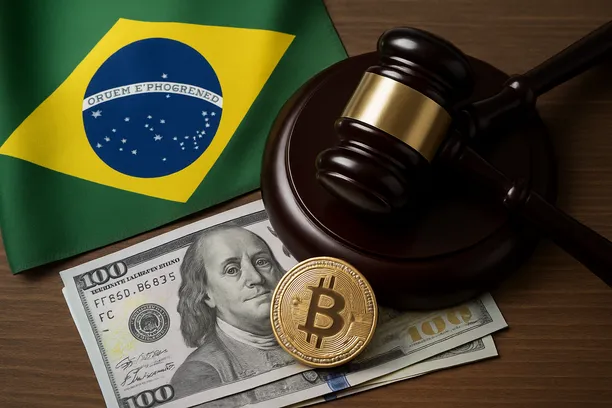
Brazil’s enactment of Law No. 15. 358/2026 in late March 2026 has dramatically expanded federal authorities’ powers to freeze, seize, and liquidate assets, including cryptocurrency and other digital assets, connected to organized crime and financial offences. For General Counsels, Chief Compliance Officers, and corporate legal teams with any exposure to Brazilian operations, the Brazil Seized Digital Assets Law 2026 creates an immediate obligation to reassess internal controls, custody arrangements, and incident-response protocols. This guide delivers a practitioner-level compliance playbook: the concrete steps to take in the first 72 hours after a seizure, the programme changes required to reduce forfeiture risk, and the litigation strategies available when assets are targeted.
Every recommendation is grounded in the statutory text, regulatory guidance from the Banco Central do Brasil, and leading legal commentary.
Law No. 15.358/2026, signed into law in late March 2026, amends Brazil’s organised crime and anti-money-laundering framework to explicitly bring digital assets within the scope of criminal asset forfeiture. The statute authorizes federal judges, upon application by the Ministério Público (Public Prosecutor) or the Polícia Federal, to order the immediate freeze, seizure, and, in defined circumstances, the liquidation of cryptocurrencies, stablecoins, non-fungible tokens, and other virtual assets held on exchanges, in self-custody wallets, or through third-party custodians. Proceeds from liquidated assets may be channelled into public-security budgets, a provision that has attracted significant attention from both industry observers and international press.
The practical effect for corporates is threefold:
If your assets are frozen or seized, act immediately: (1) preserve all wallet snapshots, transaction logs, and key-management records; (2) halt any internal transfers touching affected wallets or accounts; (3) engage Brazil-qualified criminal counsel within 24 hours.
When a company receives notice, or discovers through on-chain monitoring, that Brazilian authorities have frozen or seized digital assets, the response in the first 72 hours is decisive. Delay can result in permanent loss of privilege, destruction of exculpatory evidence, or missed deadlines for interlocutory relief. The following ten-step protocol should be adapted to each company’s organizational structure and then rehearsed as part of its standing incident-response plan.
| Timeframe | Action | Responsible Party |
|---|---|---|
| 0–4 hours | Intake, evidence preservation, stop-transfer instruction | GC / Head of Legal |
| 4–12 hours | Engage local counsel, freeze accounting entries, begin privilege protocol | GC + External Counsel |
| 12–24 hours | Appoint investigation lead, notify insurers, assess injunctive relief | Investigation Lead + Risk |
| 24–48 hours | File interlocutory motions (if warranted), draft stakeholder communications | External Counsel + Comms |
| 48–72 hours | Complete chain-of-custody log, deliver board briefing, coordinate cross-border teams | Investigation Lead + GC |
“PRIVILEGED AND CONFIDENTIAL, PREPARED IN ANTICIPATION OF LITIGATION. This notice confirms that [Company] has received / become aware of a judicial order from [Court / Authority] dated [Date] directing the freeze/seizure of digital assets held in [Wallet / Exchange / Custodian]. All personnel with access to the affected assets or related records must immediately cease transfers, preserve all documentation, and direct inquiries to [Investigation Lead]. No external communication regarding this matter is authorised without legal department approval.”
Law No. 15.358/2026 amends several pillars of Brazil’s criminal enforcement architecture. It builds on the existing anti-money-laundering framework (Law No. 9.613/1998) and the organized-crime statute (Law No. 12.850/2013) by inserting explicit provisions governing virtual assets. The new law defines “digital assets” broadly, consistent with the terminology adopted in Brazil’s Virtual Assets Framework (Law No. 14.478/2022) and the Banco Central’s supervisory regulations for Virtual Asset Service Providers (VASPs).
| Area | Pre-2026 Position | Change Under Law 15.358/2026 | Practical Effect |
|---|---|---|---|
| Scope of seizable property | Traditional assets (bank accounts, real estate, vehicles); digital assets referenced indirectly | Digital assets, including cryptocurrencies, stablecoins, tokens, and NFTs, are explicitly listed as seizable property | Removes any ambiguity; courts can issue targeted orders against wallets and custodians |
| Freeze/seizure authority | Judicial orders required; practical enforcement on crypto was inconsistent | Standardised ex parte freeze procedure for digital assets; exchanges and custodians must comply within defined timeframes | Faster enforcement; companies may discover a freeze before receiving formal notification |
| Liquidation and repurposing | Seized assets held pending trial; limited early liquidation | Judiciary may authorise early liquidation of volatile digital assets; proceeds can be directed to public-security funds | Asset value may not be preserved for return; heightens urgency of interlocutory challenges |
| Organized-crime enforcement | Existing anti-faction provisions under Law 12.850/2013 | Enhanced penalties and expanded definition of criminal organisation to capture digital-asset-facilitated networks | Corporates linked, even tangentially, to investigated networks face broader forfeiture exposure |
The Banco Central do Brasil, in its role as supervisor of VASPs, has reinforced these provisions by requiring licensed exchanges and custodians to maintain technical capabilities for rapid compliance with judicial freeze orders. Industry observers expect implementing regulations to impose specific response-time requirements, making operational readiness a compliance imperative for any entity offering custody or exchange services in Brazil.
Understanding which agency initiates action, and through which court, is essential for responding to criminal investigation in Brazil. The Brazil Seized Digital Assets Law 2026 framework involves multiple institutional actors, each with distinct roles and points of engagement for corporate counsel.
| Authority | Typical Action | Where Counsel Engages |
|---|---|---|
| Polícia Federal (Federal Police) | Investigates, identifies assets, requests judicial orders, executes physical seizures of hardware and keys | Respond to search warrants, negotiate scope, assert privilege over specific records |
| Ministério Público Federal (Federal Prosecutors) | Files applications for freeze/seizure orders, leads prosecution, may offer cooperation agreements | Negotiate terms of cooperation, challenge overbroad orders, present exculpatory evidence |
| Federal Judiciary (Vara Federal / Tribunal Regional Federal) | Issues and reviews freeze, seizure, and liquidation orders; adjudicates interlocutory challenges | File motions for release/partial release, challenge proportionality, request hearings |
| Banco Central do Brasil (BACEN) | Supervises VASPs; may issue administrative orders requiring exchanges to comply with judicial freezes | Coordinate with exchange/custodian counsel; ensure VASP licensing obligations are met |
| COAF (Financial Intelligence Unit) | Receives and analyses suspicious-transaction reports; shares intelligence with prosecutors | Ensure timely SAR filing; review internal reporting triggers to prevent omission |
In practice, the Ministério Público typically initiates forfeiture proceedings by applying ex parte to a federal judge. The Polícia Federal then executes the order, which, for digital assets, means serving freeze notices on exchanges, custodians, or the company itself. Because ex parte orders are issued without prior notice to the asset holder, the first indication a company receives may be a frozen wallet balance or a formal notification delivered after the fact. This underscores the importance of proactive monitoring and the 72-hour response protocol outlined above.
The mechanics of seizing crypto in Brazil differ fundamentally from traditional asset forfeiture. Understanding these mechanics allows counsel to identify vulnerabilities, challenge procedural errors, and protect asset value.
Brazil’s legal framework permits both corporate criminal liability and personal liability for officers and directors. The 2026 reforms sharpen these risks by expanding the categories of assets subject to forfeiture and increasing penalties for entities connected to organized criminal networks. Companies operating in, or holding digital assets connected to, Brazil must understand the matrix of exposure.
| Entity Type | Typical Exposure Under 2026 Changes | Immediate Obligations for Counsel |
|---|---|---|
| Subsidiary operating in Brazil | Asset seizure, possible administrative forfeiture; criminal investigations if linked to organized crime | Freeze relevant assets, preserve records, run enhanced AML review, notify parent legal team |
| Treasury / HQ holding crypto on behalf of Brazil operations | Risk of cross-border mutual legal assistance requests, potential court orders to transfer assets | Document chain of title, ensure custody contracts meet Brazilian court requests, coordinate with local counsel |
| Crypto custody provider / exchange | Court orders to freeze wallets and transfer assets to court-appointed custody | Review legal hold procedures, notify compliance/security, assemble KYC and transaction logs |
Executives and directors may face personal criminal exposure where they knew of, or should have known of, illicit activity facilitated through the company’s operations or digital-asset holdings. Defences available under Brazilian law generally rest on demonstrating:
Industry observers expect the 2026 changes to encourage greater use of cooperation agreements (acordos de colaboração premiada) between corporates and prosecutors, as the expanded forfeiture powers create significant leverage for enforcement agencies.
The enactment of Law No. 15.358/2026 means that existing compliance programmes must be reviewed and, in most cases, materially updated. The following six areas represent the highest-priority changes for companies with Brazilian exposure to digital assets.
Compliance programmes that can demonstrate these six updates will be in a significantly stronger position to defend against corporate criminal liability in Brazil 2026 and to mitigate executive exposure in the event of an investigation.
When assets have been seized and a criminal investigation is underway, corporate counsel must execute a litigation and regulatory strategy that balances immediate asset protection with longer-term defence objectives. Responding to a criminal investigation in Brazil under the new framework requires a nuanced approach.
Multinationals must be prepared for cross-border dimensions. Brazilian prosecutors may issue mutual legal assistance treaty (MLAT) requests to jurisdictions where the parent company, exchanges, or custodians are located. Counsel should:
| Phase | Typical Timeframe | Key Actions |
|---|---|---|
| Emergency relief | 0–14 days from seizure | File interlocutory motions, request hearing, challenge proportionality |
| Investigation phase | 1–12 months | Respond to information requests, manage privilege, negotiate cooperation terms |
| Criminal proceedings | 12–36+ months | Trial defence, asset-recovery motions, appeals |
| Asset return / forfeiture | Post-judgment | Execute return orders or challenge final forfeiture; manage property and asset recovery logistics |
The following templates are designed to be adapted to your organisation’s specific circumstances. They should be reviewed by qualified Brazilian counsel before use.
“URGENT, LEGAL HOLD NOTICE. [Company] has been notified of a judicial order dated [Date] issued by [Court] in proceeding No. [Case Number] directing the freeze of digital assets in account(s) [Account ID / Wallet Address]. You are hereby instructed to: (a) immediately freeze all withdrawals, transfers, and trades on the identified account(s); (b) preserve all transaction logs, KYC records, and metadata associated with the account(s) from [Date Range]; and (c) confirm compliance with this notice in writing within [24/48] hours. All communications regarding this matter should be directed to [Investigation Lead / External Counsel].”
The Brazil seized digital assets law 2026 represents a step change in enforcement capability. Corporates, custodians, and executives with any Brazilian nexus must treat this legislation as a compliance priority, not a background regulatory development. The practical effect will be felt most acutely by those who fail to prepare.
Three priority actions for counsel:
This article is published for informational purposes and does not constitute legal advice. Organisations facing or anticipating enforcement action under Law No. 15.358/2026 should seek jurisdiction-specific counsel. Last reviewed: April 28, 2026.
This article was produced by Global Law Experts. For specialist advice on this topic, contact David Rechulski at David Rechulski, Advogados, a member of the Global Law Experts network.

posted 1 minute ago

posted 23 minutes ago

posted 1 hour ago

posted 2 hours ago

posted 2 hours ago

posted 2 hours ago

posted 3 hours ago

posted 3 hours ago

posted 3 hours ago

posted 4 hours ago

posted 4 hours ago

posted 4 hours ago
No results available
Find the right Legal Expert for your business

Send welcome message