
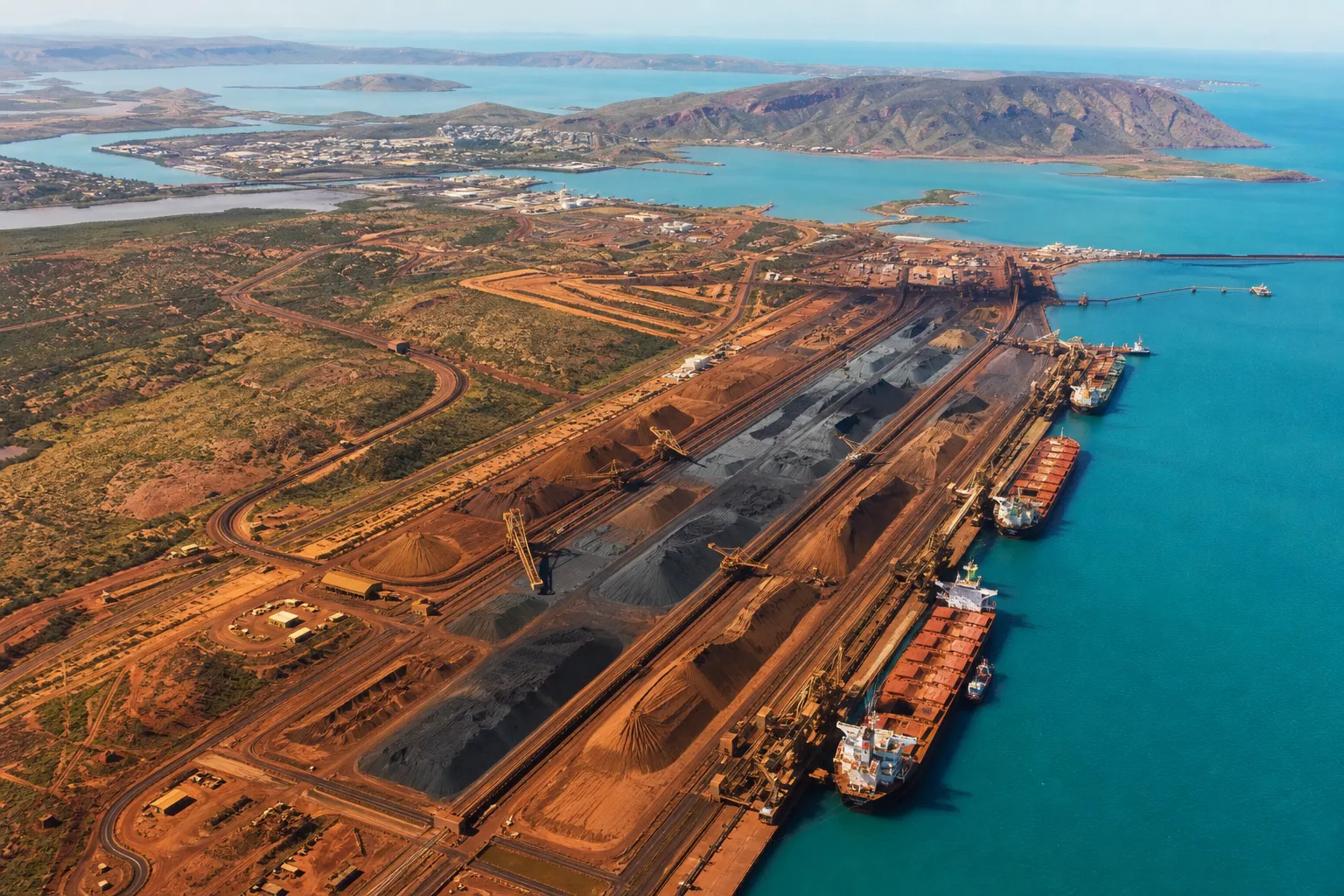

Australia is bringing safeguard inquiries into its specialist trade remedies body, and manufacturers exposed to sudden import surges need to understand what this means in practical terms. The Customs Amendment (Safeguard Inquiries) Bill 2026 transfers responsibility for conducting safeguard investigations from the Productivity Commission to the Anti‑Dumping Commission. This is an institutional change, not a change to the substantive legal tests, but its practical consequences for domestic industry are significant. In the sections below you will learn what changed, how safeguards differ from anti‑dumping and countervailing duties, the evidence to preserve now, the provisional relief realistically available, and how importers and downstream users can participate.
If you have detected an import surge that is damaging your business, the decision that Australia brings safeguard inquiries into its trade remedies body should not slow you down, it should focus you. The reform concentrates safeguards, anti‑dumping and countervailing investigations under one investigator, which makes early, well‑organised evidence more valuable than ever. Within the next few days, take three practical steps.
The core reform is straightforward. The Customs Amendment (Safeguard Inquiries) Bill 2026 amends the Customs Act 1901 to remove the safeguard inquiry function from the Productivity Commission and place it within the Anti‑Dumping Commission. The rationale, as set out by the Minister for Trade, is to give Australian manufacturers a single, specialist body handling trade remedy investigations rather than splitting safeguards away from the closely related anti‑dumping and countervailing regimes.
Historically, the Productivity Commission conducted safeguard inquiries as ad hoc references. That model kept safeguards administratively separate from the day‑to‑day machinery of trade remedies, and in practice safeguards were rarely used. By consolidating the function, the government intends to lower the practical barrier to accessing safeguard relief and to bring the same investigative rigour, procedures and sector familiarity that the Anti‑Dumping Commission already applies to dumping and subsidy cases.
It is essential to understand what did not change. The substantive legal tests for safeguards remain the same. A safeguard still requires proof of a surge in imports causing or threatening serious injury to a domestic industry. The Bill re‑homes the investigative function; it does not lower the threshold or rewrite the elements that a complainant must establish. When Australia brings safeguard inquiries into its trade remedies body, it changes who investigates and how, not what must be proven.
A safeguard measure is a temporary trade restriction that a government may impose when a sudden increase in imports of a product causes, or threatens to cause, serious injury to the domestic industry producing a like or directly competitive product. The defining feature of a safeguard is that it does not require any finding of unfair conduct. Unlike anti‑dumping (which targets exporters selling below normal value) or countervailing duties (which target subsidised imports), a safeguard responds to fairly traded imports that simply arrive in damaging volumes.
Because no wrongdoing needs to be proven, safeguards are uniquely useful, and, in Australia, historically under‑used. The trade‑off is a higher evidentiary bar. The threshold is “serious injury,” which is a more demanding standard than the “material injury” test applied in anti‑dumping and countervailing cases. Complainants must demonstrate a clear, recent and relatively sharp increase in imports and a causal link to serious injury across the industry as a whole.
The remedies available under a safeguard are structural rather than exporter‑specific. Under the WTO Agreement on Safeguards, a member may impose temporary tariffs, quotas, or tariff‑rate quotas. Critically, these apply to imports of the product generally, not only to a particular exporter found to have behaved unfairly. Because the remedy restricts fair trade, the WTO framework requires that measures be temporary, subject to progressive liberalisation where applied for longer periods, and, in defined circumstances, that a member maintain an equivalent level of concessions with affected trading partners or face suspension of equivalent concessions.
The three principal trade remedies share a common purpose, protecting domestic industry from injurious imports, but they rest on different legal triggers, evidentiary burdens and remedies. The table below sets out the practical distinctions manufacturers and their advisers must weigh when choosing a route.
| Feature | Safeguard | Anti‑Dumping | Countervailing (CVD) |
|---|---|---|---|
| Legal trigger | Serious injury from a surge in imports (no unfair conduct required) | Material injury caused by dumped imports (price below normal value) | Material injury caused by subsidised imports |
| Burden of proof | Serious injury, causation, and (under WTO practice) unforeseen developments | Dumping margin and material injury | Existence and effect of a subsidy; material injury |
| Remedies | Temporary tariffs, quotas, tariff‑rate quotas (subject to WTO limits) | Anti‑dumping duties on specific exporters | Countervailing duties on subsidised imports |
| WTO constraints | Agreement on Safeguards; rebalancing/compensation may apply | Anti‑Dumping Agreement provisions | SCM Agreement (subsidies and countervailing measures) |
| Typical timeframe | Longer investigations; provisional relief rarer | Faster; provisional measures possible | Similar to anti‑dumping; requires evidence of subsidy |
Now that Australia brings safeguard inquiries into its trade remedies body, the most immediate operational effect is that the same investigators and procedures used for anti‑dumping and countervailing cases will handle safeguards. For manufacturers, this has several practical implications.
First, evidence formats are likely to harmonise. The Anti‑Dumping Commission already operates well‑established questionnaires, submission templates and confidentiality regimes. Complainants who have previously navigated an anti‑dumping matter will find much of the machinery familiar, and those preparing a safeguard case can structure their data along the same lines from the outset.
Second, sector familiarity should help. The Commission accumulates detailed knowledge of import patterns, pricing behaviour and industry structures across the sectors it investigates. That institutional memory, previously fragmented when safeguards sat with a separate body, can now be brought to bear on safeguard inquiries, potentially shortening the learning curve at the start of a case.
Third, and this cannot be overstated, the different legal tests still apply. A single investigative machine does not mean a single legal standard. An investigator moving from an anti‑dumping matter to a safeguard inquiry must apply the higher “serious injury” threshold and must not require any finding of unfair conduct. Manufacturers should ensure their submissions are framed to the correct legal test, because the procedural convergence can obscure the substantive divergence. When Australia brings safeguard inquiries into its trade remedies body, the discipline of matching evidence to the correct statutory test becomes the complainant’s responsibility.
The strength of a safeguard case is determined largely before any application is lodged, by the quality and contemporaneity of the evidence assembled. Serious injury is proven with data trends over time, so the earlier you begin capturing and preserving that data, the more persuasive your case will be. Reconstructed figures invite challenge; contemporaneous records rarely do.
Gather and preserve the following categories of evidence, ideally covering several recent financial years plus the current year to establish a clear trend line:
Do not wait for a formal application before building your evidentiary infrastructure. Begin drafting the following:
Because Australia brings safeguard inquiries into its trade remedies body under harmonised procedures, aligning your data early to the Commission’s expected formats will save time once a matter formally begins.
Choosing the right remedy is a strategic exercise, not a default. Each route carries a different burden of proof, timeline, and set of political and commercial consequences. A useful way to approach the decision is to ask what the imports are doing and how they are priced.
If imports are fairly traded but arriving in a sudden, damaging surge from many sources, a safeguard may be the only route, anti‑dumping and countervailing measures require proof of dumping or subsidisation respectively. If, on the other hand, the imports are priced below normal value or are subsidised, an anti‑dumping or countervailing complaint may deliver faster, exporter‑specific relief with a “material injury” threshold and without the rebalancing exposure that safeguards can attract.
The decision factors include:
Can you file both? In principle, a manufacturer can pursue an anti‑dumping (or countervailing) complaint and a safeguard inquiry concerning the same product, because they rest on different legal bases and target different things. Running parallel complaints can be a legitimate hedge, anti‑dumping duties address unfairly priced imports from specific sources, while a safeguard addresses the overall surge. However, the strategies must be coordinated carefully to avoid inconsistent factual positions and to manage the increased evidentiary and procedural burden. Now that Australia brings safeguard inquiries into its trade remedies body, running concurrent matters before a single investigator is administratively simpler than it was under the previous split arrangement, but it still demands disciplined case management.
Manufacturers facing an active surge understandably want relief immediately. The realistic position is that provisional safeguards are the exception rather than the rule. The WTO Agreement on Safeguards permits provisional measures only in critical circumstances where delay would cause damage difficult to repair, and only on the basis of a preliminary determination that increased imports have caused or are threatening serious injury. Any provisional measure must take the form of a tariff increase, is time‑limited, and must be refunded if the final investigation does not confirm serious injury.
By contrast, anti‑dumping investigations conducted by the Commission have well‑established procedural timelines for preliminary findings and provisional measures, which is one reason manufacturers sometimes favour the anti‑dumping route when speed is critical. As a practical matter, if early relief against imports is the priority, an anti‑dumping complaint (where the facts support it) is more likely to deliver provisional relief than a safeguard.
Set realistic expectations internally. Safeguard investigations tend to run longer than anti‑dumping cases because of the higher threshold and the broader industry‑wide analysis required. Interim relief for safeguards is available only in genuinely exceptional cases. The practical value of moving quickly, therefore, is less about securing instant provisional relief and more about strengthening the eventual case and preserving the option of parallel anti‑dumping action where the facts justify it. Because Australia brings safeguard inquiries into its trade remedies body alongside anti‑dumping and countervailing work, complainants can now evaluate all of these timing options with a single specialist investigator.
Australia’s ability to impose safeguards is constrained by its WTO commitments. The governing instruments are Article XIX of the GATT 1994 and the Agreement on Safeguards. These impose disciplines that shape what any Australian safeguard measure can look like.
Non‑compliance can carry real consequences. Safeguard measures are among the more frequently litigated at the WTO, and a measure that fails to meet the Agreement’s requirements can be challenged through dispute settlement. Australia’s domestic process is therefore designed to produce the reasoned, evidence‑based determinations that the WTO framework demands. This international discipline is one reason the government’s decision that Australia brings safeguard inquiries into its trade remedies body, a body already experienced in producing robust, reviewable investigative findings, is significant.
Safeguard inquiries are not one‑sided. Importers, exporters and downstream user industries have legitimate interests and defined rights to participate, and the consolidation of the function does not diminish those rights. Because a safeguard restricts fairly traded imports across the board, downstream manufacturers who rely on those imports as inputs, and who may face higher costs if a measure is imposed, have every reason to engage.
Participation typically includes the ability to:
For importers and downstream users seeking to oppose a measure or limit its scope, the practical tactics include demonstrating that the injury is caused by factors other than imports, arguing for the least trade‑restrictive form of remedy, seeking product exclusions where the imported item is not genuinely competitive with domestic production, and highlighting the impact of any measure on user industries and consumers. Engaging early and with well‑organised evidence is just as important for opponents as it is for complainants.
Three short scenarios illustrate how the reform plays out in practice.
Small manufacturer facing a sudden surge. A regional producer sees imports rise sharply within a single quarter and margins collapse. The imports appear fairly priced, so anti‑dumping is unavailable. The right response is to begin preserving contemporaneous sales, pricing and capacity data immediately, engage counsel to test whether the “serious injury” threshold can be met, and prepare a safeguard application to the Anti‑Dumping Commission.
Large manufacturer suspecting dumping. An established producer believes imports are priced below normal value and is also alarmed by the overall volume. Here, a parallel strategy may be optimal, an anti‑dumping complaint targeting the specific exporters for faster, provisional relief, supported by a safeguard inquiry addressing the wider surge. Coordinating both before a single investigator is now more straightforward.
User industry facing rising input costs. A downstream manufacturer relying on imported inputs learns a safeguard is being sought. Its interest lies in opposing or narrowing the measure. It should lodge submissions promptly, seek access to non‑confidential materials, argue for product exclusions, and quantify the cost impact on its own operations and employment.
The reform is best understood as a practical upgrade: Australia brings safeguard inquiries into its trade remedies body to give manufacturers a single, specialist forum for trade remedy cases, while leaving the substantive safeguard tests untouched. Three actions matter most. First, preserve contemporaneous evidence, sales, pricing, capacity, employment and management records, the moment a surge is detected. Second, take early specialist advice to choose between a safeguard, an anti‑dumping or countervailing complaint, or a coordinated combination. Third, set realistic expectations on timing and WTO constraints, recognising that provisional safeguard relief is rare and that any measure must comply with the Agreement on Safeguards.
Manufacturers and importers who engage early and organise their evidence to the correct legal test will be best placed to protect their interests. For tailored guidance, contact the Global Law Experts International Trade & Customs team.

posted 16 minutes ago

posted 53 minutes ago

posted 1 hour ago

posted 1 hour ago
posted 2 hours ago

posted 2 hours ago

posted 2 hours ago

posted 2 hours ago

posted 2 hours ago

posted 2 hours ago

posted 3 hours ago

posted 3 hours ago
No results available
Find the right Legal Expert for your business

Send welcome message