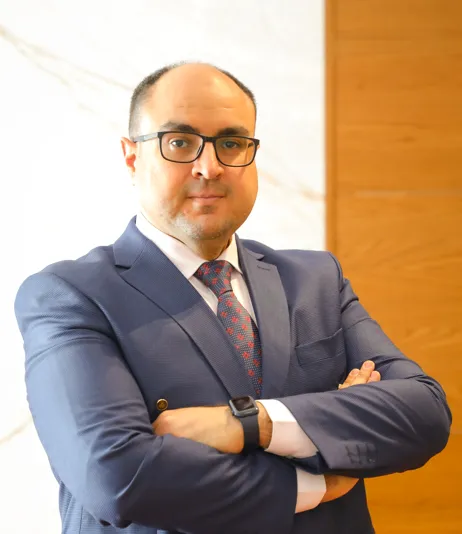
Mohamed Kurd is recognised across Libyan and regional business circles as a leading authority on commercial advisory and business-law issues affecting companies operating in Libya, including his work as a business lawyer in Libya. As the Managing Partner of Libyan Group Consultancy (LGC), Kurd combines cross-border financial experience with a public profile that includes international speaking and advisory engagements, positioning him as a trusted adviser for complex commercial and investment matters. His practical focus is on helping businesses translate regulatory complexity into actionable transaction and risk-management strategies. Kurd’s approach integrates rigorous analysis with pragmatic execution to deliver measurable results for clients.
Kurd serves as Managing Partner of the Libyan Group Consultancy (LGC), a firm providing accounting, auditing and business advisory services from offices in Tripoli and Benghazi. The firm’s profile emphasises sectoral advisory across energy, financial services, infrastructure and technology, reflecting the breadth of Kurd’s client work. His formal academic background includes a bachelor’s degree in accounting from Garyounis University in Benghazi, an MS in Accounting & Finance from Western California University (with an award in Financial Risk Analysis), and an MBA from Rome Business School. Kurd also has more than 18 years of regional management and financial sector experience across Libya and neighbouring markets, underpinning his advisory emphasis on commercial structuring, financial risk and governance.
Kurd and his firm specialise in business advisory work at the intersection of law, finance and corporate governance. Typical matters include company structuring and registration, investment feasibility and compliance reviews, financial due diligence, dispute risk evaluation and regulatory navigation for foreign participants, as well as transactional support for project development in sectors such as energy, infrastructure, healthcare and technology. LGC’s client-facing materials emphasise results‑oriented programs designed to align consultant incentives with client outcomes. This combination supports clients in navigating both regulatory constraints and commercial opportunities.
While LGC operates as a multidisciplinary advisory practice rather than a conventional law firm, Kurd frequently advises on the commercial-law implications of transactions and collaborates with specialist counsel where formal legal representation is required. For organisations seeking a business lawyer in Libya, LGC positions itself as a gateway to coordinated advisory and legal teams that can manage both regulatory and commercial execution risks. He remains focused on aligning regulatory strategy with commercial execution to reduce risk for clients. In Libya, this integrated approach offers clients access to both strategic advisory and specialist legal support.
In recent years Kurd has raised his public profile by participating in international business forums and national exhibitions that highlight Libya’s commercial recovery and investment opportunities. He represented LGC at the UNBOUNDED Barcelona Assembly 2026 and contributed to public conversations about investor due diligence and frontier‑market governance. LGC’s event summaries also record the firm’s active role at national expos and startup competitions, where Kurd has participated in panels and judging panels focused on innovation and venture development. Kurd’s participation demonstrates a commitment to practical knowledge transfer and capacity building.
These engagements reflect a practical blend of advisory work and sector advocacy: Kurd uses public speaking and partnership activity to surface market intelligence for clients and to promote capacity building initiatives for Libyan entrepreneurs and institutions. Where publications, formal legal judgments or major cross‑border precedents are cited in public updates, LGC references its advisory role rather than acting as lead litigation counsel. This stance reinforces the firm’s value to Libyan institutions seeking informed market insights while avoiding sole reliance on litigation. This broader engagement supports capacity building across Libya’s business ecosystem.
Kurd’s practice is characterised by integration of financial risk analysis, local regulatory insight and practical project execution. He emphasises a “results not reports” ethos and deploys tailored commercial models intended to align incentives with client outcomes; this includes structured consulting arrangements that link fees to measurable project milestones. His multi‑jurisdictional experience across Libya and neighbouring MENA markets enables a comparative perspective that is useful for foreign investors and Libyan corporates alike. Kurd also emphasises ongoing client education and transparent communication as a core service principle.
Libya’s legal and investment framework has undergone notable reforms and policy shifts in recent years, including official measures regulating foreign participation and periodic clarifications on ownership rules for foreign investors. These changes create both opportunities and legal complexity for investors, particularly in sectors tied to national policy or public assets. International monitoring organisations and government-level investment reports emphasise that Libya’s regulatory environment remains in transition and that careful local legal and regulatory navigation is essential for successful projects. This evolving landscape requires trusted partners who can translate policy shifts into actionable steps.
Key practical risks for businesses include evolving foreign-investment decrees, sectoral restrictions, unclear application of property rules, and the uneven implementation of regulatory approvals at regional levels. For that reason, specialist advisory — combining local regulatory knowledge, financial structuring skills and established institutional relationships — materially reduces execution risk and improves the odds of transaction completion. Kurd’s advisory model is designed to help clients anticipate those legal friction points and embed compliant, enforceable contractual protections in their project documentation. Kurd emphasises practical, enforceable solutions tailored to Libyan regulatory realities.
Clients who typically benefit from Kurd’s advisory role include foreign investors assessing entry strategies, Libyan entrepreneurs scaling ventures, corporates undertaking cross‑border project development, and public institutions seeking capacity building in procurement and governance. His background in accounting, finance and management makes his advice particularly relevant where transactional structuring, financial due diligence and dispute risk evaluation are critical to decision‑making. LGC’s industry focus means clients in energy, infrastructure, finance, healthcare and technology can access integrated advisory teams tailored to sectoral regulatory realities. This breadth across sectors ensures clients receive tailored strategies that reflect sector-specific regulatory landscapes.
Mohamed Kurd combines academic training in accounting and finance with nearly two decades of regional advisory experience to deliver practical commercial guidance in Libya’s evolving business landscape. While his firm is not a substitute for licensed legal representation in courtroom matters, his leadership at LGC positions him as an influential figure for organisations seeking coordinated advice that bridges regulatory, financial and commercial disciplines. For businesses looking for a trusted collaborator when engaging Libyan markets — whether they search for a business lawyer in Libya or multidisciplinary advisory support — Kurd and LGC offer grounded local knowledge, international connections and a transaction‑focused advisory model. Kurd’s ongoing engagement with Libyan markets underscores a commitment to sustainable growth for clients.
Mohamed Kurd is the Managing Partner of Libyan Group Consultancy (LGC). He advises on complex commercial and investment matters affecting Libya, combining cross-border financial experience with public speaking and advisory engagements. He holds a bachelor’s degree in accounting from Garyounis University, an MS in Accounting & Finance from Western California University with an award in Financial Risk Analysis, and an MBA from Rome Business School, and has over 18 years of regional management and financial sector experience across Libya and neighbouring markets. His advisory approach integrates financial risk analysis, local regulatory insight and practical project execution with a ‘results not reports’ ethos; he uses tailored commercial models that align consultant incentives with client outcomes, emphasizes client education and transparent communication, and works with specialist counsel when formal legal representation is required.
LGC provides accounting, auditing and multidisciplinary business advisory services from offices in Tripoli and Benghazi, with sectoral focus on energy, financial services, infrastructure and technology. Typical services include company structuring and registration, investment feasibility and compliance reviews, financial due diligence, dispute risk evaluation, regulatory navigation for foreign participants and transactional support for project development.
Investors face evolving foreign-investment decrees, sectoral restrictions, unclear application of property rules and uneven implementation of regulatory approvals at regional levels. Libya’s regulatory environment remains in transition, so careful local legal and regulatory navigation is essential to reduce execution risk and improve the odds of transaction completion.
Typical beneficiaries include foreign investors assessing entry strategies, Libyan entrepreneurs scaling ventures, corporates undertaking cross-border project development and public institutions seeking capacity building in procurement and governance. Sector clients often come from energy, infrastructure, finance, healthcare and technology.

Find the right Legal Expert for your business

Send welcome message