
Our Expert in Bulgaria
No results available
Subcontracting clauses bulgaria sit at the heart of every major construction and infrastructure deal, and for main contractors they are the difference between controlled risk and open-ended exposure. As Bulgarian infrastructure spending continues into 2026 and litigation-risk management rises up the boardroom agenda, main contractors can no longer treat subcontract drafting as a back-office formality. This guide takes a clear position: the architecture you choose, novation, direct payment, flow-down or simple appointment, determines who bears the loss when a subcontractor defaults, and that choice must be made deliberately, not by default.
Below you will find a practitioner-level walkthrough of the clauses that matter, a decision matrix to pick the right structure, redline templates, and a framework for when to instruct specialist counsel.
This article is general information only and is not legal advice. Statutory article references and case citations must be confirmed by qualified Bulgarian counsel before you rely on them.
Subcontracting clauses bulgaria operate within a civil-law framework where the general rules of obligations, the construction-specific planning regime and, on public works, procurement law interact. Unlike common-law systems, Bulgarian law gives contractual privity a central role: unless a subcontractor is formally brought into the main contract, the employer generally has no direct remedy against it, and the main contractor remains the single point of liability. That principle drives most of the risk-allocation decisions in this guide.
The core instruments governing subcontract relationships include the Obligations and Contracts Act (which covers assignment, set-off, penalties and the general law of contract), the Civil Procedure Code (enforcement, interim measures and recovery), the Spatial Development Act (building permits, technical supervision and acceptance of works), and the Public Procurement Act (rules on subcontracting in public projects). The authoritative consolidated texts of these laws are published in the State Gazette. Always work from the current consolidated version, amendments are frequent, and confirm the exact article numbers with counsel before drafting.
Bulgarian courts do not operate a binding precedent system, but interpretive decisions of the Supreme Court of Cassation, in particular its interpretive rulings (tълкувателни решения), carry strong authority and are routinely followed by lower courts. For subcontract drafting, the most relevant lines of authority concern the validity of novation (whether the parties intended to extinguish and replace an obligation), the enforceability of assignments and third-party payment arrangements, and the treatment of contractual penalties. Published decisions of the court are a primary reference point when you need to test whether a clause will hold up in enforcement.
On public projects, EU procurement law, chiefly Directive 2014/24/EU, as transposed into the Public Procurement Act, shapes what you can and cannot do with subcontractors. The Directive contains provisions permitting direct payment to subcontractors and allowing contracting authorities to verify subcontractor eligibility, subject to the manner of transposition into national law. This matters because a direct-payment or novation structure that is perfectly valid in a private contract may be constrained, mandated or modified in a public one. Where interpretation is contested, the case law of the Court of Justice of the European Union on procurement is a controlling reference.
This is the clause-by-clause checklist. For each clause, understand its commercial purpose, the drafting trap that most often defeats it, and how Bulgarian law treats it. The clauses are ordered to prioritise those that shift or cap risk.
The scope clause is where risk allocation either succeeds or quietly fails. The subcontract scope must map precisely onto the corresponding slice of the main contract scope, no gaps, no overlaps. If the main contract imposes a performance standard, completion date or quality specification, the subcontract must carry the same obligation forward. The classic trap is a subcontract that describes the works generically while the main contract imposes specific, measurable standards; the contractor is then liable to the employer for a standard it never passed down. Draft by incorporation where possible and attach the relevant main-contract specifications as a schedule.
Flow-down clauses bind the subcontractor to the same obligations the main contractor owes the employer, so far as they apply to the subcontracted works. Word them to flow down obligations, programme requirements, notice regimes and quality standards, but be deliberate about what you exclude. A blanket “the subcontractor assumes all obligations of the main contract” is risky: it can import obligations the subcontractor cannot physically perform or price, and it blurs the interface between the two contracts. The better approach is express obligation mirroring, with a schedule listing which main-contract clauses apply, plus audit and inspection rights so you can verify compliance before the employer does.
A novation clause substitutes the subcontractor into the main contract, creating direct contractual rights and obligations between the subcontractor and the employer. Under Bulgarian law, replacing one obligation with another requires the clear, documented consent of the parties and an intention to replace the original obligation. Reserve novation for critical or standalone works where the employer genuinely wants direct contractual control. The formalities are not trivial: expect to reissue bonds, update insurance, and execute a signed novation agreement. Build a pre-agreed novation mechanism into the subcontract so the switch does not become a mid-project negotiation.
Direct payment lets the employer pay the subcontractor directly, typically to protect cashflow on the works without disturbing the overall contractual structure. In Bulgaria this is achievable, but it depends entirely on express wording, usually a tripartite agreement or a third-party beneficiary mechanism, and it must be reconciled with procurement rules on public projects. Draft it with care: specify the trigger for direct payment, the authorisation route, the cap, and crucially the recovery mechanics so the main contractor is not left paying twice. Direct payment that keeps the subcontractor working is useful; direct payment without a recovery and set-off framework is a liability.
Retention and withholding give the main contractor security against defective work and incomplete performance. Draft the retention clause with explicit release triggers, for example a percentage at practical completion and the balance at the end of the defects period, and tie each release to a notice and certification step. Address interest expressly: late-payment interest and the treatment of retained sums should follow the applicable statutory framework and the contractual agreement, not be left to implication. The most common failure is a retention clause with no clear release date, which converts a security mechanism into a recurring dispute.
Liability caps are generally enforceable in Bulgaria where they are clear and proportionate, but they must be drafted with carve-outs. Standard carve-outs exclude the cap for fraud, wilful misconduct, death or personal injury, and safety breaches, and for indemnities and insured risks, which should sit outside the general cap. Note that under the Obligations and Contracts Act, agreements excluding liability for intentional conduct or gross negligence are not enforceable. Indemnities (contractor indemnities bulgaria included) must be specific as to trigger and scope; an open-ended indemnity may be read down. Tie insurance requirements to the indemnity: require the subcontractor to carry policies that respond to the risks it indemnifies, and set minimum limits and evidence obligations.
Performance security converts a paper obligation into recoverable value when a subcontractor defaults or becomes insolvent. Use the following checklist:
Industry observers expect the most contested subcontract issues in 2026 to cluster around three themes: disputes over flow-down compliance (did the obligation actually pass down?), challenges to novation formalities (was consent properly documented?), and bonding and guarantee calls where subcontractor insolvency is in play. The likely practical effect is that contracts drafted loosely two or three years ago will be tested, and the gaps will surface in enforcement. Tightening flow-down mirroring and novation formalities now is the cheapest form of litigation insurance.
The structure you pick is a strategic decision, not a drafting afterthought. The matrix below compares the four approaches across the dimensions that determine cost, control and recoverability. Read it alongside the decision rules that follow, those rules take a position so you can act, rather than leaving the choice open.
| Dimension | Novation (subcontractor substituted) | Direct payment (third-party payment) | Flow-down (contractual obligations only) | No-novation / simple appointment |
|---|---|---|---|---|
| Legal effect (Bulgaria) | Subcontractor becomes party to the main contract, strongest rights against the employer, but requires formal consent | Employer pays the subcontractor on authorisation or a direct-pay mechanism; creates practical recovery routes but not full privity | Subcontractor bound by obligations via a clause in the subcontract; privity stays with the main contractor | Subcontractor contracts only with the main contractor; employer has no contractual privity |
| Cost / admin burden | High, novation paperwork plus insurer and guarantee updates | Medium, payment mechanisms and security adjustments required | Low–Medium, drafting and enforcement rest with the main contractor | Low upfront; higher risk of the contractor bearing the entire loss |
| Timing impact | Can delay start while novation is processed | Minimal if the payment mechanism is pre-agreed | Minimal; relies on clear flow-downs | Minimal |
| Liability / recovery | Employer can pursue the subcontractor directly, reduces double-recovery friction | Employer can pay, but recovery against the subcontractor may be contractual; contractor still exposed without a direct remedy | Main contractor retains primary liability to the employer and must step in to recover from the subcontractor | Main contractor fully exposed; strong bonds and insurance essential |
| Retention interaction | Retentions may be transferred or adjusted, depending on novation terms | Direct pay usually does not disturb retention unless expressly agreed | Retention stays with the main contractor unless the flow-down mirrors it | Retention stays with the main contractor |
| Enforceability (Bulgaria) | Clear where formal requirements for substitution are met and all parties consent | Depends on wording and whether a tripartite or third-party mechanism exists; procurement rules may restrict in public contracts | Enforceable between main and subcontractor; third-party enforcement against the employer is limited | Routine but riskier |
| Best for | Large projects where the employer wants direct control of critical works | Where the employer reserves payment control or protects subcontractor cashflow but keeps privity with the contractor | Where the contractor wants central control of the delivery chain | Minor packages where simplicity trumps risk |
| Recommended clause tone | Detailed novation agreement with a three-party signature block | Tripartite direct-payment clause with step-in and recovery mechanics | Strong flow-down with express obligation mirroring and audit rights | Strong bonds, insurance and indemnities |
Our recommendation: flow-down should be your default structure for the majority of packages, with novation reserved for genuinely critical works and direct payment used surgically to manage cashflow. Simple appointment is acceptable only for low-value, low-risk packages, and only when backed by security.
Choosing a structure is half the job. The other half is the operational and contractual detail that preserves your recovery rights when something goes wrong. These strategies for risk allocation on infrastructure projects are where margins are protected or lost.
Retention should follow a defined schedule rather than sit as a vague percentage. A workable structure releases a first tranche on certified practical completion and the balance on expiry of the defects liability period, each release conditional on a notice and the absence of outstanding defects. Where you want to avoid tying up subcontractor cash, often a point of negotiation leverage, offer a retention bond or an escrow/third-party trust as an alternative to cash retention. Handle interest expressly so retained sums do not become a dispute about accrued charges on release.
Withholding and set-off let the main contractor deduct sums owed by the subcontractor from amounts otherwise payable. To be stable and enforceable, the clause must define the grounds for withholding, require a withholding notice with a stated basis and amount, and preserve set-off rights across the subcontract and any related agreements. Vague “the contractor may withhold any sums it considers appropriate” wording invites challenge; precise, notice-driven set-off is far more defensible in enforcement.
Set the cap at a commercially realistic figure linked to subcontract value, and draft the carve-outs explicitly. Exclude from the cap: fraud and wilful misconduct, death and personal injury, breaches of safety obligations, and liability covered by the subcontractor’s insurance or by express indemnities. The drafting tip that avoids most disputes is to state clearly that indemnities and insured risks sit outside the general cap, otherwise a well-intentioned cap can neutralise the very indemnities you negotiated.
Structure conditional-call mechanics so you can draw on security quickly but fairly: define the default events, the notice period and the documents required for a call. Where you hold main-contract security in favour of the employer, build back-to-back subcontractor bonds so a call against you can be matched by a call against the subcontractor. Align bond expiry with retention release and the defects period so you are never left with an uncovered gap.
Require the subcontractor to carry insurance that responds to the risks it bears, with minimum limits, evidence obligations and a duty to maintain cover through the defects period. On larger projects, consider cross-liability and waiver-of-subrogation wording so that insurers of one party cannot pursue the other for an insured loss. Reconcile the contractor’s and subcontractor’s policies to avoid double insurance or, worse, gaps where each assumes the other covers the risk.
Many strong clauses fail because they are not administered. Preserve your rights by running disciplined notices, certification and progress reporting. Serve notices within contractual time limits, document instructions and variations in writing, and handle claims early, the moment an issue arises, not at final account. A short, consistently followed early-claims procedure protects entitlements that a well-drafted but unadministered contract would otherwise lose.
The snippets below are starting points, not finished clauses. Each is marked Use as template, lawyer review required, because the correct wording depends on the main contract, the project type and current Bulgarian statutory references.
“The Subcontractor shall perform the Subcontract Works so as to enable the Contractor to comply with its obligations under the Main Contract set out in Schedule [X], which obligations are incorporated into this Subcontract so far as they relate to the Subcontract Works.” (Annotation: attach the specific main-contract clauses in Schedule X rather than incorporating the whole contract; add audit and inspection rights. Use as template, lawyer review required.)
Use as template, lawyer review required.
A tripartite clause should identify the direct-payment trigger, the authorisation route, the maximum amount, the effect on sums owed by the employer to the contractor, and the contractor’s set-off and recovery rights. On public projects, confirm compatibility with procurement rules before use. Use as template, lawyer review required.
Use as template, lawyer review required.
Good drafting reduces disputes; disciplined process resolves the ones that remain. The goal is to preserve entitlements early and pick a forum whose decisions you can actually enforce.
Operate a standing early-warning procedure: as soon as a delay, defect or cost issue emerges, issue the contractual notice, record the facts, and preserve evidence (photographs, site records, correspondence). Late or missing notices are the most common reason otherwise valid subcontract claims bulgaria fail. Treat the notice regime as a hard deadline, not a formality.
For cross-border or technically complex projects, arbitration is often the stronger choice: it offers confidentiality, technical arbitrators and internationally enforceable awards. Note that, under Bulgarian law, disputes involving consumers and certain non-arbitrable matters cannot be referred to arbitration, so confirm arbitrability for your specific contract. For domestic, lower-value disputes, the Bulgarian courts may be faster and cheaper. Whichever you choose, draft the dispute clause precisely, seat, rules, language and governing law, so it is not itself the first thing in dispute.
Domestic judgments are enforced through the Civil Procedure Code, including interim measures that can secure assets early. Foreign arbitral awards are recognised and enforced in Bulgaria in line with the New York Convention, to which Bulgaria is a party, through the competent Bulgarian court. Factor enforceability into the dispute clause at drafting stage, an award you cannot enforce against the defaulting party’s assets is of little practical value.
Certain situations justify specialist construction counsel immediately rather than relying on in-house templates. Instruct early when you see any of the following red flags:
As a high-level expectation, engagement cost scales with value and complexity, and early instruction almost always costs less than remedial work once a dispute has crystallised. Professional conduct and the basis of engagement are governed by the Bar Act and the rules of the relevant bar association. The practical takeaway: on critical or high-value packages, get subcontracting clauses bulgaria reviewed before signature, not after a default.
Getting subcontracting clauses bulgaria right is one of the most effective ways for a main contractor to control risk on a Bulgarian construction project. The method is consistent: assess the criticality of each package, choose the structure that matches it, and back it with retention, security, insurance and disciplined administration. Take these five immediate actions:
For broader context, see the Global Law Experts Commercial lawyers Bulgaria, construction & procurement overview and the Choose corporate lawyer Bulgaria, practical guide 2026.
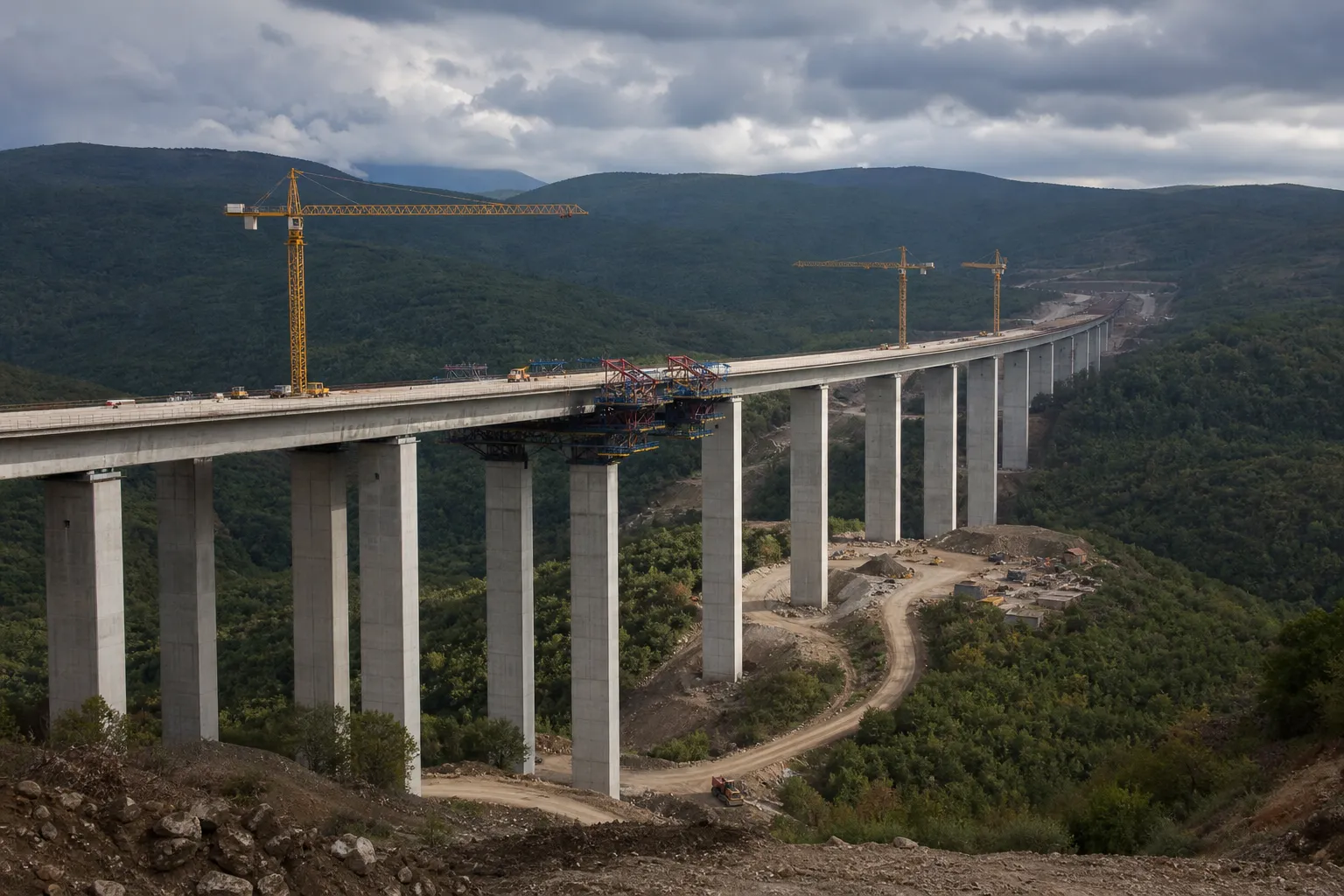
Image alt: Construction site in Bulgaria with contract documents and hardhats, subcontracting clauses bulgaria review.
This article was produced by Global Law Experts. For specialist advice on this topic, contact Yavor Tankov at Penkova & Partners, a member of the Global Law Experts network.

posted 15 minutes ago

posted 39 minutes ago

posted 51 minutes ago

posted 1 hour ago

posted 1 hour ago

posted 1 hour ago

posted 1 hour ago

posted 1 hour ago

posted 1 hour ago

posted 2 hours ago

posted 2 hours ago

posted 2 hours ago
No results available
Find the right Legal Expert for your business

Send welcome message