
Author
No results available
Introduction
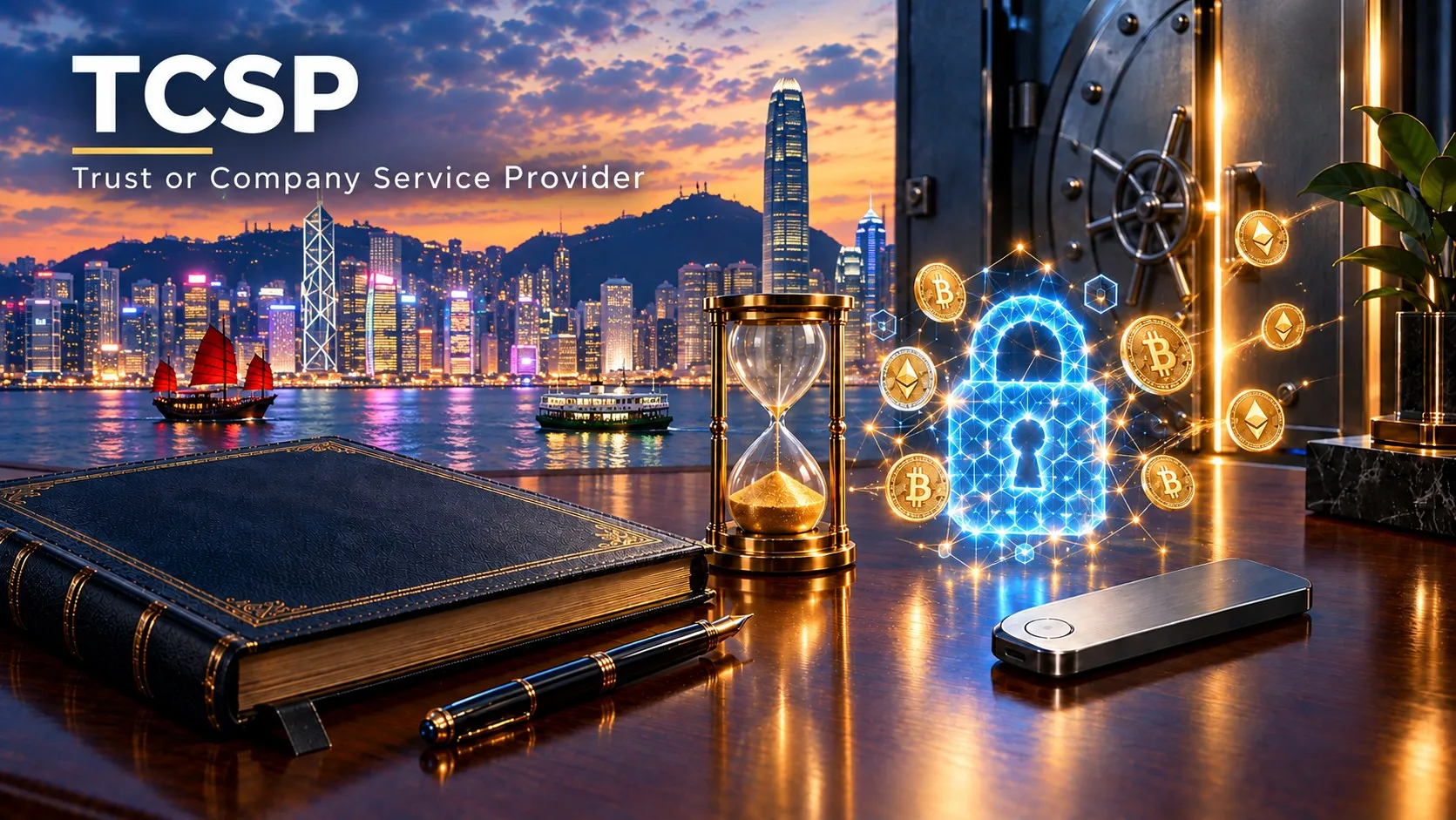
Hong Kong is moving steadily towards a fully licensed virtual asset (“VA”) market. After the licensing regime for VA trading platforms took effect in June 2023 and the stablecoin issuer regime took effect in August 2025, the Government has now confirmed that a bill introducing new licensing regimes for VA dealing, custody, advisory and management services will be put before the Legislative Council within 2026 [7][11][12][15]. For trust or company service providers (“TCSPs”) that hold crypto assets on trust for customers of crypto exchanges and other crypto businesses, the custody regime is the most significant development since the TCSP licensing regime itself began in 2018. This article looks at how TCSPs have been used in the crypto field, what the new custodian law will require, and what this means for TCSPs and their clients.
What a TCSP Is
Part 5A of the Anti-Money Laundering and Counter-Terrorist Financing Ordinance (Cap. 615) (“AMLO”) requires any person carrying on a trust or company service business in Hong Kong to be licensed by the Registrar of Companies [1]. The licensing regime commenced on 1 March 2018, and applicants, their directors and their ultimate owners must pass a fit-and-proper test [2]. A “trust or company service” includes forming companies, acting as a director or company secretary, providing a registered office or business address and, most importantly for present purposes, acting (or arranging for another person to act) as a trustee of an express trust or as a nominee shareholder [1]. The Companies Registry has also made clear that a company registered as a trust company under the Trustee Ordinance (Cap. 29) still needs a TCSP licence, and that a company acting only as a custodian trustee holding trust assets for another person will generally need one if it does so by way of business [3].
How TCSPs Have Been Used in the Crypto Field
Because Hong Kong has, until now, had no dedicated licence for the safekeeping of VAs, the trust has become the natural legal vehicle for holding crypto assets on behalf of customers. A trust separates the customer’s beneficial ownership from the platform’s own assets, and a licensed TCSP is the regulated person that can act as trustee. In practice, TCSPs have been used in three main ways:
In each case, the TCSP licence has provided the regulatory basis for a Hong Kong entity to hold crypto assets on trust. It is important to note, however, that the TCSP regime is primarily an anti-money laundering regime: it tests fitness and properness and imposes customer due diligence and record-keeping obligations, but it does not set technical standards for private key management, capital or insurance [1][2].
The Upcoming Custodian Law
On 24 December 2025, the Financial Services and the Treasury Bureau (“FSTB”) and the SFC published consultation conclusions on the licensing regimes for VA dealing and custodian service providers [7][8]. The Government stated that the custody regime “will focus on managing risks relating to safekeeping private keys of client VAs in Hong Kong, which is the core risk area of VA custody” [7]. The key features are as follows:
The Government reaffirmed the timetable to the Legislative Council Panel on Financial Affairs on 1 June 2026, stating that any person carrying on a business of providing VA custodian services in Hong Kong will need to be licensed by or registered with the SFC and that the regime will take full effect on commencement [11]. On 5 October 2026, the Secretary for Financial Services and the Treasury confirmed that the amendment bill would be submitted within this year [12]. As at the date of this article, the bill has not yet been published, and the final details (including the commencement date) may change.
Implications for TCSPs
The new law will change the role of TCSPs in the crypto sector in several important ways:
Conclusion
For several years, the TCSP licence has been the main regulatory route by which Hong Kong entities have held crypto assets on trust for customers of crypto exchanges and other crypto businesses. The new custodian law will bring that period to an end. Once the bill is passed and commences, the safekeeping of customers’ private keys will require an SFC licence, with significant capital and personnel requirements and no deeming arrangement for existing providers. In light of the new custodian law, the current applicants and new licensees may well be the last round of TCSPs able to offer trust services over the crypto assets of customers of crypto exchanges and crypto businesses on the basis of a TCSP licence alone. Businesses considering this route should act now, while the existing framework remains available, and should plan for the transition to the new regime.
Sources
[1] Companies Registry, Guideline on Licensing of Trust or Company Service Providers: https://www.tcsp.cr.gov.hk/tcspls/portal/guide/1033/eng/TCSP_G1_revised_May2025-e.pdf
[2] Companies Registry, Regulation of Trust or Company Service Providers (presentation): https://www.cr.gov.hk/en/publications/docs/speech20180423_01-e.pdf
[3] Companies Registry, Frequently Asked Questions – Trust Companies: https://www.tcsp.cr.gov.hk/tcspls/portal/faq/54/eng/TCSP_FAQ4-e.pdf
[4] Securities and Futures Commission, Licensing Handbook for Virtual Asset Trading Platform Operators (July 2025) and Guidelines for Virtual Asset Trading Platform Operators: https://www.sfc.hk/-/media/EN/assets/components/Guidelines/File-current/Licensing-Handbook-for-VATPs_July-2025.pdf?rev=4ca421d144034e2b94c52c2d9bbae9bc
[5] Hex Trust, Trust Center (licences and registrations): https://www.hextrust.com/trust-center
[6] First Digital, Legal and Regulatory Information: https://1stdigital.com/legal-and-regulatory/
[7] HKSAR Government press release, FSTB and SFC publish consultation conclusions on legislative proposals (24 December 2025): https://www.info.gov.hk/gia/general/202512/24/P2025122400265.htm
[8] Securities and Futures Commission, Consultation Conclusions on Legislative Proposal to Regulate Virtual Asset Custodian Services: https://apps.sfc.hk/edistributionWeb/gateway/EN/consultation/conclusion?refNo=25CP7
[9] Gibson Dunn, Hong Kong Concludes Consultations on Regulation of Virtual Asset Dealing and Custodian Services: https://www.gibsondunn.com/hong-kong-concludes-consultations-on-regulation-of-virtual-asset-dealing-and-custodian-services-with-yet-more-to-come/
[10] Charltons, FSTB and SFC Conclude Consultation on Licensing Regime for Virtual Asset Custodians: https://www.charltonslaw.com/fstb-and-sfc-conclude-consultation-on-licensing-regime-for-virtual-asset-custodians/
[11] Legislative Council Panel on Financial Affairs, LC Paper No. CB(1)530/2026(06) (1 June 2026): https://www.legco.gov.hk/yr2026/english/panels/fa/papers/fa20260601cb1-530-6-e.pdf
[12] Fintech Hong Kong, Hong Kong Targets Year-End for Wider Virtual Asset Licensing Bill (7 October 2026): https://fintechnews.hk/41126/blockchain/christopher-hui-policy-address-2026-legco-briefing/
[13] Simmons & Simmons, Five takeaways on the new Hong Kong virtual asset regulatory regime: https://www.simmons-simmons.com/en/publications/cmjwp982e05mevlz0kpafy3mr/latest-consultation-conclusions-on-the-new-sfc-va-regime-key-takeaways
[14] Hong Kong Economic Times, 2026 Policy Address report (16 September 2026): https://inews.hket.com/article/4194515/policy-address-2026-ai-fraud-virtual-assets-rwa
[15] Legislative Council, Replies to initial questions on the Estimates of Expenditure 2026-27 (Financial Services and the Treasury Bureau): https://www.legco.gov.hk/yr2026/english/fc/fc/w_q/fstb-fs-e.pdf

posted 7 minutes ago

posted 15 minutes ago

posted 29 minutes ago

posted 36 minutes ago

posted 39 minutes ago

posted 58 minutes ago

posted 2 hours ago
posted 2 hours ago
posted 2 hours ago
posted 2 hours ago
posted 2 hours ago

posted 2 hours ago
No results available
Find the right Legal Expert for your business

Send welcome message