
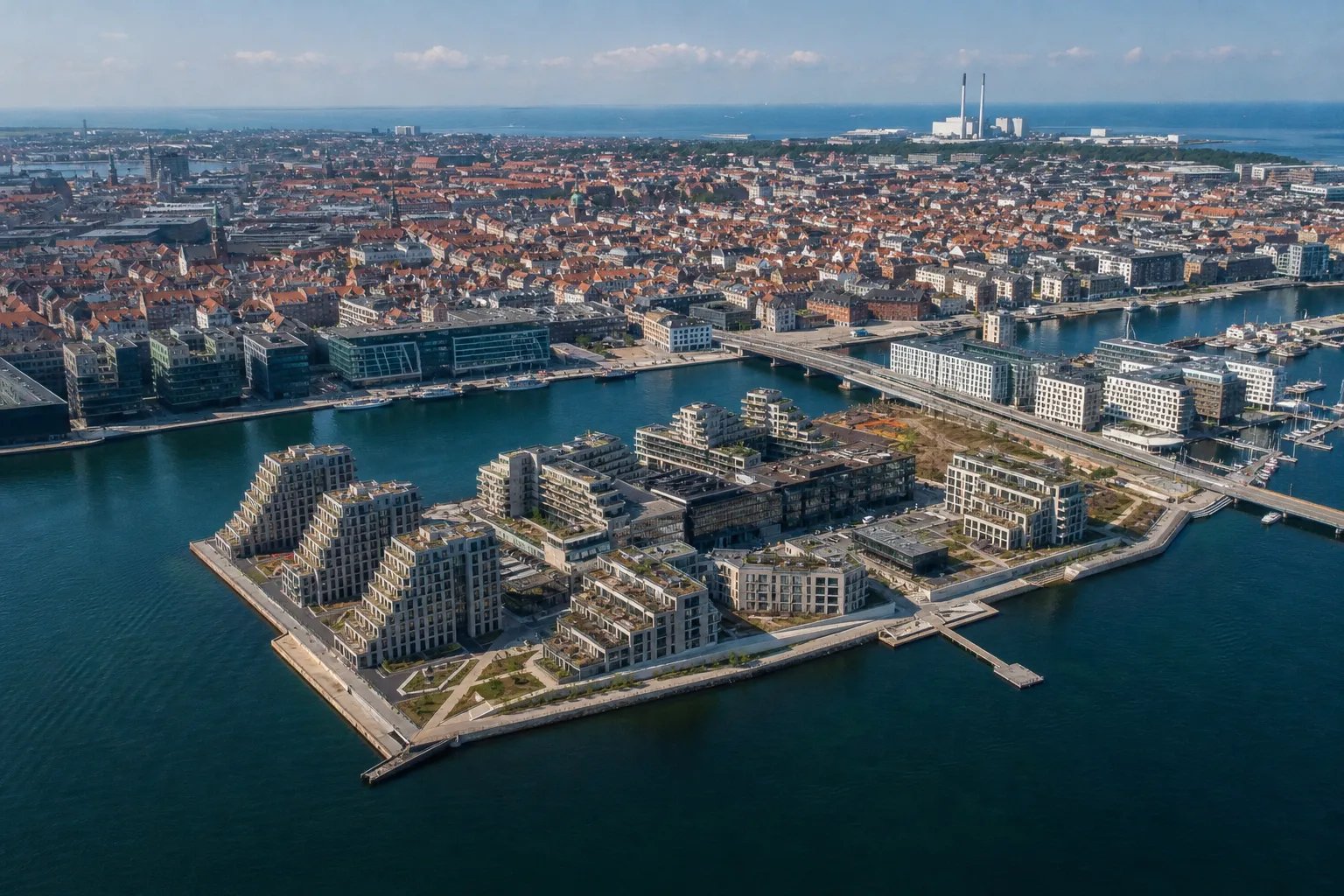
Our Expert in Denmark
No results available
Shareholder disputes Denmark decision-makers face in 2026 increasingly demand a defensible, documented choice between arbitration and the courts, and the right answer is rarely instinctive. This guide gives you that answer directly: a practitioner-led framework for choosing a forum, securing interim relief, and pursuing the remedies that actually work under Danish law. With continuing activity in management and board-liability claims, in-house counsel and directors need tools that produce clear decisions under time pressure, not academic hedging. Everything below is grounded in the core Danish statutes, Selskabsloven (the Danish Companies Act), Retsplejeloven (the Administration of Justice Act) and Voldgiftsloven (the Arbitration Act), and in settled procedure before the Danish courts.
Who this guide is for: in-house counsel, directors, minority and majority shareholders, and their external advisers.
What you will get: a practical decision framework, checklists for interim relief, a side-by-side Arbitration vs Court comparison table, procedural timelines, and an FAQ built to support immediate decisions.
If you need speed, confidentiality, cross-border enforceability and a decision-maker with industry expertise, and you have an enforceable arbitration clause, arbitrate. If you need urgent freezing orders or injunctions, statutory derivative mechanics, public precedent, or the joinder of third parties and insolvency actors, go to court. For most shareholder disputes Denmark companies encounter, the determining factor is whether your most valuable remedy requires the court’s exclusive statutory powers. The sections below show you how to make that call, what remedies you can realistically win, and how to protect your position before and during a dispute.
Resolving shareholder disputes Denmark businesses encounter is a staged process. The majority settle before a tribunal or judge ever rules, but the leverage to settle well comes from credibly preparing the contentious route. Understanding the common dispute types, the available pathways and the realistic outcomes lets you choose a strategy rather than react to one.
Danish shareholder and board disputes cluster into a handful of recurring patterns:
Danish practice offers a graduated set of pathways. Negotiation remains the fastest and cheapest, and is often contractually mandated as a first step. Mediation, including court-connected mediation (retsmægling) under Retsplejeloven, can preserve commercial relationships where parties must continue to own a company together. Arbitration applies where a valid clause exists under Voldgiftsloven (the Arbitration Act) and is favoured for confidentiality and finality. Litigation before the Danish courts (domstolene) is the default where no arbitration agreement applies, and the exclusive route for certain court-only remedies. A regulatory complaint to Erhvervsstyrelsen (the Danish Business Authority) can address registration, disclosure and company-law compliance issues, though it is not a substitute for a damages or derivative claim.
The realistic outcomes of a shareholder dispute shape which pathway you should choose:
Map each pathway to outcome likelihood and timing before you commit. A buy-out can be achievable in months through negotiation; a contested derivative claim with an appeal can run for years. That timing differential is itself a strategic lever.
Danish company law gives both statutory and general-law remedies to shareholders. Knowing which remedy fits your facts, and which forum can deliver it, is the heart of a sound strategy for shareholder disputes Denmark counsel manage.
Selskabsloven (the Companies Act) is a primary source of shareholder remedies Denmark holders can invoke. It provides for governance rights and protective mechanisms including:
Cite the exact Selskabsloven provisions for the relief you seek, the court and any arbitral tribunal will expect precision, and vague appeals to “fairness” rarely succeed on their own.
Can minority shareholders bring a derivative action in Denmark? Yes. Selskabsloven permits qualifying shareholders to pursue claims on behalf of the company against directors and others who have caused the company loss, subject to statutory conditions. Standing typically requires holding above a prescribed proportion of the share capital, and the recovery runs to the company rather than to the claiming shareholder personally. Procedurally, a derivative action Denmark minorities bring will often follow a general meeting that has declined to pursue (or has resolved to release) the claim, which is precisely why the statutory route exists.
The claimant bears the ordinary civil standard of proof and the usual costs exposure, including the risk of an adverse costs award if the claim fails. Because the statutory tests are technical, derivative claims are frequently better suited to the courts than to arbitration, a point the decision framework below develops.
Director liability Denmark claims rest on recognised bases: breach of the duty to manage the company responsibly, negligent decision-making that falls below the standard of a reasonable director, and specific statutory wrongs such as unlawful distributions or failing to act appropriately when the company’s financial position required it. Under Danish law, liability is generally assessed on a culpa (negligence) standard, on the facts known to the director at the time, not with hindsight. The principal defences are that the director acted within the bounds of sound business judgment, relied reasonably on professional advice, disclosed and abstained from conflicted decisions, or that causation and loss are not made out.
Directors’ and officers’ (D&O) liability insurance is common in Danish companies of any scale and should be reviewed when a claim is intimated; policy notification deadlines are typically strict, and late notice can jeopardise cover. Review indemnity provisions in service agreements and the articles alongside the policy, because the interaction can determine who ultimately bears defence costs.
Interim relief is frequently the single most decisive step in a shareholder dispute. Preventing a damaging share issue, securing dissipating assets or preserving documents before they vanish can determine the entire outcome. In shareholder disputes Denmark litigants bring, the availability and speed of interim measures is often a deciding factor between arbitration and court.
Under Retsplejeloven (the Administration of Justice Act), the Danish courts can grant a range of interim measures:
These coercive powers rest with the courts. An arbitral tribunal cannot, by itself, deliver measures with the same coercive reach against third parties such as banks, which is why urgent asset protection so often drives a litigant to court even where an arbitration clause exists.
To obtain interim relief in a corporate dispute you must generally establish: that you have a prima facie right or claim; that the measure is necessary because ordinary proceedings would come too late and the respondent’s conduct otherwise threatens your position; and that the balance of interests favours granting relief. The court will often require the applicant to provide security to cover loss to the respondent if the measure later proves unjustified. Interim measures may be sought urgently, and the respondent is ordinarily heard; relief granted without first hearing the other side is exceptional and closely scrutinised.
Voldgiftsloven (the Arbitration Act) addresses the interaction directly. An arbitral tribunal has power to order interim measures between the parties, but those measures lack the coercive reach of court orders against third parties and immediate enforcement. The Act therefore preserves the courts’ power to grant interim measures in support of arbitration, applying for a court order does not, in itself, waive or breach an arbitration agreement. In practice, the optimal strategy in an arbitrated dispute is frequently a hybrid: seek urgent protective relief from the court while the substantive dispute proceeds before the tribunal.
Emergency-relief checklist:
The forum choice is among the most consequential early decisions in any shareholder dispute. It governs cost, speed, confidentiality, the identity of your decision-maker and, crucially, whether your award or judgment can be enforced where the assets actually sit. The table below sets out the trade-offs; the decision framework that follows tells you how to choose.
| Dimension | Arbitration | Court |
|---|---|---|
| Timing to final decision | Often faster for commercial cases; depends on tribunal and procedural rules | Can be slower, especially with appeals; overall timeline tends to be longer |
| Cost | Predictable by fee schedule but can be high (tribunal fees, administration, experts) | Court fees often lower, but evidence-gathering and expert costs accumulate |
| Interim relief availability | Tribunals can order interim measures; court assistance needed for coercive orders against third parties | Full powers for injunctions, attachment and evidence preservation |
| Confidentiality | Proceedings typically private | Hearings and judgments are generally public |
| Expertise of decision-maker | Parties can choose arbitrators with industry expertise | Judges are generalists; the Maritime and Commercial High Court offers commercial specialism in qualifying cases |
| Enforceability | Strong cross-border enforceability via the New York Convention | Domestic enforcement straightforward; cross-border depends on treaties and arrangements |
| Appealability | Very limited grounds to challenge; finality increases | Appeal generally possible, provides a review opportunity |
| Procedural formality | Flexible; strong party autonomy | Formal civil procedure and established rules of evidence |
Enforceability should often dominate the forum decision. Denmark is a party to the New York Convention on the Recognition and Enforcement of Foreign Arbitral Awards, so a Danish arbitral award is enforceable in the many other contracting states, and foreign awards are enforceable in Denmark, subject to the Convention’s narrow refusal grounds. A Danish court judgment, by contrast, enforces readily within Denmark; cross-border enforcement depends on applicable arrangements. Within the EU and under the Lugano Convention, mechanisms for recognition and enforcement of civil and commercial judgments exist, but note Denmark’s special position on EU justice cooperation means the applicable instrument should be checked case by case.
Where your counterparty’s assets sit outside those arrangements, the New York Convention’s reach is frequently the strongest single argument for arbitration.
Arbitration can keep a sensitive shareholder dispute out of the public record, protecting commercial reputation and trade secrets. Court proceedings are generally public, which is a liability where discretion matters, but an asset where you want a published precedent to deter future conduct or to clarify an unsettled point. Choose according to whether privacy or precedent serves your strategic goal.
Choose arbitration when:
Choose court when:
Work through these questions in order. If a court-only remedy such as an attachment order is your decisive need, that generally settles the forum, even with an arbitration clause, because you can seek protective relief from the court in support of the arbitration.
Budgeting a shareholder dispute realistically, in both time and money, is essential to a credible strategy and to any settlement negotiation. The figures below are indicative ranges that vary with complexity, forum and the parties’ conduct, and should not be taken as guarantees.
A contested first-instance commercial case before the Danish courts commonly runs from the exchange of pleadings through evidence-gathering, witness and expert evidence, to a main hearing and judgment. Allowing for a right of appeal, a litigated shareholder dispute can realistically span roughly 12 to 36 months or more from issue to final resolution, with the longer end reflecting appeals and complex expert evidence. Case-management directions set the pace, and parties who cooperate on scope can compress the lower timeline considerably.
Arbitration, whether institutional (for example under the rules of the Danish Institute of Arbitration) or ad hoc, is frequently faster, with many commercial disputes concluding in roughly 6 to 18 months, driven by tribunal availability and procedural choices. The main cost drivers are the scope of document production, the number of fact and expert witnesses, and the tribunal’s and any institution’s fees. Because the parties shape the procedure, disciplined scoping is the single biggest lever on both time and cost.
Control exposure with staged funding tied to procedural milestones, early mediation or settlement windows, applications for security for costs where the counterparty’s ability to pay an adverse award is in doubt, and measures to limit the disclosure burden. Confirm at the outset whether D&O insurance or a contractual indemnity will fund defence costs, this materially changes the economics of a director-liability claim.
The following anonymised, hypothetical scenarios illustrate how the strategies above can play out. They are provided for illustration only.
Handling shareholder disputes Denmark companies face in 2026 well comes down to decisive, documented choices: identify the remedy that genuinely protects your position, secure interim relief before value erodes, and select the forum whose powers and enforceability fit your facts. Arbitration tends to win on confidentiality, speed and cross-border reach; the courts tend to win on urgent coercive relief, statutory derivative mechanics and public precedent. For tailored strategy on shareholder disputes Denmark businesses must resolve, including forum selection, interim applications and director-liability defence, seek specialist dispute-resolution advice before taking any irreversible step. See also Dispute resolution lawyers Denmark, how to choose.
This article was produced by Global Law Experts. For specialist advice on this topic, contact Morten Boe Jakobsen at Jon Palle Buhl, a member of the Global Law Experts network.
posted 5 minutes ago

posted 22 minutes ago

posted 25 minutes ago

posted 27 minutes ago

posted 27 minutes ago

posted 47 minutes ago

posted 2 hours ago

posted 2 hours ago
posted 2 hours ago

posted 2 hours ago

posted 3 hours ago

posted 3 hours ago
No results available
Find the right Legal Expert for your business

Send welcome message