

Sanctions due diligence canada ma has moved from a back-office compliance footnote to a front-line deal issue in 2026, as a wave of Orders and Regulations under Canada’s Special Economic Measures Act (SEMA) continues to expand the list of restricted persons and property that private buyers must screen against. For in-house counsel, private equity sponsors and strategic acquirers, an undetected sanctions exposure can erode deal value, derail closing, and create criminal and reputational liability that survives completion. This guide translates SEMA’s statutory framework into a practical, transaction-level buyer workflow, covering target and beneficial owner screening, SPA risk allocation, closing mechanics and post-closing monitoring.
The purpose is simple: give deal teams a statute-led checklist they can run on every Canadian private M&A transaction.
Who this is for: In-house counsel, private equity and strategic acquirers, transaction counsel and compliance officers running Canadian private M&A.
What it delivers: A statute-led buyer due diligence checklist for SEMA-related risk, screening, beneficial ownership tracing, SPA risk allocation and closing mechanics.
Estimated read time: 12–15 minutes.
Canada’s sanctions regime is now among the most active in the world, and recent years have brought multiple new Orders in Council and regulatory amendments that add, vary and consolidate designated persons. For private M&A, the practical consequence is that a target, a seller, a shareholder or even a downstream counterparty can become a restricted party between the day you sign a letter of intent and the day you close. A transaction that looked clean at exclusivity can carry hidden exposure by signing.
The stakes are high. Dealing with property owned or controlled by a designated person, including acquiring shares, paying consideration, or providing financial services, can constitute a breach of SEMA prohibitions, and breaches carry criminal penalties under the Act. The consolidated statutory text is available on the Justice Laws Website. Beyond fines and prosecution, a sanctions hit can trigger reputational damage, lender withdrawal, and a collapse in the value of the asset you are buying. Robust sanctions due diligence canada ma is therefore not optional risk management; it is a condition of a bankable deal.
The Special Economic Measures Act is the principal statute under which Canada imposes autonomous (non-UN) economic sanctions against foreign states, entities and individuals. SEMA empowers the Governor in Council to make Orders and Regulations restricting dealings with designated persons, freezing assets, prohibiting the provision of financial and related services, and banning specified trade and transactions. The operative prohibitions are set out in the Orders and Regulations made under the Act, and the designated persons are published through Global Affairs Canada, Sanctions and in the Canada Gazette.
SEMA operates alongside the United Nations Act (which implements UN Security Council measures) and the Justice for Victims of Corrupt Foreign Officials Act (Sergei Magnitsky Law) which provides for Magnitsky-style listings. The statutory text, including the enabling provisions and the offence framework, is accessible through the Justice Laws Website. Because the specific prohibitions sit in country-specific Regulations, the Russia, Myanmar and other programs each have their own instrument, a buyer must identify every regime potentially relevant to a target’s operations, owners and supply chain.
Enforcement is shared. Global Affairs Canada administers the sanctions program and the permit (licence) process, while the Royal Canadian Mounted Police and the Canada Border Services Agency handle enforcement, including at the border, and financial institutions apply screening obligations. Breaching SEMA is a criminal offence, exposing individuals and corporations to fines and, for individuals, potential imprisonment on conviction. For a private M&A buyer, that means sanctions due diligence canada ma is as much about protecting directors and officers from personal exposure as it is about protecting the transaction.
SEMA’s reach turns on a Canadian nexus. The prohibitions generally bind:
In an M&A context, a nexus may be created when Canadian funds move, Canadian shares transfer, a Canadian bank processes consideration, or a Canadian subsidiary is part of the target group. This is why even a seemingly “foreign” deal with a Canadian acquiring entity or a Canadian financing bank can fall squarely within the sanctions due diligence canada ma perimeter.
Cross-border private M&A rarely engages only one sanctions regime. A Canadian acquirer financed by a US bank, buying a European target with Asian supply chains, may need to satisfy several overlapping frameworks simultaneously. Each regime has its own listing mechanism, extraterritorial reach and enforcement body, and the lists do not perfectly overlap, a person not listed under SEMA may still be designated by the US Office of Foreign Assets Control (OFAC). Effective sanctions due diligence canada ma therefore means multi-list screening, not a single search.
| Feature | SEMA (Canada) | UN Security Council | EU | US (OFAC) |
|---|---|---|---|---|
| Listing mechanism | Orders/Regulations by Governor in Council, published in the Canada Gazette and the Consolidated Canadian Autonomous Sanctions List | Security Council resolutions and Sanctions Committee designations | Council Regulations and Decisions; EU consolidated list | Executive Orders and OFAC designations; SDN List |
| Who is bound | Persons in Canada; Canadians (including entities) worldwide; property in Canada | UN member states implement into domestic law | EU persons and entities; conduct within the EU | US persons; USD transactions; US-nexus conduct; some secondary sanctions reach non-US persons |
| Extraterritoriality | Applies to Canadians outside Canada | Through national implementation | Primarily EU nexus; limited extraterritorial effect | Broad, primary and secondary sanctions reach non-US persons |
| Typical prohibitions | Asset freezes, financial service bans, dealing prohibitions, trade restrictions | Asset freezes, travel bans, arms and sectoral embargoes | Asset freezes, sectoral restrictions, trade bans | Asset blocking, prohibited transactions, sectoral and secondary sanctions |
| Enforcement body | Global Affairs Canada; RCMP; CBSA | National authorities | EU member state competent authorities | OFAC; US Department of Justice |
For deal teams, the practical rule is to identify every regime with a nexus to the transaction. A Canadian buyer must satisfy SEMA and applicable UN measures; if US dollars or a US bank are in the payment chain, OFAC screening becomes relevant; and an EU target or EU operations pull in the EU consolidated list. Where the regimes diverge, apply the most restrictive outcome.
The core of any sanctions due diligence canada ma exercise is a disciplined, repeatable screening workflow. Screening the named target company is necessary but never sufficient, SEMA captures property owned or controlled by designated persons, which means a clean target can still be contaminated by a sanctioned beneficial owner sitting several layers up the ownership chain. The workflow below moves from legal ownership to beneficial ownership to third-party dependencies, with documentation at every step.
Begin by mapping the full ownership structure, not just the immediate seller. Request a group structure chart and verify it against primary sources:
Beneficial ownership tracing is where most sanctions exposure hides. Guidance from FINTRAC on ownership and control provides a useful benchmark for the depth of inquiry buyers should apply when identifying who ultimately owns or controls an entity.
Once legal and beneficial owners are identified, screen every name, individuals and entities, against the authoritative lists:
Screen exact names, known aliases, transliterations and former names. Because designations change frequently, record the date and version of each list used, this timestamp is a critical part of the sanctions due diligence canada ma audit trail.
Lists capture designated persons, but they do not capture pending designations, close associates, or persons acting on behalf of a sanctioned party. Supplement list screening with adverse media and politically exposed person (PEP) checks using a commercial AML/screening provider, and verify any amber or red hits manually against primary sources. A hit against a PEP or an entity frequently mentioned alongside a sanctioned regime is a signal to deepen, not conclude, the inquiry.
Control under SEMA can be exercised indirectly, so the inquiry must extend beyond ownership to operational dependencies:
Screening document checklist:
The reliability of your conclusion depends on the authority and currency of your sources. For sanctions due diligence canada ma, build your screening on primary, government-published lists and treat commercial databases as an efficiency layer on top of, not a substitute for, those sources.
Global Affairs Canada publishes the Consolidated Canadian Autonomous Sanctions List, which aggregates SEMA designations across country programs, and the main sanctions index links to each country-specific Regulation and Order. In practice: screen against the consolidated list first, then cross-check the specific country program relevant to the target’s operations. The country program pages, for example the Global Affairs page on Canadian sanctions related to Myanmar, illustrate how each regime sets out its own prohibitions and designated persons, and why a single consolidated search must be supplemented by a regime-specific review. Record the publication dates of any Order in the Canada Gazette to timestamp your diligence against the state of the list on the screening date.
Because many SEMA programs parallel, but do not duplicate, UN measures, screen names against the UN Security Council consolidated list to capture multilateral designations. Where the transaction has a US or EU nexus, add the OFAC SDN list and the EU consolidated list. Set a defined screening cadence and re-run searches at each gating moment in the deal, a sanctions landscape that changes frequently demands fresh checks rather than reliance on a single early search.
Good sanctions diligence is only as defensible as the record behind it. If a regulator or a court later asks what the buyer knew and when, the file must demonstrate a systematic, contemporaneous inquiry. Collect and retain:
Document both clean results and the resolution of flagged matches. A screening file that records how an initial amber hit was investigated and cleared is far more valuable in a dispute than a bare “no hits found” summary.
Diligence identifies risk; the sale and purchase agreement allocates it. Even thorough sanctions due diligence canada ma cannot eliminate the possibility of a late designation or an undisclosed relationship, so the SPA should contain tailored sanctions protections rather than relying on general compliance boilerplate. Buyers often negotiate for standalone sanctions provisions covering representations, interim covenants, conditions and indemnities.
The following are high-level examples of the protections buyers typically seek, they are illustrative prompts only and not legal drafting; obtain jurisdiction-specific advice before relying on any language:
Negotiation friction usually centres on knowledge qualifiers and financial limits. Buyers often resist softening sanctions warranties with broad “to the seller’s knowledge” qualifiers and seek to keep sanctions indemnities outside ordinary materiality and de minimis caps, reflecting the criminal and reputational consequences of a breach.
Because designations can occur between signing and closing, the SPA should make sanctions a condition of completion, not merely a matter for post-closing indemnity. Consider building the following into the closing architecture:
If a target, seller or owner becomes a designated person before completion, the buyer generally has several options: walk away by invoking the sanctions condition precedent; apply to Global Affairs Canada for a permit or authorisation to carry out the specific transaction, with timing and publication of any relevant instrument monitored through the Canada Gazette; restructure the deal to carve out or divest the sanctioned entity or interest before closing; or, only where lawful to do so, close with enhanced escrow and indemnity protection. Each option carries its own legal and commercial risk and should be assessed with counsel, completing a transaction involving a designated person without the necessary authorisation is not a viable path.
Sanctions compliance does not end at completion. Once the target joins the buyer’s group, its exposure becomes the acquirer’s exposure, and for private equity sponsors that means portfolio-wide responsibility. Establish an ongoing screening cadence, periodic re-screening of counterparties, owners and key suppliers, and integrate the acquired business into the group’s sanctions compliance policy. Require board-level reporting on sanctions risk, deliver sanctions training to relevant personnel, and build remediation obligations into governance so that a newly designated counterparty triggers an immediate, documented response. For sponsors, embedding these controls across the portfolio is a core part of demonstrating that sanctions due diligence canada ma continues beyond the deal.
Run the following consolidated checklist on every Canadian private M&A transaction, adapting depth to the target’s jurisdictional and sectoral risk profile.
| Dimension | SEMA (Canada) | UN | EU | US (OFAC) |
|---|---|---|---|---|
| Authoritative list | Consolidated Canadian Autonomous Sanctions List | UN Security Council consolidated list | EU consolidated list | SDN List |
| Binds Canadians abroad | Yes | Via national law | No (EU nexus) | Via secondary sanctions reach |
| Deal relevance | Where a Canadian nexus exists | Where UN measures apply | EU target/operations | USD payments or US nexus |
| Licensing authority | Global Affairs Canada | National authorities | Member state authorities | OFAC |
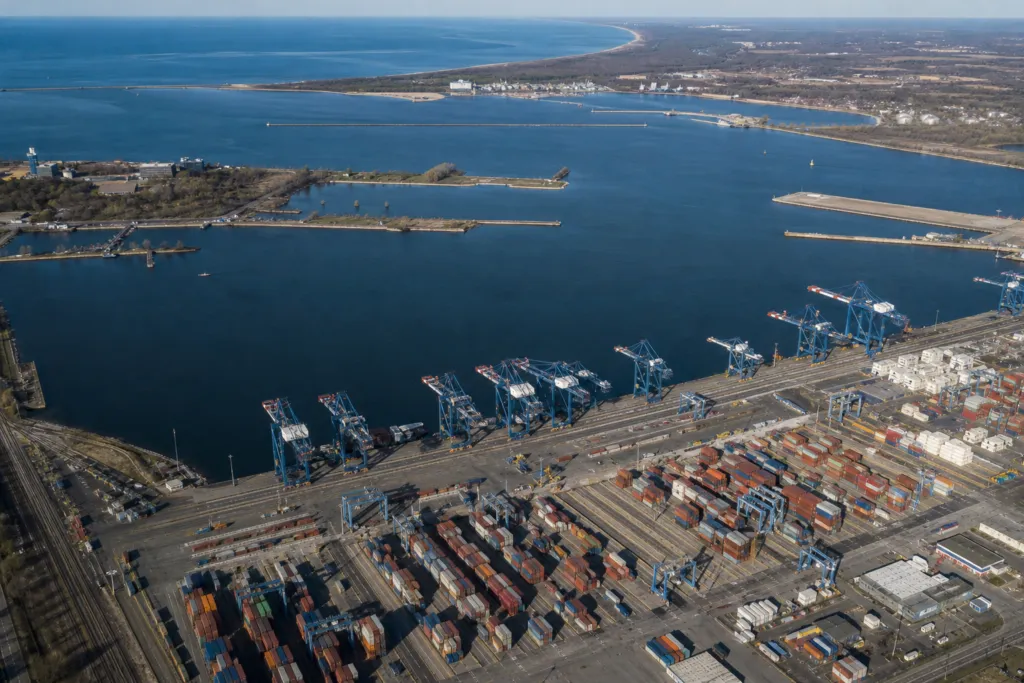
Image alt: Buyer performing sanctions due diligence checklist for Canadian M&A under SEMA.
In 2026, sanctions due diligence canada ma is a core deal discipline, not a compliance afterthought. The combination of an active SEMA designation program, broad extraterritorial reach, overlapping international regimes and serious criminal consequences means that private M&A buyers should screen targets and beneficial owners rigorously, document their inquiry defensibly, allocate residual risk carefully in the SPA, and keep screening alive through closing and integration. Deal teams that build the checklist in this guide into their standard process will help protect deal value, protect their directors and officers, and keep transactions bankable.
For tailored support on applying SEMA due diligence to a specific transaction, speak to the Private M&A team via the Private M&A, Canada practice area or the Canada, Private M&A lawyers directory.
This article was produced by Global Law Experts. For specialist advice on this topic, contact Ghazal Hamedani at Kalfa Law, a member of the Global Law Experts network.

posted 14 minutes ago

posted 21 minutes ago
posted 23 minutes ago

posted 34 minutes ago

posted 51 minutes ago

posted 56 minutes ago

posted 1 hour ago

posted 1 hour ago

posted 2 hours ago

posted 2 hours ago

posted 3 hours ago

posted 3 hours ago
No results available
Find the right Legal Expert for your business

Send welcome message