
Our Expert in Belgium
No results available
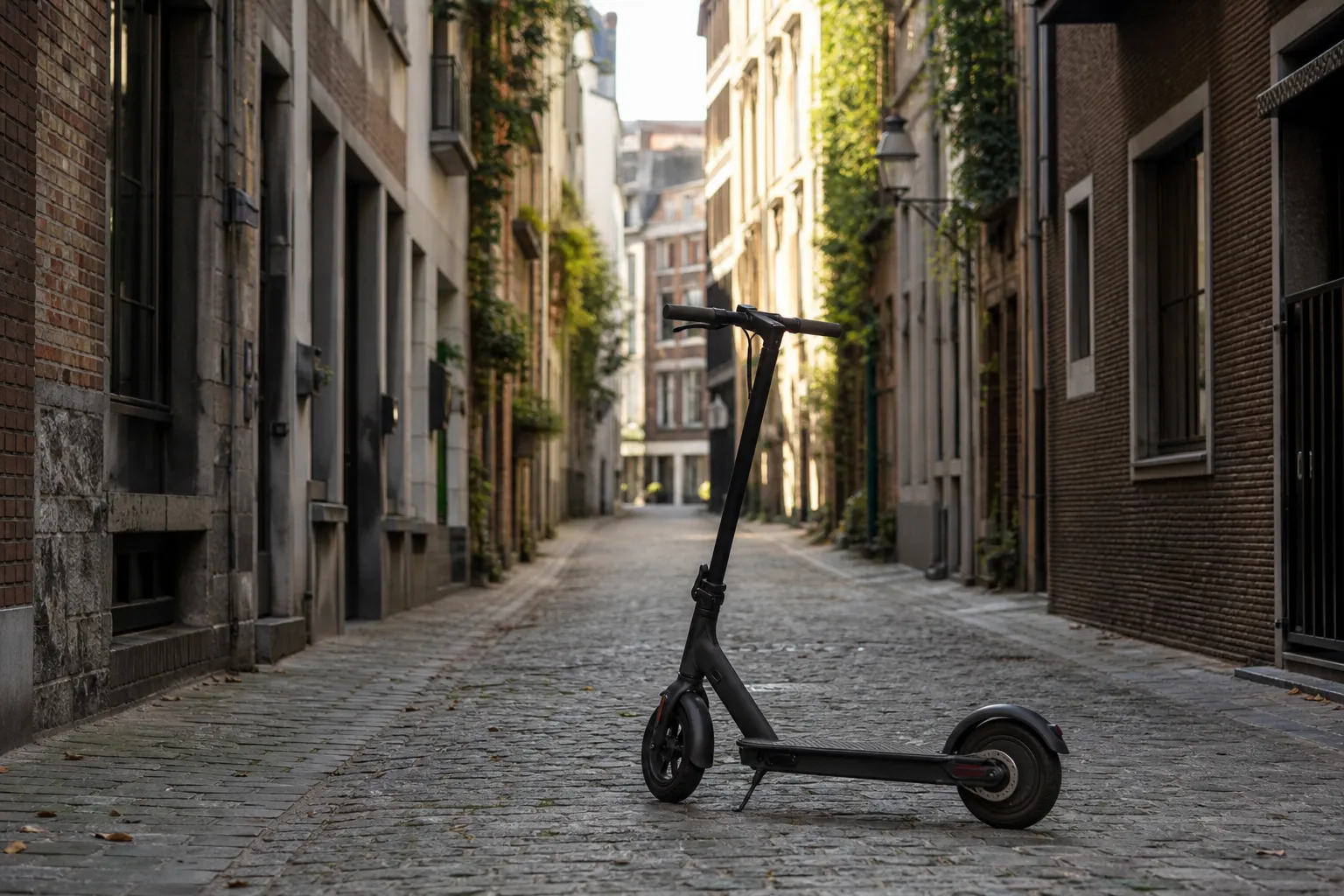
E-scooter liability belgium has become one of the most pressing civil-law questions of recent years, as the reformed Belgian Civil Code reshapes how fault, custody and compensation are handled after micro-mobility accidents. Whether you are a pedestrian struck on a crowded pavement, a rider injured by a defective machine, a scooter owner unsure of your exposure, or an operator managing a shared fleet, the rules governing who pays, and how, matter immediately. This practitioner guide explains the current framework in plain language, maps out every party who can be held responsible, sets out how different insurers respond, and gives you a step-by-step playbook for making a claim.
It draws together statute, regulatory guidance and Belgian case law into a single actionable resource.
Who this guide is for: accident victims (pedestrians and riders), scooter owners, shared-scooter operators, insurers and legal advisers in Belgium.
What you will learn: who can be liable for micro-mobility accidents, how insurers typically pay, the practical steps to claim compensation, applicable deadlines and sample documents.
Last updated: 2026 (reflects the reformed Belgian Civil Code).
The detail below matters, but if you need the essentials first, here is where each reader stands under the current framework for e-scooter liability belgium.
Belgium has been progressively modernising its Civil Code, replacing the historic 1804 Code with a new Code organised into numbered Books. Book 5 (on obligations) and the reform of extra-contractual liability (Book 6, which entered into force in 2025) are directly relevant to micro-mobility claims. These reforms consolidate and clarify the principles of fault-based liability, the liability of a keeper for things in their custody, and the rules on contribution between multiple wrongdoers. For anyone navigating e-scooter liability belgium, the practical significance is that the legal routes to compensation are now more clearly defined than under the earlier, largely case-law-driven approach.
The reforms address several themes that recur in scooter accidents. The consolidated text, published in the Belgian Official Gazette (Moniteur belge / Belgisch Staatsblad), should always be consulted for the precise article numbers applicable to your facts, because the reform renumbered and restructured core provisions.
Belgian courts and the Court of Cassation (Hof van Cassatie / Cour de cassation) will continue developing the practical contours of custody-based liability as it applies to shared and privately-owned devices. The likely practical effect is that victims may find it easier to anchor a claim where a defect caused the harm, while operators and owners will face closer scrutiny of their maintenance and inspection records. Contributory fault, for instance a pedestrian stepping into a cycle lane, or a rider ignoring a one-way restriction, generally reduces rather than eliminates compensation, with the apportionment decided on the facts.
Because the extra-contractual liability reform is recent, the body of binding precedent is still maturing; the Court of Cassation remains the authority to watch for definitive guidance on fault allocation and insurer subrogation.
Determining who pays after a micro-mobility accident is rarely a single-answer question. Several parties can be liable, sometimes simultaneously, and the correct target depends on the mechanism of the accident, the device’s classification and the evidence available. The analysis below walks through each candidate and the thresholds for proving responsibility.
The rider is the most common defendant. Liability flows from fault: riding on a prohibited pavement, excessive speed, running a red light, carrying a passenger where prohibited, or riding while intoxicated all point toward rider fault. Intoxication is particularly significant, both because it strengthens the victim’s case and because it can affect the rider’s own cover and compensation. Under Belgian road traffic rules (the Highway Code), e-scooters and similar devices are subject to defined behavioural requirements, and breaching them is powerful evidence of fault. For a pedestrian injured by a reckless rider, the rider, backed by their household liability insurer where private use applies, is usually the first and clearest route to compensation.
Where the rider and the owner are different people, liability can attach to the owner or keeper in specific circumstances, for example where the owner permitted an unsuitable person to ride, or where the device was in a defective condition under the owner’s custody. The reformed rules on liability for things in one’s custody are relevant here: the custodian of a defective machine may be liable even without personal fault in handling it.
Shared-scooter operators carry distinct exposure. They owe duties to maintain their fleet in a safe condition, to respond to reported defects, to comply with municipal parking and deployment rules, and to operate within the regulatory framework. If a brake failure, a worn tyre or an ignored maintenance report causes an accident, the operator can be liable notwithstanding the terms of use the rider accepted in the app. Operators are also expected to carry appropriate liability insurance for their activity. Municipal by-laws in cities such as Brussels, Antwerp and Ghent add further obligations around parking zones, caps on vehicle numbers and designated no-go areas, and breach of these duties can feed into a liability finding.
Where the accident was caused by a design or manufacturing defect, a battery fire, a structural failure, a steering fault, the manufacturer or importer can be liable under product-liability principles. These claims turn on proving the defect and its causal role, which usually requires preserving the scooter, securing an engineering report and gathering any recall or safety-notice evidence. Maintenance providers can also be drawn in where negligent servicing created the hazard.
The following table summarises the main candidates, when they are liable, the evidence typically required and the insurer most likely to respond.
| Potentially liable party | When they are liable | Evidence typically required | Likely insurer to pay | Typical hurdles |
|---|---|---|---|---|
| Rider | Fault, reckless riding, traffic breach, intoxication | Witness statements, footage, police report, toxicology where relevant | Rider’s household / family civil liability insurer (private use) | Proving fault; contributory fault of victim |
| Owner / keeper | Defective device in their custody; permitting an unfit rider | Maintenance records, ownership proof, condition evidence | Owner’s liability insurer | Distinguishing owner from rider responsibility |
| Shared operator | Maintenance failure, safety breach, municipal non-compliance | Fleet logs, defect reports, inspection history, app data | Operator fleet / commercial liability insurer | Operator disclaimers; proving causal maintenance failure |
| Manufacturer / importer | Design or manufacturing defect causing the accident | The scooter itself, engineering report, recall notices | Product liability insurer | Proving defect and causation; preserving evidence |
| Municipality | Road or infrastructure defect causing the accident | Photographs of defect, maintenance complaints, incident report | Public authority insurer | Establishing the authority knew or should have known |
Understanding e-scooter liability belgium means understanding how insurers actually respond, because the right policy, and the right insured, determines who is indemnified and how quickly. A frequent and costly misconception is that ordinary motor third-party liability automatically covers e-scooters. Whether a device falls within the compulsory motor-insurance regime depends on its classification under Belgian law, which has evolved and should be checked for the specific device. For many personal mobility devices used privately, it is the household civil liability policy that responds, while shared fleets rely on dedicated operator cover. Because classification directly affects which cover applies, verify the current position for your device type.
For a private rider who injures someone, the family civil liability policy (often described as household or family liability cover, “familiale” / “BA privéleven”) is typically the policy that pays the victim. This cover protects against damage the insured causes to third parties in everyday life, and in many policies that extends to private e-scooter use. It is distinct from personal accident insurance, which pays the policyholder for their own injuries regardless of fault. A rider who is themselves injured and was not at fault will usually claim against the responsible party’s insurer; a rider injured through their own fault may rely on personal accident cover if they hold it.
Checking the exact wording of your policy is essential, because exclusions and device-classification clauses vary between insurers.
Shared-scooter operators are expected to maintain commercial liability cover sufficient for the risks their fleets create. The insurance supervisory framework overseen by the National Bank of Belgium governs the solvency of insurers, while the Financial Services and Markets Authority (FSMA) supervises conduct of business. For a victim, this means that a claim arising from a shared scooter is often directed first at the operator and its insurer, particularly where a maintenance or safety failure is in issue. Operators typically expect prompt notification, supporting evidence and an assessment of whether the harm stemmed from rider behaviour, device defect or both, an allocation that drives how the claim is handled and whether subrogation follows.
Subrogation is the mechanism by which an insurer that has paid a victim steps into the victim’s shoes to recover from the party ultimately responsible. In practice, an insurer that indemnifies an injured pedestrian may then pursue the rider, operator or manufacturer whose fault or defect caused the loss. For victims, subrogation is largely invisible but beneficial: it can allow a prompt payout without waiting for liability between defendants to be fully resolved. For riders and operators, it means that a settlement with the victim is not necessarily the end of the matter, as a subrogated insurer may still pursue recovery. Belgian case law, including guidance from the Court of Cassation, shapes how subrogation interacts with fault apportionment.
| Insurer / cover type | Who it covers | What it pays | How to claim |
|---|---|---|---|
| Household / family civil liability | Private rider causing injury to others | Third-party injury and damage caused by the insured | Notify insurer promptly with incident details and evidence |
| Personal accident | The policyholder’s own injuries | Agreed benefits for the insured’s injuries, regardless of fault | Submit medical evidence and policy claim form |
| Operator fleet / commercial liability | Shared-scooter operator’s liability to third parties | Injury and damage arising from fleet operation and defects | Report through operator’s claims channel with evidence |
| Product liability | Manufacturer / importer | Loss caused by a defective product | Preserve the device, obtain expert report, notify the producer |
A methodical approach to evidence and notification is the single biggest factor in a successful micro-mobility claim. The playbook below sets out what to do, in order, from the moment of the accident to settlement or suit.
What you capture in the first minutes often determines the outcome. Prioritise safety first, then evidence.
Notify the relevant insurer promptly and in writing, keeping a copy of everything. Early, clear notification helps avoid later disputes about delay. A written notification should identify the parties, describe the accident, state the injuries and damage, and reserve your rights to compensation. The sample structure below can be adapted, it is a template only and should be tailored to your facts and, ideally, reviewed by a lawyer.
Sample claim letter (template, adapt to your case):
Medical evidence is the foundation of any personal-injury element of an e-scooter liability belgium claim. Seek medical attention immediately, even for seemingly minor injuries, so that the link between the accident and your condition is documented from the outset. Keep every certificate, prescription, imaging report and invoice. Where injuries are significant, an independent medical expert report may be needed to establish the extent of harm, the prognosis and any permanent impairment. If a defect is alleged, preserve the scooter and instruct a technical expert before the device is repaired or returned, as the physical evidence is often decisive and cannot be recreated later.
Most claims resolve through negotiation with insurers, but a credible willingness to litigate strengthens your position. Build a documented file, quantify your losses with evidence, and present a reasoned demand. If negotiations stall or liability is denied, a civil claim before the competent court may be necessary. Timelines depend on complexity, the number of parties and whether expert reports are required, so realistic expectations matter. Crucially, bring your claim within the applicable prescription period; because the exact deadline turns on the nature of the claim and the reformed Civil Code rules, confirm it early and do not let correspondence lull you into missing it.
Several recurring scenarios complicate micro-mobility claims. Recognising them early helps you target the right defendant and preserve the right evidence.
Operators’ terms of use frequently include broad disclaimers. These contractual clauses cannot override the operator’s statutory and safety duties, nor can they defeat a third party’s claim, a disclaimer in an app agreement does not bind an injured pedestrian who never accepted it. Where an accident stems from the operator’s failure to maintain or deploy its fleet safely, those duties remain live despite the small print.
Proving a defect requires preserving the machine and securing expert analysis. Evidence of recalls, safety notices or a pattern of similar failures strengthens the case. The reformed rules on liability for things in custody can provide an additional route against whoever controlled the defective device, alongside a product-liability claim against the manufacturer or importer.
Where the rider flees or cannot be identified, victims are not automatically without remedy. Prompt reporting to the police is essential to create an official record and support any investigation. Depending on the device’s classification and the circumstances, there may be avenues to compensation for victims of unidentified parties, and a lawyer can assess which mechanisms apply to your facts. The key practical point is to document everything immediately, because later identification of the rider or operator can revive a direct claim.
Belgian law compensates the full range of harm flowing from an accident. The main heads of damage include medical and care costs, loss of earnings and earning capacity, property damage, and non-material damage (immateriële schade / dommage moral) for pain and suffering. Each head must be evidenced, and the stronger the documentation, the more robust the valuation.
Compensation varies enormously with injury severity, degree of fault and the strength of evidence, so figures should be treated as illustrative rather than predictive. The table below shows how outcomes typically scale; actual awards depend on the facts and on the valuation methods applied by Belgian courts (frequently guided by the indicative tables, the “Indicatieve tabel / Tableau indicatif”, which courts may use as a reference).
| Case profile | Typical heads of damage | Relative compensation level |
|---|---|---|
| Minor injury, quick recovery, no lasting effects | Medical costs, short-term pain and suffering | Lower |
| Moderate injury with temporary incapacity | Medical costs, lost earnings, pain and suffering | Medium |
| Serious injury with permanent impairment | Full medical and care costs, lost earning capacity, significant non-material damage | Higher |
Use this master checklist whether you are a victim or an operator managing a claim. Treat all templates as samples to be adapted, and take legal advice on anything consequential.
For deeper guidance, see the civil law practice area, and if you need tailored help, use the Global Law Experts directory to find a civil liability lawyer in Belgium. Related practical topics include how to make an insurer claim after an e‑scooter accident, the liability of shared scooter operators, and pedestrian injuries and compensation in Belgium.
Consider instructing counsel early where injuries are serious, liability is disputed, several parties or insurers are involved, a defect is alleged, or the rider is unidentified. A lawyer can confirm the applicable prescription deadline, identify the correct defendants, manage expert evidence and handle insurer negotiation or litigation. For a first meeting, bring the incident and police reports, photographs, medical records, correspondence with insurers, and any policy documents. Getting the right advice at the outset is often the difference between a smooth recovery and a lost claim, and in a field as fast-moving as e-scooter liability belgium, timely, specialist guidance is invaluable. To take the next step, contact a Belgian civil lawyer through the Global Law Experts directory.
This article was produced by Global Law Experts. For specialist advice on this topic, contact Hakan Hüsnü Erzurumlu at Hakan H. Erzurumlu Advocaat, a member of the Global Law Experts network.

posted 28 minutes ago
posted 49 minutes ago

posted 2 hours ago

posted 3 hours ago

posted 3 hours ago

posted 3 hours ago

posted 4 hours ago

posted 4 hours ago

posted 5 hours ago

posted 5 hours ago

posted 5 hours ago
posted 6 hours ago
No results available
Find the right Legal Expert for your business

Send welcome message