
Our Expert in Malaysia
No results available
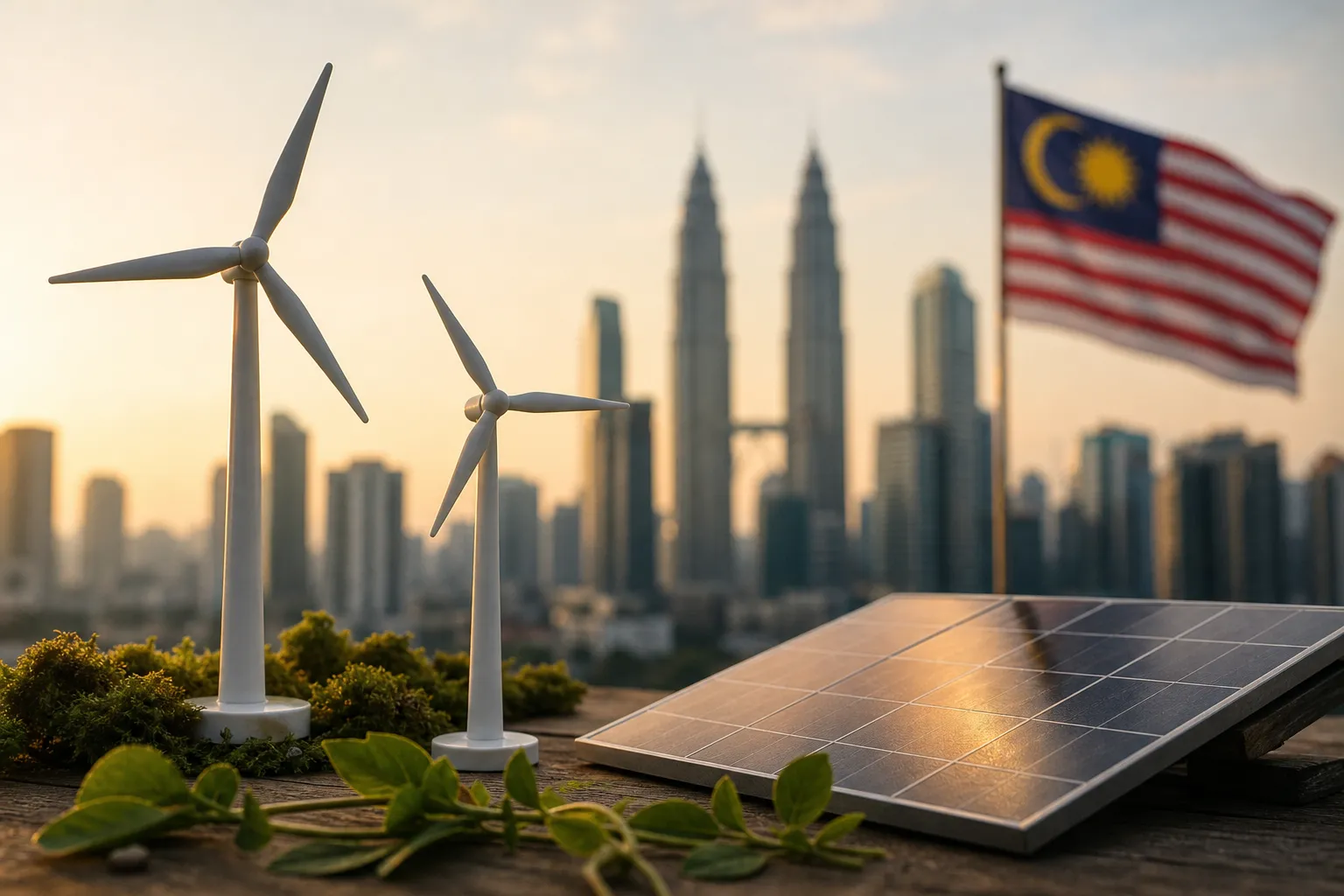
Green sukuk renewable energy malaysia financing has become one of the most compelling capital-raising routes for solar and clean-energy sponsors heading into 2026, combining Shariah-compliant investment structures with the discipline of certified green use-of-proceeds. As Malaysia accelerates its energy-transition ambitions and institutional appetite for Islamic ESG instruments deepens, developers with bankable project pipelines are finding that a well-structured green sukuk can widen the investor base, sharpen pricing and signal credible sustainability commitments. This practical guide sets out the structures, regulatory approvals, documentation and ongoing covenants that sponsors, CFOs, arrangers and counsel must master to move from term sheet to financial close.
It is written as a transaction-level roadmap, a working checklist rather than a commentary, with inline references to the primary Malaysian regulators whose rules govern each stage.
This guide is built for project sponsors, renewable-energy developers, CFOs, Islamic finance arrangers, institutional investors and the counsel preparing or advising on a green sukuk renewable energy malaysia issuance for solar and clean-energy projects in 2026. The intended outcome is a usable issuance checklist, a realistic timeline and a compliance map that converts financing interest into an actionable plan.
The 2026 window is active: recent headline issuances and renewed investor demand make this an opportune moment for sponsors to prepare documentation early and secure allocations before pipeline competition intensifies.
A sukuk is often described loosely as an “Islamic bond,” but the comparison is imperfect. Unlike a conventional bond, which represents a debt owed by the issuer, a sukuk represents an undivided beneficial interest in underlying assets, a project, or a defined pool of cashflows. Investors (sukukholders) receive returns generated by those assets rather than conventional interest, which is prohibited under Shariah principles. This asset-linked character makes sukuk a natural fit for infrastructure and renewable-energy projects, where there are tangible assets, solar plants, equipment, leasehold interests, and contracted cashflows to underpin the structure.
The “green” element is layered on top. A green sukuk is a sukuk whose proceeds are ring-fenced to finance or refinance eligible environmental projects, and which complies with a recognised framework governing eligibility, disclosure and reporting. In Malaysia, the Securities Commission Malaysia administers the Sustainable and Responsible Investment (SRI) Sukuk Framework, which sets out eligible project categories, renewable energy prominent among them, along with disclosure and post-issuance reporting expectations. The framework is what distinguishes a green sukuk renewable energy malaysia transaction from an ordinary corporate sukuk: the proceeds must be demonstrably applied to qualifying green assets, and the issuer must report against that application.
Economically, a typical structure uses a special purpose vehicle (SPV) as the issuer. The SPV holds or acquires a beneficial interest in the underlying solar assets or enters into Shariah-compliant contracts, such as ijarah (lease), wakalah (agency) or a sale-and-leaseback, with the sponsor or project company. The cashflows generated by the project, often anchored by a power purchase agreement (PPA), flow through to service periodic distributions to sukukholders. Where the structure is limited-recourse, investors look primarily to the project assets and cashflows rather than the broader balance sheet of the sponsor.
For solar developers, this model aligns well with the asset profile: predictable generation, contracted offtake, and a clear capital-expenditure programme that maps onto green eligibility criteria. It also allows refinancing of operational assets to recycle capital into new projects, a useful lever for sponsors scaling a renewable portfolio.
The case for green sukuk renewable energy malaysia financing rests on several practical advantages. First, it opens access to a dual pool of capital, Islamic finance investors who require Shariah-compliant instruments, and ESG-mandated institutional investors seeking certified green exposure. This broadened demand base can translate into tighter pricing and stronger order books, particularly where the issuance carries a credible external green review.
Second, Malaysia’s policy environment is supportive of green financing. The Securities Commission Malaysia and the Ministry of Finance Malaysia have historically deployed incentives and grant measures relevant to SRI sukuk (for example, grant schemes to offset external review costs), and sponsors should confirm the current tax and incentive position with the relevant authorities when modelling returns, as these can materially affect net cost of capital. Third, a green sukuk aligns a sponsor’s financing with national decarbonisation ambitions, which can carry reputational and stakeholder benefits beyond the transaction itself.
Finally, the discipline of green certification and reporting, while an added obligation, can enhance governance and transparency in ways that institutional investors increasingly reward. The trade-off is additional structuring complexity and the need for Shariah and green verification workstreams, factors that counsel should price into the timeline and budget from the outset.
| Feature | Green Sukuk | Conventional Project Loan | Green Bond |
|---|---|---|---|
| Investor base | Islamic + ESG institutional investors (broad) | Relationship banks and syndicate lenders | ESG and conventional fixed-income investors |
| Shariah compliance | Required, structured as asset-linked, interest-free | Not applicable (interest-bearing) | Not required |
| Typical tenor | Medium to long, matched to asset life | Shorter to medium, with refinancing risk | Medium to long |
| Security package | Asset charges, assignment of receivables, account security | Comprehensive security and covenants | Negative pledge; may be secured or unsecured |
| Speed to close | Moderate, Shariah + green review add workstreams | Often faster where lender relationships exist | Moderate, green review required |
| Relative costs | Higher upfront structuring; can price competitively | Lower documentation cost; may price wider | Moderate structuring cost |
| Suitability for Malaysian solar | Strong, asset profile and deep Islamic market | Good for early-stage or bridge financing | Good, but narrower domestic investor depth |
Understanding the malaysia green sukuk requirements across the relevant regulators is the single most important planning exercise for sponsors. The approvals do not proceed in a strict sequence, many run concurrently, but each has its own lead time and documentary demands. Mapping them early prevents the most common cause of delayed closings: a licence or approval that was assumed to be in hand but was still in process.
The Securities Commission Malaysia is the central regulator for the sukuk issuance itself. Under the SC’s framework for unlisted capital market products, most corporate sukuk are issued via a lodgement process with the SC through its principal adviser, with disclosure of structure, use of proceeds and risk factors. For a green sukuk renewable energy malaysia transaction, the issuance is typically designed to qualify under the SC’s SRI Sukuk Framework, which establishes eligible project categories, external review expectations and post-issuance reporting commitments. Engaging early with the SC’s requirements, and confirming the current guidance directly via the Securities Commission Malaysia, is essential, because the framework’s disclosure and reporting commitments shape the drafting of the offering documents.
No renewable project is financeable without its underlying licences and permits in order. For Peninsular Malaysia and Sabah, the Energy Commission (Suruhanjaya Tenaga) regulates the generation of electricity and oversees the licensing and technical approvals a solar project requires; in Sarawak, electricity regulation falls under a separate state regime. Investors and their advisers will treat these licences and approvals as condition-precedent items: the project must hold, or have a clear and reliable path to, the necessary approvals before financial close. Sponsors should verify the current permit checklist and processing timelines directly with the Energy Commission (Suruhanjaya Tenaga), since gaps or pending renewals here are a frequent bottleneck that can stall an otherwise ready transaction.
Where the project relies on a programme such as net energy metering or large-scale solar, the relevant programme administrator (for example, the Sustainable Energy Development Authority, SEDA, for certain schemes) should also be consulted.
Where the sukuk is to be listed or quoted, the listing and disclosure rules of Bursa Malaysia apply. Listing can broaden investor reach and enhance transparency, but it brings additional disclosure obligations and a defined eligibility and documentation process. Many corporate project sukuk are placed or sold to sophisticated investors rather than listed, so sponsors should decide early whether listing adds enough value to justify the incremental compliance burden.
While the central bank is not the primary approval authority for a corporate green sukuk, the Islamic finance guidance issued by Bank Negara Malaysia, including the Shariah governance and relevant Shariah standards and operational requirements, influences how Islamic banks participate in sukuk syndicates and provide related financing, which in turn affects the depth and pricing of demand. Separately, where a transaction involves tax incentives, policy support or any sovereign element, the position of the Ministry of Finance Malaysia becomes relevant. Confirming the applicable incentive and tax treatment early allows accurate financial modelling.
Running throughout the regulatory process is the Shariah workstream. The appointed Shariah adviser (registered with the SC) reviews the structure, the underlying contracts and the transaction documents, and issues a Shariah pronouncement confirming compliance. This review must be built into the timeline deliberately, it is not a formality appended at the end. Early engagement allows the adviser to shape the structure (for example, the choice between ijarah and wakalah) before documents are drafted, avoiding costly late-stage rework. In practice, the most common timeline extensions arise from late Shariah engagement, outstanding Energy Commission licences, and the external credit rating process where a rating is sought.
A green sukuk renewable energy malaysia transaction brings together a sizeable cast of parties, each with a defined role. Clear allocation of responsibilities at the outset prevents workstream overlap and keeps the timeline on track.
The economic engine of the structure is the cashflow waterfall. Revenue from the project, chiefly contracted PPA receipts, flows into designated project accounts, then is applied in a defined priority: operating costs and O&M first, then periodic sukuk distributions, then reserve account top-ups (such as a finance-service reserve), with any surplus available to the sponsor subject to covenant tests. This ordering protects sukukholders by ensuring that the project remains serviceable and that reserves cushion short-term shortfalls.
The security package typically includes charges over the project assets, an assignment of project receivables and PPA rights, security over the project accounts, and a charge over the sponsor’s shares in the project company. In a limited-recourse structure, these security interests, not the sponsor’s general creditworthiness, are the principal protection for investors. The creation, perfection and enforcement of these charges are governed by Malaysian law, including the relevant provisions of the Companies Act 2016 (under which company charges are registrable with the Companies Commission of Malaysia (SSM)), together with the trustee’s remedies under the relevant trust and security documents.
Preparing documentation for a sukuk for solar projects is a substantial undertaking that spans finance documents, Shariah documents, project agreements and security. Sponsors who assemble these items in advance dramatically compress the execution timeline. The checklist below reflects the core documents in a typical issuance; the precise suite depends on the chosen Shariah structure.
Due diligence runs in parallel across legal, technical, financial and Shariah dimensions. Legal due diligence verifies title, licences, corporate authority and the enforceability of security. Technical due diligence, led by the independent engineer, tests generation assumptions and construction status. The green verification confirms that the proceeds will be applied to eligible assets consistent with the SRI framework. Where any of these workstreams surfaces a gap, it typically becomes a condition precedent to closing, so identifying issues early is far cheaper than resolving them under deal pressure.
The economic terms of a green sukuk renewable energy malaysia issuance will reflect the project’s risk profile, the strength of the offtake, the security package and prevailing market conditions. Profit rates may be fixed or incorporate step-ups, and the structure will specify how distributions are calculated and paid.
The covenant package is where investor protection is operationalised. Typical covenants include:
Post-issuance, the green character of the instrument creates continuing obligations distinct from financial covenants. The issuer is expected to provide use-of-proceeds reporting and periodic impact reporting consistent with the SRI framework administered by the Securities Commission Malaysia, often supported by external review. Recommended performance KPIs for a solar project include megawatt-hours generated and estimated emissions avoided, which give investors a transparent measure of environmental impact against the stated green objectives.
Finally, the documents must address events of default, acceleration and enforcement. These provisions determine what happens if covenants are breached or the project underperforms, and they engage the trustee’s enforcement rights and the realisation of security under Malaysian law. The enforceability of charges and trustee remedies is grounded in the statutory framework, including the Companies Act 2016 and the Capital Markets and Services Act 2007. Where local counsel certification or specific professional-conduct requirements arise, practice guidance from the Malaysian Bar is the appropriate reference point.
A standard solar green sukuk renewable energy malaysia transaction can typically run several months from a stable term sheet to closing, assuming licences and project agreements are substantially in place; actual timing varies significantly with deal complexity and the regulatory route. The following sequence illustrates the critical path:
Counsel should watch several negotiation checkpoints throughout: the scope and triggers of the covenant package; the precise conditions precedent, especially licence and title items; the allocation of risk in sponsor support obligations; the enforcement and intercreditor mechanics; and the exact wording of the green use-of-proceeds and reporting commitments. Building realistic lead times for the Shariah review, Energy Commission licences and the rating process, the three most common sources of slippage, into the plan is the single most effective way to protect the closing date.
For sponsors with bankable solar and clean-energy pipelines, green sukuk renewable energy malaysia financing offers a credible, well-supported route to capital in 2026, pairing a broad Islamic and ESG investor base with the governance discipline of certified green reporting. The decisive factor in a smooth execution is preparation: map the approvals across the Securities Commission Malaysia, the Energy Commission (Suruhanjaya Tenaga), Bursa Malaysia (where listing applies), Bank Negara Malaysia and the Ministry of Finance; engage the Shariah adviser at the structuring stage rather than the end; and assemble the documentation and due-diligence suite before launch.
Sponsors evaluating a 2026 issuance should begin by confirming licence status, locking down the PPA and project agreements, and settling the Shariah structure, the three items that most often determine whether a transaction closes on schedule. With the current window active and investor demand strong, early movers are best placed to secure favourable allocations and pricing.
This article is for general informational purposes and does not constitute legal advice. Sponsors and investors should obtain bespoke advice tailored to their specific transaction and circumstances.
This article was produced by Global Law Experts. For specialist advice on this topic, contact Terrence Edward Chong at Darryl, Edward & Co., a member of the Global Law Experts network.

posted 13 minutes ago

posted 54 minutes ago

posted 2 hours ago
posted 2 hours ago

posted 2 hours ago

posted 3 hours ago
posted 3 hours ago

posted 3 hours ago

posted 4 hours ago

posted 4 hours ago
posted 4 hours ago
posted 4 hours ago
No results available
Find the right Legal Expert for your business

Send welcome message