
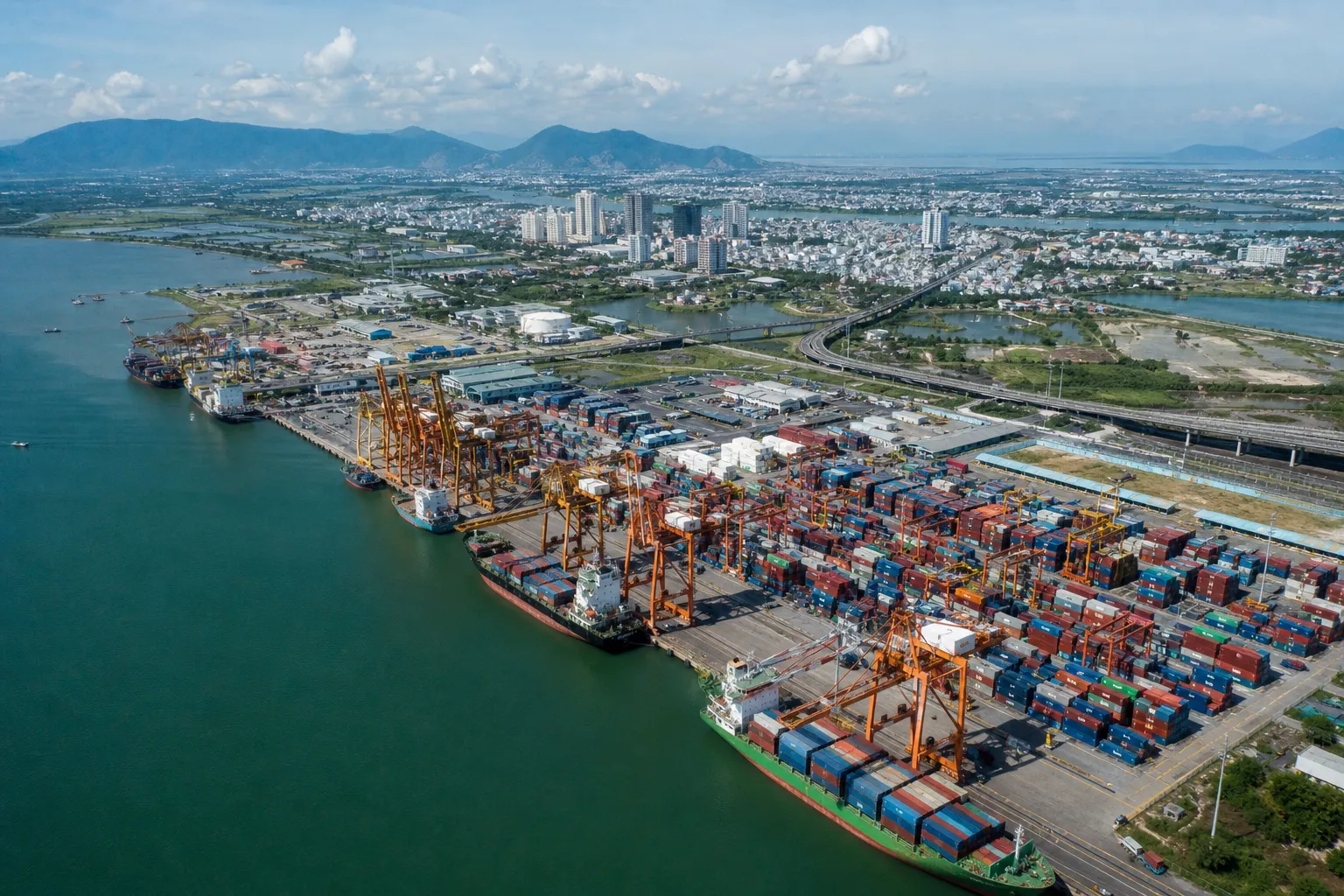
Who this is for: foreign investors, private equity sponsors, strategic acquirers and deal teams considering acquisition of an operating public-private partnership (PPP) or build-operate-transfer (BOT) project in Vietnam who need compliance steps, assignment consents, due diligence checklists and deal protections for 2026 transactions.
What it delivers: clear eligibility criteria, a step-by-step assignment consent process, a detailed due diligence checklist (land, licences, finance and tax), structuring options and sample timeline estimates.
PPP project acquisition Vietnam is a viable but procedurally demanding route for foreign buyers in 2026. The sector is governed primarily by the Law on Investment under the Method of Public-Private Partnership (the “PPP Law”) and its implementing decrees, alongside the general Law on Investment and the Law on Enterprises. An acquisition of a PPP or BOT project company is generally permitted, but it sits at the intersection of investment law, sectoral concession rules, land law and project finance, and each of those layers imposes its own consent requirements. Before committing capital, buyers should map the full approval chain and build regulatory conditionality into the transaction documents.
The recommended next step for any serious buyer is to engage Vietnamese counsel early and commission a regulatory pre-check before signing heads of terms. A short, well-targeted feasibility review of eligibility and consent routes will save far more than it costs by shaping the deal structure from the outset.
The threshold question for any PPP project acquisition Vietnam strategy is whether the foreign buyer is permitted to acquire the target at all, and on what terms. In principle, foreign investors can acquire shares in, or the assets of, a PPP or BOT project company, but the acquisition is governed both at the investor level and at the transaction level, and the two must be reconciled.
The current framework for PPP projects derives from the Law on the Method of Public-Private Partnership Investment and its implementing decrees, while foreign capital contribution or share purchase is governed by the Law on Investment and the Law on Enterprises, as published through the National Assembly and the Vietnam Legal Documents Portal. Under this framework, a foreign investor acquiring an interest in an existing Vietnamese enterprise may need to register the capital contribution or share purchase with the competent investment-registration authority before completion, particularly where the target operates in a conditional sector or where the acquisition crosses foreign-ownership thresholds. For PPP and BOT companies, the investment-law approval sits alongside, not instead of, the sectoral concession consents.
Infrastructure is not a single regulatory category. Transport concessions (highways, ports, airports) are supervised by the Ministry of Construction, which assumed the former Ministry of Transport’s functions following the 2025 government restructuring; energy, water, and other utilities fall under their own line ministries and sector rules. Several sectors impose foreign-ownership ceilings or require that a state-owned or domestic counterpart retain a controlling or blocking stake. A buyer evaluating an acquisition of infrastructure projects Vietnam should confirm early whether the specific sector permits majority foreign control, because that single fact can determine whether a share deal or an asset deal is even feasible.
Beyond the headline rules, several practical factors frequently stall transactions:
For the broader investment-law context underpinning these points, see the M&A & Investment, Vietnam (practice note), which sets out how foreign-investment approvals interact with transaction-level filings.
The assignment consent process is the core regulatory workstream in almost every PPP project acquisition Vietnam transaction. A BOT concession is a contract between the project company and a competent state authority; transferring control of that company, or assigning the contract itself, generally requires that authority’s consent. Getting the consent workflow right is the difference between a clean completion and a deal that drifts for a year.
Responsibility for granting assignment consent depends on the level and sector of the project:
Because a single bot project transfer Vietnam deal may need all of these approvals in sequence or in parallel, deal teams should prepare a consolidated approvals map that identifies each decision-maker, the legal basis for their consent, and the documents each requires.
While the exact document set varies by ministry and sector, a typical assignment consent BOT Vietnam application package includes:
Authorities will scrutinise the buyer’s ability to step into the project’s obligations. Demonstrating operational competence, not just funding, is often decisive, particularly for transport and utility concessions where service continuity is a public-interest concern.
Statutory review periods differ across ministries and sectors. As a planning benchmark, straightforward transport BOT assignments commonly fall within a 60–180 day window once a complete application is filed, while deals that also require tariff re-approval, land conversion or foreign-control clearance can extend considerably. The periods run from acceptance of a complete file, so incomplete submissions effectively reset the clock. Buyers should confirm the specific review period applicable to their sector with the relevant ministry before fixing a long-stop date.
| Milestone | Indicative day | Key activity |
|---|---|---|
| Pre-notification & file preparation | Day 0–30 | Informal regulator engagement; assemble complete application package |
| Formal filing & acceptance | Day 30–90 | Submit application; respond to clarification requests; secure file acceptance |
| Substantive review & consent (straightforward) | Day 90–180 | Ministry/authority review; consent issued for clean deals |
| Extended review (complex) | Day 180–360+ | Tariff re-approval, land conversion or foreign-control clearance resolved before consent |
Due diligence PPP Vietnam deals demands depth beyond a conventional corporate acquisition, because the value of a PPP or BOT asset is tied to a web of state consents, land rights and long-term contracts that can each unravel the economics if mishandled. The following checklist organises the review into five workstreams. The overarching PPP project acquisition Vietnam objective is to confirm that the rights being bought are secure, transferable and free of material encumbrance.
Land is frequently the single highest-risk area. Review the complete title chain and establish:
Unclear conversion status or unregistered encumbrances over land-use rights PPP assets are among the most common reasons deals are repriced or abandoned.
Confirm that every operating permission is valid, transferable and in good standing:
The concession agreement is the asset. Read it alongside every related project contract:
Most PPP and BOT projects are leveraged, and lenders hold significant leverage over any transfer:
Where completion is to be conditioned on funding or security release, the mechanics are best handled through a structured escrow; the SPA Escrow (Vietnam), transactional escrow guide explains how release triggers can be tied to regulatory and lender consents.
Transfer of a project interest can crystallise material tax liabilities. Review:
Structure drives risk allocation. In a PPP project acquisition Vietnam context, the choice between buying shares, buying assets, or taking a staged step-in position determines which consents are triggered, which liabilities transfer, and how much protection the buyer retains after completion.
A share acquisition keeps the project company, and therefore its licences, land-use rights and contracts, intact, which can avoid re-registration of individual permits. But it carries the full liability history of the company and almost always triggers change-of-control consents and foreign-investment approval. An asset acquisition can isolate unwanted liabilities, but requires separate transfer approvals for land, licences and key contracts, each of which may be refused or delayed. For most operating concessions, a share deal is the default, with warranties and indemnities managing historic-liability risk.
Where the concession or related contracts are transferred directly, distinguish assignment from novation. Assignment transfers rights but may leave obligations with the original party; novation replaces the original contracting party entirely, releasing the seller and substituting the buyer. Counterparties, especially contracting authorities and lenders, frequently insist on novation so that the incoming investor assumes full, direct responsibility. The transfer of project rights Vietnam mechanism should be documented to match what the authority will actually approve.
Because regulatory consents can take months, completion is typically conditioned on obtaining them. Escrow arrangements allow the buyer to commit funds while protecting against the risk that a consent is refused. Release triggers should be tied precisely to the issuance of the contracting authority’s consent, the line-ministry approval, the foreign-investment registration and any lender consent.
Seller warranties should cover title to shares and land-use rights, validity of permits, the absence of undisclosed liabilities, and compliance with the concession. Specific indemnities are appropriate for identified risks such as tax exposure or pending disputes. Buyers should also negotiate protection against regulatory termination, for example, price adjustment or walk-away rights if a consent is refused or granted on materially adverse conditions.
Where the project is financed, lender consent is usually a hard condition. Engage lenders early, understand their intercreditor and step-in rights, and build their consent into the conditions precedent. A lender refusal late in the process is one of the most damaging failure modes in infrastructure M&A.
| Feature | Asset acquisition | Share acquisition | Staged / step-in |
|---|---|---|---|
| Consents triggered | Separate transfers of land, licences, contracts | Change-of-control + foreign-investment approval | Phased consents as control increases |
| Liability exposure | Lower, liabilities can be isolated | Higher, full company history assumed | Graduated with ownership |
| Re-registration burden | High | Lower | Moderate |
| Best suited to | Deals with significant legacy liabilities | Clean operating concessions | Partnership entry or risk-sharing |
Completion is not the end of the regulatory process. A successful PPP project acquisition Vietnam transaction requires disciplined post-closing execution to perfect the transfer and maintain the concession in good standing.
After completion, the buyer must complete the registration formalities that give legal effect to the change of ownership and, where relevant, the contract transfer. This typically includes updating the enterprise registration and investment registration records with the competent authority, recording land-use-right changes with the land authority where applicable, and notifying the contracting authority and relevant line ministry of completion.
Operating concessions carry workforces. Confirm the treatment of employment contracts on transfer, ensure continuity of social-insurance contributions, and address any required notifications or consultations so that operations continue uninterrupted.
Concession agreements impose continuing obligations, reporting, performance standards, and financial covenants under the loan documents. Establish a compliance calendar from day one, assign ownership of each obligation, and put in place a monitoring system so that early warning signs of breach are caught before they become termination events.
A practical 90-day post-closing checklist should include: completing all registry updates; notifying the contracting authority and lenders of completion; reconciling permit holders to the new ownership; onboarding the workforce; and standing up the ongoing compliance-reporting framework.
The timeline below consolidates the workflow from pre-signing to the first year after completion. Treat the day ranges as planning estimates to be confirmed against the specific sector and ministry.
| Phase | Indicative period | Priority actions |
|---|---|---|
| Feasibility & regulatory pre-check | Weeks 0–4 | Confirm eligibility, foreign-ownership limits and consent routes |
| Due diligence | Weeks 2–10 | Land, licences, contracts, finance and tax review |
| Negotiation & signing | Weeks 8–14 | SPA, conditions precedent, escrow, warranties and indemnities |
| Consent & approvals | Months 3–12 | Contracting authority, line ministry, investment-registration authority and lender consents |
| Completion | On satisfaction of conditions | Escrow release; transfer of shares/assets |
| Post-closing | Months 12+ | Registry updates, filings, integration and compliance |
For structuring a local holding vehicle or partnership entry, see also Set up a joint venture company in Vietnam.
| Feature | BOT (Build-Operate-Transfer) | PPP (generic) | BT (Build-Transfer) |
|---|---|---|---|
| Typical consent authority | Competent ministry (e.g., Ministry of Construction) plus investor/shareholder approvals | Depends on sectoral regulator / investment-registration authority | Often the contracting authority (local/provincial) |
| Assignment documentation | Assignment application, concession agreement, financial statements, approvals | Similar to BOT but sector-specific licences may vary | Often focused on land transfer approvals |
| Statutory review period (indicative) | 60–180 days (varies by ministry) | 60–240 days | 60–120 days |
| Common roadblocks | Lender consents, land conversion, tariff re-approval | Foreign-ownership limits, sectoral restrictions | Public land transfer formalities |
Note: the BT (Build-Transfer) model has been significantly constrained under successive reforms, and the terms on which new BT projects may be undertaken have changed; buyers should confirm the current status of the BT framework for any specific project.
A PPP project acquisition Vietnam deal in 2026 is achievable for well-prepared foreign buyers, but it rewards early planning and punishes shortcuts. The transaction succeeds or fails on three things: confirming eligibility and consent routes before signing; running deep due diligence on land-use rights, permits, contracts and financing; and building regulatory conditionality, escrow and strong warranties into the deal documents. Buyers who map the full approval chain, engage the contracting authority and lenders early, and condition completion on the consents they actually need are the ones who close on time and on terms.
The practical first move is a focused regulatory pre-check with experienced Vietnamese counsel, ahead of heads of terms, to shape the structure around the approvals the specific sector will require.
This guide is for general information and does not constitute legal advice; seek tailored counsel for any specific transaction.
This article was produced by Global Law Experts. For specialist advice on this topic, contact Hien Truc Nguyen at VILAF, a member of the Global Law Experts network.

posted 1 minute ago

posted 22 minutes ago

posted 41 minutes ago

posted 42 minutes ago

posted 1 hour ago

posted 1 hour ago

posted 2 hours ago

posted 2 hours ago

posted 3 hours ago

posted 3 hours ago

posted 3 hours ago

posted 4 hours ago
No results available
Find the right Legal Expert for your business

Send welcome message