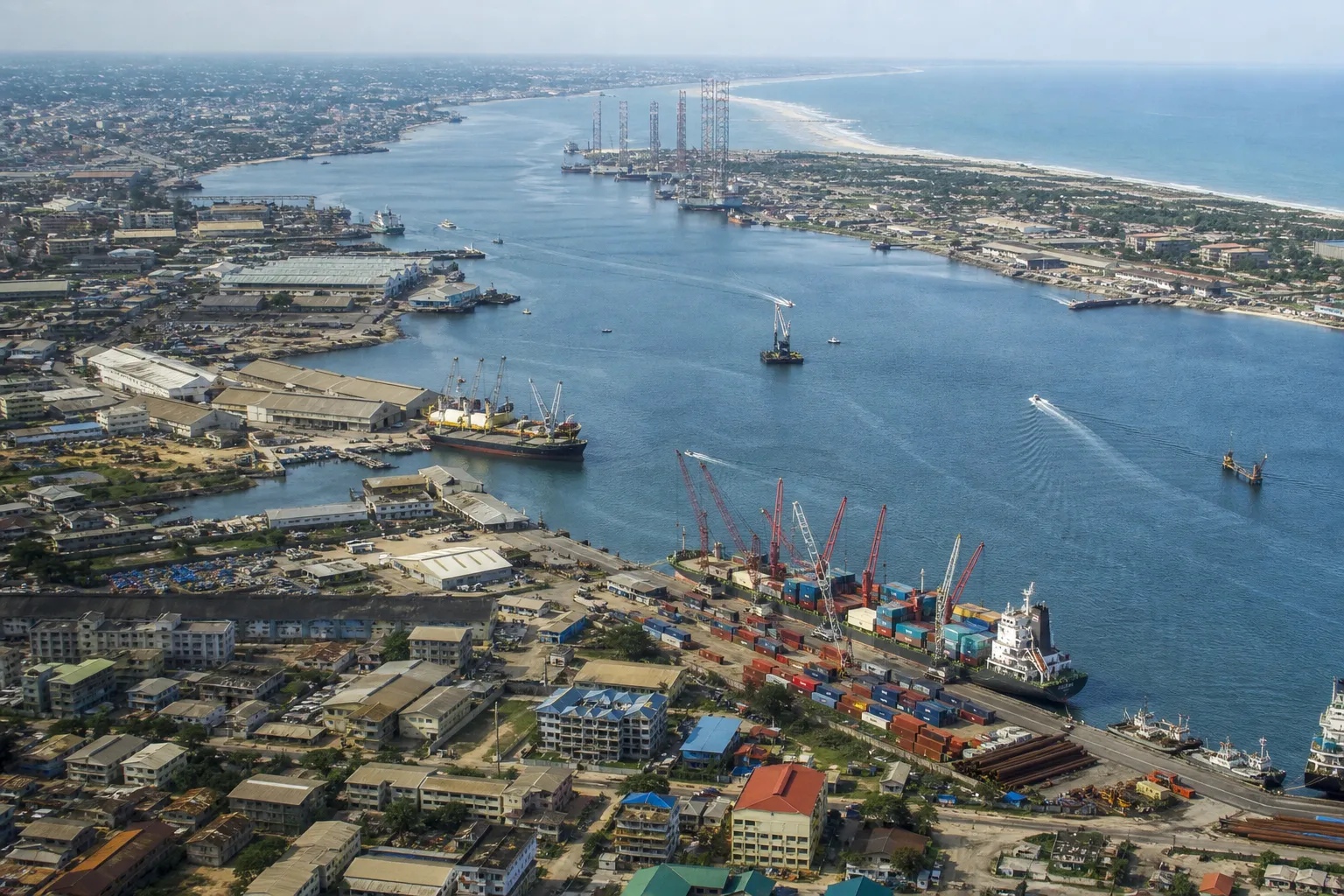
Maritime arbitration Nigeria has become a decisive commercial question for shipowners, charterers, P&I clubs and in-house counsel navigating disputes that touch Nigerian ports, cargoes or counterparties, and the recent overhaul of Nigeria’s arbitration legislation has sharpened the stakes. Nigeria remains a party to the New York Convention, which underpins the recognition and enforcement of foreign awards, and its courts continue to develop practice on enforcement, forum selection and interim relief. This guide is a practitioner’s procedural playbook: it explains how to commence proceedings, how to weigh a Nigerian seat against London, Singapore or Paris, what documents you need to enforce an award, and how long each stage realistically takes.
It is written for decision-makers who must move quickly to preserve claims, secure assets and collect on awards. Read it alongside qualified Nigerian counsel before acting on any specific dispute.
This guide addresses maritime and shipping arbitration only, charterparty disputes, bills of lading, ship sale and purchase, bunker supply, salvage, demurrage, and related commercial claims, rather than general commercial arbitration. The stakeholders are typically shipowners, charterers, cargo interests, P&I clubs, maritime claims managers and their arbitration counsel. The step sequence is broadly consistent across cases: review the arbitration clause, serve a notice of arbitration, secure any urgent interim relief, constitute the tribunal, exchange pleadings and evidence, obtain an award, and then enforce or resist enforcement in Nigeria.
The headline development is the enactment of the Arbitration and Mediation Act 2023, which repealed the older Arbitration and Conciliation Act and modernised Nigeria’s arbitration framework, introducing, among other things, provisions on emergency arbitrators, interim measures, and consolidated procedures, with continued policy emphasis on alternative dispute resolution and closer alignment with international standards. For international shipping parties, the practical consequence is a more predictable, though still court-dependent, environment for enforcing awards and obtaining interim measures. This makes early, careful procedural planning more valuable than ever.
Arbitration offers shipping parties confidentiality, the ability to appoint tribunal members with maritime expertise, procedural flexibility and, critically, cross-border enforceability under the New York Convention. Court dockets can be congested, and admiralty litigation, while powerful for arrests, may not suit parties who want a neutral, specialist forum. A well-drafted clause allows the parties to fix the seat, the rules and the language in advance, reducing satellite disputes about jurisdiction. For counterparties spread across flags and jurisdictions, an arbitral award is generally easier to enforce internationally than a national court judgment.
The domestic statutory foundation for arbitration in Nigeria is the Arbitration and Mediation Act 2023, which draws on the UNCITRAL Model Law on International Commercial Arbitration. Nigeria’s obligations to recognise and enforce foreign arbitral awards flow from the New York Convention, to which it is a party. Together, these instruments give effect to party autonomy, limit the grounds on which courts may refuse enforcement, and support arbitration with interim measures. The UNCITRAL Model Law influence means many concepts, separability of the arbitration agreement, competence-competence, and narrow setting-aside grounds, will be familiar to international practitioners.
Most commercial maritime disputes are arbitrable in Nigeria where a valid arbitration agreement exists. Typical arbitrable claims include charterparty breaches, demurrage and detention, freight and hire disputes, cargo damage and shortage claims under bills of lading, ship sale and purchase disputes, bunker supply contracts, shipbuilding and repair disputes, and salvage remuneration. The parties must have capacity and consent, and the dispute must fall within the scope of the arbitration clause.
Two recurring complications deserve early attention. First, third-party and privity issues: a party seeking to bind a non-signatory (for example, a beneficial owner or a related single-purpose vehicle) must establish a legal basis for doing so, because arbitration is fundamentally consensual. Second, sovereign or state immunity may arise where a state entity or state-owned enterprise is involved; commercial activity generally attracts a narrower immunity, but this must be assessed carefully. There is also an important intersection with admiralty jurisdiction, an arbitration agreement does not extinguish the right to arrest a vessel to obtain security, provided arrest is pursued in support of, rather than in substitution for, the arbitration.
Some remedies and matters sit outside the arbitral tribunal’s reach. Certain statutory admiralty remedies, in particular the arrest of a vessel and other in rem measures, are exercised by the courts, not by arbitrators, even where the underlying merits are arbitrable. Matters engaging criminal liability, insolvency processes, or public regulatory functions are generally not arbitrable. Where a dispute mixes arbitrable and non-arbitrable elements, the tribunal will decide what it can, and the parties may need parallel court proceedings for the reserved remedies. Identifying these boundaries at the outset prevents wasted procedural effort.
The following numbered sequence sets out how to commence and run a maritime arbitration Nigeria from clause review to collection. Treat each step as an action item with a responsible person and a time trigger. The timeline table below consolidates who does what and how long each stage typically takes.
The notice of arbitration is the founding document. It must identify the parties, the arbitration agreement relied on, the nature of the dispute, the relief claimed and any proposal on the number and identity of arbitrators. Where the clause refers to institutional rules, use that institution’s prescribed form and pay any filing fee. A plain-text sample notice appears later in this guide.
Parties may choose an institution, for example, ICC arbitration Nigeria under the ICC Rules, the LCIA, the Lagos Court of Arbitration, or a regional maritime body, or run the arbitration ad hoc under rules such as the UNCITRAL Arbitration Rules. Institutional arbitration offers administrative support, scrutiny of awards and established emergency-arbitrator mechanisms, at higher cost. Ad hoc arbitration is more flexible and often cheaper but demands more from counsel and depends on court support for appointments and challenges.
Where urgent security is needed before the tribunal is constituted, an emergency arbitrator under the chosen institution’s rules, and, under the Arbitration and Mediation Act 2023, under the statutory framework itself, can grant interim measures quickly. For measures affecting assets in Nigeria, most importantly a vessel arrest, you will usually still need to go to the Nigerian courts, because in rem arrest is a court power. Coordinate the two tracks so that court measures support, rather than undermine, the arbitration.
Defective service is one of the most common and costly errors. Serve strictly in accordance with the clause and rules, and keep proof of service. Expect the respondent to test jurisdiction, the scope of the clause, the validity of the agreement, or the capacity of a party, and prepare your jurisdictional case at the outset rather than reactively.
| Step | Who (typical) | Typical duration |
|---|---|---|
| 1. Review clause & internal approvals | In-house counsel / claims manager | 1–3 days |
| 2. Send Notice of Arbitration (per clause/institutional rules) | Claimant / arbitration counsel | 1–3 days to prepare; immediate service |
| 3. Apply for emergency interim relief (if needed) | Claimant / local counsel | Same day to 7 days (urgent) |
| 4. Constitute tribunal (institutional or ad hoc) | Parties / institution | 2–6 weeks typical |
| 5. File Statement of Claim / memorial | Claimant | 2–8 weeks (varies by rules) |
| 6. Respondent files defence/counterclaim | Respondent | 2–8 weeks |
| 7. Jurisdictional challenges / preliminary objections | Respondent / tribunal | 4–12 weeks (if raised) |
| 8. Merits hearings / evidence | Parties / tribunal | 2–12 months (case complexity) |
| 9. Award rendered | Tribunal | 1–4 months after hearings |
| 10. Apply for enforcement in Nigeria (if award is foreign) | Successful party / local counsel | 1–6 months (see notes) |
| 11. Execution/collection measures (e.g., garnishee, arrest) | Successful party / sheriff / counsel | 1–6 months (depends on asset location and debtor tactics) |
| 12. Setting-aside (if respondent applies) | Respondent / local counsel | 6–18 months (varies widely) |
Distinguish clearly between the documents needed to start an arbitration and those needed to enforce an award in Nigeria. Enforcement bundles are more formal: courts commonly require certified or attested copies, affidavits verifying the documents and service, and, where the underlying documents are in another language, authenticated translations. Depending on where documents originate, notarisation and consularisation (or apostille where applicable) may be needed to prove authenticity. Build the enforcement bundle early; a strong, complete bundle shortens contested proceedings.
| Purpose | Documents required (Nigeria) | Notes |
|---|---|---|
| Start arbitration / Notice filing | Arbitration agreement / clause; commercial contract; charterparty; Notice of Arbitration; power of attorney / authority to act | Where the clause refers to institutional rules, follow that institution’s form |
| Emergency interim relief application | Affidavit in support; statement of facts; list of assets; security undertaking (if requested) | Local counsel usually files at the Federal High Court or a state High Court depending on seat and relief |
| Enforcement of foreign award (New York Convention award) | Duly authenticated original award or a certified copy; original arbitration agreement or a certified copy; authenticated translations (if applicable); affidavit of service | Follow Nigerian court requirements under the Arbitration and Mediation Act 2023; affidavits and certified copies are commonly used |
| Enforcement of domestic award | Original award or certified copy; proof of notice to parties; the arbitration agreement; affidavit of debt | Domestic awards may be enforced on application to a competent court |
| Execution / asset tracing | Bank account records; vessel registry details; ship’s IMO/MMSI; beneficial owner details | Use P&I club assistance and local agents for trace and arrest |
| Setting-aside application (respondent) | Grounds/evidence supporting public policy / jurisdictional objections; transcript (if available) | Nigerian courts apply a narrow public policy test |
Timelines vary widely with case complexity, court backlog and the debtor’s tactics, but realistic planning ranges help set expectations for boards and clubs. Uncontested enforcement can move quickly; a determined award-debtor can extend matters considerably through objections and setting-aside applications.
Maritime claims are frequently subject to short contractual and statutory time bars, bills of lading and charterparties often contain one-year or shorter time limits, and enforcement rights are themselves subject to limitation. Preserve claims early: serve time-bar-protective notices, seek extensions where the contract allows, and commence arbitration before any applicable bar expires. Where security is needed, an early arrest or freezing measure both preserves the asset and applies commercial pressure. Do not let procedural steps drift; in maritime disputes, a missed time bar can extinguish an otherwise strong claim.
Note that the Arbitration and Mediation Act 2023 also excludes the period between the commencement of arbitration and the date of the award when computing limitation for subsequent proceedings, confirm the current position with counsel.
The figures below are indicative only and vary materially by institution, tribunal, counsel rates, expert requirements and the complexity of enforcement. Currency is stated in US dollars (USD) or Nigerian naira (NGN) as noted, and NGN figures are especially sensitive to exchange-rate movements, confirm current fees with counsel and the relevant institution or court registry. Budget for institutional fees, arbitrator fees, counsel fees and, separately, the cost of local court applications for interim relief and enforcement.
| Cost item | Typical party responsible | Indicative range (USD / NGN) |
|---|---|---|
| Notice of Arbitration / institution filing fee (ICC / LCIA / alternatives) | Claimant | Institution dependent, check the current schedule of fees |
| Arbitrator fees | Parties (split per tribunal order) | Set by the tribunal or institutional scale; case dependent |
| Counsel fees (arbitral proceedings) | Parties | Complexity dependent; obtain a written estimate |
| Emergency interim relief (local court application) | Applicant | Court filing fees plus counsel fees (as per current registry rates) |
| Enforcement application (competent court) | Successful party | Court filing fees plus counsel fees (as per current registry rates) |
| Vessel arrest costs (court fees, agents) | Applicant | Varies by port and vessel; obtain a current quote |
| Expert fees (surveyors, marine experts) | Hiring party | Varies by scope and expert |
The seat is not merely a venue; it fixes the supervisory court, the setting-aside regime and much of the procedural law of the arbitration. For maritime arbitration Nigeria decisions, the seat choice turns on neutrality, enforceability against the debtor’s assets, the speed and availability of interim measures, the depth of the available arbitrator pool, cost and procedural certainty. Where the counterparty and its assets are in Nigeria, a Nigerian seat can simplify enforcement and speed up local interim measures. Where neutrality and a deep bench of maritime arbitrators matter most, London, Singapore or Paris are often preferred, but you will still need Nigerian proceedings to reach assets located in the country.
Maritime disputes carry features that ordinary commercial arbitrations do not. Vessel arrest risk means the location of the ship at a decisive moment can matter more than the seat. Port jurisdiction, where the vessel calls, such as Lagos or Port Harcourt, determines where an arrest application can be brought. Local court attitudes to supporting arbitration with in rem remedies, and to enforcing awards, are practical considerations. So too is the availability of experienced maritime arbitrators, marine surveyors and expert witnesses. Weigh these alongside the enforceability of the eventual award.
| Factor | Seat in Nigeria (Lagos / Abuja) | London / Singapore / Paris |
|---|---|---|
| Enforcement in Nigeria | Direct court familiarity; domestic awards enforced on application to a competent court | Requires recognition proceedings in Nigeria, but the New York Convention applies |
| Interim relief availability | Available via Federal High Court / state courts; variable speed | May require local Nigerian court measures for assets in-country |
| Perception of neutrality | May be questioned by international parties | Strong international reputation; often preferred for neutrality |
| Costs | Potentially lower local counsel fees | Higher tribunal and counsel costs, but efficient institutional framework |
| Speed / procedural certainty | Mixed, dependent on court backlog and recent reform | Generally predictable under institutional rules |
| Access to experienced maritime arbitrators | Fewer globally known arbitrators locally | Wider pool of experienced maritime arbitrators |
The most significant development is the Arbitration and Mediation Act 2023, which repealed the previous Arbitration and Conciliation Act and modernised the framework, reflecting international best practice on interim measures, tribunal powers, emergency arbitrators, and the recognition of awards, and reinforcing the UNCITRAL Model Law approach. Court practice on enforcement continues to develop, with the higher courts maintaining a narrow public policy test as a ground for refusing enforcement, consistent with Nigeria’s New York Convention obligations. Nigerian courts generally uphold clearly drafted forum-selection and arbitration clauses, and continue to support arbitration with interim and in rem measures.
Because the precise contours of the reforms and the leading recent judgments should be confirmed against primary sources at the time of filing, parties should take current advice before relying on any specific point.
NOTICE OF ARBITRATION
To: [Respondent name and address]
From: [Claimant name and address]
Date: [date]
1. This Notice is served pursuant to the arbitration agreement contained in [clause/contract reference, dated].
2. The parties to the dispute are [Claimant] and [Respondent].
3. The nature of the dispute is [brief description, e.g., unpaid hire/demurrage under charterparty dated …].
4. The relief sought is [sum claimed, interest, costs, and any interim measures].
5. The seat of arbitration is [seat]; the applicable rules are [institution/ad hoc rules]; the language is [language].
6. The Claimant nominates [arbitrator] / proposes a [sole/three-member] tribunal.
7. The Claimant reserves all rights, including to seek urgent interim relief.
Signed: [Claimant / authorised counsel]
Maritime arbitration Nigeria rewards early, disciplined preparation: a clear clause, prompt service, timely interim relief and a complete enforcement bundle will determine whether a strong claim actually results in payment. The Arbitration and Mediation Act 2023 points toward a more predictable framework, but court practice remains an important variable, and limitation periods in shipping are unforgiving. Parties with Nigerian counterparties or Nigerian-located assets should weigh the seat carefully, plan enforcement from the first day, and take current local advice. This article is general guidance only and does not constitute legal advice; for clause drafting, urgent interim relief and enforcement, consult qualified Nigerian counsel through the Global Law Experts directory of Dispute Resolution lawyers in Nigeria.
For a related jurisdictional methodology, see Construction Dispute Boards in Nigeria, and the related Q&A: Dispute Resolution.
This article was produced by Global Law Experts. For specialist advice on this topic, contact Emokiniovo Dafe-Akpedeye at Compos Mentis Legal Practitioners, a member of the Global Law Experts network.