
Our Expert in South Korea
No results available
Maritime arbitration South Korea sits at the centre of one of Asia’s most active shipping economies, and in 2026 the practical questions that dominate cross-border disputes are no longer about whether to arbitrate but about how to secure assets and enforce awards once a dispute is live. This guide is a decision-led, practitioner-focused brief for in-house counsel, P&I clubs, shipowners, operators and foreign litigants who need to move quickly. It covers three things that matter most in practice: securing interim relief (including ship arrest), enforcing domestic and foreign arbitral awards, and obtaining court assistance during arbitration.
The core takeaway is simple, in a maritime emergency you will usually pursue court-ordered preservation and tribunal relief in parallel, and knowing which lever to pull first is what protects recovery.
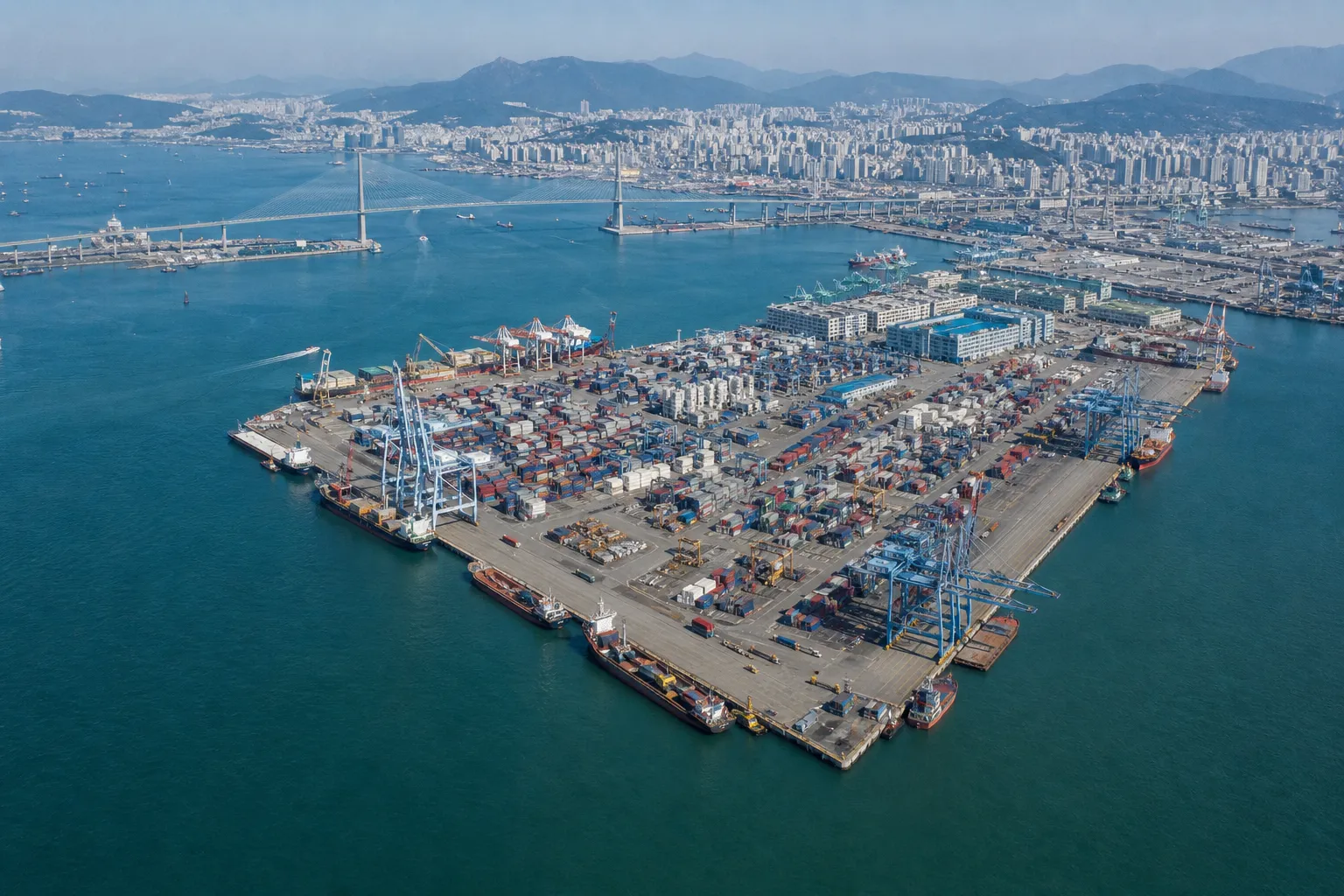
South Korea remains a shipbuilding and shipping powerhouse, home to major carriers and a dense network of terminals, banks and ship registries that make it a natural forum for asset-based remedies. Independent directories continue to rank Korean maritime and arbitration practices highly, and the volume of cross-border claims has grown as trade patterns shift, charter disputes multiply and sanctions-driven re-routing complicates cargo and payment chains. For anyone weighing maritime arbitration Korea strategy, the practical consequence is that Korea is increasingly both the place where disputes arise and the place where recovery happens.
Korea also trains a strong pipeline of maritime specialists, Korea Maritime and Ocean University and leading Seoul law faculties feed the specialist bar, but for dispute strategy what matters is the depth of the practising counsel and arbitrator pool, not academic rankings. When you need to identify counsel, market directories provide a useful cross-check alongside GLE’s own listings.
Arbitration in Korea is governed principally by the Arbitration Act (Republic of Korea), which applies to both domestic and international arbitrations seated in Korea. The Act is closely modelled on the UNCITRAL Model Law on International Commercial Arbitration, which gives foreign users a familiar structure for tribunal powers, court supervision and grounds for setting aside or refusing enforcement of awards (see UNCITRAL, Model Law texts). Korea is also a contracting state to the New York Convention on the Recognition and Enforcement of Foreign Arbitral Awards, which is the backbone of foreign award enforcement and is discussed in detail below.
Institutional administration for most maritime arbitration Korea matters runs through the KCAB and its international rules, which govern the constitution of tribunals, expedited procedures, emergency relief and costs. The statutory text of the Arbitration Act and related Civil Execution Act and Civil Procedure Act provisions is available in English through the Korean Legislation Research Institute (KLRI) e-Law portal, and counsel should cite specific article numbers when framing applications for interim relief or enforcement.
The single Arbitration Act covers both domestic and international proceedings, but the practical treatment differs. International arbitrations seated in Korea benefit from Model Law-aligned provisions on party autonomy, arbitrator appointment and limited court intervention. KCAB maintains separate international rules for cross-border matters, which are frequently chosen for maritime disputes with a foreign element because they include internationally recognised features such as emergency relief and expedited timelines.
The legal seat determines which national courts supervise the arbitration, which law governs the arbitral procedure and which courts hear challenges to the award. Choosing Korea as the seat means Korean courts provide supervisory support and, critically, direct access to Korean preservation remedies. Even where parties select a foreign seat, Korean courts remain available for asset preservation and for enforcement of the eventual award if assets or vessels are located in Korea. The distinction between the contractual “place” of hearings and the legal seat is a recurring drafting trap, always fix the seat expressly.
This is the operational heart of any maritime arbitration South Korea strategy. When a ship is about to leave Korean waters, or funds are about to move, the question is not academic: you need to know whether to file at court, apply to the tribunal, or both. Both routes are legitimate, and Korean law does not force an exclusive choice.
The legal bases differ. Korean courts derive their power to order provisional measures, including precautionary attachment (gapyeu) and ship arrest, from the Civil Execution Act and related provisional-remedy provisions, and those powers are exercisable even where an arbitration clause exists. The Arbitration Act, consistent with the Model Law, confirms that seeking court measures is compatible with an agreement to arbitrate. The arbitral tribunal, by contrast, derives its power from the Arbitration Act and the KCAB Rules, and can order interim measures such as conservatory relief and security for costs, but only against the parties before it.
Court applications for provisional measures are made by petition to the competent district court. The location of the vessel or assets typically determines competence, so a coastal court where the vessel is berthed may be the relevant forum. A well-prepared application will include:
Ship arrest in Korea is a provisional remedy: the applicant petitions the court, posts the required security, and the court issues an order that is executed against the vessel through the registry and enforcement machinery. Where urgency is established, orders can be obtained quickly, often within days and, on strong facts, faster, subject to the court’s docket and procedures. The remedy is powerful because it operates directly against the res and is enforceable by the court’s execution officers, which is why it is a default tool when a vessel is transiting Korea.
KCAB’s international framework provides expedited procedures and an emergency relief mechanism, allowing a party to seek urgent interim measures before the full tribunal is constituted (check the current KCAB International Rules for the emergency arbitrator appointment, timing and scope). This route preserves confidentiality and the integrity of the arbitral forum. Its limitation is reach: an emergency arbitrator’s order binds the parties to the arbitration but cannot directly command a ship registry, an execution officer or a third-party bank. For third-party enforceability you will still need court support.
| Dimension | A, Korean courts | B, Arbitral tribunal / KCAB |
|---|---|---|
| Legal basis | Civil Execution Act & Arbitration Act; courts may order provisional measures and attachment (ship arrest) even where an arbitration clause exists | Arbitration Act & KCAB Rules; tribunal orders interim measures such as conservatory relief and security for costs within its powers |
| Speed | Fast for urgent measures; provisional orders and ship arrest available in days, subject to court docket and registry procedures | Fast where an emergency arbitrator or expedited tribunal is available, but slower to enforce against third parties |
| Scope of relief | Broad: arrest, attachment and injunctions enforceable in Korea; effective against third parties (ships, bank accounts in Korea) | Limited to parties to the arbitration; orders may require court assistance for third-party enforcement |
| Enforceability (practical) | High, court orders are directly enforceable in Korea through execution and sale of assets | Lower unless supported by a court enforcement application |
| Risk of waiver | Low if the application is carefully framed; higher if a party litigates the merits in court without reservation | Low when the emergency procedure is used |
| Cost | Court fees, security/bond for arrest or attachment, local counsel costs; quick asset preservation can avoid larger downstream losses | Tribunal and emergency arbitrator fees plus arbitrator time; add the later cost of court enforcement of any tribunal order |
| Jurisdictional effects | Court action coexists with arbitration; Korean courts are generally arbitration-supportive but retain supervisory power | Preserves the contractual forum and avoids piecemeal court litigation, but reach against third parties is limited |
| Practical steps | File petition at the competent district court, prepare vessel details, security/bond and translated arbitration clause | File emergency application to KCAB, secure appointment of emergency arbitrator, notify the opposing party, prepare to seek court support if needed |
| When it wins | Best when immediate asset preservation is critical and third-party interference is likely | Best to preserve inter-party rights quickly while maintaining confidentiality and forum integrity |
Choose A (Korean courts) when:
Choose B (tribunal / KCAB emergency arbitration) when:
Run both (the hybrid approach): in many maritime emergencies experienced counsel pursue parallel relief, an emergency arbitration application together with an immediate court-ordered ship arrest or attachment. Coordinate the filings, give clear notice, and frame the court application to preserve arbitration rights. A short reservation such as: “This application is made solely to preserve assets and evidence pending arbitration under the parties’ agreement, and without prejudice to the applicant’s right to arbitrate the merits” helps reduce any waiver argument.
Once you hold a domestic award, converting it into recoverable value requires a court enforcement step. Under the Arbitration Act, an enforcement decision (as opposed to the earlier enforcement judgment procedure) is issued by the court; the court does not re-open the merits but confirms the award and issues a decision that unlocks execution against assets. The process is document-driven, so a clean, complete filing is the fastest route to recovery.
The essential compliance checklist is:
Filing is made at the competent district court. After the court issues an enforcement decision, execution proceeds through attachment, seizure and, where necessary, sale of assets, and provisional measures obtained earlier can support the execution to prevent dissipation. Timing varies with the court’s docket and whether the matter is contested: uncontested applications may be resolved within several months, while contested matters, where the respondent raises jurisdictional or procedural objections, can take considerably longer.
The most common objections a respondent raises mirror the limited grounds available under the Arbitration Act and, for the parallel foreign-award regime, the New York Convention: invalidity of the arbitration agreement, denial of due process, an award exceeding the scope of submission, or conflict with public policy. Because these grounds are narrow and Korean courts apply them restrictively, a procedurally sound arbitration that respected the parties’ hearing rights is very difficult to resist. Recovery of the costs of enforcement should be pleaded where available.
Foreign awards are enforced in Korea under the New York Convention, to which Korea is a party, applied through the Arbitration Act. The procedure is an application to the competent Korean court for recognition and enforcement; as with domestic awards, the court does not review the merits but examines whether any Convention ground for refusal is made out (see UNCITRAL New York Convention resources and the Arbitration Act text via KLRI).
The grounds on which a Korean court may refuse recognition of a foreign award track the Convention closely:
Public policy is the ground most frequently invoked and least frequently successful, Korean courts interpret it narrowly and reserve it for genuine violations of fundamental principles, not ordinary disagreements with the outcome. Practical steps to avoid refusal begin long before enforcement: ensure the arbitration agreement is clearly recorded, that all parties receive proper notice at every stage, that the tribunal stays within its mandate, and that a clean record of due process is preserved. For enforcement counsel, the checklist for a foreign-award application is:
Enforcement against vessels and other assets then follows the same execution route as domestic awards, with arrest and attachment used to convert a recognised award into actual recovery.
Korean courts play a supportive, supervisory role throughout the arbitral process, not just at enforcement. Understanding the available forms of court assistance lets counsel plug the gaps that a tribunal alone cannot fill. The principal forms of assistance are:
Strategically, court assistance is a timing tool. Deploy it when the tribunal’s own powers reach their limit, most commonly where a remedy must bind a third party or must be executed by state officers. Note the limits too: while Korean courts are arbitration-supportive, the practical reach of anti-suit relief and similar cross-border orders is constrained, so build your strategy around remedies the Korean system enforces directly.
Most enforcement problems are made, or avoided, at the drafting stage. A disciplined approach to clauses and pre-dispute asset preservation dramatically improves recovery prospects in any maritime arbitration South Korea scenario.
Drafting tips for the arbitration clause:
Pre-dispute and live-dispute measures:
When speed matters, having the paperwork ready is decisive. For an urgent court application to preserve a vessel or funds, assemble: the arbitration agreement with certified translation; evidence of the underlying claim; vessel particulars or account details; the applicant’s authority documents; and funds available for the security or bond the court will require. For an emergency arbitration application, prepare the notice of arbitration, the emergency relief request, and proof of urgency, and identify the KCAB filing channel for emergency appointments.
To place these steps within GLE’s wider Korea resources, see the C.J. Kim, profile and the related Shipping & Maritime, South Korea practice materials. Supporting guides, how to enforce a foreign arbitral award in South Korea, interim measures in Korean maritime disputes, and choosing the seat for maritime arbitration involving Korean parties, provide deeper step-by-step detail on each stage, alongside the GLE lawyer directory for Korean maritime counsel.
Maritime arbitration South Korea rewards preparation and speed: the parties who recover are those who have mapped assets in advance, drafted a clean arbitration clause with a clear seat, and are ready to file for court preservation and tribunal relief promptly. The framework is arbitration-friendly, the New York Convention route is well established, and Korean courts provide direct, enforceable remedies against ships and accounts, but each advantage only crystallises if you act before assets move. If you need interim relief today, run the checklist: identify the asset, assemble the arbitration agreement and translation, prepare security, and file at the competent court while lodging an emergency arbitration request in parallel.
For a tailored strategy on a live matter, request a consultation through Global Law Experts.
This article was produced by Global Law Experts. For specialist advice on this topic, contact C.J. Kim at Choi & Kim, a member of the Global Law Experts network.

posted 37 minutes ago
posted 56 minutes ago

posted 1 hour ago

posted 2 hours ago

posted 2 hours ago

posted 3 hours ago

posted 3 hours ago
posted 4 hours ago

posted 4 hours ago

posted 4 hours ago

posted 5 hours ago

posted 5 hours ago
No results available
Find the right Legal Expert for your business

Send welcome message