
Our Expert in China
No results available
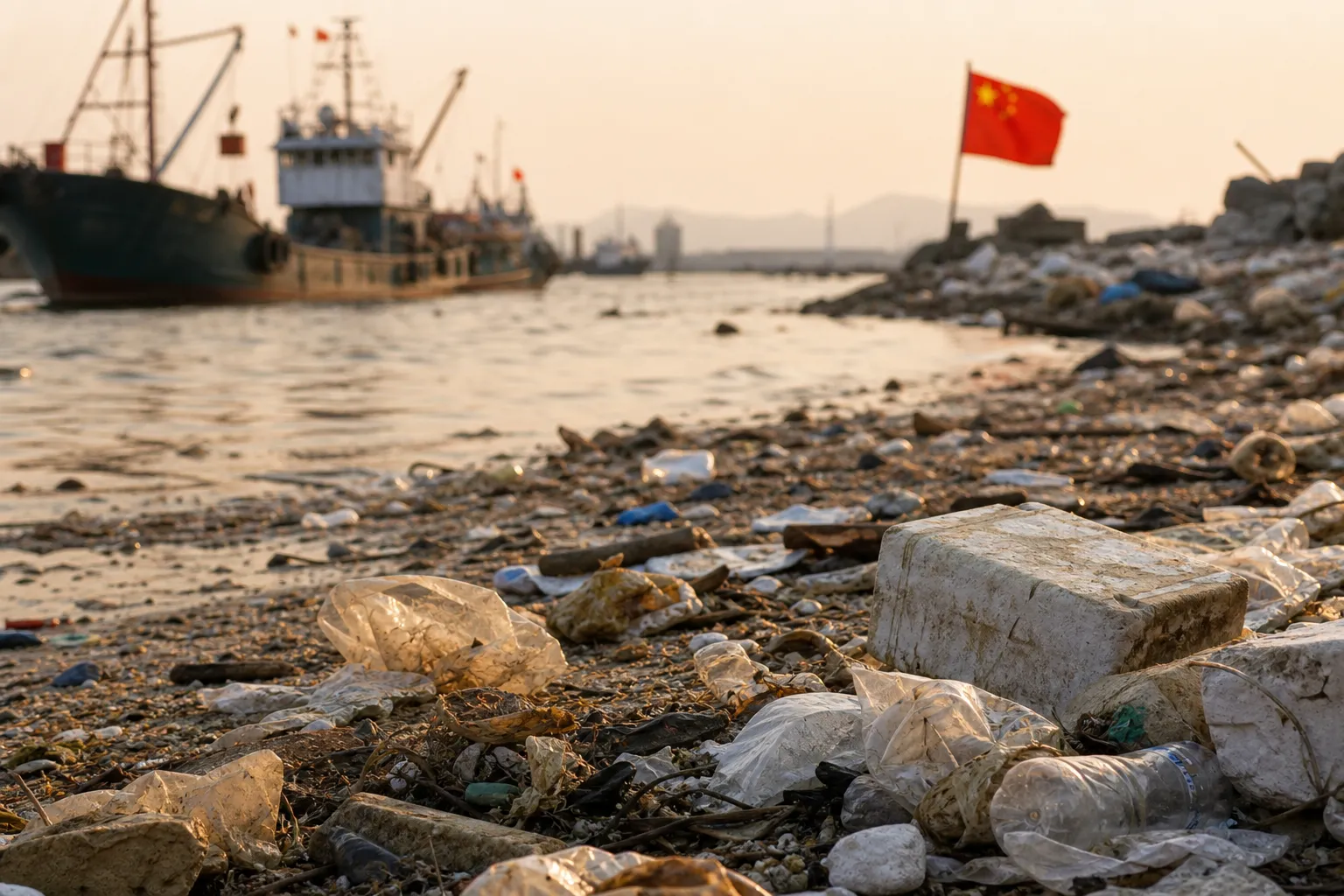
Marine pollution claims china have entered a new operational phase following the amendments to the Maritime Law of the People’s Republic of China, which take effect on 1 May 2026. For P&I clubs, hull and cargo insurers, shipowners, coastal authorities and environmental managers, the revised regime alters who can recover, how quickly cleanup costs can be enforced, and what evidence claimants must preserve from the first hour of an incident. This guide sets out the practical workflow, from on-scene notification through administrative enforcement, civil litigation, arbitration and P&I subrogation, so that claim handlers can act decisively when an oil spill or hazardous discharge occurs in Chinese waters.
It reflects the position as at 2026 and is written for readers who need operational steps, not general commentary.
Quick summary: This how-to explains who may bring pollution claims in China after the 2026 amendments, the routes to recover cleanup costs (administrative recovery, civil damages and P&I subrogation), the required evidence, key timelines, and practical tips for insurers and claim handlers.
China’s marine pollution regime operates across several overlapping layers. When oil or a hazardous substance is discharged into Chinese territorial waters, and, for certain incidents, the exclusive economic zone (EEZ), the response engages administrative authorities, private claimants and, in serious cases, criminal investigators simultaneously. Understanding which forum delivers the fastest and most complete recovery is the central strategic question for any insurer or P&I club.
There are broadly four categories of claim. First, administrative enforcement, in which the Maritime Safety Administration (MSA) and the Ministry of Ecology and Environment (MEE) direct cleanup and recover costs from the polluter. Second, civil tort claims for compensation brought by injured parties in the maritime courts. Third, subrogation claims brought by insurers or P&I clubs after they have indemnified the insured. Fourth, criminal proceedings where the discharge crosses statutory thresholds of gravity.
The revised Maritime Law, adopted on 28 October 2025 and effective 1 May 2026, updates the liability regime for carriage and marine-related claims and forms part of the broader legal framework relevant to pollution incidents; administrative pollution liability continues to be governed principally by the Marine Environment Protection Law and its implementing regulations. For a fuller background on the legislative package, see the China Maritime Code 2026, changes & overview.
The single most important operational takeaway is that speed and documentation determine recovery. The claimant who notifies authorities promptly, preserves an unbroken chain of custody on samples, and secures vessel data before it is overwritten will consistently outperform the claimant who reacts late. Everything that follows in this guide is organised around that principle.
Standing to pursue marine pollution claims in China depends on the type of loss and the identity of the claimant. The framework recognises both public and private claimants, and the two routes frequently run in parallel.
State bodies hold primary enforcement standing. The MSA (under the Ministry of Transport) and the MEE, together with local maritime and port authorities, are empowered to investigate incidents, order emergency remediation and recover the costs of state-directed cleanup from the responsible party. Under the Marine Environment Protection Law, designated authorities may also pursue compensation for damage to the marine ecological environment on behalf of the state. These authorities act in the public interest, their standing derives directly from statute and administrative regulation. For claimants, this matters because administrative recovery is often an efficient mechanism for recouping public cleanup expenditure.
Private parties who suffer direct loss may bring civil claims. Typical claimants include coastal property owners, aquaculture and fishing operators, tourism and port-dependent businesses, cargo owners whose goods are contaminated, and the insurers or P&I clubs who have paid claims and step into their insured’s shoes through subrogation. Fishing communities and aquaculture cooperatives are frequent claimants in Chinese pollution litigation because economic loss from a spill is often concentrated and readily quantified. P&I pollution claims in China commonly arise where the club has funded emergency cleanup on behalf of a member and then seeks to allocate or recover that expenditure.
Where a discharge causes serious environmental harm, a public prosecutor may pursue criminal liability against individuals or the corporate operator, for example for the crime of environmental pollution under the Criminal Law. Criminal investigation runs independently of civil and administrative claims, but it can materially affect them: a criminal finding of fault can strengthen a parallel civil claim, while an ongoing criminal investigation can freeze vessel movement and complicate settlement. Claim handlers should treat any criminal dimension as a factor that both raises stakes and, in some cases, accelerates evidence gathering by the authorities.
The workflow below moves from the first hours of an incident through to final recovery. Each stage has a responsible party and a set of concrete actions. Follow the numbered steps in sequence, but note that administrative, civil and subrogation tracks often proceed simultaneously rather than strictly one after another.
The administrative route is frequently an efficient path to recouping cleanup expenditure. In practice it unfolds as follows:
Civil proceedings are the route for private compensation, economic loss, property damage and consequential losses that the administrative process does not capture. The core steps are:
Where the underlying relationship is contractual, a charterparty dispute over responsibility for a spill, or a claim under a letter of indemnity, arbitration may be the agreed forum. Arbitration is appropriate when the contract specifies a seat and governing law, and it offers privacy and, in some cases, speed. Claimants should note that an arbitral award still requires enforcement through the Chinese courts under the applicable civil procedure and arbitration rules, and that arbitral tribunals lack the administrative powers that state bodies wield in the enforcement route.
P&I pollution claims in China typically crystallise after the club or insurer has paid. The subrogation workflow is:
For a deeper treatment of the recovery mechanics, see the supporting guidance on P&I subrogation and recovery after oil spills in China.
| Step | Responsible party | Typical duration |
|---|---|---|
| 1. Immediate notification to MSA/MEE & P&I | Ship master / operator / P&I | As soon as practicable after discovery |
| 2. On-scene evidence collection & sampling | Ship operator + appointed investigators/labs | First days; certified lab results typically several weeks |
| 3. Emergency containment & cleanup (under authority direction) | Polluter/operator, supervised by MEE/MSA/local authority | Containment immediate; cleanup weeks to months |
| 4. Administrative decision / enforcement order | MEE / local maritime authority | Varies by incident; may be expedited for hazards |
| 5. Administrative recovery of cleanup costs | Local authority collection/enforcement units | Months if polluter solvent; longer if enforcement contested |
| 6. Civil suit for damages & enforcement | Claimant (insurer/P&I/third party) | Varies by court and complexity |
| 7. Arbitration (if contract clause) | Claimant & respondent | Varies, plus award enforcement time |
| 8. Subrogation recovery after insurer payment | Insurer/P&I via litigation or negotiation | Parallel to civil/arbitral timelines |
| Feature | Administrative (MEE/MSA) | Civil (Maritime Court) | Arbitration |
|---|---|---|---|
| Primary purpose | Immediate cleanup & public-interest enforcement | Private damages & restitution | Contract-based remedies & damages |
| Who brings | State administrative bodies | Private claimants, insurers/P&I | Parties per contract |
| Remedies available | Enforce cleanup, recover costs, fines, orders | Compensation for loss, restitution | Damages per contract; no administrative powers |
| Burden of proof | Administrative standard, agency-led investigation | Civil standard supported by expert evidence | Tribunal’s evidentiary rules, often party-driven |
| Speed | Often efficient for enforcement | Generally slower | Variable; can be faster under expedited rules |
| Enforcement | Administrative enforcement; state collection | Court enforcement procedures | Enforced via arbitration law; may need court assistance |
| Insurance implications | Some fines may be non-insurable | Recoverable if insured, subject to policy | Depends on contractual and policy terms |
Evidence discipline decides most pollution disputes. The table below is a ready-to-use checklist; treat it as a working document to be populated from the moment an incident is discovered. Emphasise chain of custody, certified laboratory reports, geotagged imagery, vessel data logs, bunker and cargo samples, and complete cost documentation.
| Document / evidence | Purpose | Who provides | Notes |
|---|---|---|---|
| Incident report (ship/port) | Establish timeline & facts | Ship master / port authority | Keep originals; obtain authority acknowledgement where possible |
| Notification records to MSA/MEE/P&I | Proof of timely notice | Ship operator / P&I | Save emails, faxes and port logs |
| Photographs & video (geotagged) | Scene documentation | On-scene personnel / contractor | Preserve originals and metadata |
| AIS / VDR / radar logs | Track vessel movement & events | Shipowner / port authority / agent | Export and secure immediately before overwrite |
| Oil/chemical samples (chain of custody) | Link pollutant to source | Accredited lab / collector | Use accredited labs; document every transfer |
| Certified lab analysis reports | Prove composition & damage | Accredited laboratory | Obtain Chinese-accredited reports where feasible |
| Cleanup invoices & contractor contracts | Quantify cleanup costs | Cleanup contractors / shipowner | Include receipts and bank traces |
| Expert technical report | Valuation of loss & causation | Third-party expert | Use court-accepted experts where possible |
| Insurance / P&I correspondence & proof of payment | Subrogation & indemnity basis | P&I / insurer | Preserve reserve memos and payment evidence |
| Contracts & charterparty | Determine contractual rights | Shipowner / charterers | Identify arbitration and limitation clauses |
| Witness statements & crew declarations | Corroborate events | Crew, port staff, third parties | Signed statements, translated where necessary |
Chinese courts and administrative bodies apply exacting standards to pollution evidence. Samples must be traceable through an unbroken chain of custody, and laboratory analysis carries far greater weight when performed by an accredited Chinese facility. Foreign expert reports and overseas laboratory results are not automatically admissible; evidence formed outside mainland China generally requires appropriate notarisation and authentication procedures and certified Chinese translation, and in many cases corroboration through a domestically accepted expert. Where documentation is generated abroad, P&I correspondence, foreign survey reports, contracts, build in time and budget for certified Chinese translation, since untranslated foreign-language documents will not be accepted at face value.
Timing is highly consequential for marine pollution claims in China. Several deadlines run in parallel and each can independently defeat a claim if missed.
The most immediate is the notification duty, which requires the operator to report the incident to the authorities without delay following discovery. Missing this window not only exposes the operator to additional penalties but also undermines the evidential narrative that a claim depends on. Beyond notification, administrative claim and recovery processes operate on their own schedules. Civil claims arising from ship pollution damage to the marine environment are subject to the limitation period provided in the Maritime Law, which runs from the date on which the claimant knew or ought to have known of the damage, while other civil claims may fall under the general limitation period in the Civil Code.
Claimants should confirm the applicable limitation period for their specific claim with local counsel, as the starting point and duration depend on the legal basis of the claim.
To preserve rights while these clocks run, claimants should act on procedural protections early: apply for pre-action evidence preservation so that samples and vessel data are secured by order; seek interim measures to prevent further discharge or asset dissipation; and apply for asset preservation, including vessel arrest, before the responsible party removes assets from the jurisdiction. The practical lesson is that limitation is only one of several time pressures, the operational deadlines in the first days often determine whether the claim is winnable at all.
Recovery in marine pollution claims in China spans several cost lines, and the mix of administrative recovery and civil damages determines how much of each is ultimately recouped. The ranges below are broad, indicative illustrations only and vary widely with spill size, shoreline sensitivity and claim complexity; obtain a specific estimate for any given incident.
| Cost item | Indicative range | Notes |
|---|---|---|
| Emergency containment & initial cleanup | Variable, modest to several million CNY+ | Highly variable with spill size & location |
| Full-scale remediation | Can reach tens of millions of CNY+ | Dependent on shoreline sensitivity |
| Accredited lab analysis | Moderate; increases with sample count & repeat tests | Multiple samples & repeat tests increase cost |
| Technical experts / consultant reports | Moderate to substantial | For causation and valuation |
| Legal fees (domestic counsel) | Complexity-dependent | Varies with quantum and contest |
| Court / arbitration fees | Scaled to claim quantum | Court fees set by applicable schedules; arbitration fees per institution rules |
| Enforcement / asset recovery costs | Variable | Attachments and enforcement actions |
In most incidents the polluter or its P&I club funds the emergency response first, either voluntarily or under administrative direction. Cleanup and remediation costs, expert and laboratory fees, and legitimate third-party losses are generally recoverable, through administrative cost recovery, civil damages, or subrogation once the insurer has paid. Administrative fines, by contrast, are commonly treated as non-insurable, which means the responsible party typically bears them directly. Claim handlers should model recovery on the basis that cleanup and compensation are recoverable while penalties may sit outside the recoverable pool.
The Maritime Law amendments, adopted on 28 October 2025 and effective 1 May 2026, represent the most significant overhaul of China’s maritime legal framework since the Law came into force in 1993. They update rules on the carriage of goods by sea and the allocation of maritime liability, among other areas, and form part of the broader legal environment relevant to pollution incidents. Administrative pollution liability and state-directed cleanup recovery continue to be governed principally by the Marine Environment Protection Law and its implementing regulations, alongside China’s international treaty obligations on oil pollution civil liability and fund compensation.
The practical consequences for insurers and P&I clubs remain grounded in familiar principles. First, the administrative route means state-led cost recovery may reach the responsible party efficiently, and clubs should be ready to engage with administrative decisions rather than waiting for civil process. Second, local MEE and MSA bodies retain broad authority to direct emergency remediation, so operators can expect limited opportunities to manage cleanup entirely on their own terms. Third, exacting documentation and evidence expectations reward those who preserve certified samples and vessel data from the outset. The likely practical effect is a premium on early, disciplined claim handling, with civil litigation reserved for contested quantum and complex causation.
For the legislative detail, consult the China Maritime Code 2026, changes & overview and the official text published by the National People’s Congress.
Marine pollution claims in China demand fast, disciplined claim handling, and the environment following the 2026 Maritime Law amendments continues to reward those who act within the first hours of an incident. The clearest path to full recovery combines prompt notification, rigorous chain-of-custody evidence, engagement with the administrative recovery route, and careful preservation of subrogation rights. Insurers, P&I clubs and coastal claimants who internalise the timelines, evidence standards and forum choices set out in this guide will be best placed to recover cleanup costs and compensation. Given the technical and procedural stakes, claimants pursuing marine pollution claims in China should secure experienced local maritime counsel at the earliest possible stage.
This article was produced by Global Law Experts. For specialist advice on this topic, contact Hongkai Xu at All Bright Law Office, a member of the Global Law Experts network.
posted 17 minutes ago

posted 38 minutes ago

posted 57 minutes ago

posted 1 hour ago

posted 2 hours ago

posted 2 hours ago

posted 3 hours ago
posted 4 hours ago

posted 4 hours ago
posted 4 hours ago

posted 5 hours ago
posted 5 hours ago
No results available
Find the right Legal Expert for your business

Send welcome message