
Our Expert in Poland
No results available
What this guide covers: This practical guide explains who prosecutors are in Poland (2026), their powers in investigations and criminal proceedings, and the step-by-step remedies available to defendants, victims and companies to challenge prosecutorial decisions.
A prosecutor in Poland sits at the centre of every criminal case, from the first knock on the door to the moment charges are read out in court, and understanding this office has become more urgent as Poland’s ongoing debates over the organisation of the prosecution service and criminal procedure reshape how prosecutorial power is exercised and reviewed. For a foreign defendant, a victim seeking justice, or a company facing a white-collar inquiry, the practical question is rarely academic: what can a prosecutor actually do to you, and what can you do in return?
The short answer is that prosecutors direct investigations, decide who is charged, request coercive measures such as detention, and can discontinue cases, but many of these decisions can be challenged if you act quickly and correctly. This article sets out those powers and, just as importantly, the concrete remedies. Treat it as general information and not a substitute for tailored legal advice.
About this guide. The practical and tactical sections draw on established criminal defence practice in Poland. Statutory explanations are kept strictly procedural and neutral; you should verify any specific deadline or article number against current law before relying on it.
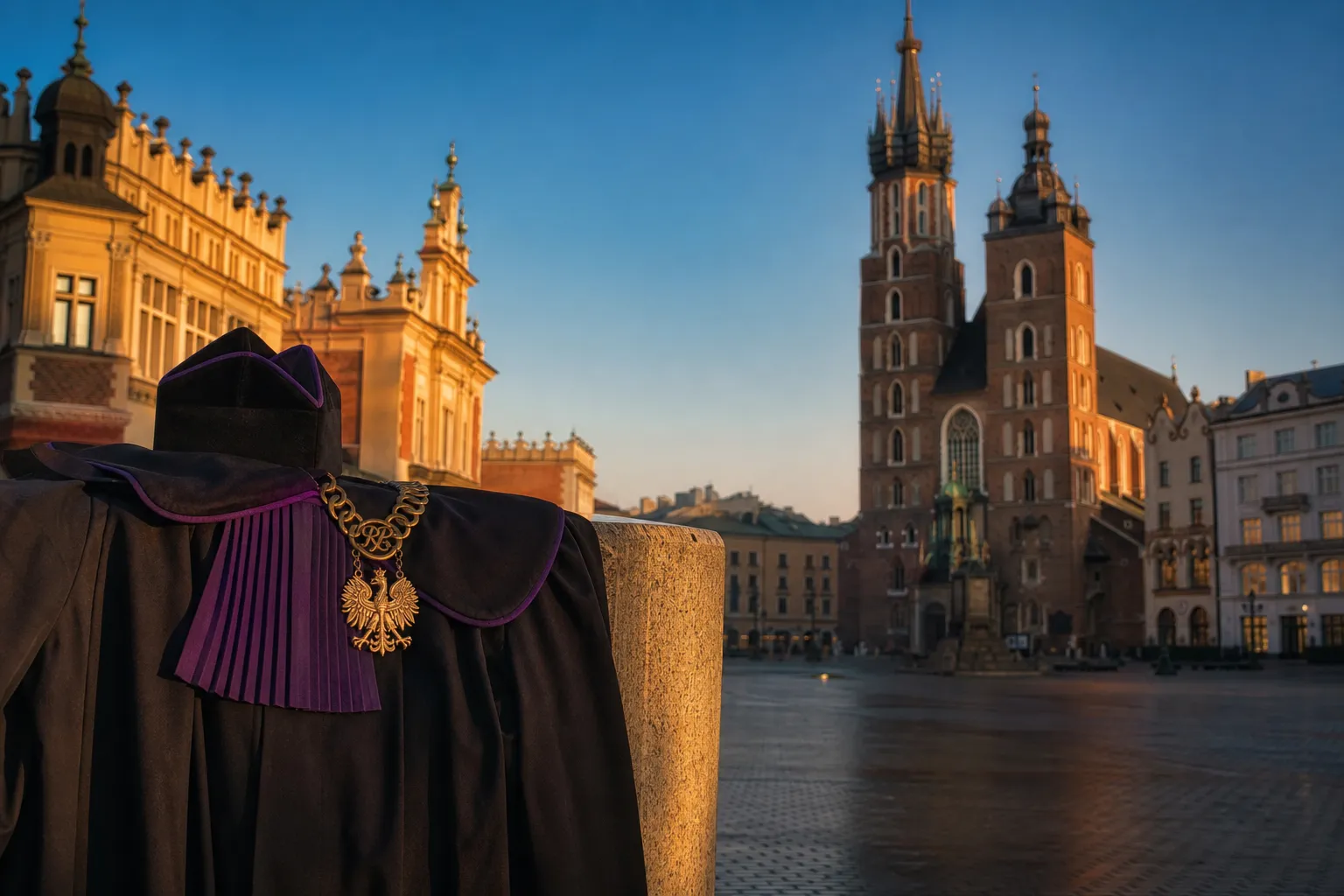
A prosecutor in Poland (prokurator) is a public official who represents the state in criminal matters. The prosecutor conducts or supervises preparatory proceedings (the investigation stage), decides whether to bring an indictment, and represents the prosecution before the court. Unlike a judge, the prosecutor is a party to the proceedings, but a party required to act impartially and in the public interest, examining and taking into account circumstances that favour the accused as well as those against them.
The constitutional framework for the administration of justice, the courts and the separation of powers is set out in the Constitution of the Republic of Poland. The organisation and functioning of the prosecution service are governed by the Act on the Public Prosecutor’s Office (Prawo o prokuraturze). The detailed procedural powers of a prosecutor, how investigations are opened, how coercive measures are sought, and how cases are discontinued or referred to court, are governed by the Code of Criminal Procedure (Kodeks postępowania karnego). The substantive offences a prosecutor charges, and the sentencing framework that shapes charging decisions, are found in the Penal Code (Kodeks karny).
The prosecution service is organised as a hierarchy with the National Public Prosecutor’s Office (Prokuratura Krajowa) at its operational apex.
Most offences in Poland are prosecuted by a public prosecutor acting on behalf of the state (offences prosecuted ex officio). Polish law also recognises limited categories where a private prosecutor (an injured party bringing a private accusation for certain offences, such as some forms of defamation or minor bodily harm) or a subsidiary prosecutor may pursue a case, particularly where a public prosecutor has declined to act. For foreign readers, the key distinction is that the public prosecutor drives the vast majority of criminal cases, while victims retain defined rights to participate and, in specific circumstances, to prosecute in their own name.
The prosecution service in Poland is organised as a hierarchy. Understanding this structure matters because your remedies often depend on complaining to the prosecutor one level above the one who made the decision.
At the top of the operational hierarchy sits the National Public Prosecutor’s Office (Prokuratura Krajowa), headed by the Prokurator Krajowy. This office coordinates significant and cross-regional cases and exercises supervisory functions over the lower tiers of the service. The Prosecutor General (Prokurator Generalny) heads the prosecution service overall. It is the reference point for questions about who supervises whom.
Below the national office, prosecutors are organised into regional prosecutor’s offices (prokuratury regionalne), circuit prosecutor’s offices (prokuratury okręgowe) and district prosecutor’s offices (prokuratury rejonowe) that handle the bulk of everyday criminal work. A district (rejonowa) prosecutor typically deals with ordinary offences within a local jurisdiction, while circuit and regional prosecutors handle more complex or serious matters. This tiered arrangement is what allows an aggrieved party to escalate a complaint to a supervising prosecutor at a higher level.
Poland maintains specialised prosecutorial units for categories such as economic crime, organised crime and fiscal offences. These units concentrate expertise where investigations are technically demanding, for example, complex financial fraud, corruption or transnational organised crime. Companies under investigation are frequently dealt with by these specialised divisions, which is why a corporate response often requires counsel familiar with that specific unit’s practices.
The powers of a prosecutor in Poland are extensive and are exercised throughout the preparatory stage of criminal proceedings. Under the Code of Criminal Procedure, the prosecutor directs the investigation, either conducting it personally or supervising the police who conduct it. Below are the principal categories of Polish prosecutor powers.
A prosecutor can open preparatory proceedings on receiving a report of an offence, on information gathered by the police, or on their own initiative. Investigative tools available at this stage include questioning suspects and witnesses, commissioning expert opinions, gathering documentary evidence, and directing specific investigative steps. In practice, the prosecutor decides the strategic direction of an investigation: what to pursue, in what order, and against whom. The Code of Criminal Procedure governs the form these steps take and the rights of those questioned.
Some of the most consequential prosecutorial powers concern coercive measures. A prosecutor can order or apply for searches, seizures of property and evidence, and, in appropriate cases, apply for surveillance measures. Crucially, the most intrusive measures are subject to judicial control. Pre-trial detention (the most severe preventive measure) is decided by a court, not by the prosecutor alone; the prosecutor applies to the court, which then rules on whether detention is justified. Some non-custodial preventive measures (for example, police supervision or bail) may be imposed by the prosecutor within the limits set by the Code of Criminal Procedure.
This division between the prosecutor’s application and the court’s authorisation for the most severe measures is a central safeguard, and it is one of the first things a defence lawyer will scrutinise.
Where the police carry out an investigation, the prosecutor supervises it. This means the prosecutor can give binding instructions to the police, take over investigative steps, review the material gathered, and ultimately decide the outcome. The police are, in this sense, an investigative arm that operates under prosecutorial direction in criminal matters. This supervisory relationship is what makes the prosecutor, rather than the officer who arrests or questions you, the decision-maker who determines whether a case proceeds to indictment. It is a recurring theme in criminal procedure in Poland that the prosecutor, not the police, holds the pen on charging decisions.
Foreign clients frequently assume the officer who detains or questions them controls the case. In Poland, the reality is more layered. The police (Policja) carry out investigative work on the ground, but the prosecutor directs the investigation and makes the decisive calls. Specialised bodies, such as the Central Anti-Corruption Bureau (CBA), operate in defined areas. The table below sets out the practical division of labour.
| Actor | Primary functions | Investigative powers | Decision-maker for charges | Oversight | How to challenge actions |
|---|---|---|---|---|---|
| Prosecutor (Prokurator) | Directs and supervises investigations; represents the state at trial | Broad: opens proceedings, commissions experts, applies for coercive measures, issues orders | Yes, decides on indictment or discontinuance | Higher-level prosecutor; National Public Prosecutor’s Office | Complaint to supervising prosecutor; judicial review of specified decisions |
| Police (Policja) | Conducts investigative steps on the ground; detains suspects; gathers initial evidence | Operational: questioning, searches (under authority), arrests within legal limits | No, refers material to the prosecutor | Prosecutor supervising the investigation; internal police oversight | Complaint about specific acts; raise with supervising prosecutor |
| Special units (e.g., CBA) | Investigate defined categories such as corruption | Specialised investigative powers within their mandate | No, cases proceed through the prosecutor | Prosecutorial supervision; statutory oversight of the agency | Complaint via prosecutorial channels; judicial review where available |
In a routine case, the police receive a report, secure the scene, question witnesses and detain a suspect if the legal grounds exist. The material is then passed to, or supervised by, the prosecutor who decides the next steps. The prosecutor may direct further inquiries, request coercive measures from the court, or conclude the investigation.
The police have operational autonomy for urgent, time-sensitive acts, securing evidence, making lawful arrests, and conducting initial questioning. But the strategic and legally decisive choices, whether to charge, whether to seek detention, whether to discontinue, belong to the prosecutor. This is why, when confronted by the police, an important early step is to establish who the supervising prosecutor is and to route your legal response accordingly.
At the end of preparatory proceedings, and at various points during them, a prosecutor in Poland makes decisions that shape the entire case. Each carries different consequences and different routes of challenge.
A prosecutor may discontinue proceedings (umorzenie), for example, where there is insufficient evidence that an offence was committed, where the act does not constitute an offence, or where other statutory grounds under the Code of Criminal Procedure apply. Discontinuance ends the investigation without an indictment. For a suspect, this is a favourable outcome; for a victim, it can be deeply frustrating. Critically, discontinuance is not always final, the injured party generally has the right to challenge it, and the specific procedural route and deadline should be confirmed against the current Code of Criminal Procedure and prosecutorial guidance in each case.
If the prosecutor concludes there is sufficient evidence, the case is referred to court by way of an indictment (akt oskarżenia). This document sets out the charges and the supporting evidence and formally opens the trial phase. The defence’s response to an indictment, challenging its sufficiency, contesting evidence, or preparing a substantive defence, is a decisive moment in any case and should be handled with counsel already instructed.
Not every case ends in trial or discontinuance. Depending on the offence and circumstances, mediation and other diversionary or conditional measures may be available under the framework of criminal procedure in Poland, for example, a motion for conditional discontinuance or a voluntary submission to a penalty. These can offer proportionate outcomes, particularly in less serious matters, and are worth exploring where the facts permit. A prosecutor may also apply for asset seizures or preventive measures during the case, each of which has its own consequences and, where the law provides, its own means of challenge.
An important point to understand about a prosecutor in Poland is that many of their decisions are reviewable. Whether you are a defendant contesting a charge or a victim contesting a discontinuance, there are structured remedies. Speed matters: procedural deadlines are strict, and missing one can extinguish an otherwise strong challenge. Verify every deadline and article reference against the current Code of Criminal Procedure before acting.
Because the prosecution service is hierarchical, one line of challenge is a complaint directed to the prosecutor supervising the one who made the decision, or to a higher-level prosecutor within the structure. This route allows the service to review its own decision. It is sometimes used in tandem with, or as a precursor to, judicial remedies. The National Public Prosecutor’s Office materials describe the supervisory hierarchy relevant to escalation.
Certain prosecutorial decisions can be challenged before a court. The Polish procedural system provides for an interlocutory appeal (zażalenie) against specified decisions, allowing a court to review the prosecutor’s determination, for example, a decision to discontinue proceedings or to refuse to open them, subject to the conditions in the Code of Criminal Procedure. The precise decisions that are appealable, the court competent to hear the appeal, and the applicable deadline are set out in the Code of Criminal Procedure and must be confirmed for each specific decision.
Judicial review is the mechanism that gives real weight to the right to challenge a prosecutor decision in Poland, because it places the matter before an independent court rather than the prosecution service itself. The case law of the Supreme Court of Poland offers guidance on how these procedural routes are interpreted.
Victims are not passive observers in Polish criminal proceedings. The injured party (pokrzywdzony) has defined rights to participate, to be informed, and, in many situations, to contest decisions that close a case.
During the investigation, the injured party can report the offence, provide evidence, and act as a party with procedural rights. Being the injured party is significant because it carries rights of participation and, importantly, rights to challenge certain decisions such as discontinuance. Civil claims arising from the offence can, in defined circumstances, also be pursued in connection with the criminal proceedings or separately in the civil courts.
A victim who disagrees with a decision to discontinue can generally lodge a complaint, and the appeal against discontinuance is one of the most important remedies available to injured parties. Where a public prosecutor ultimately declines to prosecute, the law provides, in defined circumstances and following a specified procedure, for the injured party to act as a subsidiary prosecutor and bring the matter to court in their own name. The exact conditions and deadlines should be confirmed against the Code of Criminal Procedure, but the principle is clear: a prosecutor’s refusal to proceed is not necessarily the end of the road for a determined victim.
Whether you are a suspect, a witness or a victim, the early hours and days shape the entire case. The following steps protect your position when dealing with a prosecutor in Poland or the police.
The following anonymised, hypothetical scenarios illustrate how the powers and remedies described above operate in practice. They are illustrative only.
A traveller is detained at the border and questioned about a suspected offence. The police carry out the initial questioning, but the decision on whether to charge rests with the supervising prosecutor. The priority steps are to request an interpreter, exercise the right not to give explanations until counsel is present, and identify the prosecutor overseeing the matter so that representations can be directed to the right decision-maker. If detention is sought, the matter goes before a court, and legal representation at that hearing is critical.
A business receives notice that a specialised economic-crime unit is investigating suspected financial wrongdoing. The prosecutor may seek document production, searches or asset measures. The company’s response should include preserving legal professional protections where they apply, mapping the scope of the inquiry, preserving records, and preparing a coordinated strategy. Because such matters are frequently handled by specialised prosecutorial divisions, counsel experienced with those units is a significant advantage.
The role of a prosecutor in Poland is powerful but not unaccountable. Prosecutors direct investigations, decide charges, seek coercive measures and can discontinue cases, yet many significant decisions can be reviewed, whether through a complaint up the prosecutorial hierarchy, a judicial appeal, or, once domestic remedies are exhausted, an application to the European Court of Human Rights. As Poland’s procedural framework continues to be debated, the practical priorities remain constant: understand which decision you are facing, act within the deadline, and instruct experienced counsel early. For urgent matters, seek advice from a Poland criminal law specialist without delay.
This article is general information and does not constitute legal advice; confirm all statutory references and deadlines with a qualified lawyer before acting.
This article was produced by Global Law Experts. For specialist advice on this topic, contact Maciej Zaborowski at Kopeć & Zaborowski Law Firm, a member of the Global Law Experts network.

posted 23 minutes ago

posted 36 minutes ago
posted 56 minutes ago

posted 1 hour ago
posted 2 hours ago
posted 2 hours ago

posted 2 hours ago

posted 3 hours ago

posted 3 hours ago

posted 3 hours ago
posted 4 hours ago

posted 4 hours ago
No results available
Find the right Legal Expert for your business

Send welcome message