
Author
No results available
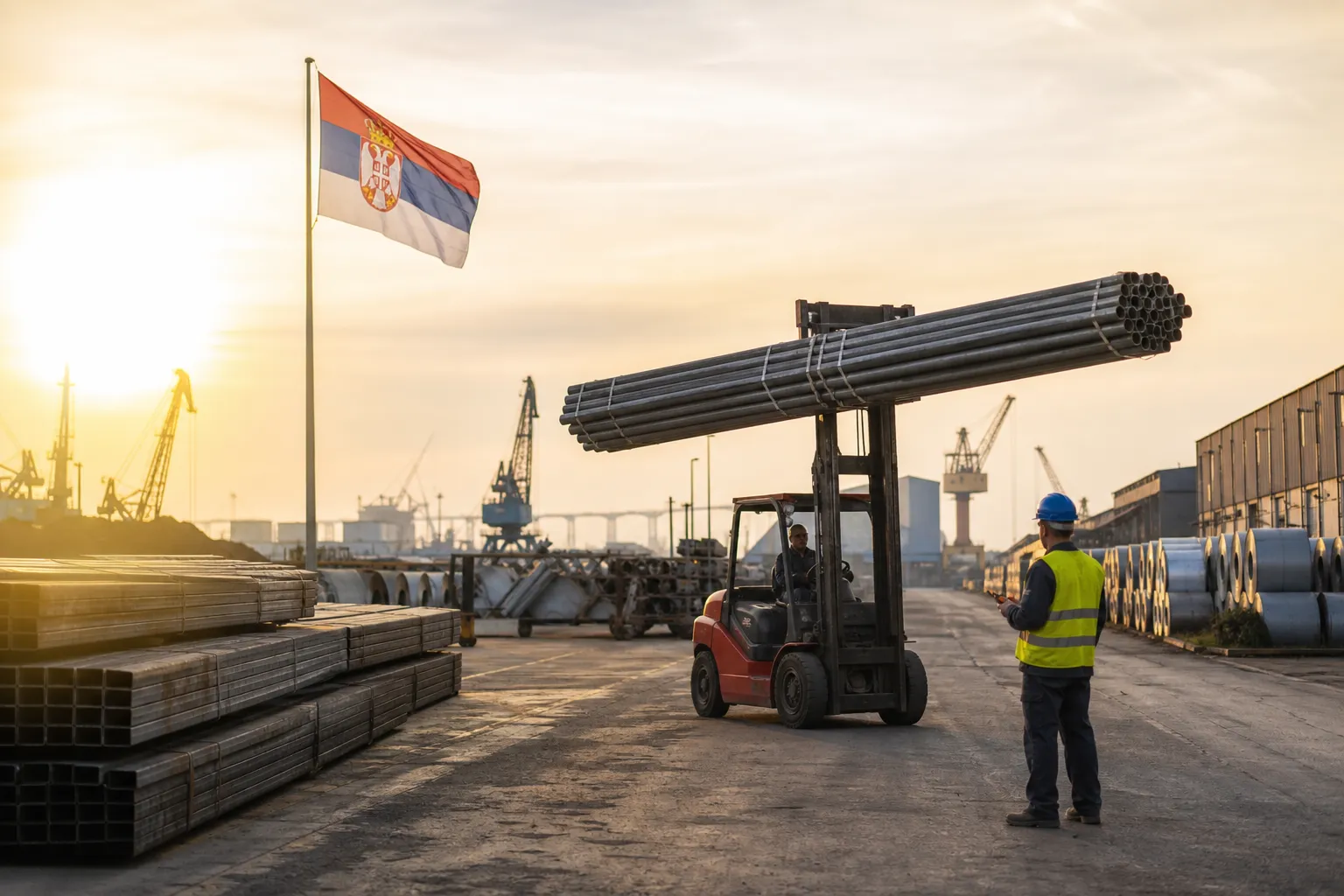
Free economic zones serbia foreign investors increasingly rely on to reduce customs cost, streamline export operations and access regional markets are governed by a distinct legal regime that treats designated territory as functionally outside the Serbian customs area. Entering 2026, Serbia’s export-driven economy and its ongoing EU integration have made this regime one of the most practical vehicles for foreign manufacturers, assemblers and logistics operators to structure inward processing and re-export. This guide sets out the statutory framework, the customs and value added tax (VAT) mechanics, the corporate and ownership rules, and a step-by-step application workflow. It is written for investors and their legal and tax advisers who need actionable detail rather than high-level commentary.
Throughout, primary sources, the Law on Free Zones, the Serbian Customs Administration and the Business Registers Agency, are cited so that each claim can be verified.
Who this guide is for: foreign manufacturers, exporters, logistics companies and their legal and tax advisers researching Serbia’s free economic zone regime and the steps required to establish and operate there.
A free economic zone (in Serbian legislation, a “free zone”) is a defined and physically demarcated part of Serbian territory where a special customs and fiscal regime applies. For customs purposes, goods held inside the zone are treated as if they are outside the customs territory of Serbia, which means that import duties and import VAT are suspended for as long as the goods remain in the zone or are re-exported. This treatment is the single most important commercial feature for free economic zones serbia foreign investors evaluate when planning cross-border supply chains.
Consider a manufacturer that imports components from outside Serbia into a free zone, assembles or processes them into a finished product inside the zone, and then ships the finished product abroad. Because the components are not released into the domestic customs territory and the finished product is re-exported, no Serbian import duty or import VAT is triggered on the inbound components. The cash-flow and duty benefits can be substantial for high-volume, low-margin manufacturing and for logistics operations that consolidate, repackage or redistribute goods across regional markets.
Serbia hosts a network of designated zones spread across the country, positioned to exploit road, rail and river corridors linking Central Europe with South-Eastern Europe. For further corporate context, see our overview of Serbia, Corporate law changes 2026.
The regime rests on dedicated primary legislation and is administered by several institutions working in parallel. Understanding which body does what is essential before an investor commits capital or signs an operator agreement.
The governing statute is the Law on Free Zones (Zakon o slobodnim zonama), whose consolidated text is accessible through the official legal information system of the Republic of Serbia (Pravni informacioni sistem). The Law establishes the criteria for designating a zone, the licensing and obligations of zone operators (founders), the permitted activities inside a zone, and the grounds on which zone status may be withdrawn. It also defines the interaction between the special zone regime and general customs law. Investors and their advisers should always work from the current consolidated text rather than secondary summaries, because provisions on operator licensing and permitted activities have been refined over successive amendments.
Serbia is a candidate for EU membership and has progressively aligned its customs and trade rules with European standards, a process documented in policy commentary from the OECD and the UNCTAD Investment Policy Hub. Serbia’s network of free trade agreements and its position on pan-European transport corridors mean that goods processed inside a zone can, subject to origin rules, reach large regional markets on preferential terms. The World Bank country overview provides supporting context on the investment climate and trade facilitation. Investors should always confirm preferential origin treatment for their specific product, because processing inside a zone does not automatically confer preferential origin.
Serbia operates a network of designated free economic zones distributed across its main industrial and logistics hubs. Each zone is established following a government decision and managed by a licensed operator, and the authoritative, up-to-date list of designated zones is maintained by the Free Zones Administration and reflected in the Law and its implementing acts.
Because zone designations and operator licences can change, investors should verify the current list against the official legal information system (Pravni informacioni sistem) and the Free Zones Administration before relying on any published figure. The zones cluster around major cities and transport nodes, giving foreign investors a choice of locations according to proximity to suppliers, labour markets, ports on the Danube and Sava, and road and rail corridors.
Permitted activities are defined by the Law on Free Zones and the individual operator’s regulations. Before selecting a zone, foreign investors should confirm that their intended activity, for example, a regulated or licensed process, is expressly permitted inside that specific zone.
The advantages of the regime combine fiscal relief with operational efficiency. For free economic zones serbia foreign investors weighing site options, the benefits fall into three broad groups.
The headline benefit is the suspension of import duties and import VAT on goods brought into the zone, consistent with the Serbian Customs Administration’s treatment of zone goods as outside the customs territory (carina.rs). Duty and VAT are not payable while goods remain in the zone, and are avoided entirely where goods are re-exported. This converts what would be an upfront cash outflow into a deferred or eliminated liability, improving working capital for import-intensive operations.
Beyond the customs regime, foreign investors may qualify for separate investment incentives administered nationally or by municipalities, and for local advantages relating to land, utilities and administrative support. These incentives sit outside the Law on Free Zones itself and are subject to their own eligibility criteria; UNCTAD’s Serbia profile catalogues the broader framework of investor measures (investmentpolicy.unctad.org). Investors should treat zone benefits and general investment incentives as separate but potentially combinable, and confirm eligibility in advance.
To operate inside a Serbian free zone, a foreign investor generally establishes a Serbian legal entity, which then contracts with the zone operator and registers the relevant customs status. The path from decision to operation involves company formation, an operator agreement, and customs and tax registration.
Foreign investors typically incorporate a Serbian company, most commonly a limited liability company (društvo s ograničenom odgovornošću, d.o.o.), registered with the Business Registers Agency (APR). Serbian company law permits full foreign ownership of such entities, so a foreign parent may hold 100% of the zone-operating company. Company formation rules, forms and procedures are published by APR (apr.gov.rs). Choosing the right corporate form affects governance, capital and liability, and should be settled before drafting the operator agreement. For a broader walkthrough, see our forthcoming guide, How to set up a company in Serbia, practical guide.
Document requirements vary by zone and by activity, so investors should request the operator’s checklist early and cross-check it against APR and Customs requirements.
This section addresses the most common source of confusion among free economic zones serbia foreign investors: the difference between suspension of import charges on goods and the corporate income tax obligations of the operating company.
Because goods inside the zone are treated as outside the customs territory of Serbia, import duties are suspended while the goods remain in the zone. Where imported components are processed inside the zone and the resulting product is re-exported, no Serbian import duty arises on those inbound components. The Serbian Customs Administration supervises the movement, storage and release of goods and requires accurate records so that the customs status of every consignment can be traced (carina.rs).
Import VAT generally follows the same logic as customs duty: it is suspended on import into the zone and does not become payable while the goods remain there or are re-exported. VAT becomes payable when goods leave the zone and enter the domestic Serbian market, at which point the release is treated as an import into the customs territory and the appropriate declaration must be lodged. Serbian VAT legislation also provides certain reliefs for the entry of goods into a free zone and for supplies connected with production activity within the zone; investors should confirm the precise treatment for their transactions with a Serbian tax adviser and against the current VAT rules (carina. rs).
Investors selling into the domestic market as well as exporting should model both flows carefully.
The customs and VAT suspension applies to goods, not to the profits of the operating company. A Serbian resident company operating inside a free zone remains subject to Serbian corporate income tax, which is levied at the standard rate applicable under the Law on Corporate Income Tax (currently 15%). Municipal charges and local taxes may also apply depending on the location. In other words, the zone regime is principally a customs and VAT relief mechanism, not a corporate income tax holiday, a distinction investors must grasp before modelling returns. Separate investment incentives, where available, may reduce the effective tax burden but are governed by their own rules. For a deeper treatment, see our planned guide on Serbia tax and incentives.
Assume a manufacturer imports components worth 1,000,000 EUR into a Serbian free zone. If those components were released into free circulation domestically, they would attract import duty and import VAT on entry. Inside the zone, both charges are suspended. The manufacturer processes the components into finished goods and exports 90% of them abroad; on that 90%, no Serbian import duty or import VAT is ever paid, because the goods leave the zone as exports. The remaining 10% is sold into the Serbian domestic market; on release, the manufacturer lodges a customs declaration and pays the applicable import duty and VAT on that portion only.
Separately, the company’s trading profit is subject to corporate income tax at the applicable rate (currently 15%). The example illustrates the core principle: import charges attach only to the fraction of goods that enters domestic circulation, while profit is taxed regardless of where the goods go.
| Feature | Free zone company | Domestic company (non-zone) | Bonded / customs warehouse |
|---|---|---|---|
| Customs duties on imports | Suspended while in zone; avoided on re-export | Payable on import into free circulation | Suspended during storage; payable on release to free circulation |
| VAT on import | Suspended; payable on entry to domestic market | Payable on import | Suspended during storage; payable on release |
| Allowed activities | Manufacturing, processing, storage, logistics per Law and operator rules | Any lawful activity | Primarily storage; limited handling |
| Tax incentives | Customs/VAT suspension; possible separate investment incentives | General incentives only | Deferral only, no zone incentives |
| Land/lease regime | Lease or user agreement with zone operator | Open market lease or purchase | Warehouse contract with authorised keeper |
| Typical operator/licence | Licensed zone operator under the Law on Free Zones | None specific | Customs-authorised warehouse keeper |
| Ease of re-export | High, streamlined re-export from zone | Standard export formalities | Moderate, release then export |
| Labour law | Serbian labour law applies | Serbian labour law applies | Serbian labour law applies |
Operating inside a free zone does not create a separate labour jurisdiction. Employees engaged by a zone company are Serbian employees subject to Serbian labour law, and the company must meet ordinary social security and payroll obligations.
Employment relationships are governed by Serbian labour legislation, including rules on written contracts, working time, leave and termination. Where collective agreements apply, they bind the employer in the usual way.
Foreign nationals in managerial or specialist roles generally require the appropriate residence and work authorisation to be employed in Serbia. Investors should plan immigration timelines alongside company formation, since key personnel often need to be in place before operations begin.
Occupational health and safety rules apply to zone operations, and activities with an environmental footprint may require permits and ongoing compliance. Manufacturing investors in particular should verify environmental obligations before committing to a site.
A disciplined workflow shortens the path to operation and reduces the risk of customs or registration bottlenecks. The following checklist consolidates the steps most foreign investors follow.
Company incorporation with APR is usually the fastest step, while operator negotiations, customs authorisation and immigration processing tend to determine the overall timeline. The most common delays arise from incomplete documentation, unresolved questions over permitted activities, and late engagement with Customs. Early, parallel processing of the operator agreement and customs authorisation is the single most effective way to compress the schedule.
The most serious risk is the unauthorised release of goods from the zone into the domestic market without lodging the required customs declaration and paying duty and VAT. Customs audits, inaccurate record-keeping and misuse of the suspension regime can trigger penalties and, in serious cases, jeopardise the company’s authorisations or the zone’s status. Rigorous bonded accounting and reconciliation of every consignment are the primary safeguards.
Decisions of customs and administrative authorities are subject to administrative appeal and, ultimately, judicial review before the Administrative Court. Commercial disputes with operators or counterparties may be resolved before the competent commercial courts or, where the contract provides, through arbitration. Investors should ensure their operator agreements contain clear governing-law and dispute-resolution clauses before signing.
For free economic zones serbia foreign investors seeking duty-efficient, export-oriented structures, Serbia’s regime offers a clear and administrable set of advantages: suspension of import duties and VAT on zone goods, streamlined re-export, and a stable statutory framework backed by the Law on Free Zones and the Serbian Customs Administration. The critical distinctions to keep front of mind are that customs and VAT relief attaches principally to goods rather than profits, that the operating company remains subject to corporate income tax at the applicable rate (currently 15%), and that charges arise on any goods released into the domestic market.
Investors should verify the current zone list and statutory text, structure the Serbian entity correctly, negotiate the operator agreement early, and put bonded accounting in place before goods move. Well-prepared free economic zones serbia foreign investors who follow this sequence can move from decision to operation efficiently and with confidence.
This article was produced by Global Law Experts. For specialist advice on this topic, contact Nemanja Curcic at NCR lawyers, a member of the Global Law Experts network.

posted 9 minutes ago

posted 53 minutes ago
posted 1 hour ago

posted 2 hours ago

posted 2 hours ago

posted 2 hours ago

posted 2 hours ago
posted 3 hours ago

posted 3 hours ago

posted 3 hours ago

posted 3 hours ago

posted 3 hours ago
No results available
Find the right Legal Expert for your business

Send welcome message