
Our Expert in Austria
No results available
ReFuelEU Aviation Austria compliance moves into a decisive operational phase in 2026, and every airline, business jet operator, fuel supplier and airport fuel farm operator active at Vienna Airport (VIE) or the country’s regional aerodromes needs to understand precisely what the framework demands. Regulation (EU) 2023/2405, the ReFuelEU Aviation Regulation, sets binding, escalating minimum shares of sustainable aviation fuel (SAF), imposes uplift discipline on aircraft operators, and creates layered reporting and verification duties enforced through national competent authorities. For Austrian market participants, the challenge is translating an EU-wide legal text into concrete steps: who is obliged, how uplift is measured and documented, where reports are lodged, and what penalties follow non-compliance.
This guide sets out the Austria-specific operational and contractual reality for 2026, grounded in the Regulation and the national and airport-level sources that govern day-to-day practice.
What you’ll get: Austria-specific 2026 compliance steps, the reporting and verification process, enforcement contacts, a practical checklist and sample contract language.
ReFuelEU Aviation Austria obligations rest on a simple structure with complex execution. Aviation fuel suppliers must ensure a minimum share of SAF in the aviation fuel they make available at Union airports; aircraft operators must uplift at least the fuel they need for their operations at each Union airport to prevent “tankering” (deliberately carrying excess fuel to avoid refuelling at higher-cost stations); and both sets of duties feed a strict annual reporting and verification cycle overseen by a designated national competent authority.
The rest of this guide unpacks each obligation, with references to Regulation (EU) 2023/2405 and the Austrian and airport sources that determine local practice.
Yes. The Regulation is built around the concept of the “Union airport,” and fuel made available and uplifted at airports on EU territory falls within scope. Vienna Airport and the qualifying Austrian airports that meet the Regulation’s traffic thresholds are Union airports for these purposes, so both the supplier SAF-share obligation and the aircraft-operator uplift obligation apply to operations departing Austria.
Regulation (EU) 2023/2405 applies to aviation fuel suppliers, to aircraft operators, and to the managing bodies of Union airports. The supplier obligation attaches to aviation fuel supplied at Union airports; the uplift obligation requires aircraft operators to ensure that the yearly quantity of aviation fuel uplifted at a given Union airport is at least a defined proportion of their yearly aviation fuel requirement at that airport. In practical terms, if fuel is uplifted at VIE, the transaction and the volumes involved are within the ReFuelEU perimeter regardless of whether the flight is intra-EU or destined for a third country.
The mechanism is deliberately airport-anchored: it is the point of uplift in the Union that is central, subject to the Regulation’s definitions and thresholds. This is why Austrian fuel infrastructure and into-plane operators are as central to compliance as the airlines themselves.
The Regulation’s design focuses on commercial air transport, and certain flights and operations fall outside the core obligations. Aircraft operators below the defined activity thresholds, and particular categories of flight such as State, military, customs, police, humanitarian, medical emergency and search-and-rescue operations, are treated differently from ordinary commercial passenger and cargo services. Business jet operators should not assume automatic exemption: whether a given operator is caught depends on its Union departure activity measured against the thresholds in the Regulation. Because misclassification carries enforcement risk, operators near any threshold should document their assessment and revisit it annually.
Where uncertainty exists, confirm the position against the text of Regulation (EU) 2023/2405 and any implementation guidance issued by the European Commission and EASA before concluding that an operation sits outside scope.
The central commercial question for the Austrian market is: what share of SAF must be in the fuel, and who carries the legal and economic burden of delivering it? Regulation (EU) 2023/2405 answers both, but the answers must be read together with the operational allocation that determines who reports and who supplies.
The Regulation sets a rising minimum-share trajectory for SAF in aviation fuel made available at Union airports, beginning at a 2% minimum in 2025 and increasing at defined intervals through subsequent years, with a separate sub-obligation for synthetic aviation fuels (e-fuels) phasing in from 2030. The precise percentage applicable in any given year is fixed by the Regulation’s Annex I and operative articles; suppliers and operators must therefore rely on the exact figure stated in Regulation (EU) 2023/2405 for the relevant compliance year rather than on rounded market estimates. For 2026, the applicable minimum SAF share should be taken directly from the Regulation’s binding schedule, noting that the first step-up to a 6% minimum applies from 2030.
Because the trajectory is designed to accelerate, contracts and forecasting models built for 2026 should already anticipate the steeper obligations that follow, so that fuel-purchasing and blending arrangements do not need renegotiation each year.
ReFuelEU Aviation Austria compliance splits duties along the fuel supply chain:
The economic incidence follows this legal split but is negotiated commercially. Suppliers incur the cost of sourcing and blending SAF and typically pass it through in fuel pricing; airlines carry uplift-compliance risk and the cost of any SAF price premium embedded in the fuel they buy. This is precisely why contractual allocation, who bears the premium, who evidences the SAF content, and who is liable for shortfalls, is so important, and it is addressed in the checklist and sample clauses below.
Measurement discipline underpins the entire framework. The SAF share is assessed across a supplier’s yearly aviation fuel deliveries, using the Regulation’s methodology and mass-balance accounting to attribute the sustainable component reliably. Aircraft-operator uplift is measured against the operator’s yearly aviation fuel requirement at each Union airport. Because these are annual, airport-specific calculations, both suppliers and operators must maintain granular records at the point of delivery. EASA’s technical guidance on SAF definitions, lifecycle calculation and sustainability criteria should be used to ensure that the fuel counted as SAF actually qualifies, and that mass-balance chains of custody are documented to the standard verifiers will expect.
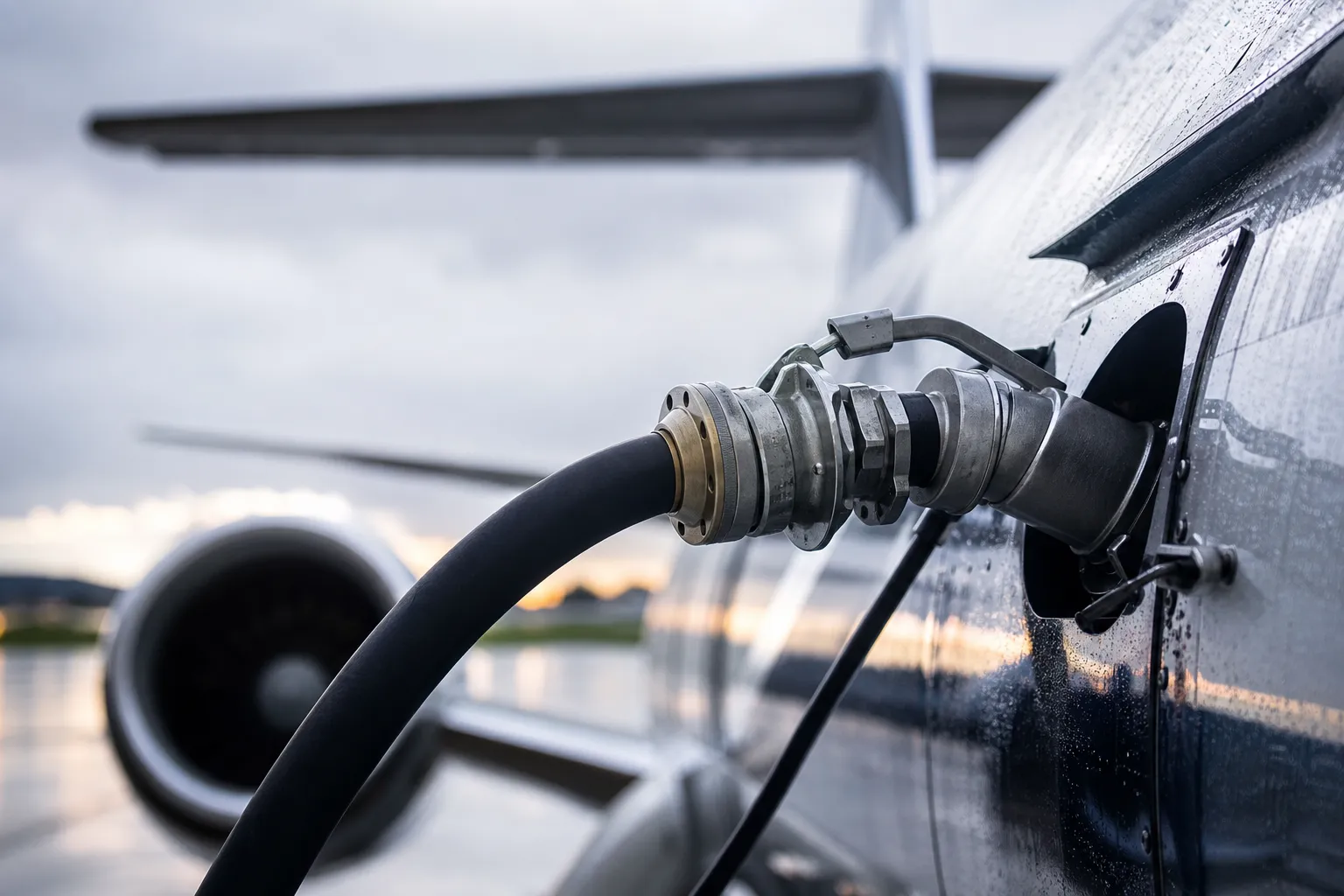
Legal obligations become real at the fuel farm. For ReFuelEU Aviation Austria compliance, the practical work happens where SAF is blended, stored, documented and delivered into aircraft, and Vienna Airport is the country’s principal node for that activity.
Aviation fuel suppliers operating in Austria must be able to demonstrate that the fuel they make available meets the minimum SAF share and that the SAF component satisfies the Regulation’s sustainability criteria. This entails:
The managing body of Vienna Airport and the operators of its fuel infrastructure play a facilitation role: they must enable access to SAF-containing fuel and to the storage, blending and hydrant infrastructure through which it is delivered. In practice this means coordinating fuel infrastructure access, storage segregation where required, and the documentation that accompanies each uplift. Airlines and suppliers should engage Vienna Airport’s sustainability and fuel-operations contacts early to understand published SAF uplift capabilities, lead times for arranging SAF-inclusive deliveries, and the manifest and documentation standards used on site.
Vienna Airport’s sustainability information is the starting point for confirming current uplift capability and the practical procedures at VIE; regional aerodromes will have their own, typically more limited, arrangements that should be confirmed directly.
Business aviation operators face particular contractual checkpoints. Where a business jet operator is within scope, its handling agreements and fuel-supply arrangements must dovetail with ReFuelEU: the operator needs assurance that fuel uplifted at VIE carries verifiable SAF content, that documentation is provided to support the operator’s own reporting, and that responsibility for any SAF premium and for shortfall risk is clearly allocated. Even where an operator sits below the activity threshold, it should retain the assessment evidence and monitor its position, because incremental growth in Union departures can bring it into scope in a later year.
Reporting is where compliance is proven. Regulation (EU) 2023/2405 requires obliged entities to report annually, to have their reports independently verified, and to submit them through the channels established by the Member State’s competent authority. For Austria, that means collecting the right data, securing verification, and lodging reports through the national route.
Reports must capture the substance of the obligation, which for the core entities includes:
Independent verification is not a formality. Verifiers examine whether the reported volumes reconcile to underlying delivery and uplift records, whether the SAF claimed genuinely qualifies under the Regulation’s sustainability criteria as referenced in EASA guidance, and whether the mass-balance chain of custody is intact and free of double-counting. Obliged entities should treat verification readiness as a year-round discipline: the data must be captured contemporaneously at each uplift, not reconstructed after the fact. Engaging the verifier early, ideally at the point of designing the data system, reduces the risk of an adverse verification statement that could expose the entity to enforcement.
Reports are submitted through the route designated by Austria’s competent authority, following the templates and formats provided under the EU framework. The European Commission’s ReFuelEU Aviation pages are the reference point for implementation guidance and reporting templates, while the national submission channel is determined by the authority designated in Austria. Operators and suppliers should confirm, before the compliance deadline, the exact portal or submission address, the accepted file formats, and the deadline itself, verifying these against the Commission guidance and the Austrian competent authority’s own published instructions rather than relying on assumptions carried over from other Member States.
| Party | Reports on | Verified by |
|---|---|---|
| Aviation fuel supplier | Total fuel supplied and SAF/synthetic share per Union airport | Independent verifier |
| Aircraft operator | Fuel uplifted versus yearly fuel requirement per Union airport (uplift/anti-tankering) | Independent verifier |
| Airport managing body / fuel infrastructure | Facilitation measures and infrastructure access supporting SAF delivery | Authority oversight |
ReFuelEU Aviation Austria enforcement is a national responsibility. The Regulation requires each Member State to designate a competent authority and to lay down effective, proportionate and dissuasive penalties for breaches, then to apply them.
Austria must designate the authority responsible for monitoring and enforcing ReFuelEU. National policy and implementation context in the transport and climate field sits with the relevant Austrian federal ministry responsible for climate action, mobility and technology, while operational civil aviation oversight in Austria is exercised through the civil aviation authority, Austro Control. Obliged entities should confirm the specific designated competent authority for ReFuelEU reporting and enforcement, and its contact route, from the responsible ministry and Austro Control, and the national legal information system (RIS), before submitting reports or responding to enforcement correspondence, because the reporting counterparty and the enforcement counterparty must be correctly identified.
Penalties under the framework are administrative in character and calibrated to the nature and gravity of the breach. Suppliers who fail to meet the SAF-share obligation and operators who fail the uplift requirement face financial and administrative consequences, and the Regulation is designed so that shortfalls carry measurable cost, ensuring that non-compliance is not cheaper than compliance. The precise ranges, calculation methods and procedural steps applicable in Austria are set by the national penalty framework and should be confirmed against the relevant Austrian legal provisions accessible through RIS. In practice, enforcement typically begins with a review of submitted and verified reports, followed by a request for explanation where figures fall short, and then the imposition of the applicable administrative measure.
Administrative penalties in Austria are subject to the ordinary routes of administrative review and appeal. An obliged entity that disputes an enforcement decision can generally challenge it through the applicable administrative procedure, including before the competent administrative court, and the availability, deadlines and forum for such challenges are governed by Austrian administrative law. Because appeal deadlines are strict, any entity receiving an enforcement decision should obtain advice promptly and preserve the underlying compliance records that support its position.
The following staged checklist turns the obligations above into an operational programme for airlines, business jet operators and fuel suppliers.
| Party | Primary obligations (2026) | Reporting responsibility | Typical enforcement risk | Contractual levers |
|---|---|---|---|---|
| Airlines / aircraft operators | Uplift at least the required proportion of fuel needed at each Union airport (anti-tankering) | Annual uplift report, independently verified | Administrative penalty for uplift shortfall | SAF-content warranties, premium pass-through, documentation delivery clauses |
| Fuel suppliers | Ensure minimum SAF (and, from 2030, synthetic) share in fuel supplied per Union airport | Annual supply/SAF-share report, independently verified | Administrative penalty for SAF-share shortfall | Sustainability evidence obligations, mass-balance warranties, price-adjustment terms |
| Airport fuel infrastructure operators | Facilitate access to SAF-containing fuel and refuelling infrastructure | Facilitation and infrastructure measures; authority oversight | Regulatory scrutiny of access facilitation | Infrastructure access terms, documentation standards, service-level commitments |
The following are illustrative drafting points only and must be tailored by qualified counsel to the specific transaction and to Austrian law:
Assembling ReFuelEU Aviation Austria compliance in one place means combining EU legal text, EU-level guidance and templates, and Austrian national and airport sources. Start with the primary Regulation on EUR-Lex to confirm the exact 2026 SAF share, the obligation-allocation articles and the reporting and verification requirements. Use the European Commission’s ReFuelEU Aviation pages for implementation guidance and reporting templates, and EASA’s SAF pages for the technical sustainability and lifecycle criteria your fuel must satisfy. For the Austrian dimension, confirm the designated competent authority, reporting route and penalty framework through the responsible federal ministry, Austro Control and RIS, and engage Vienna Airport’s sustainability and fuel-operations contacts for VIE-specific uplift procedures.
Finally, build record retention into your programme from day one: keep fuel volume data, SAF evidence, mass-balance records and verification statements for the periods required under the Regulation and Austrian law, so that they are available if the competent authority queries a report or opens an enforcement review. Aligning contracts, data systems and verification well before the reporting deadline is the single most effective way to reduce ReFuelEU Aviation Austria compliance risk in 2026.
ReFuelEU Aviation Austria compliance in 2026 is no longer a policy question on the horizon, it is an operational and contractual reality at Vienna Airport and across the country’s aerodromes. The Regulation’s structure is clear: suppliers must deliver the mandated SAF share, aircraft operators must uplift honestly, airport fuel infrastructure operators must facilitate access, and everyone in the chain must report and verify. Getting there requires accurate reading of Regulation (EU) 2023/2405, disciplined mass-balance data, verification readiness, well-drafted supply contracts and correct engagement with Austria’s designated competent authority.
Organisations that align these elements early will treat ReFuelEU Aviation Austria as a manageable annual routine rather than an enforcement exposure, and that difference will define who navigates 2026 smoothly and who does not.
This article was produced by Global Law Experts. For specialist advice on this topic, contact Georg Schwarzmann at Jarolim Partner, a member of the Global Law Experts network.
posted 44 seconds ago

posted 8 minutes ago

posted 10 minutes ago

posted 14 minutes ago

posted 16 minutes ago

posted 18 minutes ago

posted 23 minutes ago

posted 25 minutes ago

posted 27 minutes ago

posted 31 minutes ago

posted 32 minutes ago

posted 40 minutes ago
No results available
Find the right Legal Expert for your business

Send welcome message