
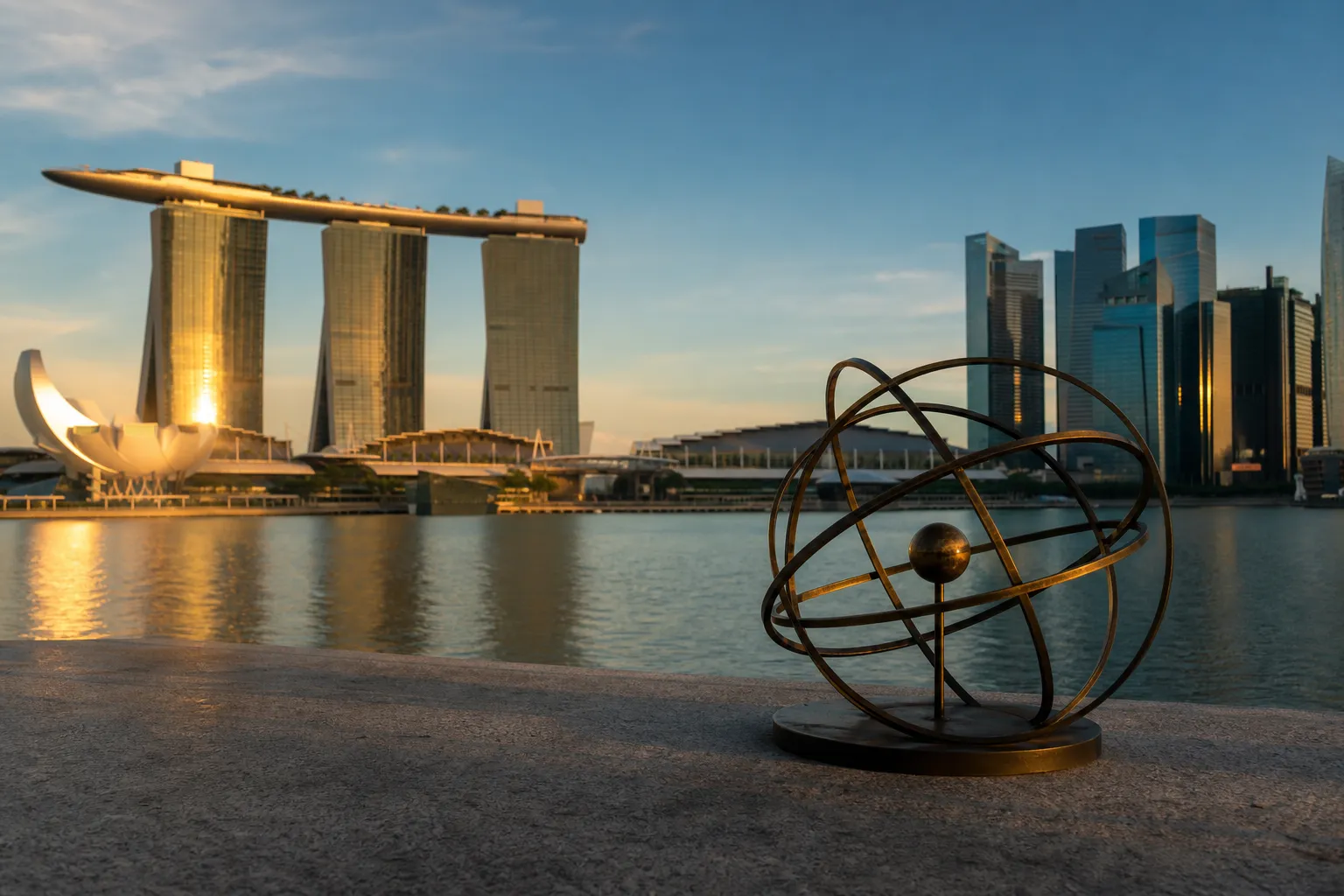
AI patent eligibility singapore has moved from a niche concern for patent attorneys to a boardroom question for any company building AI-driven products. In recent years, the Intellectual Property Office of Singapore (IPOS) has sought views on developing Singapore patent practice, and the UK Supreme Court’s decision on AI inventorship has sharpened cross-jurisdictional debate about who, or what, can be an inventor. For in-house counsel, founders, R&D leads and IP teams, the practical stakes are immediate: whether a machine-learning feature can be protected, how claims should be framed, and what documentation must exist before filing. This guide translates the current legal position and the emerging policy signals into concrete steps you can take now.
Who this guide is for: in-house counsel, founders, R&D and product leads, IP teams, and outside counsel advising Singapore-headquartered or regionally-serving technology and fintech companies on the protectability of AI-driven innovations. It assumes commercial familiarity with software development but no deep patent-law background.
Singapore remains a favourable jurisdiction for protecting software and AI innovations, provided you frame the invention as a technical solution to a technical problem rather than an abstract idea or a bare mathematical method. The statutory tests under the Patents Act 1994, novelty, inventive step and sufficiency of disclosure, continue to govern, and computer-implemented inventions are generally patentable where they deliver a genuine technical effect.
The near-term uncertainty is policy-driven rather than doctrinal. IPOS has consulted on the future direction of Singapore patent practice, and the international backdrop, most notably the UK Supreme Court’s treatment of AI inventorship, is prompting patent offices worldwide to clarify their positions. The practical message for product teams is to file on conservative, well-supported technical claims while monitoring how ai patent eligibility singapore evolves.
Two developments make this a pivotal period for AI patent eligibility singapore. First, IPOS has sought views on developing Singapore patent practice, inviting stakeholders to comment on how the framework should adapt to emerging technologies. Second, the UK Supreme Court delivered its ruling on AI inventorship in the DABUS litigation, a decision that carries persuasive weight in common-law jurisdictions and feeds into how offices such as IPOS and the EPO articulate their own positions.
Because Singapore’s patent jurisprudence draws on common-law reasoning and international harmonisation, decisions from the UK and guidance from the EPO and WIPO can inform how local examiners and courts approach novel questions. That does not mean Singapore automatically imports foreign outcomes, but it does mean well-advised filers watch these developments to anticipate the direction of travel.
The precise scope and outcomes of any consultation should be verified against the IPOS website, which remains the authoritative record. Industry observers generally expect any resulting changes to refine examination guidance rather than overturn the fundamental patentability tests.
Until IPOS confirms any revised practice, the sensible course is to file against the current framework and preserve flexibility. That means drafting claims that survive under existing technical-effect requirements, documenting human inventive contribution rigorously, and keeping a watching brief on published outcomes. Where commercial timelines are pressing, applicants should assess Singapore’s accelerated examination routes, including the SG Patents Fast programme, whose current availability and eligibility should be confirmed with IPOS, to secure early grant.
Singapore’s approach to AI patent eligibility singapore rests on the statutory requirements in the Patents Act combined with examination practice for computer-implemented inventions. The core question is not whether software or AI is involved, but whether the claimed invention delivers a technical contribution beyond the abstract idea itself.
Under the Patents Act 1994, an invention is patentable if it is new, involves an inventive step, and is capable of industrial application, and if the specification discloses the invention clearly enough to be performed by a skilled person. These requirements, novelty, inventive step and sufficiency, apply equally to AI inventions. A machine-learning method claimed in the abstract, without a concrete technical application, may face objections on the basis that it amounts to a scheme, rule or mathematical method as such rather than a patentable invention.
In practice, computer-implemented inventions in Singapore are assessed by considering whether the claimed invention, taken as a whole, makes a technical contribution and provides a technical solution to a technical problem. IPOS examination guidelines address the treatment of computer-implemented inventions, and the analysis is broadly aligned in spirit with the approach taken at the EPO, under which a claim reciting technical means and delivering a further technical effect may be eligible, while a claim to a mathematical method or business method as such is not.
For AI inventions, the technical effect might be improved image recognition accuracy achieved through a specific network architecture, reduced memory consumption during model inference, more efficient signal processing, or a control system that operates a physical device more reliably.
The framing matters enormously. A claim to “an algorithm that predicts customer churn” is likely to be treated as an abstract or business method. The same underlying work, reframed as “a computer-implemented method that reduces processing latency in a fraud-detection pipeline by [specific technical mechanism],” is far more defensible because the technical contribution is concrete and articulated.
Consider four illustrative scenarios drawn from the patterns examiners encounter:
These are illustrative rather than binding, but they capture the decisive dividing line: technical contribution versus abstract or commercial idea. Any Singapore court decision touching on these questions should be checked against the Singapore Courts judgments database.
One of the most frequently asked questions about AI-generated inventions Singapore concerns inventorship: can an AI system be named as the inventor? The short answer under current practice is no. Singapore, in common with the UK and most major jurisdictions, requires a natural person as the inventor.
The UK Supreme Court addressed this directly in the DABUS litigation (Thaler v Comptroller-General, decided in 2023), holding that an inventor must be a natural person and that an AI machine cannot be named as inventor on a UK patent application. While that decision is not binding in Singapore, its reasoning is persuasive in a common-law setting and aligns with the personhood requirement embedded in patent frameworks internationally. The likely practical effect is that Singapore will continue to require a human inventor unless and until the statute is amended.
Where AI tools assist the inventive process, the correct approach is to identify the human beings who made the inventive contribution, for example, the researchers who conceived the technical solution, selected the architecture, or devised the training approach that produced the claimed effect. Omitting a genuine human inventor, or naming a non-contributor, creates vulnerability: incorrect inventorship can be challenged and, in some circumstances, affect entitlement to or the validity of a granted patent. Careful contribution records reduce this exposure.
Inventorship and ownership are distinct. Even where inventors are correctly identified, ownership depends on employment status and contractual arrangements. Inventions created by employees in the course of their duties will generally vest in the employer, but the position is less certain for contractors, consultants and collaborators. Companies developing AI should ensure that assignment clauses expressly cover inventions arising from AI-assisted work, and that agreements with contractors and third-party developers transfer rights and address the use of any pre-existing or open-source materials.
Sound drafting is where AI patent eligibility singapore is often won or lost. The overarching strategy is to anchor every claim in a technical solution to a technical problem, to support that framing with the specification, and to anticipate the standard objections, abstract idea, mathematical method and computer program as such.
Effective claim structures for AI inventions typically foreground the technical mechanism and its effect. Illustrative framings include:
Each template moves the claim away from the abstract model and towards the concrete technical contribution that examiners can recognise as patentable subject matter. Functional language can be useful for breadth, but it should be paired with structural or operational detail so the claim is properly supported.
Sufficiency of disclosure is a live risk for AI inventions. The specification should explain how the invention works in enough detail for a skilled person to reproduce it, and should articulate the technical effect with supporting data where possible. That means describing the architecture or method, the inputs and outputs, the technical problem addressed, and, ideally, experimental results or comparative measurements demonstrating the improvement. A specification that recites only high-level aspirations, without a reproducible technical teaching, invites both eligibility and sufficiency objections.
Filing strategy should reflect commercial urgency and geographic reach. A first filing establishes a priority date, after which applicants generally have a 12-month priority window under the Paris Convention to file abroad, including via the PCT for international coverage and directly in the UK or before the EPO where those markets matter. For time-sensitive inventions, Singapore’s accelerated examination options, including the SG Patents Fast programme, can bring grant forward; eligibility and current timelines should be confirmed with IPOS. Where the invention is central to the business and international enforcement is anticipated, parallel filings preserve strategic options across jurisdictions with differing approaches to computer-implemented inventions.
Not every AI innovation should be patented. Patents require public disclosure and have a finite term, whereas trade secrets and confidential know-how can last indefinitely but offer no protection once independently discovered or reverse-engineered. Copyright protects the expression of source code but not the underlying functional idea, and open-source licensing carries obligations that can constrain commercialisation.
A practical decision flow: if the invention can be detected in a shipped product and delivers a technical effect, lean towards patenting; if its value lies in secret data or process that competitors cannot observe, lean towards trade-secret protection with strong contractual and technical safeguards.
| Jurisdiction | Inventorship (AI named?) | Eligibility approach | Notable case / policy | Practical effect for filers |
|---|---|---|---|---|
| Singapore | No, human inventor required | Technical solution to a technical problem; statutory novelty, inventive step and sufficiency | IPOS consultation on developing patent practice | Frame claims around technical effect; monitor IPOS for practice changes; consider SG Patents Fast |
| United Kingdom | No, inventor must be a natural person | Technical contribution assessment; exclusions for programs and methods as such | UK Supreme Court ruling on AI inventorship (DABUS) | Name human inventors; expect scrutiny of abstract claims; parallel filing preserves options |
| EPO | No, designated inventor must be a person | Further technical effect test for computer-implemented inventions | Established EPO guidance on AI and technical character | Draft to the technical-effect standard; strong alignment supports harmonised claim drafting |
Positions above reflect authoritative guidance from the UK Supreme Court, the EPO and IPOS, and should be verified against those sources before reliance.
Robust documentation strengthens both eligibility arguments and inventorship claims. R&D, product and legal teams should maintain, as a matter of routine:
A phased plan keeps ai patent eligibility singapore work manageable and aligned with commercial priorities:
This article was produced by Global Law Experts. For specialist advice on this topic, contact Geraldine Tan at Amica Law, a member of the Global Law Experts network.
For further reading, consult the IPOS consultation and practice pages, the Patents Act 1994 on Singapore Statutes Online, the UK Supreme Court judgment on AI inventorship, EPO guidance on computer-implemented inventions, WIPO resources on AI and IP, and academic commentary from NUS. For confirmation of any Singapore case law, refer to the Singapore Courts judgments database.
This article provides general guidance on AI patent eligibility singapore and is not legal advice. For advice on a specific invention or portfolio, consult qualified Singapore counsel. You can review the Geraldine Tan, lawyer profile at Global Law Experts, read the announcement of her joining Global Law Experts, or explore the Technology practice, Singapore, the IP & Technology practice page, and the Singapore lawyer directory, Technology filter to find an adviser.

posted 4 minutes ago
posted 5 minutes ago

posted 5 minutes ago

posted 14 minutes ago

posted 14 minutes ago

posted 14 minutes ago

posted 22 minutes ago

posted 23 minutes ago

posted 31 minutes ago
posted 40 minutes ago

posted 40 minutes ago

posted 49 minutes ago
No results available
Find the right Legal Expert for your business

Send welcome message