[codicts-css-switcher id=”346″]

Global Law Experts Logo
choose shipping lawyer singapore

How to Choose a Shipping Litigation Lawyer in Singapore (2026): What Businesses Must Check Before Hiring

By Global Law Experts
– posted 1 hour ago

Choose shipping lawyer Singapore decisions rarely happen at a comfortable pace, they are made under pressure, often within hours of a collision, cargo loss, bunker dispute or arrest threat. This guide gives shipowners, charterers, cargo interests, P&I clubs and insurers a neutral, step-by-step process for hiring the right shipping litigation counsel in Singapore in 2026, a period marked by active pollution enforcement from the Maritime and Port Authority of Singapore (MPA), sustained arbitration activity and increasingly urgent casualty work. It sets out what to check, which documents to prepare, realistic timelines, cost bands and the red flags that separate genuine specialists from generalists.

Every procedural claim is anchored to primary sources, SIAC rules, MPA guidance, the Supreme Court of Singapore and Singapore statutes, so you can verify each point yourself. The aim is simple: help you instruct the right team quickly, on clear terms, before a bad situation becomes worse.

Overview: What this guide helps you do

By the end of this guide you will be able to run a disciplined selection process rather than a panicked one. You will know how to define your dispute, test a firm’s arbitration and casualty credentials, prepare the evidence pack counsel needs on day one, understand likely fee structures, and issue a tight engagement letter. When businesses choose shipping lawyer Singapore representation well, they preserve evidence, secure interim relief and control cost from the outset.

Use this quick checklist as your starting point:

  • Define the dispute and the outcome you actually need (judgment, award, injunction, arrest, LOU).
  • Confirm forum and clause, court, SIAC, LMAA, ICC or mediation.
  • Verify specialist experience in wet and dry shipping work, not general commercial litigation.
  • Test mobilisation speed, can they act within 24–48 hours for a casualty?
  • Check conflicts, insurance and disciplinary records before instructing.
  • Agree fees and scope in writing with an engagement letter and escalation path.

For a companion decision framework, read Arbitration vs Litigation, Singapore shipping disputes alongside this guide.

Eligibility: Who should use this guide

This guide is written for the businesses and professionals who most often need to instruct shipping litigation counsel in Singapore: shipowners and managers facing collision, grounding or cargo claims; charterers in disputes over performance, off-hire or bunkers; cargo owners and their subrogated insurers; P&I clubs coordinating claims and security; hull underwriters; and in-house counsel or brokers managing risk across a fleet.

The right moment to act depends on the nature of the problem. A commercial dispute over a charterparty balance can be scoped over days. A marine casualty, pollution, collision, fire or crew injury, demands near-immediate legal support to preserve evidence, manage regulatory notifications and secure or resist arrest.

When to instruct within 48 hours

If there is any prospect of vessel arrest, pollution reporting to the MPA, salvage, or urgent conservatory relief, you should have counsel engaged within 24 to 48 hours. Delay costs evidence and negotiating leverage. The difference between forum options, and why speed matters differently for each, is explained in Arbitration vs Litigation, Singapore shipping disputes.

Step-by-step: How to choose shipping lawyer Singapore representation

The following ten steps form a repeatable procurement process. Treat them as a sequence, early steps shape the criteria you apply later. Where a matter is urgent, several steps compress into the same day, but none should be skipped.

  1. Define the dispute and the outcome required. Establish whether you need a court judgment, a SIAC or LMAA arbitration award, interim injunctive relief, a vessel arrest or a negotiated LOU. Identify the arbitration seat and governing law, and flag any limitation issues early. A cargo claim on Hague-Visby terms may face a one-year time bar, so the outcome you can realistically pursue is often dictated by the clock. Sample question: “What outcomes are still available given our limitation position?”
  2. Check jurisdiction, the arbitration clause and emergency relief needs. Read the dispute resolution clause in the charterparty or bill of lading. Confirm whether emergency arbitration, a local court injunction, or immediate arrest is the right lever. Assess any MPA or casualty reporting obligations that run in parallel. Ask: “Given our clause, where do we file for urgent relief, and what can the Singapore courts do to assist an arbitration?”
  3. Assess firm and individual lawyer experience. Look at actual caseload, SIAC and LMAA track record, P&I matters handled, casualty response experience, and known involvement in bunker or pollution disputes. A strong shipping litigation counsel will point to concrete matters, not just a practice-area listing. Verify standing through Legal 500 and Chambers rankings, but treat rankings as one signal among several.
  4. Examine procedural capability. Confirm the firm’s local Singapore counsel network, ability to coordinate foreign counsel, admiralty and SIAC practice, and hands-on experience with vessel arrest procedure and letters of undertaking. Ask how many arrests they have run in the last two years and how they handle LOU wording and quantum negotiation.
  5. Verify regulatory and casualty response capability. The lawyer must understand MPA casualty notification and pollution reporting, salvage protocols and cross-border enforcement. With MPA enforcement active, this is not optional. Ask: “Walk me through the first 24 hours after a pollution incident in Singapore waters.”
  6. Test team depth and availability. Establish how quickly they can accept instructions, ideally within 48 hours for a casualty, and whether there is a genuine 24/7 emergency contact. Check the trial and arbitration calendar of the lead lawyer for conflicts with your likely timetable.
  7. Ask about pricing and fee structure. Request clarity on retainers, blended rates, any conditional fee arrangements permitted under Singapore law, provisional arrest costs and how they handle escrow and LOUs. A specialist should be comfortable giving indicative budgets by phase.
  8. Check conflicts, insurance and disciplinary record. Run a conflicts check, confirm professional indemnity cover, and verify the solicitor’s standing through the Law Society of Singapore. Public disciplinary records are a legitimate part of due diligence.
  9. Request references and sample pleadings. Ask for anonymised sample awards or judgments and client references for comparable matters. The quality of drafting and the relevance of prior work tell you more than a pitch deck.
  10. Make the decision and issue a detailed engagement letter. Set out scope, KPIs, an escalation matrix, emergency contacts and a dispute resolution clause governing the engagement itself. A precise engagement letter protects both sides and sets expectations for a fast-moving matter.

The table below maps each phase of a live instruction to who leads and how long it typically takes.

Step Who leads Typical duration / SLA
1. Initial triage & conflict check Senior partner or senior associate Hours, once instructed
2. Emergency instructions & casualty response On-call shipping litigator + operations team Within 24–48 hours
3. Forum / arbitration clause review & strategy Senior counsel (partner) 1–3 business days
4. Evidence preservation & preservation notice Counsel + client operations Immediate, within 24–72 hours
5. Arrest / urgent court application / emergency arbitration Lead counsel + local counsel 24–72 hours to file if urgent
6. Full engagement & case team mobilisation Partner + associate + local counsel Days
7. Running pleadings & the timetable Lead counsel Forum-dependent, set by the tribunal or court
8. Enforcement / settlement / execution Lead counsel + enforcement specialist Weeks–months, depending on enforcement jurisdiction

Sample questions to test arbitration experience (SIAC / LMAA / ICC / HKIAC)

Arbitration competence is where many generalist firms fall short. When you choose shipping lawyer Singapore counsel for an arbitral matter, put specific questions to the lead lawyer:

  • Institutional familiarity. “How many SIAC and LMAA shipping arbitrations have you run to award in the past three years?”
  • Emergency arbitration. “Have you obtained emergency arbitrator relief under the SIAC Rules, and how did you coordinate it with local court measures?”
  • Tribunal appointments. “How do you approach arbitrator selection for a technical casualty dispute?”
  • Enforcement. “Where have you enforced awards under the New York Convention, and what obstacles arose?”
  • Cost control. “How do you manage tribunal deposits and procedural cost under the applicable rules?”

The precise procedural framework, including emergency arbitration and case management timing, is set out in the current SIAC Rules.

Casualty checklist: what counsel must do within 48 hours

For a marine casualty, the first two days are decisive. Competent counsel should, within 48 hours:

  • Secure and preserve evidence, bridge and engine logs, ECDIS/AIS data, VDR downloads, photographs and crew accounts.
  • Manage regulatory obligations, MPA notifications and pollution reporting where applicable.
  • Assess arrest exposure, whether the vessel faces arrest, or whether to arrest a counterparty’s vessel to obtain security.
  • Coordinate with the P&I club, confirm cover, surveyor appointment and LOU strategy.
  • Issue holding correspondence, protect positions on liability and mitigation without conceding.

The choice between court, arbitration and mediation frames everything that follows. The comparison below summarises the trade-offs.

Feature Court (Singapore) Arbitration (SIAC / LMAA / ICC) Mediation
Enforceability High, domestic judgments readily enforced Awards enforceable under the New York Convention Settlement needs conversion to consent award/judgment
Speed for interim relief Fast (urgent ex parte) Emergency arbitration or local court assistance may be needed Slow for urgent relief
Confidentiality Generally public Private Private
Costs predictability Variable Often predictable under procedural rules Generally lower
Best for Admiralty/arrest, public enforcement Complex commercial disputes, international parties Settlement-focused solutions

To illustrate, in a typical casualty scenario an owner facing an arrest threat in Singapore may be able to negotiate a P&I club LOU within days where evidence has been preserved and quantum modelled early, a direct product of instructing specialist counsel immediately rather than waiting for the dispute to crystallise. Note that admiralty jurisdiction and arrest in Singapore are governed by the High Court (Admiralty Jurisdiction) Act.

Required documents: the evidence pack counsel needs

The single biggest determinant of a fast, effective start is whether you can hand counsel a complete evidence pack. Assemble as much of the following as possible before your first substantive call. Missing documents can be chased, but early clarity on contract terms and casualty facts shapes strategy from the outset. When you choose shipping lawyer Singapore representation, arriving with an organised file materially reduces cost and delay.

Document type Why it is needed Typical source
Charterparty(s) Establishes contractual terms, jurisdiction/arbitration clauses Owner / charterer
Bills of lading / waybills Evidence of cargo contract and consignee rights Carrier / agent
P&I correspondence & LOUs To assess P&I positions and security P&I club / insurer
Voyage, bridge & engine logs Evidence for casualty and navigation allegations Master / ship operator
Survey reports (preliminary & full) Damage assessment and cause Independent surveyor
Crew statements & witness contacts Evidence and witness statements Ship operator
Bunker delivery notes / invoices Fuel disputes and contamination evidence Supplier
Insurance policies (hull, P&I, cargo) Assess cover, subrogation and limits Insurer / broker
Photos / video / AIS data Real-time evidence for causation and location Operator / third-party providers
Correspondence (emails, notices of claim) Shows timeline, admissions and mitigation In-house / agent

Timeline and deadlines

Shipping disputes are governed by hard deadlines, and missing one can extinguish an otherwise strong claim. Understanding the key windows before you instruct helps you brief counsel on the urgency accurately.

  • Urgent court applications. The Singapore courts can hear urgent arrest and interim relief applications on short notice where the facts justify it. Judgments and case information are published by the Supreme Court of Singapore.
  • SIAC case management. Under the SIAC Rules, tribunals convene an initial case management conference and set a procedural timetable at an early stage after constitution; confirm current timeframes against the applicable edition of the rules.
  • Cargo claim limitation. Where the Hague-Visby Rules apply, a one-year time bar for cargo claims commonly runs, though the exact position depends on the contract and applicable law. Statutory provisions, including the Carriage of Goods by Sea Act and the Merchant Shipping Act, are published on Singapore Statutes Online.
  • Casualty and pollution reporting. MPA reporting obligations are time-sensitive; consult current MPA circulars and Port Marine Notices for applicable requirements.

Costs and fees

Fee transparency is a hallmark of a professional shipping practice. Expect a specialist to explain their retainer expectations, hourly bands, any emergency uplifts for out-of-hours casualty response, and disbursements such as court fees, agents, process servers and expert reports. Urgent arrest applications and arbitration deposits carry their own cost profile. The indicative ranges below are broad market bands only and will vary significantly by complexity, seniority and stage, always obtain a written quote.

Cost type Indicative range (SGD) Notes
Initial triage & emergency call-out Varies Some firms absorb initial scoping; emergency attendance often billed hourly
Retainer to start work Matter-dependent Depends on matter complexity and stage
Partner hourly rate Higher band Senior partners and niche counsel at the top of the range
Senior associate hourly rate Mid band ,
Court application / urgent arrest Matter-dependent Includes court fees, hearings and process costs; provide security for arrest
SIAC administrative fees & deposits See current SIAC schedule Filing and administrative fees; tribunal deposits shared between parties
Disbursements (surveys, expert reports) Varies by expert Can be substantial in technical casualties
Enforcement (foreign jurisdictions) Jurisdiction-dependent Additional litigation in the enforcement forum

Current SIAC filing and deposit structures are published on the SIAC website; confirm these directly, as institutional fees and deposit schedules are periodically revised. Ask any firm for a written, itemised fee estimate by phase before instructing.

What matters in 2026

Several market and regulatory factors should influence how you choose shipping lawyer Singapore counsel this year. These are the considerations that separate a lawyer equipped for the current environment from one relying on older assumptions.

  • Active MPA enforcement. The MPA maintains a strong focus on marine pollution prevention and port state control. Counsel must be fluent in reporting protocols and enforcement exposure, and alert to international obligations under IMO instruments such as MARPOL.
  • Robust arbitration caseload. Singapore remains a leading seat for international arbitration, so demonstrable SIAC and LMAA experience is an important criterion when selecting counsel.
  • Evolving P&I claim patterns. Scrutiny of LOUs and recovery strategy remains high, so P&I handling experience is a core selection criterion.
  • Urgent casualty work. The tempo of casualty instructions makes genuine 24/7 counsel availability and rapid mobilisation valuable.

Academic commentary on these trends is published by the NUS Centre for Maritime Law, a useful reference when assessing market direction.

Common pitfalls and red flags when hiring

Watch for the following warning signs during selection. Any one of them warrants a harder look before you instruct.

  • No demonstrable arbitration record. A lawyer who cannot point to SIAC or LMAA experience is likely a generalist, not a shipping specialist.
  • Slow mobilisation. Inability to act within 48 hours on a casualty is disqualifying for urgent work.
  • No P&I experience. Unfamiliarity with clubs, LOUs and security undermines effective claims handling.
  • Weak conflicts and insurance checks. A firm casual about conflicts or professional indemnity cover is a risk to your matter.
  • Opaque fees. Reluctance to commit to a fee structure or indicative budget is a red flag.
  • No references or sample pleadings. Refusal to share anonymised work product or client references limits your ability to verify quality.
  • Disciplinary history or poor enforcement record. Check the Law Society of Singapore and probe past enforcement outcomes.

Whatever your matter, insist on an engagement letter with clear KPIs, an emergency contact, an escalation path and a sample budget. This is the single most effective safeguard when you choose shipping lawyer Singapore representation under time pressure.

Conclusion

To choose shipping lawyer Singapore representation well in 2026, run a structured process rather than reacting to the crisis in front of you: define the dispute and forum, test genuine arbitration and casualty credentials, prepare a complete evidence pack, understand the deadlines and costs, and lock the terms into a clear engagement letter. The market rewards specialists who can act within hours and coordinate court, arbitration, P&I and regulatory strands together, against a backdrop of active MPA enforcement and a strong arbitration caseload. Apply the checklists and red flags in this guide, verify each procedural point against the primary sources below, and you will instruct with confidence rather than under duress.

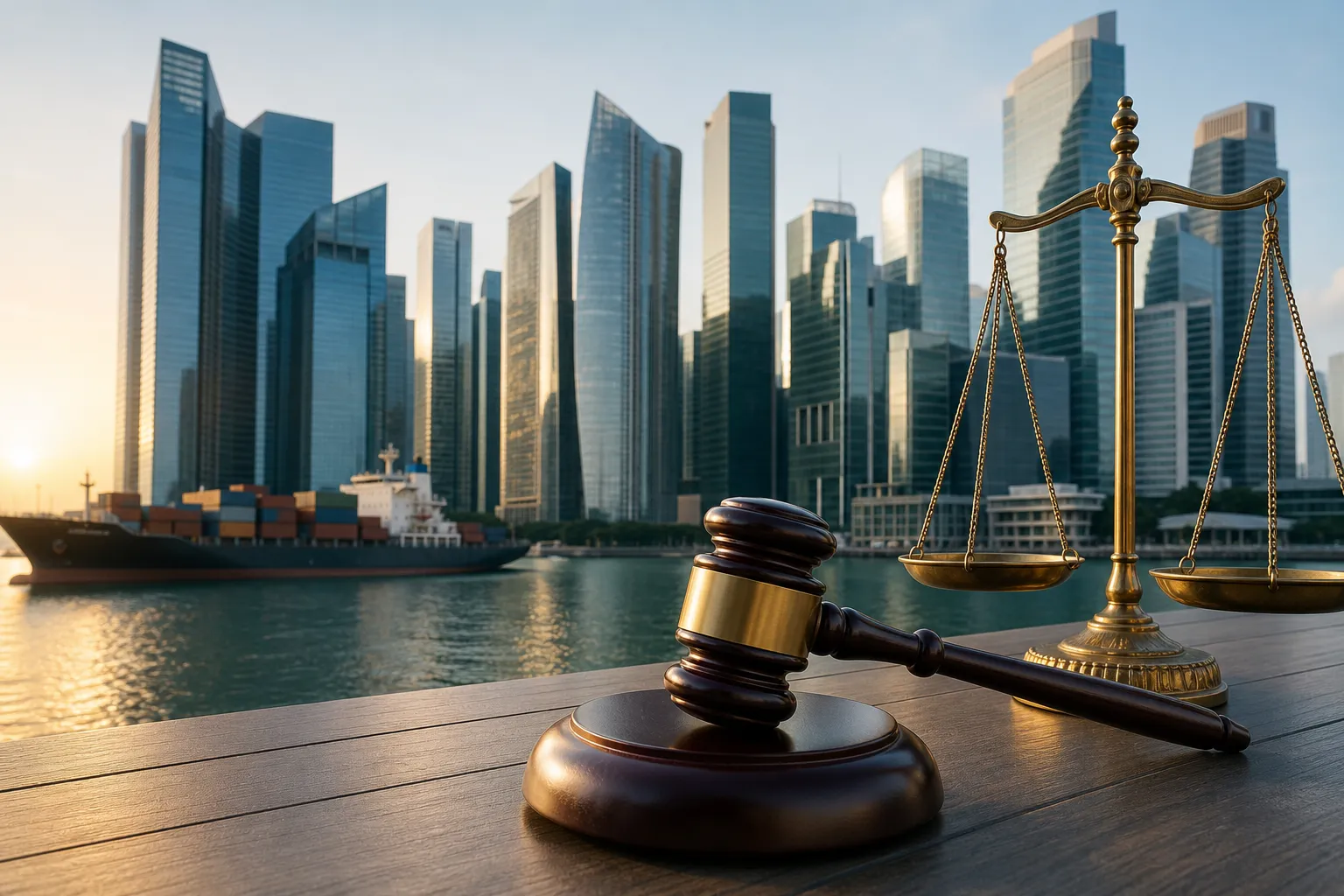
Choose Shipping Lawyer Singapore, Shipping Litigation Lawyer Advising Client In Singapore Courtroom And Arbitration Hearing

Need Legal Advice?

This article was produced by Global Law Experts. For specialist advice on this topic, contact Shanen Nanoo at Incisive Law LLC, a member of the Global Law Experts network.


Sources

  1. Maritime and Port Authority of Singapore (MPA)
  2. Singapore International Arbitration Centre (SIAC)
  3. SIAC Rules and Guidelines
  4. Supreme Court of Singapore
  5. Singapore Statutes Online (AGC)
  6. Law Society of Singapore
  7. International Maritime Organization (IMO)
  8. National University of Singapore, Centre for Maritime Law

FAQs

How quickly can a shipping litigation lawyer respond to a casualty in Singapore?
Reputable shipping counsel should accept emergency instructions and provide a mobilisation plan within 24 to 48 hours. For arrest or urgent court relief, expect filings within 24 to 72 hours depending on the facts and the availability of security. If you are trying to choose shipping lawyer Singapore counsel during an active casualty, prioritise firms with a genuine 24/7 contact and a documented response protocol.
Not for the arbitration itself, parties in a Singapore-seated arbitration may generally be represented by foreign counsel. However, Singapore-qualified counsel is critical for interim relief applications, vessel arrests and local enforcement, so most parties instruct local specialists alongside or in place of foreign lawyers.
Ask for anonymised awards and judgments, case summaries, references to reported decisions where public, and client references for comparable matters. Cross-check mentions in Legal 500 and Chambers and credible academic commentary. Rankings support your assessment but should not replace direct verification of relevant experience.
Scope of work, emergency fees, hourly rates, the retainer amount, disbursements, a dispute-escalation mechanism, confidentiality, and clear instructions on handling LOUs and P&I communications. A precise agreement prevents disputes when the matter moves quickly.
P&I clubs often appoint local law firms or operate approved panels, and may control litigation strategy as part of claims management. Confirm whether counsel is club-appointed or client-instructed, and consider any conflicts that arise from the club also representing other interests in the same incident.
Demonstrable SIAC and LMAA experience, a casualty response track record, P&I handling, enforcement and arrest experience, familiarity with current MPA enforcement practice, and the ability to mobilise fast. Weighing these together is how you sensibly choose shipping lawyer Singapore representation for a modern, high-tempo dispute environment.
file divorce ukraine
By Global Law Experts

posted 30 minutes ago

d&o insurance criminal investigations austria
By Global Law Experts

posted 4 hours ago

Find the right Legal Expert for your business

The premier guide to leading legal professionals throughout the world

Specialism
Country
Practice Area
LAWYERS RECOGNIZED
0
EVALUATIONS OF LAWYERS BY THEIR PEERS
0 m+
PRACTICE AREAS
0
COUNTRIES AROUND THE WORLD
0
Lawyer Profile Page - Lead Capture
GLE-Logo-White
Lawyer Profile Page - Lead Capture

How to Choose a Shipping Litigation Lawyer in Singapore (2026): What Businesses Must Check Before Hiring

Send welcome message

Custom Message