
Our Expert in Burkina Faso
No results available
How to invest in Burkina Faso in 2026 is a question that increasingly lands on the desks of regional expansion teams and in-house counsel, and the answer continues to evolve alongside the country’s regulatory framework. This guide explains, step by step, how foreign investors can enter and operate legally in Burkina Faso this year, from choosing an entry route to securing sector permits, repatriating profits and meeting corporate governance obligations. It grounds every procedural point in the primary legal framework that governs commercial activity in the country. The four takeaways to hold onto are simple: pick the right entry route, secure the correct approvals and sector permits, protect your repatriation rights, and engage local counsel early.
What this guide covers: entity options, required approvals and permits, profit repatriation mechanics, sector-specific rules and compliance timelines, with references to primary legal sources and practical checklists for a first-year investment.
“Foreign investors must plan carefully for sector licences, especially in mining, aviation and financial services, and for company registration formalities. Early engagement with a Burkina Faso corporate team reduces regulatory delays and protects repatriation rights.”
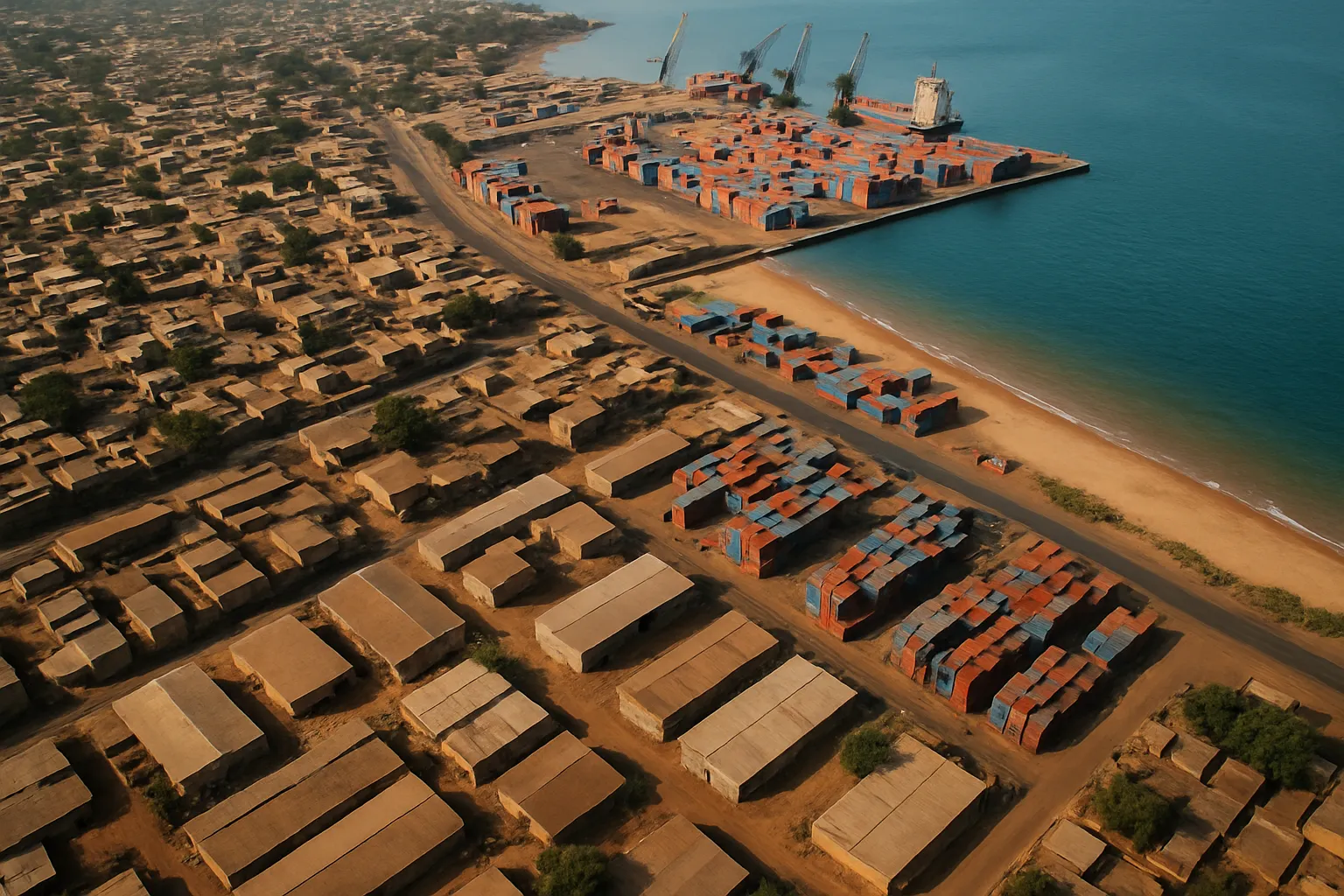
Burkina Faso is a landlocked economy in the West African Economic and Monetary Union (UEMOA/WAEMU), sharing the CFA franc and a common monetary framework administered by the Central Bank of West African States (BCEAO). Its economy remains anchored in commodity exports, with gold and cotton dominating export earnings and agriculture employing the majority of the workforce. For macroeconomic context, investors should consult the IMF Burkina Faso country page and the African Development Bank country profile, both of which publish current GDP, balance-of-payments and sectoral data.
Understanding how to invest in Burkina Faso begins with matching your business model to these sector realities, export orientation, land access and infrastructure gaps all influence the optimal entry structure.
Foreign investment in Burkina Faso is channelled through a handful of established legal forms, most of which derive from the OHADA Uniform Act on Commercial Companies and Economic Interest Groups. OHADA, the Organisation for the Harmonisation of Business Law in Africa, provides the harmonised company-law framework applied across member states, including Burkina Faso. Choosing between a subsidiary, branch, representative office or joint venture is the single most consequential decision an investor makes, because it determines liability, tax treatment and the compliance burden going forward.
The principal vehicles available to foreign investors are:
A subsidiary offers the cleanest ring-fencing of liability and the strongest platform for investment protection, which is why most operating investors default to an SARL or SA. A branch avoids the effort of incorporating a distinct company but leaves the parent directly exposed and is often favoured for short-duration, project-based engagements. Representative offices are inexpensive and quick to establish, yet their inability to trade limits them to a scouting role. Joint ventures unlock local market access and regulatory familiarity but demand careful negotiation of governance, capital contributions and exit terms.
| Feature | Subsidiary (SARL/SA) | Branch | Representative Office | Joint Venture (Local partner) |
|---|---|---|---|---|
| Legal status | Separate legal entity (OHADA company) | Extension of foreign company | Non-commercial liaison | Contractual / company form |
| Liability | Limited to share capital | Parent liable | Parent liable | Shared per agreement |
| Taxation | Local corporate tax | Taxed locally (branch) | Not revenue-generating | Depends on structure |
| Registration complexity | Medium | Medium | Low | High (negotiation) |
| Use-case | Full operations, investment protection | Project-based without separate company | Market research / promotions | Local know-how, market access |
For most investors weighing how to invest in Burkina Faso as a foreigner, the SARL or SA subsidiary is the recommended baseline, it isolates liability, supports profit repatriation and satisfies regulators expecting a locally incorporated counterpart.
Business setup in Burkina Faso follows a defined sequence rooted in OHADA formalities and administered through national registration bodies, with the one-stop business formalities centre (Centre de Formalités des Entreprises, CEFORE, operated under the national investment promotion agency) coordinating much of the process. Under Burkina Faso corporate law, the incorporation of a company must pass through name reservation, constitutive documents, commercial registration, tax enrolment and social security registration before trading can begin.
Regulatory and administrative requirements in Burkina Faso can change through new laws and decrees, and investors should confirm the current position before committing capital. Where a specific decree or reform is cited to you, instruct local counsel to obtain the official published text via the government portal or the official gazette (Journal Officiel) and confirm which categories of company fall within scope, what obligations apply and what penalties attach to non-compliance. Do not rely on second-hand summaries of any new measure without verifying the primary text.
Typical incorporation documents include the statutes, proof of capital deposit, identification for directors and shareholders, and, for foreign parents, corporate documents that may require certified translation into French and legalisation. Company registration through the one-stop centre can, for straightforward cases, be completed relatively quickly, though sector permits, translation and legalisation requirements, and any verification steps can extend the overall timeline. Investors should budget for notary fees (where applicable), registration charges, capital deposit and professional fees, and should treat all timelines as indicative and dependent on the completeness of the filing. Confirm current fees directly with the CEFORE and the relevant authorities, as they are subject to change.
Several industries are regulated and require sector-specific authorisation beyond ordinary company registration. Sector permits in Burkina Faso are issued by the relevant ministry or specialist regulator, and the application steps, environmental obligations and timelines vary significantly by sector.
Mining investment in Burkina Faso is the archetypal permitted activity and follows a staged licensing model under the national mining code. Investors typically progress from an exploration permit to an exploitation (mining) permit, with an environmental and social impact assessment required before exploitation begins. Community agreements and land access arrangements are integral to the process, and royalties and other fiscal contributions apply on production. Because the mining code sets out precise permit categories, durations and fiscal terms, and has been the subject of reform in recent years, prospective mining investors should verify current requirements through the responsible ministry and confirm the interpretation with local counsel before committing capital.
Aviation activity, including air operators and related services, requires an operating licence and permits from the national civil aviation authority (ANAC). Given the safety-critical nature of the sector, investors should scope authorisation requirements early and factor in the regulator’s review timelines.
Telecommunications and spectrum-based services are subject to licensing by the national telecoms regulator (ARCEP Burkina Faso). Licences may cover network operation, spectrum allocation and access obligations, and applicants should expect technical and financial qualification requirements as part of the process.
Banking, financial services and insurance operate under regional supervision. Banking authorisation in the UEMOA zone involves the BCEAO and the regional Banking Commission, together with the national Ministry of Finance, with capital adequacy, governance and fit-and-proper requirements. Insurance is supervised regionally under the CIMA framework. These sectors demand the longest lead times and the most rigorous documentation.
Navigating approvals efficiently depends on identifying the right authority for each step and anticipating common delays. Filings are generally made in French, and investors should confirm whether a given process is paper-based or available online.
Mining and other land-intensive projects frequently require community consultation and land access agreements. These steps can materially extend timelines and should be planned from the outset, with early engagement of affected communities and documented agreements to reduce later disputes.
Practical tip: because language and completeness of filings drive most delays, prepare certified French documents in advance and confirm current processing times with each authority before you file.
Profit repatriation in Burkina Faso is a legitimate and achievable objective, but it depends on compliance with exchange control rules, tax settlement and bank documentation. Because Burkina Faso sits within the UEMOA zone, foreign exchange and capital movements operate under rules administered by the BCEAO and framed by UEMOA regulations. Understanding this mechanism is essential to any assessment of how to invest in Burkina Faso, because repatriation rights are what ultimately return value to the parent.
Repatriation is executed through a licensed local bank acting in compliance with BCEAO and UEMOA rules. In practice, the sequence is:
Before profits leave the country, the tax position must be settled. Banks will generally require evidence of tax clearance and, where relevant, proof that withholding tax on dividends or other distributions has been paid. Corporate tax and withholding rates applicable in 2026 should be verified against current notices from the tax authority or Ministry of Finance, since rates and reliefs can change and may be affected by applicable double-tax treaties. Investors should not rely on historical figures but confirm the prevailing rates before modelling net returns.
The CFA franc’s arrangement within the UEMOA zone supports convertibility for legitimate, documented transactions, but delays most often arise from incomplete paperwork. To avoid hold-ups: register relevant contracts where required, retain original invoices and contracts, keep resolutions and audited accounts current, and consider early engagement with the tax authority so that clearance is ready when the transfer is instructed. Sample documents a bank may request include the sales or service contracts, invoices, the dividend resolution, audited financial statements and tax clearance evidence.
Corporate governance in Burkina Faso is governed principally by OHADA, which sets out directors’ duties, shareholder meeting obligations and disclosure rules applicable to SARLs and SAs. Directors owe duties of care and loyalty to the company, and management decisions must respect the statutes and the OHADA framework. Companies must convene the required shareholder meetings, including the annual meeting to approve accounts, maintain statutory books and registers, and keep proper accounting records in accordance with the applicable OHADA accounting standards (SYSCOHADA).
Annual obligations typically include the preparation and approval of financial statements, statutory audits where the OHADA thresholds or company form require them, and timely filings with the commercial registry and tax authority. Non-compliance can attract penalties and, in serious cases, personal exposure for directors. Because official documents and filings are prepared in French, foreign parents should ensure their local representative or director can manage the compliance calendar and that key corporate documents are properly translated. A disciplined compliance calendar, tracking meeting dates, filing deadlines and licence renewals, is the most effective safeguard against inadvertent breaches.
The following sequence maps a typical first year for an investor working through how to invest in Burkina Faso, from planning to first repatriation. Timelines are indicative and depend on sector and filing completeness.
Selecting the right advisers is decisive for a smooth entry. Prioritise firms with demonstrated OHADA company-law experience, sector-specific expertise (particularly for mining, aviation or financial services), a track record with the relevant regulators, and the language capability to manage French-language filings and negotiations. For cross-border deals, confirm the team’s experience with international transactions and repatriation structuring. Agree a clear scope of work and fee structure at the outset, whether fixed-fee for incorporation, milestone-based for permits, or retainer for ongoing compliance, and conduct due diligence on the firm’s regulatory relationships.
To identify suitable advisers, consult the Burkina Faso lawyers directory and review the profile of Corporate and Mining Law counsel in Ouagadougou, whose appointment to Global Law Experts reflects recognised jurisdictional expertise.
Knowing how to invest in Burkina Faso in 2026 means combining the right entry route with the correct approvals, disciplined governance and secure repatriation planning, all while confirming the current regulatory requirements before you commit. The prudent next step is to engage Global Law Experts member counsel for a jurisdiction-specific engagement, confirm the current legislative and sector permit position, and use a first-year checklist to sequence your entry.
This article was produced by Global Law Experts. For specialist advice on this topic, contact Bobson COULIBALY at SCP YANOGO BOBSON, a member of the Global Law Experts network.

posted 21 minutes ago

posted 36 minutes ago

posted 36 minutes ago

posted 42 minutes ago

posted 1 hour ago

posted 1 hour ago

posted 2 hours ago

posted 2 hours ago

posted 3 hours ago

posted 3 hours ago

posted 3 hours ago

posted 4 hours ago
No results available
Find the right Legal Expert for your business

Send welcome message