

Our Expert in Italy
No results available
Who it’s for: HR directors, in-house counsel, recruiters and multinational employers hiring non-EU nationals for work in Italy.
What it delivers: a step-by-step employer playbook from quota planning to nulla osta filing, entry visa, residence contract and post-arrival obligations.
Read time: approximately 14 minutes.
Last updated: 2 October 2025 (DPCM), reviewed 31 August 2026.
Hiring non-EU workers under Italy’s Decreto Flussi is now a planning exercise that begins months before any worker sets foot in Italy. The multi-year Prime Ministerial Decree (DPCM) programming framework fixes entry quotas for the 2026–2028 cycle, giving employers unusual visibility over available places but also compressing the practical battleground into a narrow set of pre-compilation windows and “click days. ” Because places are allocated on a first-come, timestamped basis through the Interior Ministry’s dedicated online portal (the Sportello Unico per l’Immigrazione system, accessed via the Ministero dell’Interno’s ALI platform), the employers who succeed are those with a complete, verified file ready before the window opens.
This guide sets out what employers must prepare, in what order, and what happens after a nulla osta is granted.
The central message is simple: even where quota volumes are relatively generous, demand routinely outstrips supply within a very short time of a click day opening. Employers who wait for the calendar to appear before assembling contracts, accommodation proof and candidate documentation risk losing their place to better-prepared applicants. For an overview of related support in Italy, see Employment lawyers in Italy, Global Law Experts.
The Decreto Flussi is not a single event but a multi-year planning instrument published in the Gazzetta Ufficiale. For the 2026–2028 cycle, the governing DPCM sets the maximum number of entries and distributes them across defined work categories. Understanding the structure is the first step in any credible headcount plan.
For the 2026–2028 programming period, the DPCM authorises a substantial multi-year total of entries for non-EU workers (in the region of half a million across the three years, as set out in the official decree). Employers should always confirm the exact authorised figures directly from the decree as published in the Gazzetta Ufficiale, because the annual and category sub-allocations, not the headline aggregate, govern any individual hire. The procedure is administered under the framework of the Testo Unico sull’Immigrazione (Legislative Decree No. 286 of 25 July 1998), which governs the nulla osta procedure and the underlying employer obligations. The volumes are split across categories including:
Because the total is spread over three years and across categories, the volume available for any single category in a single year is a fraction of the headline number. Planning against the correct sub-quota, not the aggregate, is essential.
Each annual cycle is governed by a calendar issued by the Ministero dell’Interno. The dedicated portal opens a pre-compilation window ahead of the click days, and click days are typically scheduled for the seasonal and non-seasonal categories on separate dates. Employers should always verify the exact pre-compilation and click-day dates for the relevant year from the Ministero dell’Interno’s official communications, as these are fixed annually. The distinction matters: pre-compilation lets employers assemble and validate the application in advance, while the click day is the moment the completed application is formally transmitted and timestamped. Hiring non-EU workers under Italy’s Decreto Flussi therefore succeeds or fails largely during the pre-compilation phase, not on the click day itself.
The Ministero dell’Interno’s online portal is the single official channel through which employers file. Treat it as a technical system that rewards preparation and punishes incomplete files. The following sequence reflects how the process works in practice.
Before anything else, the employing entity must have valid digital credentials (such as SPID, CIE or CNS) to access the Ministero dell’Interno’s online services and must confirm the identity of the person filing on the company’s behalf. This includes ensuring the company’s registration details are current and that the signatory has authority to bind the employer. Identity and access failures are a common early obstacle; resolve them well before the pre-compilation window opens rather than during it.
Pre-compilation exists to let employers load and validate every element of the application ahead of the click day. A complete pre-compiled file should include the employer’s identifying data, the candidate’s identity documents, the proposed employment contract, evidence of suitable accommodation, and any translations required. The single most important discipline is completing pre-compilation early: an application saved and validated during the pre-compilation window can be transmitted as soon as the click day opens.
On the click day, employers submit their pre-compiled applications and each submission receives a timestamp. Places within each category are processed in order of receipt, and applications are considered against the available sub-quota. Because oversubscribed categories can be exhausted quickly, the technical readiness of the file, validated, error-free and ready to transmit, is decisive. Hiring non-EU workers under Italy’s Decreto Flussi is, at this stage, a matter of timing and preparation.
Because major omissions typically lead to rejection rather than a chance to correct, the file must be complete before pre-compilation closes.
A recurring point of confusion is responsibility for filing. The answer is unambiguous: the employer, not the worker, files the nulla osta al lavoro.
The nulla osta, the authorisation to employ a specific non-EU worker, is applied for by the employer through the Ministero dell’Interno’s online portal, under the framework of the Testo Unico sull’Immigrazione. The employer is responsible for the accuracy of every declaration in the file, for the proposed contract, and for the accommodation and treatment commitments made to the authorities. The worker’s role only becomes active later, at the consular and residence-permit stages.
Depending on the category and the specifics of the recruitment, the procedure may require a verification that the role could not readily be filled from the domestic or EU labour market. Where required, this involves engaging with the competent public employment centre (Centro per l’Impiego) and observing the applicable timing before the quota-based hire can proceed. Employers should confirm early whether their route triggers this step, because it affects the overall timeline and must be sequenced correctly against the pre-compilation window.
The quality of the file determines whether a timely submission converts into an approved nulla osta. This section is the practical core of hiring non-EU workers under Italy’s Decreto Flussi, the action checklist HR and legal teams should build against.
The proposed contract of stay for work (contratto di soggiorno per lavoro) must set out the essential terms of the engagement: role and duties, place of work, duration (fixed-term or indefinite), working hours, remuneration and the notice regime. The contract should reference the applicable national collective bargaining agreement (CCNL) and reflect its minimum standards. A precise, compliant contract is not a formality, it is a substantive condition of the authorisation.
Remuneration must meet or exceed the level set by the relevant CCNL for the role and sector. Under-quoting salary to reduce cost is a false economy: it exposes the application to rejection and the employer to later liability. Confirm the correct collective agreement for the activity and grade the worker accurately within it before finalising the contract.
Employers must be able to demonstrate that suitable accommodation is available to the worker, meeting the standards the authorities expect. The broader documentary package typically includes:
Quota places are distributed by category first, with certain sub-allocations reserved for nationals of countries that have concluded bilateral cooperation arrangements with Italy on migration. Employers should therefore plan against the specific category and, where relevant, nationality-linked sub-quota that applies to their intended hire, not the headline three-year figure.
Where places within a category are not exhausted on the click day, or where earlier applications fall away, residual capacity may remain available. Applications drawing on a given annual quota are generally accepted up to the end of the relevant calendar year, subject to the terms of the applicable decree and Ministry instructions. This can create a secondary opportunity for employers who missed the initial click day or who identified a hiring need later in the year, provided capacity remains in the relevant category. Always confirm the current cut-off dates in the official Ministry communications.
Securing the nulla osta is a milestone, not the finish line. A defined sequence follows before the worker can lawfully begin work and reside in Italy.
Once the nulla osta is issued, the worker applies for the entry visa (visto per lavoro subordinato) at the competent Italian consulate in the country of residence, following the guidance of the Ministry of Foreign Affairs visa portal. The consular stage requires the worker to present the nulla osta together with supporting documentation; appointment availability and processing times vary by post, so this stage should be initiated promptly after issuance.
After entry on the work visa, the worker must attend the Sportello Unico per l’Immigrazione to sign the contratto di soggiorno and then apply for the permesso di soggiorno per lavoro, typically submitting the application through the designated post office (Poste Italiane) kit and completing formalities with the Questura. This is where the earlier commitments on employment terms and accommodation are confirmed in practice. The employer’s cooperation at this stage, providing the necessary documentation and confirming the engagement, is essential to a smooth completion.
The end-to-end sequence, from nulla osta to a live permesso di soggiorno, can take several weeks or longer, driven largely by consular appointment availability and processing at the Sportello Unico and Questura. Employers should build realistic lead times into start-date commitments and avoid promising a fixed onboarding date until the visa stage is under way.
Compliance does not end when the worker starts. Hiring non-EU workers under Italy’s Decreto Flussi carries a full set of ongoing employer duties, identical in substance to those owed to any Italian employee, plus immigration-specific obligations.
The employer must register the worker for social security with INPS and pay the corresponding contributions, and must ensure workplace accident and occupational-disease coverage through INAIL. The mandatory hiring communication (Comunicazione Obbligatoria / UNILAV) must also be filed within the legal deadline. These registrations underpin the worker’s social protection and are a core compliance obligation from the start of the employment relationship. Payroll must accurately reflect tax withholdings and social contributions from the first pay cycle.
The worker is entitled to the full protections of Italian employment law and the applicable collective agreement: minimum pay, working-time limits, rest and leave, health and safety, probation rules and lawful termination procedures. The terms delivered in practice must match those declared in the nulla osta file, divergence creates both employment and immigration exposure.
Beyond ordinary employment duties, the employer must observe immigration-specific requirements, including reporting relevant changes to the employment relationship or the worker’s status where required. Keeping documentation current and cooperating with residence-permit renewals protects both parties and reduces the risk of sanction.
The following 30/60/90-day framework converts the process into a schedule HR and legal teams can execute against, anchored to the pre-compilation and click-day calendar.
| Feature | Seasonal (agriculture/tourism) | Non-seasonal (employment) | Domestic / care workers |
|---|---|---|---|
| Typical contract length | Short-term / seasonal | Indefinite or fixed-term | Full-time or part-time household contracts |
| Click-day timing | Specific seasonal click day | Separate non-seasonal click day | Separate click day for domestic/care |
| Key employer documents | Seasonal-specific contract, housing proof | Full employment/stay contract, social security plan | Domestic contract, employer declarations |
| Post-arrival registration | Standard Sportello Unico / contract signing | Standard, plus potential integration measures | Standard, with attention to social protections |
| Employer liabilities | Wages, INPS, INAIL as applicable | Full employment protections | Household-specific working time and protections |
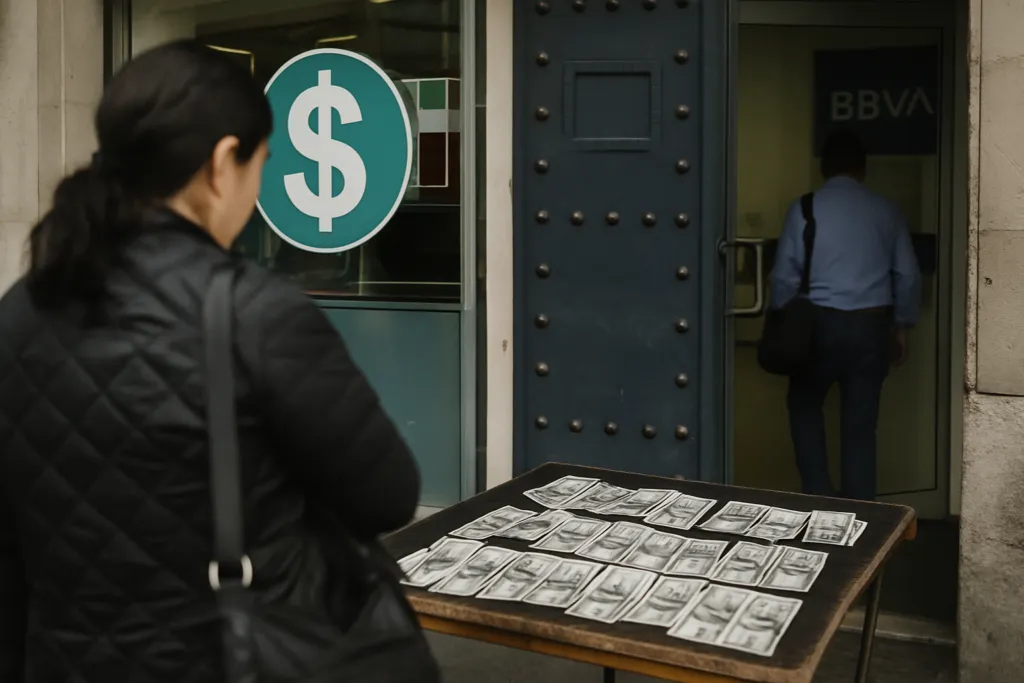
Alt: Employer filing a nulla osta on Italy’s Interior Ministry portal, hiring a non-EU worker.
Hiring non-EU workers under Italy’s Decreto Flussi rewards employers who treat the process as a project with a fixed calendar and an unforgiving submission mechanic. The 2026–2028 programming framework gives multi-year quota visibility, but success is decided in the pre-compilation window and on the click day, so the file must be complete, compliant and validated in advance. From the employer-filed nulla osta through the consular visa and permesso di soggiorno to INPS and INAIL registration, each stage depends on accurate documentation and correct sequencing.
This article is general guidance and does not constitute legal advice; the quotas, calendars and procedural requirements must be applied to your specific facts and the current official instructions published by the Ministero dell’Interno. For tailored support, consult Employment lawyers in Italy, Global Law Experts, review the expert profile at Global Law Experts, and read the feature A pillar of labour law expertise in Italy.
This article was produced by Global Law Experts. For specialist advice on this topic, contact Stefanie Lebek at DM&P Legal&Tax, a member of the Global Law Experts network.

posted 33 minutes ago

posted 58 minutes ago

posted 1 hour ago

posted 2 hours ago

posted 2 hours ago

posted 2 hours ago

posted 2 hours ago

posted 2 hours ago

posted 2 hours ago

posted 2 hours ago

posted 2 hours ago
posted 2 hours ago
No results available
Find the right Legal Expert for your business

Send welcome message