
Our Expert in Guinea
No results available
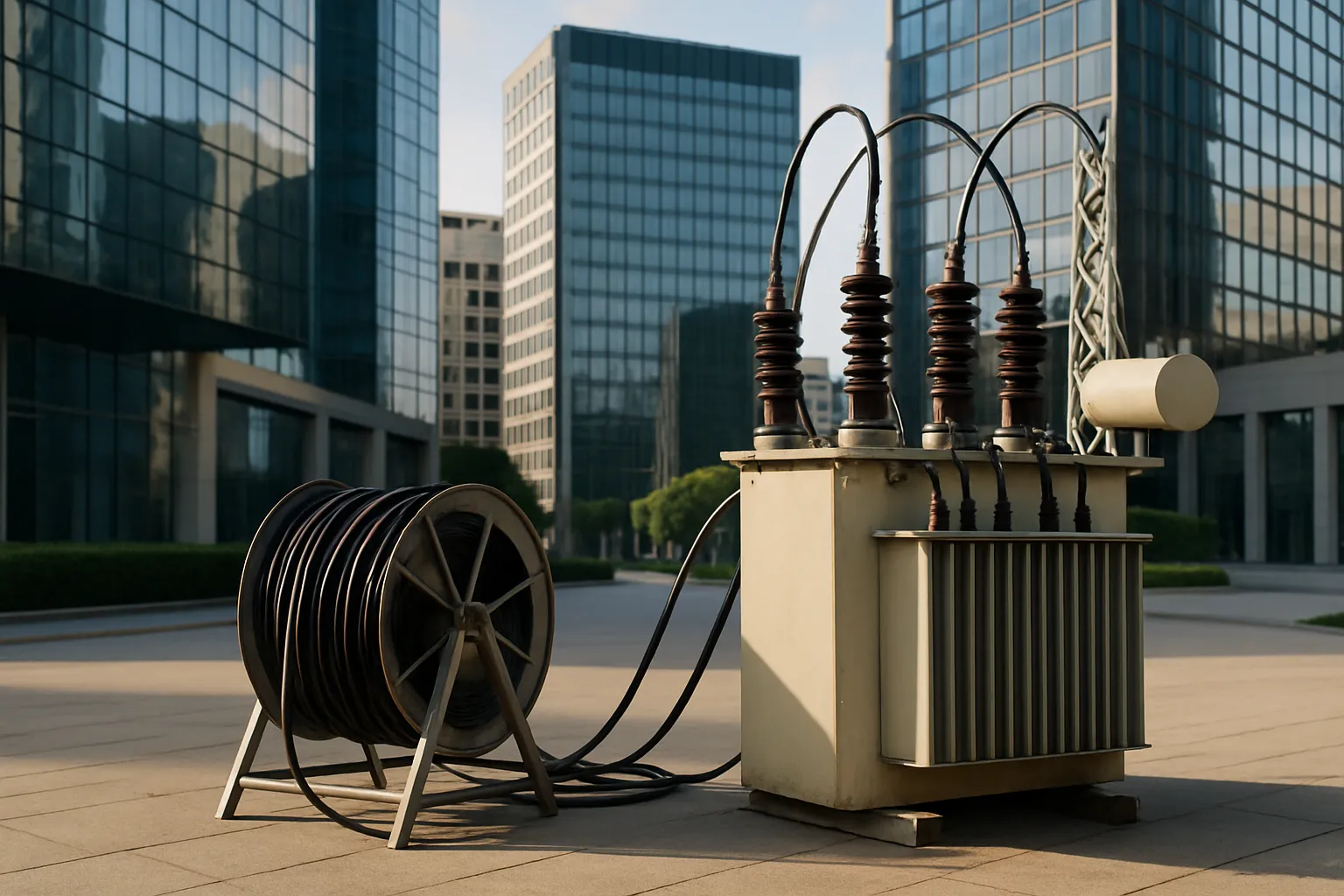
Wheeling electricity Guinea is fast becoming the decisive question for independent power producers, mining operators and industrial energy managers as the country moves toward more market‑oriented electricity rules. The core issue is simple to state and complex to execute: can you move power you generate across the public grid and sell or consume it at a distant point, and what will it cost in licences, fees and risk? This guide takes a clear position, for most IPPs and miners with existing grid proximity, wheeling is a structure worth pursuing, and you should begin the licensing and study work early rather than waiting for a final reformed legal framework.
Below you will find the licensing checklist, a worked charges example, contract clause essentials, a decision matrix and a practical board‑level checklist. This is general information, not legal advice.
The short answer for 2026 is: increasingly plausible, but on regulated terms that are still crystallising. Historically, Guinea’s electricity sector has been organised around a largely vertically integrated public utility model, with Électricité de Guinée (EDG) as the incumbent utility, which has left limited formal space for open third‑party access. Reform of the sector’s legal framework is under discussion, and any new electricity legislation is expected to move the sector toward more market‑oriented rules and to clarify open access and third‑party access, the legal foundations of wheeling. Because the specific text and article numbers of any reform are not yet settled, treat detailed procedural provisions as provisional and confirm them against the enacted law.
For an IPP or a mining company, this matters because wheeling lets you use the existing transmission and distribution network to deliver electrons to a buyer or a captive load without building a dedicated line across difficult terrain. Our recommendation is direct: if your project sits near existing network capacity and you want commercial flexibility, pursue wheeling electricity Guinea rights as a primary route, and treat private wire as a fallback where reliability demands total control. Start regulatory engagement early, licence processing and grid studies are the critical path, not the physical works.
Wheeling, also called open access or third‑party access, is the transport of electricity generated by one party over a transmission or distribution network owned by another, for delivery to a buyer or a captive site at a different location. The generator pays the network owner a regulated charge for the use of the wires (the transmission use of system, or TUS, fee) plus an allocation for losses, and retains the commercial relationship with the offtaker.
It is important to distinguish three commercially distinct models, because the licensing and cost consequences differ sharply:
The legal basis for wheeling rests on the concept of the network as a public utility subject to a regulated right of access. Where a statute or regulator establishes open access, the network operator is generally obliged to grant capacity on non‑discriminatory terms, subject to physical availability and payment of regulated charges. The anticipated change under sector reform is to make that right of access explicit and enforceable, which is precisely why the window to prepare is now.
Securing wheeling electricity Guinea rights is a sequence of licences, permits and agreements. Miss one and your commercial operation date slips. Below is the checklist we work through with clients, with the responsible authority indicated in each case. The ministry responsible for energy (currently structured within the Government of Guinea’s energy portfolio) is the primary point of contact for licence procedures, connection and permits; confirm the current ministry designation, as departmental names have changed over successive governments.
A well‑prepared application dossier accelerates the process. Assemble: corporate and financing documents; a technical description of the plant and connection; a grid impact study; environmental and social documentation; land and wayleave evidence; and your proposed metering arrangement. Submit the generation licence and connection request early, they gate everything downstream. Where the network operator must carry out a connection or impact study, factor that lead time into your critical path; it is frequently the longest single item.
Reform of Guinea’s electricity legal framework is expected to formalise open access permits and to set out the tariff‑setting and dispute framework for wheeling. Until any final text is published in the Journal Officiel or on the relevant official portal, treat specific article numbers and procedural detail as provisional. Our practical guidance: structure your applications and contracts so that they can be adapted to the final wording without renegotiation, for example, by referencing “the applicable regulated wheeling charge as determined by the competent authority” rather than a fixed figure. When new legislation is enacted, confirm the final articles and update your dossier.
The economics of wheeling electricity Guinea projects turn on the charges you pay to move power across the network. Understanding the components, and where they are negotiable versus regulated, is essential before you commit to a wheeling model.
Wheeling and TUS charges are typically regulated: the competent sector authority approves the methodology and the rates, so the network operator cannot charge arbitrarily. The tariff structure usually separates a capacity charge (for the network capacity you reserve, expressed per MW) from an energy charge (for the volume actually transported, expressed per MWh), plus ancillary services and a loss allocation. International frameworks published by institutions such as the World Bank on transmission pricing provide reference logic that West African regulators commonly draw on.
Losses fall into two buckets. Technical losses are the physical energy dissipated as power flows through lines and transformers; they rise with distance and loading. Commercial losses reflect metering error and unbilled consumption. In a wheeling arrangement, the generator is usually required to inject additional energy to cover the technical loss on the path, or to pay a monetary loss allocation. The allocation may be a fixed percentage or a nodal/marginal calculation; the fixed‑percentage approach is simpler and more common in emerging markets.
Consider a 10 MW transfer over a defined transmission path with an assumed 6% technical loss, using illustrative proxy rates (confirm actual regulated rates before relying on any figure):
The total wheeling cost is the sum of capacity charge, TUS energy charge, ancillary services and the loss you fund (in energy or money). Build this into an input‑driven spreadsheet, MW, distance, loss %, TUS rate, so you can test sensitivities before signing. The figures above are illustrative only and do not represent official Guinean tariffs.
Where charges are regulated you cannot negotiate the rate, but you can negotiate how it is applied: the loss factor used (fixed vs actual), the treatment of reserved but unused capacity, indexation and pass‑through of future regulatory changes, and the settlement period. Lock in a mechanism that protects you from retrospective tariff changes and that credits you for capacity you release. These structural terms often matter more to project returns than the headline rate.
A wheeling transaction typically requires two contracts working in tandem: a power purchase agreement (PPA) between generator and offtaker, and a separate wheeling agreement between the generator (or offtaker) and the network operator. Both must interface cleanly with the applicable grid code and system operator orders.
Settlement is only as reliable as the metering. Require certified, sealed meters at both injection and delivery points, agree the read frequency, and specify a fallback (estimation methodology) where a meter fails. A sample clause approach: “Settlement shall be based on validated metered data from certified meters at the Injection Point and Delivery Point; where a meter is found defective, energy shall be estimated using the average of the [three] preceding equivalent periods, subject to reconciliation on repair.”
The wheeling agreement must defer to the applicable grid code and to lawful system operator instructions for safety and stability, while preserving your commercial protections. A workable curtailment‑compensation clause reads: “Where the System Operator curtails scheduled wheeled energy other than for a Force Majeure event or a breach by the Generator, the Network Operator shall [credit/compensate] the Generator for curtailed volumes at the [agreed rate], save for curtailment required for system security up to [X hours] per year.” The bracketed choices are where negotiation happens.
Beyond the paperwork, wheeling depends on satisfying the network’s technical requirements. Underestimating this workstream is a common cause of delay.
The connection agreement should set clear milestones: completion of studies, energisation of the connection assets, commissioning tests, and the reliability/performance demonstration that precedes commercial operation. Define who is responsible, and who pays, for any network reinforcement identified by the impact study, and cap your exposure to reinforcement cost where possible.
Metering must meet the accuracy class required by the applicable grid code, be certified, and be subject to periodic validation. Agree in advance the calibration schedule and the procedure for challenging suspect data. Robust metering protects both revenue and your defence against disputed loss allocations.
In an open‑access system your injections are subject to system operator dispatch and to curtailment rules. Understand the curtailment hierarchy, whether renewable or priority generation ranks ahead of you, and the extent to which curtailment is compensated. Where you require firm delivery, for example to a 24/7 mine, you may need to combine wheeling with firming arrangements or reserve capacity, at additional cost.
Wheeling introduces a three‑party risk web, generator, network operator and offtaker, so risk allocation must be explicit.
Key risks to allocate include curtailment, force majeure, network outages, third‑party claims and transmission operator liability. Network operators typically seek to limit their liability for outages to a defined cap or to exclude consequential loss; you should push for meaningful compensation for uncompensated curtailment and for a carve‑out where the operator is negligent. Indemnities should be mutual and capped, with force majeure carefully defined to avoid it swallowing ordinary operational risk.
Realistic timing is a board‑level input. For a wheeling electricity Guinea project where network capacity already exists, expect roughly 6–12 months from decision to commercial operation. Where the network requires reinforcement, or where studies and permits stack up, plan for 12–18 months or more. These estimates are indicative; actual timelines depend on the specific project and current administrative practice.
A faster track is realistic where spare capacity exists, the connection is straightforward and metering is uncontroversial. A full approval, with reinforcement works, environmental permitting and a contested capacity reservation, takes materially longer. Sequence your applications so the generation licence and connection study begin on day one.
Enforceability is a genuine consideration in an emerging open‑access regime. Regulatory disputes over access, priority and tariff can arise, and administrative remedies can be slow. Build a tiered dispute clause: good‑faith negotiation, then expert determination for technical/metering issues, then arbitration for the balance. Consider the regional dimension, ECOWAS and the West African Power Pool frameworks are relevant where transfers cross borders, and specify a neutral, enforceable arbitral seat. Note that Guinea is a member of OHADA, whose Uniform Act on Arbitration and the CCJA arbitration mechanism may also be relevant to dispute resolution structuring.
This is the decision at the heart of the matter. The table below compares the three routes across the dimensions that determine project feasibility. Our position: wheeling tends to win for most grid‑adjacent IPPs and miners seeking commercial flexibility; private wire wins where absolute reliability control is non‑negotiable.
| Dimension | Wheeling (Open Access / TPA) | Private wire / Dedicated line | Sale via local supplier / trader |
|---|---|---|---|
| Licensing & approvals | Generator licence, supplier/trader authorisation if selling, grid access/TUS permit, connection agreement, possible capacity reservation; regulator tariff approvals | Limited licences (generator + wayleave); connection approvals if it interconnects with the public network; simpler if fully off‑grid | Supplier/trader needs supply authorisation; buyer may only need metering/connection; fewer approvals for the generator |
| Costs (CapEx / OpEx) | Lower CapEx using existing network; recurring TUS/wheeling fees and losses raise OpEx; exposure to tariff changes | Higher CapEx for the dedicated line; lower recurring OpEx; predictable ownership costs | Low CapEx for buyer; supplier charges margin plus TUS; predictable price under a long‑term PPA |
| Control over dispatch | Limited, subject to system operator dispatch and curtailment; commercial scheduling required | High, direct control over the dedicated line, limited curtailment exposure | Lower, supplier manages dispatch; buyer relies on contractual remedies |
| Tariff predictability | Medium, regulated fees plus negotiated margin; subject to tariff review | High, cost‑recovery via amortisation; predictable if fixed | Medium‑High, depends on supplier credit and structure; possible pass‑through |
| Timeline to implement | 6–12 months if capacity exists; longer with reinforcement | 12–24 months (construction, wayleaves, permits) | Shortest, concurrent with supplier contracting and metering |
| Enforcement & regulatory risk | Disputes over access, priority and tariff; remedies exist but can be slow | Lower regulatory intervention once the asset exists; commercial disputes remain | Regulatory oversight of suppliers; counterparty and supplier solvency risk |
| Suitable for | IPPs seeking market access; miners selling/buying over the grid where capacity exists | Very large captive loads near generation with critical reliability needs | Buyers wanting low CapEx and simplicity, or where wheeling is impractical |
Use this one‑page checklist to move from decision to execution:
For licensing context, our team advising on Energy matters in Guinea, including IPP and PPA licensing, can assist, and you can review the Guinea electricity law overview for the wider reform picture.
Wheeling electricity Guinea is shifting from a largely theoretical possibility toward a more practical, regulated route to market as sector reform clarifies open access and third‑party access. For most IPPs and miners with existing grid proximity, the recommendation is clear: consider wheeling as a primary structure, begin the licensing and connection studies early, and negotiate the charges mechanism, curtailment compensation and metering terms with care. Reserve private wire for cases where absolute reliability control justifies the higher capital cost, and use a licensed supplier where simplicity outweighs control. Prepare your contracts to flex to the final statutory text, and confirm the published articles once any new law is enacted.
This guide is general information, not legal advice, obtain tailored advice for your specific project.
This article was produced by Global Law Experts. For specialist advice on this topic, contact Aboubacar Sidiki Kanté at ASK AVOCATS, a member of the Global Law Experts network.

posted 3 minutes ago

posted 25 minutes ago

posted 31 minutes ago
posted 1 hour ago

posted 1 hour ago

posted 2 hours ago
posted 3 hours ago

posted 3 hours ago

posted 3 hours ago

posted 3 hours ago

posted 4 hours ago
posted 4 hours ago
No results available
Find the right Legal Expert for your business

Send welcome message