[codicts-css-switcher id=”346″]

Global Law Experts Logo
foreign creditors insolvency japan

When Should Foreign Creditors Hire Japanese Insolvency Counsel? Practical Guide (2026)

By Global Law Experts
– posted 1 hour ago

Search intent: This guide helps international creditors and trustees decide when to instruct Japanese insolvency counsel, the tactical triggers, the cost-versus-benefit calculus, and the step-by-step actions needed to preserve claims and assets in Japan.

Foreign creditors insolvency japan decisions turn almost entirely on timing: engage local counsel too late and you may lose provisional remedies, miss claim-filing windows, or watch Japanese assets dissipate before you can act. For any international creditor or foreign trustee facing a distressed Japanese counterparty in 2026, the trend toward earlier, hybrid out-of-court restructurings, including established frameworks such as Turnaround ADR, can compress the window in which you can secure your position. This article takes a clear position: in most material cases, foreign creditors should instruct Japanese insolvency counsel early, and only a narrow set of small, low-nexus claims justify a wait-and-monitor approach.

Below you will find a side-by-side comparison, a 30/90/180-day playbook, a counsel-selection checklist, and a decision framework you can apply immediately. For an overview of the wider market, see the Bankruptcy Lawyers, Japan (directory), and for author attribution and introductions see the Kanako Watanabe, profile.

About the guidance: This is a practitioner-led decision guide focused on cross-border restructuring and insolvency, court-appointed trustee coordination, claims filing, and provisional remedies. Market norms on fees and timing are labelled as practitioner estimates; all procedural and statutory claims are cited to primary sources listed at the end.

Executive summary, When to hire Japanese insolvency counsel

The short answer for foreign creditors insolvency japan situations is: instruct local counsel at the first credible sign of debtor distress if you have any material exposure or any Japanese nexus. The cost of early instruction is almost always smaller than the value of the assets, remedies and claim priority you risk forfeiting by waiting. Delay is defensible only where your exposure is immaterial, there is no realistic prospect of recovery in Japan, and you are prepared to accept the loss of urgent remedies.

Under Japanese practice, only a locally qualified lawyer (bengoshi) can apply to a district court for provisional attachment, file a proof of claim in the required Japanese format, and appear before or negotiate with a court-appointed trustee. Foreign counsel cannot substitute for these functions. Where speed matters, and in insolvency it almost always does, the decision to hire early is the difference between a secured recovery and an unsecured write-off.

Quick-read decision checklist, hire now if any of these apply

  • Japanese assets. The debtor holds real estate, bank accounts, inventory, receivables or subsidiaries in Japan.
  • Provisional relief needed. You need a provisional attachment (仮差押え) or preservation order to stop assets moving.
  • Material claim value. Your exposure is commercially significant relative to the estate or your portfolio.
  • Cross-border recognition likely. A foreign insolvency proceeding will affect a Japanese estate, or vice versa.
  • Imminent court event. A hearing, creditors’ meeting or filing deadline is approaching.
  • Dissipation risk. There are signs of asset flight or potential fraudulent transfers.
  • Security to perfect. You hold a security interest that requires perfection under Japanese law.
  • Trustee cooperation request. A foreign or Japanese trustee has requested cooperation, information or asset turnover.

The decision dimensions, a side-by-side comparison for foreign creditors insolvency japan

There are two practical routes open to a foreign creditor. Option A is to instruct full-scope Japanese insolvency counsel early, at the first credible sign of distress, pre-filing, or immediately on notice of a cross-border proceeding. Option B is to delay or limit instruction, using your existing foreign counsel or limited local administrative support to monitor the situation until formal Japanese proceedings begin or Japanese assets are identified.

Our position is that Option A is the correct default for creditors with material exposure. Option B is a legitimate but narrow choice. The table below sets out how the two options compare across every dimension that matters to a recovery outcome.

Dimension Option A, Hire Japanese insolvency counsel early (recommended in many cases) Option B, Delay or limit instruction (monitor / engage later)
Typical timing to instruct At first credible sign of debtor distress, pre-filing or immediately on notice of cross-border proceedings After formal filing / when Japanese proceedings are initiated or assets are identified
Cost (fees & retainers) Higher immediate cost (retainer + hourly) but early spend can save far larger downstream losses Lower upfront cost; risk of higher net cost if emergency remedies are missed or claims are subordinated
Access to provisional remedies Full access, counsel can apply for provisional attachment, preservation orders and interim injunctions against disposal Limited or no access until filed; foreign counsel cannot apply directly in Japanese courts
Filing & proving claims Counsel prepares proof of claim, evidence in Japanese format, notarisations and translations, higher accuracy and timeliness Delay may hamper timely filing or produce an incomplete proof of claim; risk of rejection or loss
Court representation & communication Local counsel appears at hearings, negotiates with court-appointed trustees, handles translations Foreign counsel must liaise through agents; delays and missed hearings possible
Recognition & enforcement Counsel coordinates recognition where applicable and advises on Japanese law limits Recognition harder without local counsel; foreign trustee may be unable to enforce measures
Speed & local intelligence Fast, counsel can act immediately and perform on-the-ground investigation Slower; reliant on third-party agents or delayed instructions
Liability & procedural risk Counsel mitigates procedural risk and ensures compliance with Japanese deadlines and formalities Greater risk of missed deadlines, incomplete filings and procedural exposure
Outcomes for recoveries Higher probability of securing assets and maximising recoveries Potentially lower recovery; higher risk of dissipation
Best for Creditors with material exposure, Japanese assets, need for provisional relief or complex cross-border matters Creditors with immaterial exposure, early-stage monitoring, budget constraints and low probability of Japanese assets
Trustee coordination Counsel integrates with foreign trustees and negotiates recognition and cooperation Coordination possible but often slower and more cumbersome

Commentary on the table dimensions

Two short illustrations show how the dimensions play out. A foreign bank holding pledged inventory in a warehouse in Yokohama might face a debtor showing signs of distress; instructing counsel early means a provisional attachment application can be ready to file the moment commencement is signalled, so the collateral can be secured before other creditors move. By contrast, a small unsecured overseas supplier with a modest invoice and no Japanese security interest could reasonably monitor from abroad, filing a proof of claim through counsel only once proceedings were formally commenced.

The recurring pattern is that the value of Option A rises steeply with exposure size, the presence of Japanese assets, and the need for provisional relief. Where all three are present, early instruction is not a close call. Where none are present, Option B is rational. Most real foreign creditors insolvency japan scenarios fall on the Option A side of that line once the numbers are honestly assessed.

Timing triggers, when to instruct Japanese insolvency counsel

The triggers below are the concrete events that should convert a “watching brief” into an instruction. Any single trigger, on a material claim, justifies engaging local counsel.

  • Japanese assets or operations. Real estate, bank accounts, inventory, receivables or subsidiaries in Japan create a recovery target, and a race with other creditors.
  • Security requiring perfection. Where you hold a security interest, perfection and enforcement follow Japanese formalities that only local counsel can execute reliably.
  • Need for provisional attachment or preservation. If assets could move, a provisional attachment or preservation order is the single most time-sensitive step, and it must be sought through a Japanese lawyer.
  • Formal commencement of proceedings. The opening of bankruptcy, civil rehabilitation or corporate reorganisation proceedings triggers claim-filing windows fixed by the court in its commencement order.
  • You are a significant claimant. Large or strategically important creditors gain leverage in creditors’ meetings and negotiations that only local representation can capture.
  • Cross-border trustee cooperation. A request for cooperation, information exchange or asset turnover from a foreign or Japanese trustee should be handled with local advice from the outset.
  • Fraudulent transfer or asset-flight risk. Suspicious pre-insolvency transfers require prompt local investigation and, where appropriate, avoidance action.

Timetable and deadlines, key timeframes

The statutory framework governing claims, deadlines and trustee powers is set out principally in the Bankruptcy Act, the Civil Rehabilitation Act and the Corporate Reorganization Act, official English translations of which are published through the Ministry of Justice’s Japanese Law Translation portal. In every insolvency proceeding the court fixes a period for the filing of proofs of claim (債権届出); the exact window depends on the type of proceeding and the court’s order, so the operative deadline must always be read from the commencement order rather than assumed. Provisional attachment applications, by contrast, are not tied to a claim window, they are urgent, evidence-driven applications made to a district court, and their value depends entirely on acting before assets move.

Because both types of deadline are unforgiving, confirming them with counsel immediately on notice of distress is the safest course. For the statutory basis of these deadlines and trustee powers, consult the Japanese Law Translation portal and, for procedural practice and published judgments, the Supreme Court of Japan’s English portal.

Cost and fee expectations in Japan

Fees are the most common reason foreign creditors hesitate, so it is worth being precise about the structure. The figures below are practitioner estimates attributed to Kanako Watanabe and reflect general market practice; they are not statutory rates and will vary substantially by firm, seniority, complexity and urgency.

  • Hourly rates. Most Japanese insolvency work is billed hourly. Senior partner rates sit at the top of the range, with associate rates materially lower; blended rates depend heavily on the mix of work.
  • Fixed fees for discrete tasks. Well-defined tasks, preparing and filing a proof of claim, or preparing a provisional attachment application, can often be quoted as fixed fees, which helps budgeting.
  • Retainers. An initial retainer is standard, drawn down against time recorded, with top-ups as the matter develops.
  • Success fees. Contingency or success-based fees are uncommon in Japanese insolvency practice and should not be assumed.
  • Translation and notarial costs. Certified translations of contracts, invoices and evidence, plus notarisation and apostille of foreign documents, are a real and recurring line item for foreign creditors.
  • Court filing fees. Statutory court fees and, for provisional attachment, security deposits ordered by the court, are additional to legal fees.

The key point for a foreign creditor insolvency japan budget is that early spend is usually the cheaper path. A modest fixed fee to file a provisional attachment application on time can protect collateral worth many multiples of that fee; a delay that causes the collateral to be dissipated cannot be undone at any price.

How to structure the engagement

When you instruct, define the engagement tightly. Ask for a clear scope (for example, “prepare and file proof of claim” or “prepare and pursue provisional attachment”), a stated retainer with drawdown reporting, a stop-work threshold so costs cannot run away, agreed billing currency, and confirmation of who will handle Japanese-language filings and correspondence. Insist on a conflicts check at the outset, particularly where the debtor is well known or where a large firm may act elsewhere in the group’s restructuring.

Remedies and enforcement, what only local counsel can do

Several of the most valuable steps in a Japanese insolvency are, as a practical matter, available only through a locally qualified lawyer. This is the core reason the timing decision matters.

  • Provisional attachment (仮差押え) and preservation orders. Applications to the district court to freeze assets or preserve the status quo must be made by Japanese counsel and are time-critical.
  • Preservation of evidence and injunctive relief. Orders to preserve evidence or restrain disposal require local applications and locally admissible supporting material.
  • Filing proof of claim (債権届出). In bankruptcy and civil rehabilitation the proof of claim must be prepared in the required format, in Japanese, with supporting evidence and translations, errors here can subordinate or defeat a claim.
  • Negotiation with the trustee (管財人) and creditors’ meetings. A court-appointed trustee controls the estate in bankruptcy; effective engagement and participation in creditors’ meetings require local representation.

Cross-border recognition, when foreign insolvency measures are recognised

Cross-border insolvency japan questions arise whenever a foreign proceeding touches a Japanese estate. Japan has adopted a framework based on the UNCITRAL Model Law on Cross-Border Insolvency, principally through the Act on Recognition of and Assistance for Foreign Insolvency Proceedings, under which a foreign representative may seek recognition and assistance from the Tokyo District Court. In practice, recognition and enforcement of foreign insolvency measures in Japan are subject to domestic law limits, and a foreign trustee will generally need Japanese counsel to seek recognition and to give any foreign measure practical effect against Japanese assets.

For the international principles, consult the UNCITRAL insolvency texts; for regulatory guidance affecting financial institutions and restructuring coordination, consult the Financial Services Agency; and for administrative guidance and legislative updates, the Ministry of Justice.

Liability, risk and procedural pitfalls

The most damaging mistakes made by foreign creditors are almost all a consequence of delay or of trying to run a Japanese matter from abroad. They are avoidable with timely local advice.

  • Missed filing deadlines. The claim-filing window is fixed by the court’s commencement order; missing it can impair or extinguish participation rights.
  • Improper document formats. Proofs of claim and supporting evidence must meet Japanese formal requirements, or they may be rejected.
  • Insufficient translations. Foreign-language contracts and evidence generally require certified Japanese translations to be effective.
  • Misreading trustee notices. Notices from a court-appointed trustee carry deadlines and consequences that are easy to misinterpret without local advice.
  • Failure to perfect security. Security interests not perfected under Japanese law may rank as unsecured in the insolvency.
  • Inadvertent waiver. Informal correspondence or unconsidered settlement discussions can compromise rights.

How local counsel reduces risk

Local counsel converts these risks into managed processes: they diarise and meet statutory deadlines, prepare filings in compliant form, collect and preserve evidence on the ground, secure witness statements where needed, and take the preservation steps that protect collateral. For a foreign trustee, that on-the-ground capability is the difference between a theoretical entitlement and an enforceable outcome.

How to select and brief Japanese insolvency counsel

When you decide to hire a bankruptcy lawyer in Japan, select against clear criteria rather than reputation alone. The strongest candidates combine insolvency specialisation with genuine cross-border experience.

  • Insolvency-specialist credentials. Look for a genuine restructuring and insolvency practice, not general commercial litigation.
  • Court appointments. Lawyers appointed by Japanese courts bring first-hand knowledge of trustee practice.
  • Language ability. Fluent working English is essential for briefing foreign clients and trustees.
  • Cross-border track record. Prior work coordinating with foreign trustees and on recognition issues.
  • Fee transparency. Clear scope, retainer and reporting arrangements.
  • Conflict checks. Confirmed independence from the debtor and other stakeholders.
  • Trustee cooperation. Demonstrated ability to work constructively with court-appointed trustees.

Sample onboarding checklist, documents to provide on day one

  • Proof of debt, with the underlying contracts and invoices.
  • Security documents and any perfection records.
  • Relevant communications with the debtor.
  • Bank statements and payment records evidencing the debt.
  • Witness details for anyone with direct knowledge of the transactions.
  • Corporate registry abstracts for the debtor and relevant Japanese entities.

Minimum terms for the engagement letter

At a minimum, agree scope, retainer amount and drawdown mechanics, hourly or fixed-fee basis, billing currency, a stop-work threshold, language of correspondence and filings, and reporting frequency. Where a retainer or court security deposit is required, agree the escrow or client-account mechanics in writing before work begins.

Practical playbook, the first 30, 90 and 180 days

This staged playbook keeps spend proportionate while protecting the time-critical steps.

  • Days 0–30, triage and provisional measures. Instruct counsel, confirm whether the debtor has Japanese assets, assess dissipation risk, and, where warranted, prepare and file provisional attachment or preservation applications. Confirm claim-filing deadlines from the commencement order the moment proceedings are opened.
  • Days 31–90, file and negotiate. Prepare and file the proof of claim with certified translations and supporting evidence; open lines with the court-appointed trustee; and begin negotiating position and information exchange. Decide whether to escalate on avoidance actions if fraudulent transfers are suspected.
  • Days 91–180, meetings, recognition and enforcement. Participate in creditors’ meetings, pursue any cross-border recognition needed to give foreign measures effect in Japan, and coordinate with any foreign trustee on cooperation and asset turnover. Reassess spend against realistic recovery and conserve where the return no longer justifies the investment.

Decision framework, Choose A when… Choose B when…

Apply this framework directly to your matter. It is designed to give a clear answer, not a hedge.

Choose Option A (hire early) when:

  • You have identifiable Japanese assets or a high-value claim.
  • There is a risk of asset dissipation or fraudulent transfer.
  • You require provisional attachment or urgent preservation.
  • The debtor is already in reorganisation negotiations, or a foreign proceeding will affect Japanese estates.

Choose Option B (delay or monitor) when:

  • The claim is small, there is no Japanese nexus, and the probability of recovery in Japan is low.
  • Your budget is limited and you accept the risk of not obtaining provisional relief.
  • Your foreign trustee has a mandate and Japanese cooperation is not required unless a later trigger arises.

Comparison checklist, what to ask before instructing

Use this one-page checklist as a printable trigger test. If you answer “yes” to any item in the first block, instruct Japanese insolvency counsel now.

  • Does the debtor hold assets or operations in Japan? (Yes / No)
  • Do I hold security that needs perfection under Japanese law? (Yes / No)
  • Do I need provisional attachment or a preservation order? (Yes / No)
  • Have Japanese proceedings been, or are they about to be, commenced? (Yes / No)
  • Is my exposure commercially material? (Yes / No)
  • Is there any sign of asset flight or fraudulent transfer? (Yes / No)
  • Has a foreign or Japanese trustee requested cooperation? (Yes / No)
  • Is a hearing, meeting or filing deadline imminent? (Yes / No)

Next steps

If you have material exposure to a distressed Japanese counterparty, the decision on foreign creditors insolvency japan should be made now, not after the estate is opened. Global Law Experts can introduce you to specialist Japanese insolvency counsel and provide the briefing checklists referenced in this guide. To arrange an introduction, visit the Kanako Watanabe, profile or the Bankruptcy Lawyers, Japan (directory).

This is general information and not legal advice. Consult local counsel for case-specific advice.

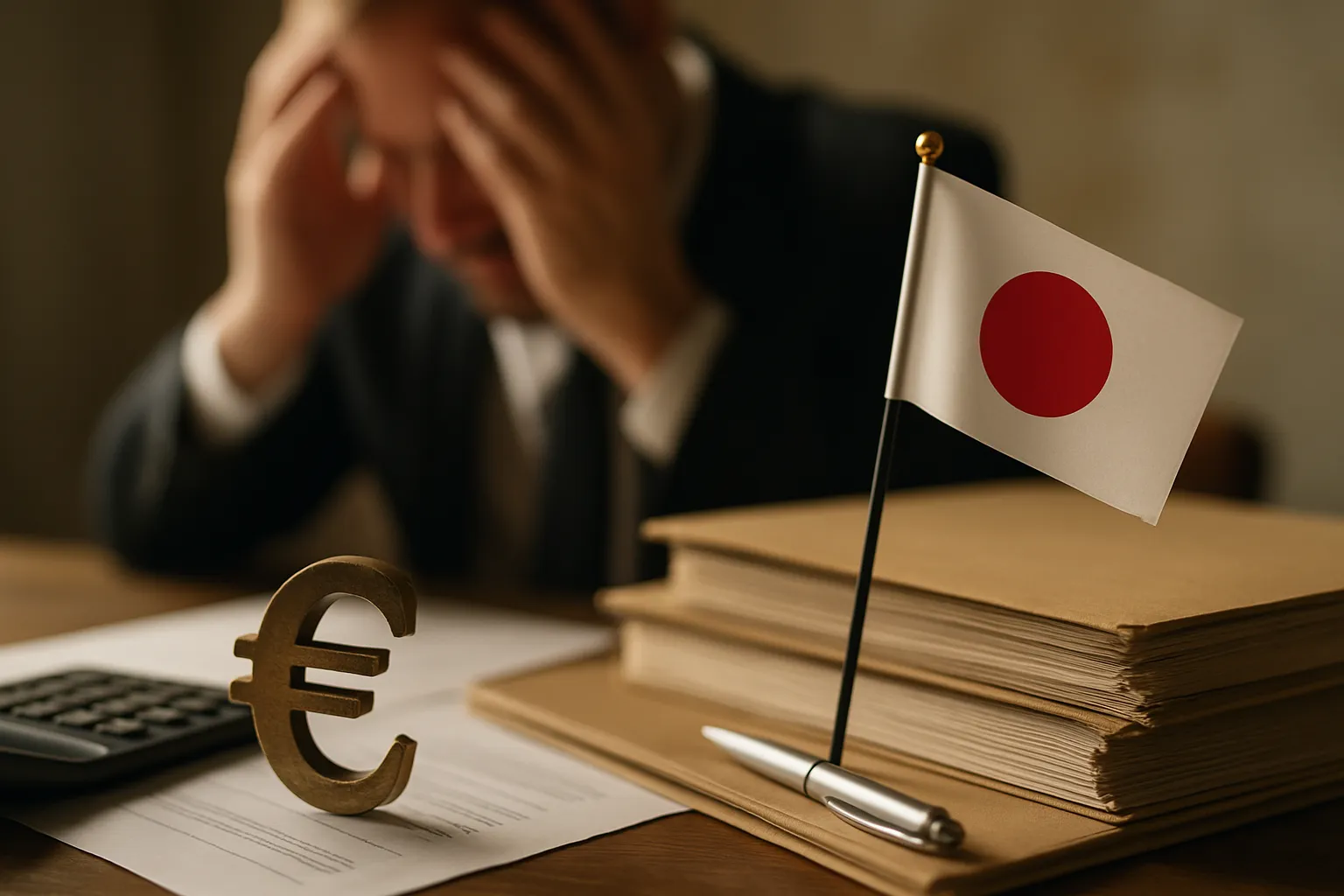
Foreign Creditors Insolvency Japan Briefing With Japanese Insolvency Counsel, Tokyo Courthouse

Need Legal Advice?

This article was produced by Global Law Experts. For specialist advice on this topic, contact Kanako Watanabe at Anderson Mori & Tomotsune, a member of the Global Law Experts network.


Sources

  1. Japanese Law Translation (Ministry of Justice)
  2. Supreme Court of Japan, English portal
  3. Financial Services Agency (FSA), Japan
  4. Ministry of Justice (Japan), English site
  5. Japan Federation of Bar Associations (Nichibenren)
  6. UNCITRAL, Insolvency texts & Model Law
  7. National Diet Library (NDL), Japan

FAQs

How much is the lawyer fee in Japan?
There is no fixed statutory rate. Most Japanese insolvency work is billed hourly, with senior partners at the top of the range and associates materially lower; discrete tasks such as filing a proof of claim or preparing a provisional attachment application can often be quoted as fixed fees. Expect an initial retainer, plus translation, notarial and court filing costs. Success fees are uncommon in Japanese insolvency practice. These are practitioner estimates attributed to Kanako Watanabe and will vary by firm, seniority, urgency and complexity.
There is no single “best” lawyer. The right choice is the one whose insolvency specialisation, cross-border track record, court experience, language ability and fee transparency fit your matter. Assess candidates against the selection checklist above and confirm independence from the debtor. For a starting point, review the Bankruptcy Lawyers, Japan (directory).
Civil legal aid in Japan, administered through the Japan Legal Support Center (Houterasu), is directed principally at individuals of limited means, and commercial insolvency matters for corporate creditors are generally not covered; pro bono support for corporate creditors is rare. For the scope and limits of legal aid and bar rules, consult the Japan Federation of Bar Associations (Nichibenren). Commercial foreign creditors should budget for paid representation.
Typically you will need the proof of debt itself, the underlying contracts and invoices, any security documents, relevant communications, and bank or payment records evidencing the claim, with certified Japanese translations of foreign-language documents and, where required, notarisation. The statutory framework for claims is set out in the Bankruptcy Act and Civil Rehabilitation Act translations on the Japanese Law Translation portal, and the operative deadline is fixed by the court’s commencement order.
In practice, no. A foreign trustee generally cannot apply to Japanese courts, file compliant claims, or enforce foreign measures against Japanese assets without local representation, and recognition of a foreign proceeding is itself a matter to be pursued through Japanese counsel before the Tokyo District Court under the Act on Recognition of and Assistance for Foreign Insolvency Proceedings. The UNCITRAL Model Law on Cross-Border Insolvency sets out the recognition and cooperation principles, but giving them effect in Japan requires local counsel.
The court fixes a claim-filing period in its commencement order, and the exact window depends on the type of proceeding. Because the deadline is set case by case and is strictly applied, you should confirm it with counsel immediately on notice of commencement rather than rely on a general assumption. The statutory basis is in the relevant Acts on the Japanese Law Translation portal.
By Abdulrahman Alhouti

posted 2 hours ago

By Birungyi Cephas Kagyenda

posted 2 hours ago

Find the right Legal Expert for your business

The premier guide to leading legal professionals throughout the world

Specialism
Country
Practice Area
LAWYERS RECOGNIZED
0
EVALUATIONS OF LAWYERS BY THEIR PEERS
0 m+
PRACTICE AREAS
0
COUNTRIES AROUND THE WORLD
0
Lawyer Profile Page - Lead Capture
GLE-Logo-White
Lawyer Profile Page - Lead Capture

When Should Foreign Creditors Hire Japanese Insolvency Counsel? Practical Guide (2026)

Send welcome message

Custom Message