
Our Expert in Singapore
No results available
Arbitration costs Singapore budgets are the single most important variable that determines whether a bank, financier or corporate decides to commence proceedings, settle, or mediate a cross-border dispute. In 2026, that calculation has become both more complex and more transparent following the introduction of the SIAC Rules 2025 and the established International Arbitration Act framework. This guide translates institutional fee schedules and typical counsel practices into realistic, line-item budgets for small, medium and large disputes seated in Singapore. It is written for in-house counsel, CFOs and finance-sector decision-makers who need concrete numbers, not theory. Every figure below is presented as an estimate, grounded where possible in primary sources, and framed so you can pressure-test your own case.
“Practical budgets and cashflow planning, not theoretical fee schedules, determine whether clients commence arbitration. Below are realistic cost bands and mitigation measures drawn from decades of Singapore-seated cases.”
If you need a fast answer to the question of arbitration costs Singapore parties should expect, the ranges below reflect realistic full-case budgets for a Singapore International Arbitration Centre (SIAC) seated dispute in 2026. These are estimates that include institutional fees, tribunal fees, counsel, experts and hearing costs, and they should be read alongside the detailed sample budgets later in this guide. Actual costs vary widely with the facts of each case.
Three takeaways drive everything that follows. First, counsel fees, not institutional fees, are usually the largest line item. Second, cost recovery is realistic in Singapore but rarely complete, so budget on a partial-recovery assumption. Third, the biggest lever you control is scope, narrowing issues, limiting document production and disciplining expert use will move your budget more than any fee negotiation. For context on choosing counsel and the wider market, see our directory of International Arbitration, Singapore practitioners.
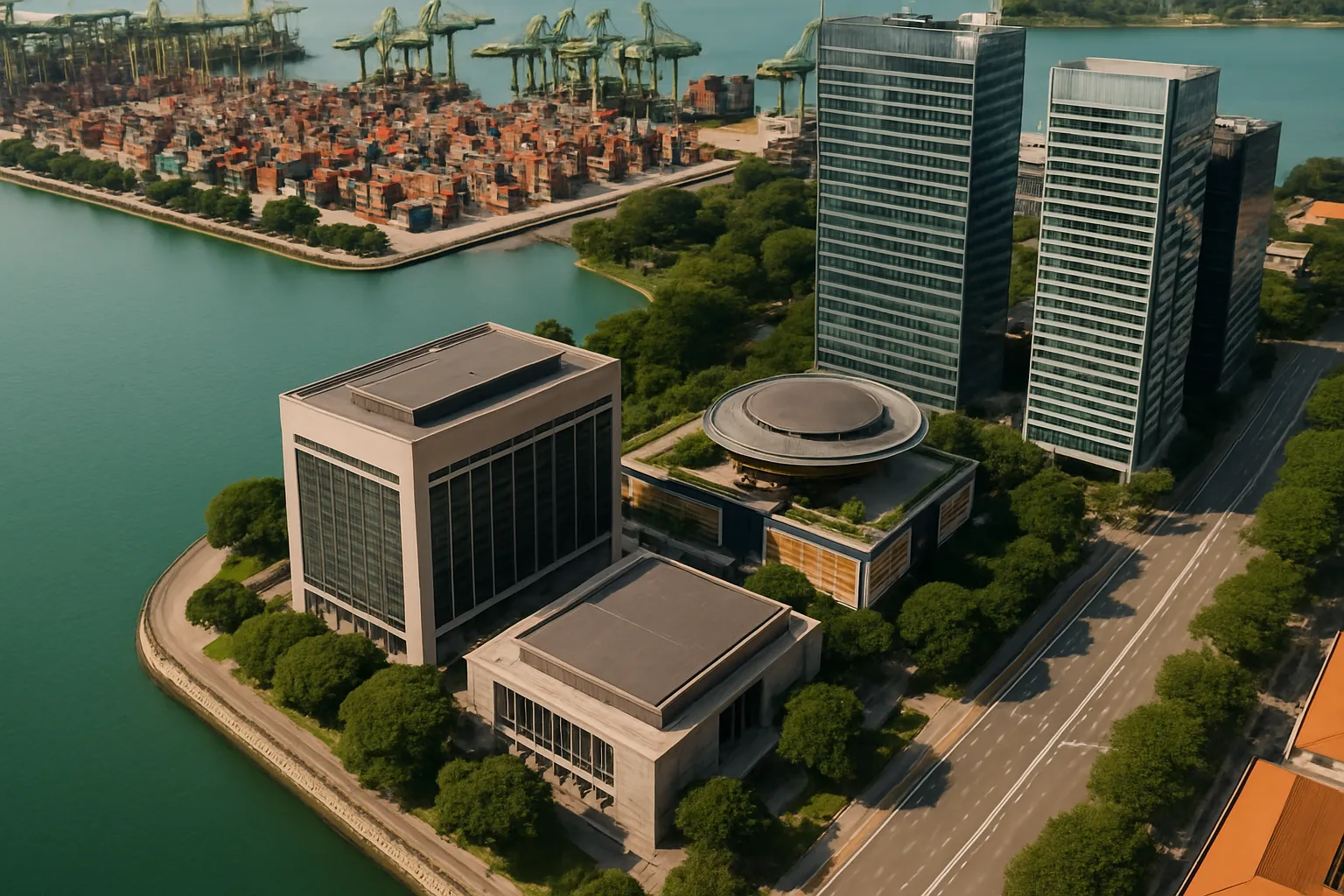
Singapore is consistently ranked among the leading global seats for international arbitration, and that reputation has a direct bearing on cost predictability. A well-supported seat reduces the risk of satellite litigation, procedural challenges and enforcement disputes, each of which can inflate a budget far beyond the tribunal’s own fees. For banks and financiers, whose disputes often turn on enforceability against assets across multiple jurisdictions, the choice of Singapore as a seat is frequently a cost-control decision as much as a legal one.
Singapore’s arbitration framework for international cases is built on the International Arbitration Act 1994, which gives the UNCITRAL Model Law on International Commercial Arbitration force of law in Singapore and implements the New York Convention. The practical consequence is a pro-arbitration judiciary that supports the process, granting interim measures, assisting with evidence, and enforcing awards, while intervening only on narrow, defined grounds. That predictability matters for budgeting: the narrower the scope for court challenge, the lower the tail-risk on your total spend. The statutory basis for these court powers is set out in the Act, published on Singapore Statutes Online.
Parties seated in Singapore typically choose between SIAC administration, ICC administration, or ad hoc arbitration under rules such as the UNCITRAL Arbitration Rules. Each carries a different cost profile. SIAC’s scale-based fees offer strong predictability because both administrative fees and arbitrator fees are calculated by reference to the amount in dispute. The ICC uses a similar ad valorem approach globally, which can be advantageous or more expensive depending on the sum claimed. Ad hoc arbitration avoids institutional administration fees entirely, but shifts the burden of appointment, fee negotiation and case management onto the parties and tribunal, often eroding the notional saving. The comparison later in this guide sets out the practical trade-offs for finance-sector users.
Institutional fees are the most transparent element of arbitration costs Singapore users will encounter, because SIAC publishes its fee schedule. Understanding how those fees are built up is the first step to a defensible budget. SIAC’s charges fall into distinct buckets, and the current schedule and the SIAC Rules 2025 should always be checked directly against the official source before finalising any budget.
SIAC’s institutional charges typically comprise the following components:
Because tribunal and administrative fees are scale-based, a larger claim mechanically increases institutional costs. That is why the amount in dispute is the first assumption to lock down in any arbitration cost estimate.
The SIAC Rules 2025 introduced procedural and administrative reforms that feed into cost calculation, including refinements to case management practices, streamlined and expedited procedures, and updated processes for emergency arbitration and preliminary determination. The practical effect for 2026 budgeting is twofold. First, procedures that allow early or preliminary disposal of unmeritorious claims or defences can materially reduce total spend where they apply. Second, changes to the fee tables and deposit mechanics mean that budgets prepared under earlier rules should be recalculated against the current schedule. Always verify the precise fee entries against the SIAC official site before relying on them.
The ICC applies an ad valorem model for both administrative expenses and arbitrator fees, set against the amount in dispute using published scales. For very large claims the ICC’s arbitrator fee bands can produce higher tribunal fees than SIAC; for smaller claims the difference narrows. The ICC also assesses arbitrator fees within a range, giving some discretion to the institution. For finance-sector users the practical question is less which institution is cheaper in the abstract, and more which offers the enforcement, speed and predictability profile that suits the dispute, the fee difference is often modest relative to counsel costs.
To understand arbitration costs Singapore budgets fully, you need to know where the money goes. Institutional and tribunal fees are visible and scale-based; the variable, and usually dominant, spend sits with counsel and experts. This section breaks down each recipient and the fee models that apply.
Under SIAC administration, arbitrator fees are calculated on the institution’s scale by reference to the amount in dispute, and are funded through the deposits described above. In ad hoc arbitration, arbitrators are typically engaged on an hourly or daily rate negotiated directly, which introduces uncertainty because total fees then depend on hearing length, reading time and deliberation. A sole arbitrator is materially cheaper than a three-member tribunal, often the single largest structural choice affecting institutional-side cost. For finance disputes of moderate value, a sole arbitrator is frequently the proportionate choice.
Counsel fees are usually the largest component of any budget and vary with the seniority and size of the team, the complexity of the matter and the number of hearing days. Singapore counsel typically bill hourly, with rates banded by seniority. As a working guide for 2026, presented as market-informed estimates, not fixed quotes, legal fees are driven by the mix of partner, senior counsel, associate and paralegal time deployed across pleadings, document production, witness preparation, written submissions and the hearing itself. The controllable variables are staffing leverage (how much work is delegated to junior fee-earners), the number of procedural rounds, and hearing length.
A disciplined, tightly-scoped case run by a lean team will cost a fraction of a document-heavy matter run with a large team over a multi-week hearing.
Expert evidence, quantum, accounting, industry or technical, is a frequent and underestimated cost driver in finance and corporate disputes. Expert fees track the volume of data reviewed, the number of reports and rebuttals, and time spent in hot-tubbing or cross-examination. Practical controls include agreeing a single joint expert where feasible, defining the expert’s instructions narrowly, and sequencing expert input so that reports are only commissioned once liability is realistically in issue. Where forensic investigation is required, phase the work and set a budget cap before instructing.
Several line items are predictable and should never surprise a well-prepared budget:
The most useful way to plan arbitration costs Singapore matters is to work from a full-case budget with stated assumptions. Below are three illustrative scenarios for a SIAC-seated arbitration, with comparative notes for ICC administration. All figures are 2026 estimates in Singapore dollars, and each assumes a documents-and-witnesses dispute proceeding to a merits hearing. They are indicative only; your actual budget should be built with counsel against the facts of your case.
Assumptions: sole arbitrator, limited document production, one factual witness per side, a single quantum expert, and a two- to three-day hearing.
Indicative total: typically in the low-to-mid hundreds of thousands of dollars. Sensitivity: early dismissal of a weak claim, or a documents-only procedure with no oral hearing, can bring the figure toward the lower bound.
Assumptions: a sole arbitrator or three-member tribunal, moderate document production with an eDiscovery platform, two to three witnesses per side, one or two experts, and a hearing of four to eight days.
Indicative total: commonly from the mid hundreds of thousands into the low millions of dollars. Sensitivity: bifurcating liability and quantum, or agreeing a joint expert, can shift the budget significantly toward the lower end.
Assumptions: a three-member tribunal, extensive document production, multiple factual and expert witnesses across several disciplines, potential emergency or interim relief, and a multi-week hearing.
Indicative total: frequently several million dollars. Sensitivity: preliminary determination of discrete issues, phased document production and disciplined witness selection are the levers with the largest impact at this scale.
| Institution | Typical institutional fees | Arbitrator appointment method and fee models | Speed / predictability | Key cost drivers |
|---|---|---|---|---|
| SIAC | Scale-based filing, administrative and tribunal fees calculated on the amount in dispute (per SIAC schedule); deposits drawn down over the case. | Institution appoints or confirms; arbitrator fees fixed on the SIAC scale, funded by deposits. Sole or three-member tribunal. | High predictability; expedited and streamlined procedures available under the SIAC Rules 2025. | Amount in dispute, number of arbitrators, document production volume, expert intensity, hearing days. |
| ICC | Ad valorem administrative expenses and arbitrator fees set on published scales against the amount in dispute; arbitrator fees within a range. | Institution appoints/confirms; arbitrator fees assessed within scale bands, offering some discretion. Scrutiny of awards adds robustness. | High predictability with strong global enforcement track record; award scrutiny can add time. | Amount in dispute (fee bands can be higher on very large claims), number of arbitrators, complexity, hearing length. |
| Ad hoc (e.g., UNCITRAL Rules) | No institutional administration fee; parties bear appointing-authority and logistical costs directly. | Parties/appointing authority appoint; arbitrator fees negotiated directly, usually hourly or daily, less predictable. | Lower predictability; depends heavily on tribunal case management and party cooperation. | Negotiated arbitrator rates, hearing length, absence of institutional case management, potential for procedural disputes. |
Managing arbitration costs Singapore parties face is largely about controlling a handful of drivers before they compound. Recognising them early, at the case-assessment stage, is the difference between a budget that holds and one that overruns.
A credible view of arbitration costs Singapore claimants can expect to recover is essential to any budget, because recoverability shapes the commercial calculus. The general principle in Singapore-seated arbitration is that costs follow the event, the successful party is usually awarded a proportion of its costs, but full recovery is the exception rather than the rule, and the tribunal retains a broad discretion.
Tribunals have broad discretion over costs and typically consider the outcome, the parties’ conduct, and the proportionality and reasonableness of the costs claimed. To maximise recovery, keep contemporaneous, well-organised records of legal fees, tribunal deposits, expert fees and disbursements, and be prepared to justify each item as reasonably incurred. Unreasonable conduct, such as pursuing hopeless points, over-broad disclosure requests or procedural gamesmanship, can reduce or reverse a costs award, so cost discipline is itself a recovery strategy.
Singapore’s courts enforce arbitral awards, including costs elements, under the International Arbitration Act and the New York Convention framework, and set aside or refuse enforcement only on the narrow grounds available under the Model Law and the Act. This pro-enforcement stance, reflected in the published judgments of the Singapore courts, is a key reason the seat is attractive to finance-sector users who need certainty that a favourable award can be turned into recovery.
Where there is a real risk that an opponent will be unable to satisfy a costs award, a party may apply for security for costs, requiring the other side to put up funds or a guarantee. Tribunals and, in support, the Singapore courts can grant interim and conservatory measures to preserve assets and the status quo. For banks and financiers pursuing counterparties of uncertain solvency, security for costs and asset-preservation measures can be decisive in ensuring that a costs award is worth pursuing.
Use this ten-point checklist to build and govern a defensible arbitration budget Singapore finance teams can rely on:
Suggested spreadsheet columns: line item, assumption, quantity or hours, unit rate, sub-total, phase, and recovery likelihood. Bold your sub-totals and maintain a one-page CFO summary for board reporting.
The decision to commence international arbitration is ultimately a commercial one, and a clear-eyed view of arbitration costs Singapore proceedings involve is the foundation of that decision. Work through a simple flow: first, run an early case assessment to test the merits and the realistic budget; second, consider whether interim or emergency relief is needed to protect assets; third, weigh mediation or negotiated settlement against the modelled cost-to-recovery ratio; and fourth, if arbitration is the right path, lock down scope, tribunal size and staffing before you file.
Singapore’s enforcement-friendly framework, transparent SIAC fee scales and the procedural efficiencies in the SIAC Rules 2025 make it one of the most predictable seats in which to budget, but predictability only helps those who plan. For a bespoke arbitration budget or case assessment tailored to banks, financiers or corporates, consult a specialist and review the guidance available through our International Arbitration, Singapore resources.
This article was produced by Global Law Experts. For specialist advice on this topic, contact Peter Gabriel at GABRIEL LAW CORPORATION, a member of the Global Law Experts network.
posted 15 minutes ago

posted 34 minutes ago

posted 52 minutes ago

posted 1 hour ago

posted 2 hours ago

posted 2 hours ago

posted 2 hours ago

posted 2 hours ago
posted 2 hours ago
posted 2 hours ago

posted 2 hours ago

posted 2 hours ago
No results available
Find the right Legal Expert for your business

Send welcome message