
Our Expert in Netherlands
No results available
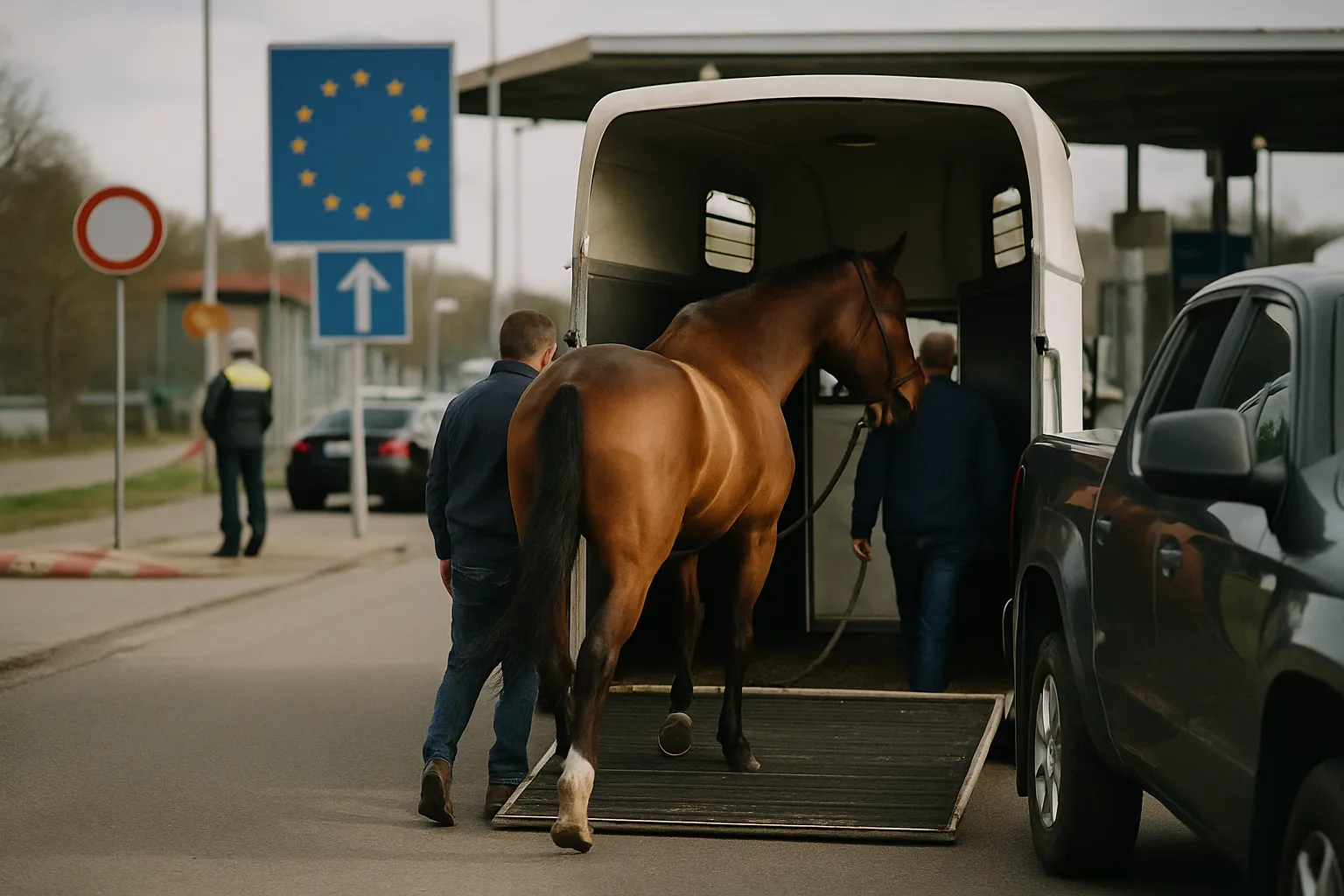
Cross-border horse transport netherlands to Germany is one of the busiest live-animal movements in Europe, and it carries commercial and legal risks that catch buyers, sellers, breeders and hauliers off guard every season. Horses cross this border constantly for sales, breeding, training and competition, and each movement triggers a web of EU welfare rules, national civil law obligations, transport documentation and insurance considerations. When something goes wrong, a horse injured in transit, a defect discovered after sale, or a pre-purchase examination that missed a serious problem, the resulting dispute often straddles two legal systems at once.
This guide sets out, in practical terms, the paperwork you must carry, who bears liability along the transport chain, how post-sale veterinary disputes are resolved, and which court and which law will govern your claim.
Who this guide is for: horse owners, buyers and sellers, breeders, transport companies, competition managers and veterinarians moving horses between the Netherlands and Germany. Purpose: to help you prevent disputes, structure and review sale and transport contracts, and manage post-sale or transport-injury claims quickly and cost-effectively. For tailored advice, consult Paul Bavelaar, Equine lawyer (profile).
Before any horse leaves the yard, work methodically through the essentials. A single missing document or an unallocated liability can turn a routine journey into a costly claim. The checklist below is your first line of defence for cross-border horse transport netherlands operators and private owners alike.
Disclaimer: This is general information and does not constitute legal advice. Contact a lawyer for advice tailored to your situation.
Paperwork is where most avoidable problems begin. Because both countries are EU Member States, movements of equidae fall under a harmonised framework, but the practical steps, who issues what, and when, still require attention. Getting the documentation right protects the horse’s welfare, satisfies border and enforcement authorities, and preserves your evidential position if a dispute later arises.
Every horse must be accompanied by a valid equine passport that identifies the animal. The passport travels with the horse and must be presented on request. Because it establishes the identity and history of the animal, it is also central evidence in any post-sale dispute about which horse was actually sold, examined or transported. Keep the passport with the horse and retain a copy in your records.
Movements of live animals within the EU are governed by the Animal Health Law, Regulation (EU) 2016/429, which sets the framework for health requirements and certification when animals move between Member States. The practical output is an appropriate animal health/movement certificate, where required for the movement in question, issued by an authorised (official) veterinarian confirming the horse’s health status, typically processed through the EU’s TRACES system. The European Commission maintains an official resource on the movement of animals within the EU that explains the certification and traceability requirements in practical terms. Confirm the exact requirements for your specific movement with an authorised veterinarian, as they vary by the purpose of the movement and the animals’ status.
Where certification is required, the issuing veterinarian must be authorised to complete the movement certificate, and any pre-movement examination should be documented. Where a certificate has a validity window, ensure the journey falls within it. For higher-risk movements or where specific disease controls apply, additional attestations may be needed. Confirm the exact certificate type with the issuing vet well in advance, because arranging authorised veterinary attendance at short notice is a common cause of delayed departures.
Beyond disease-status certification, the horse must be fit for the specific journey. This is not a mere formality: an animal that is unfit to travel must not be transported, and moving an unfit horse can breach welfare law and undermine any subsequent insurance claim. Where journey length or conditions require it, obtain and retain a fitness-to-travel confirmation.
The transporter carries its own compliance burden. Under Regulation (EC) No 1/2005 on the protection of animals during transport, those transporting animals in connection with an economic activity must, in the circumstances set out in the Regulation, hold a transporter authorisation; vehicles must be suitable and, for long journeys, approved; and journey documentation must be maintained. The Netherlands Food and Consumer Product Safety Authority (NVWA) publishes practical guidance on animal transport, authorisation and enforcement. In Germany, welfare and transport policy sits at federal level with the Federal Ministry of Food and Agriculture (BMEL), while day-to-day enforcement is carried out by the competent Länder veterinary authorities (the local Veterinäramt).
A properly completed consignment note or journey record links the horse, the transporter and the movement, and is invaluable if you later need to reconstruct what happened.
A cross-border move usually involves several parties, and disputes frequently arise because nobody wrote down who was responsible for what. Clarity at the outset is the cheapest form of risk management in cross-border horse transport netherlands arrangements.
The roles overlap in practice but are legally distinct. The owner holds title and bears ultimate commercial risk. The consignor hands the horse over for carriage. The carrier or haulier physically moves the animal and owes both contractual duties and statutory welfare obligations. The receiving vet inspects on arrival and can provide the contemporaneous evidence that decides who is liable if the horse arrives injured or ill. Identifying each person by name and role before departure prevents the finger-pointing that follows an incident.
In a sale that includes delivery, the parties should decide expressly at what point risk in the horse passes from seller to buyer, on collection, at the border, or on arrival, and who insures the horse during transit. Borrowing from the logic of international trade terms, you can allocate carriage cost and risk clearly rather than leaving it to be implied. The key is to state, in writing, the exact moment risk transfers and who bears the cost of insurance up to that point.
A documented chain of custody, who had the horse, when, and in what condition, is the backbone of any transport dispute. A consignment note recording the horse’s condition at handover, signed by the person releasing and the person receiving the animal, creates a baseline against which later injury or illness can be measured. Combine this with dated photographs at each stage.
Example clause (illustrative only, obtain local legal review): “Risk in the Horse shall pass from the Seller to the Buyer on completion of loading at the Seller’s premises. The Seller shall maintain transport insurance until that moment; the Buyer shall insure the Horse thereafter.”
When a horse is injured or falls ill during a cross-border move, liability can flow along more than one route at the same time. Understanding these routes helps you both prevent claims and pursue them effectively.
The transport contract and the carrier’s terms and conditions are the starting point. They typically set out the carrier’s duties, any limitations of liability, and the notice a claimant must give. Read these terms before the journey, not after an incident: many carriers limit liability or impose short notification windows, and a claim can fail simply because it was reported late.
Regulation (EC) No 1/2005 imposes binding welfare duties on those who transport animals, including requirements on the fitness of animals to travel, the suitability of vehicles, journey planning and the competence of those handling the animals. A breach of these statutory duties can support a liability claim and can also trigger enforcement action by the NVWA in the Netherlands or the competent Länder authority in Germany. The international welfare standards in the WOAH (formerly OIE) Terrestrial Animal Health Code transport chapter provide additional best-practice benchmarks that courts and experts may reference.
Independent of the contract, a driver or handler who causes injury through careless loading, unsafe driving, or failure to check on the horse may be liable in tort. Establishing this requires evidence: the condition of the vehicle, the manner of loading and unloading, and the driver’s conduct en route.
On longer journeys or where a horse shows signs of distress, there may be a duty to seek veterinary attention. Failure to act on obvious signs of illness or injury can aggravate both the harm and the liability. If a vet is called during the journey, keep the report.
Immediate steps after a transport incident:
Insurance is the practical safety net that turns a catastrophic loss into a manageable one, but only if the cover matches the risk and the claim is handled correctly. For anyone regularly involved in cross-border horse transport netherlands to Germany, understanding the policy before an incident is essential.
Horses travelling to competition may need cover that reflects their higher value and specific risks, including cover while stabled away from home and during transit to and from events. Confirm that the policy covers cross-border movement and the specific dates and destinations of the trip.
Read the exclusions carefully. Common pitfalls include exclusions for transporting an unfit horse, failure to comply with welfare law, undeclared pre-existing conditions, and strict notification deadlines. Notify the insurer promptly and in the manner the policy requires, a valid claim can be lost through late or informal notification. Keep every document that supports the claim: the veterinary report, photographs, the transport contract and the consignment note.
Some of the most bitter cross-border disputes arise not during transport but weeks after delivery, when a defect emerges that the buyer believes should have been detected before sale. These cases pull together contract law, veterinary standards and expert evidence.
A pre-purchase examination is only as useful as its agreed scope. The parties should record exactly what the examination covers, clinical assessment, flexion tests, imaging, endoscopy, and what it does not. Many examinations include disclaimers limiting the vet’s responsibility to the specific procedures performed. A buyer who wants comprehensive assurance must commission a comprehensive examination and record its scope in writing.
The examining veterinarian owes a professional duty to perform the examination competently, in line with recognised standards for the procedures undertaken. The scope of that duty is defined by what was agreed and by professional norms, not by a general guarantee of future soundness.
To succeed in a veterinary negligence claim, a claimant must generally establish the following elements:
Independent expert evidence is decisive. Obtain an expert report addressing the standard of care and causation, and preserve the original examination records, imaging and correspondence.
The sale contract is the other battleground. Under the Dutch Civil Code (Burgerlijk Wetboek, Book 7), a seller must deliver a horse that conforms to the contract, and remedies exist where it does not. Under the German Civil Code (Bürgerliches Gesetzbuch, BGB), seller liability for defects and consumer protections operate in a comparable but distinct way. Depending on the facts and the governing law, a buyer may seek rescission or termination of the sale, a reduction in the purchase price, or damages. Seller disclosures, and any deliberate concealment of a known defect, heavily influence the outcome.
Note that the treatment of a live animal as the “goods” sold, and how conformity and warranty rules apply to it, is a recurring point of contention in equine disputes and turns on the specific facts.
Post-sale dispute workflow:
In a cross-border sale, two separate questions arise: which court has jurisdiction, and which country’s law governs the contract. Answering them wrongly, or leaving them unaddressed, can add substantial cost and uncertainty to any claim.
The law applicable to contractual obligations across EU Member States is determined by Regulation (EC) No 593/2008 (Rome I). Parties to a commercial contract can generally choose the governing law, and a clear choice-of-law clause avoids expensive disputes about whether Dutch or German rules apply. Absent a choice, Rome I supplies default rules to identify the applicable law.
Which court may hear the dispute, and how a resulting judgment is recognised and enforced across the EU, is governed by Regulation (EU) No 1215/2012 (Brussels I Recast). Businesses can generally agree an exclusive jurisdiction clause nominating the Dutch or German courts. In the absence of agreement, the Regulation’s default rules apply, which can allow a claimant to sue in more than one Member State depending on the circumstances.
The distinction matters. Where the buyer is a consumer, protective rules can limit the enforceability of jurisdiction and choice-of-law clauses that would otherwise bind a business. A clause that works perfectly between two trading businesses may not achieve the same result against a consumer buyer, so the drafting must reflect the nature of the counterparty.
Where there is a risk that a horse will be moved, sold on, or that evidence will be lost, it may be possible to seek urgent interim measures, such as summary proceedings (kort geding) or a conservatory attachment (beslag) in the Dutch courts, or equivalent interim relief in Germany, to preserve the position while the substantive dispute is resolved. Act quickly, because delay can be fatal to urgent relief.
Most cross-border equine disputes are cheaper to prevent than to litigate. A well-drafted sale and transport contract addresses the predictable flashpoints before they occur. The following clause topics should feature in any cross-border sale.
Example clauses (illustrative only, always obtain local legal review):
The table below summarises the practical differences that matter most for cross-border horse transport netherlands to Germany. Always confirm the current position against the primary sources cited, and take advice on limitation periods and recent developments before acting.
| Topic | Netherlands | Germany |
|---|---|---|
| Competent authority (transport / welfare) | NVWA, animal transport guidance and enforcement | BMEL at federal (policy) level; enforcement via the competent Länder Veterinäramt |
| Required documents for live equidae | Passport; health/movement certificate where required; transport fitness confirmation | Passport; health/movement certificate where required; transport fitness confirmation |
| Civil sale law | Dutch Civil Code (Burgerlijk Wetboek, Book 7), conformity and seller obligations | German Civil Code (BGB), seller liability for defects and consumer protections |
| Applicable EU welfare framework | Regulation (EC) No 1/2005; Regulation (EU) 2016/429 | Regulation (EC) No 1/2005; Regulation (EU) 2016/429 |
| Typical enforcement / remedies | Civil suit in Dutch courts; possibility of summary interim relief | Civil suit in German courts; administrative measures via the Veterinäramt |
| Cross-border jurisdiction & applicable law | Brussels I Recast (Reg 1215/2012) for jurisdiction; Rome I (Reg 593/2008) for applicable law | |
For consultation on your specific movement or on litigation strategy in cross-border equine matters, contact the equine team via the profile linked in this article.
Cross-border horse transport netherlands to Germany rewards preparation and punishes assumptions. The recurring disputes, transport injuries, missing paperwork, and defects discovered after sale, almost always trace back to gaps that could have been closed at the contract stage: unallocated carriage risk, an under-scoped pre-purchase examination, no agreed governing law, or insurance that did not match the journey. By carrying the right documentation, allocating liability in writing, insuring the horse correctly and choosing your law and jurisdiction in advance, you convert most of these risks into manageable, well-evidenced positions.
If you are planning a move, structuring a sale, or facing a post-sale or transport claim, seek tailored advice on cross-border horse transport netherlands matters before you act, early legal input is consistently cheaper than litigation. Contact the equine team via Paul Bavelaar, Equine lawyer (profile).
This article was produced by Global Law Experts. For specialist advice on this topic, contact Paul Bavelaar at Bavelaar Attorneys at Law, a member of the Global Law Experts network.

posted 13 minutes ago

posted 30 minutes ago
posted 49 minutes ago

posted 1 hour ago

posted 1 hour ago

posted 2 hours ago

posted 2 hours ago

posted 3 hours ago

posted 3 hours ago

posted 3 hours ago

posted 4 hours ago

posted 4 hours ago
No results available
Find the right Legal Expert for your business

Send welcome message