
Our Expert in Cyprus
No results available
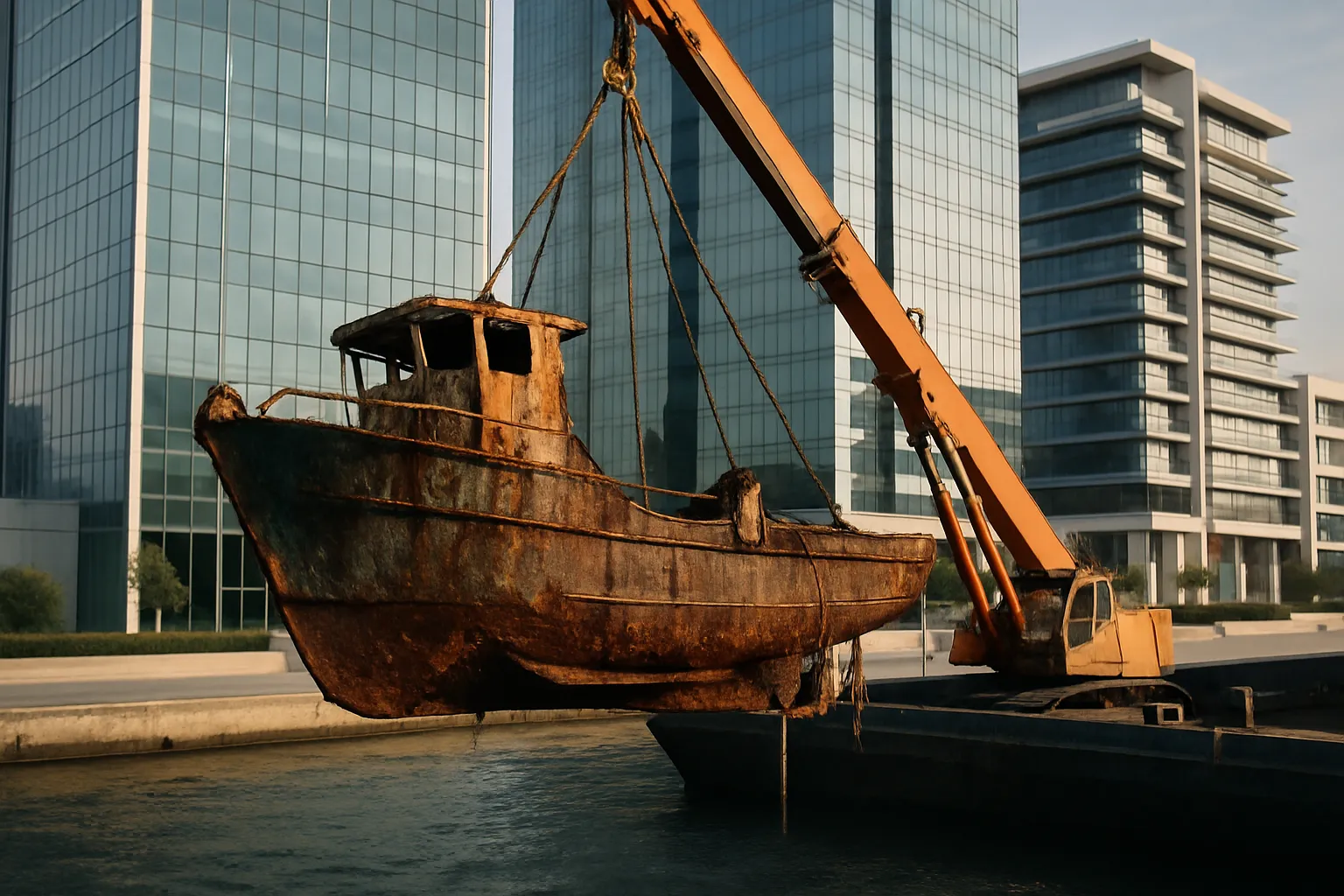
Wreck removal Cyprus procedures have taken on renewed operational and legal significance in 2026, as administrative powers, environmental controls and expanding offshore activity converge in Cypriot waters. This guide sets out the practical route from the moment of casualty through notification, permitting, contracting, physical removal and, critically, the recovery of costs from owners, insurers and P&I clubs. It is written for shipowners, ship managers, marine contractors, salvors, insurers and port authorities who need an operational checklist rather than an academic survey. Every procedural statement here should be read alongside the primary sources cited at the end and verified against the specific facts of any casualty.
Who should use this guide: shipowners, managers, P&I clubs, marine contractors, insurers and port authorities seeking an immediate operational checklist and a clear legal route to recover wreck removal costs in Cyprus during 2026.
Jurisdictional disclaimer: this guide is for general guidance only and is not a substitute for formal legal advice. Casualty response in Cyprus turns on facts, statutory detail and the terms of insurance and contracts. Engage local counsel and your P&I correspondent at the earliest opportunity.
This guide covers wrecks located in Cyprus territorial waters, within ports and harbours, and at or near offshore installations. A “wreck” for these purposes may include a sunken or stranded vessel, part of a vessel, cargo lost overboard, or an object that has become a hazard to navigation or a threat to the marine environment.
The immediate priorities in any casualty are constant regardless of the eventual removal method: preserve life and safety, contain and mitigate pollution, mark the hazard for navigation, and notify the competent authorities without delay. Cost recovery is often decided long before the invoices are certified, it is influenced by the quality of the evidence gathered in the first hours and days. Owners and insurers who treat notification and evidence preservation as formalities routinely undermine their own recovery position.
Cyprus applies a combination of domestic Merchant Shipping legislation (searchable via the Cyprus consolidated legislation portal (CYLAW)), international conventions and, as an EU Member State, EU environmental instruments. The interaction between these instruments determines who must act, in what order, and who ultimately pays.
Liability for wreck removal in Cyprus rests on two pillars: domestic Merchant Shipping legislation, accessible through CYLAW, and the international framework. The Nairobi International Convention on the Removal of Wrecks, 2007 is a central international instrument. It establishes that the registered owner is generally liable for locating, marking and removing a wreck that poses a hazard, and it underpins compulsory-insurance and direct-action mechanisms that can make recovery more effective. Practitioners must confirm the precise domestic implementing provisions, the Convention’s territorial scope of application, and any recent amendments against the exact statute references on CYLAW before advising.
The Harbour Master and the Cyprus Shipping Deputy Ministry (the maritime administration, formerly the Department of Merchant Shipping) exercise the public-law powers that drive a wreck removal in Cyprus. Where a wreck obstructs navigation or threatens the environment, the authorities may direct the owner to remove it within a stated period, may impose conditions on the method of removal, and, if the owner fails to act, may undertake removal themselves and seek to recover the cost from the owner. These administrative powers are the backbone of state-led wreck removal Cyprus operations. The precise scope of these powers should be confirmed against the current statutory provisions.
Understanding this allocation early prevents disputes over who instructs, who pays and who ultimately bears the loss after recovery.
Reporting a marine casualty in Cyprus is a legal duty, not a courtesy. Notify the following without delay:
The recovery of wreck removal costs depends on contemporaneous evidence. Preserve, from the outset: the precise position (latitude/longitude and depth), photographs and video of the vessel and any pollution, AIS and radar tracks, the vessel’s condition and cargo details, weather and sea state, and a chronological log of actions taken and lights or marks displayed.
A first notification to the Harbour Master and maritime administration should contain, as a minimum:
The applicable statutory forms and timeframes for casualty reporting should be confirmed with the maritime administration and against current legislation.
The core of any wreck removal Cyprus operation is a disciplined, sequenced process that keeps the authorities informed, controls contractor cost and preserves the evidence needed for recovery. The following ten steps set out who acts and in what order. Treat them as a risk-managed workflow: pollution risk compresses the timeline and expands the authorities’ powers, while a benign, low-hazard wreck allows a more deliberate tendering process.
| Step | Who (responsible actor) | Typical duration (indicative) |
|---|---|---|
| 1. Safety & immediate response | Master, attending tugs, port authority | 0–24 hours |
| 2. Preliminary survey & marking | Salvage contractor / hydrographic surveyor | 24–72 hours |
| 3. Formal notification & initial permits | Shipowner/manager to authorities | 24–72 hours |
| 4. Contractor mobilisation (emergency) | Salvage/wreck removal contractor | 48–120 hours |
| 5. Wreck removal plan approval | Contractor + Harbour Master/administration | Days to weeks (expedited when pollution risk) |
| 6. Environmental/archaeological clearance | Environmental authority / Antiquities Dept (if required) | Weeks (varies) |
| 7. Removal operations | Contractor + supervising authority | Days–months (scope dependent) |
| 8. Final inspections & demobilisation | Harbour Master / administration / surveyor | Days |
| 9. Cost certification and invoicing | Contractor / P&I / surveyor | Weeks |
| 10. Cost recovery (administrative or legal) | Shipowner / P&I / insurer / courts | Weeks–months (administrative) to many months / years (litigation) |
The durations above are indicative only; actual timings depend on the scope of works, the hazard level and the authorities’ processing times.
The wreck removal procedure in Cyprus typically requires layered approvals. The primary authorisation comes from the Harbour Master and maritime administration, permitting the removal works and endorsing the method statement. Where the wreck is in or near an environmentally sensitive area, environmental clearance is required, and ship-source pollution is governed in part by EU rules under Directive 2005/35/EC on ship-source pollution and its Cyprus implementing measures. In historic coastal waters, archaeological clearance from the antiquities authority may also be required. Provisional or expedited permits may be available where an active pollution or navigational hazard demands urgent intervention.
A sample LOI clause might read to the effect that: “The Contractor shall mobilise immediately upon issue of this Letter of Intent. Remuneration shall be on a day-rate basis at the agreed schedule of rates, subject to an overall cost cap of [amount] which shall not be exceeded without the Owner’s prior written approval. All invoices shall be supported by daily resource logs certified by the attending surveyor.” Owners and P&I clubs should insist on cost caps, approval gates and audit rights in every emergency engagement.
Documentation should be assembled contemporaneously and organised for eventual cost recovery. A consistent file-naming convention, casualty date, vessel name and document type, accelerates P&I processing and any subsequent litigation. Submit each document at the stage indicated below.
| Document | Who prepares / provides | When required |
|---|---|---|
| Initial marine casualty report (incident report) | Master / ship manager | As soon as practicable after casualty |
| Position report & photos / video | Master / attending vessel / surveyor | Immediate / with initial notification |
| Preliminary and detailed wreck survey report | Hydrographic surveyor / contractor | Before plan approval |
| Wreck removal plan & method statement | Contractor | Prior to mobilising heavy works |
| Environmental impact / mitigation notes | Contractor / environmental consultant | With plan submission if pollution risk |
| Permits & authorisations | Harbour Master / administration (issued) | Before removal works commence |
| Contractor contract (call-out / LOI / PSA) | Shipowner/charterer + contractor | On appointment |
| Cost breakdown & invoices | Contractor / P&I correspondent | On completion / certification |
| Certificates of completion / clearance | Harbour Master / administration | Post-operation |
Two categories of timing govern a wreck removal Cyprus operation: the practical durations of the physical work, summarised in the Step/Who/Duration table above, and the legal deadlines that protect rights and duties. Reporting duties are typically the tightest, and delay can expose owners to enforcement and weaken any later cost recovery. Permit windows are set by the authorities and are usually compressed where pollution risk is present. Confirm the precise statutory reporting timeframes with the maritime administration.
For recovery, distinguish administrative routes from litigation. Administrative charging by the Harbour Master or maritime administration, and voluntary P&I indemnity, can often resolve within weeks to a few months. Contested recovery through the Admiralty jurisdiction of the courts is materially slower, commonly many months, and longer where security, arrest and appeals intervene. Preserving rights early, including obtaining security before works begin, is what keeps the litigation timeline manageable.
Wreck removal generates a wide spread of cost items, from emergency towage to environmental remediation. Recovering wreck removal costs Cyprus depends first on distinguishing salvage remuneration from wreck removal cost. Salvage remuneration is a reward for successfully saving property or preventing damage, assessed under the International Convention on Salvage, 1989 and, where agreed, Lloyd’s Open Form terms. Wreck removal cost, by contrast, is a contractual or statutory liability recovered from the owner and, in turn, from the P&I club, it is not a reward but a reimbursement of reasonable expenditure.
| Cost item | Typical payer (initial) | Recoverability notes |
|---|---|---|
| Emergency tugs & towage | Shipowner / P&I | Recoverable if reasonable; preserve invoices |
| Hydrographic & structural surveys | Shipowner / P&I / Contractor | Recoverable with certified report |
| Salvage remuneration | Shipowner / insurer | Governed by Salvage Convention / LOF terms |
| Wreck removal contracting & heavy lifting | Shipowner / P&I | Recoverable; may need certification |
| Diving & subsea cutting | Shipowner / P&I | Recoverable with method statements |
| Disposal and recycling costs | Shipowner / P&I / port authority | May be subject to environmental rules |
| Environmental remediation & fines | Public authority then owner | Remediation usually recoverable if proved; fines generally not |
| Harbour Master / port administrative charges | Port authority | May be recoverable via statutory regime |
| Legal costs (recovery litigation) | Shipowner / P&I initially | Recoverable if court awards costs |
Recovery routes for P&I wreck claims Cyprus and for owners include:
For successful cost certification, ensure every item is supported by contemporaneous evidence: certified survey reports, daily resource logs, method statements, permits and correspondence with the authorities. Independent surveyor attendance throughout is one of the most effective controls on both cost and recoverability.
Regulatory and administrative developments continue to shape wreck removal practice. Practitioners should confirm the exact statutory position and any amendments on CYLAW before relying on them. The following themes are worth monitoring:
The practical effect for owners is a limited margin for delay; for contractors, a route to mobilise under expedited permits where a hazard exists; and for insurers, a need to reassess exposure at offshore sites.
For P&I clubs and insurers, the recurring lessons are to appoint an independent surveyor from the first hours, to embed cost-control clauses in every contractor engagement, and to build the recovery file in real time rather than reconstructing it afterwards.
| Topic | Salvage (international) | Wreck removal (statutory/contractual) |
|---|---|---|
| Legal basis | Salvage Convention 1989; reward for successful salvage | Nairobi Wreck Removal Convention / domestic statutes; cost recovery / administrative removal |
| Objective | Save property and prevent damage | Clear navigation hazards and remove wrecks |
| Payment | Salvage remuneration (reward) | Contract price; owner pays, with recovery from owner/insurer |
| Typical claimant | Salvor | Contractor appointed by owner or authority |
| Evidence focus | Success, degree of danger, skill and resources | Contractual scope, invoices, permits, environmental compliance |
Effective wreck removal Cyprus practice in 2026 rewards owners, contractors and insurers who act fast, document rigorously and understand the recovery routes from the first hour. Notify the authorities immediately, mark and survey the hazard, contract with cost discipline, obtain the right permits, and preserve the evidence that turns an operational response into a recoverable claim. Because the detail turns on the specific facts and the exact statutory provisions in force, engage local counsel and your P&I correspondent early, this guide is a starting point for a disciplined response, not a substitute for advice.
This article was produced by Global Law Experts. For specialist advice on this topic, contact Sonia Ajini at SONIA AJINI & CO LLC, a member of the Global Law Experts network.

posted 4 minutes ago

posted 23 minutes ago

posted 38 minutes ago
posted 48 minutes ago

posted 58 minutes ago
posted 1 hour ago

posted 2 hours ago

posted 2 hours ago

posted 2 hours ago
posted 3 hours ago

posted 3 hours ago

posted 3 hours ago
No results available
Find the right Legal Expert for your business

Send welcome message