
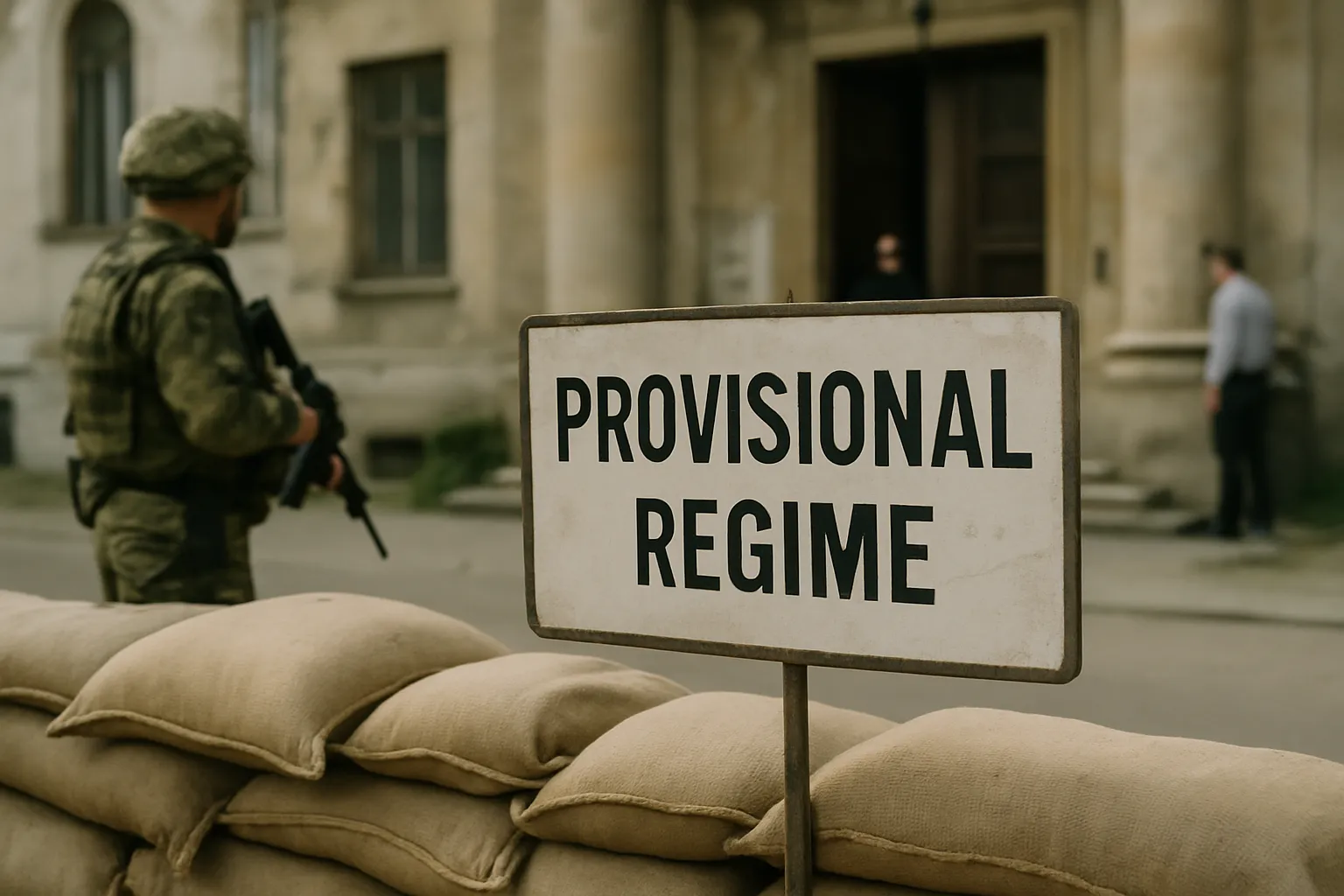
Brazil’s Supreme Court has set a provisional regime for mining on the Cinta Larga Indigenous land, a landmark constitutional decision confirmed by the full Court on 13 August 2026 that hands Congress a 24-month deadline to enact permanent legislation. The ruling does not open the gates to mining across Brazil’s demarcated territories, it constructs a narrow, time-limited framework to fill a specific constitutional gap, and its author, Justice Flávio Dino, expressly stated that the order does not by itself authorise mining. For mining counsel, project-finance teams, in-house lawyers and compliance officers, the decision creates immediate diligence, drafting and risk-allocation questions that no general news summary answers.
This analysis parses the provisional terms, the CFEM mechanics, the scope limits and the practical steps counsel should take now. Throughout, the emphasis is cautionary: this is a regulatory scaffold, not a green light.
Who this is for: mining counsel, project-finance lawyers, in-house counsel, compliance officers and investors advising on Brazilian mining transactions and financing.
Purpose: to explain the Supreme Federal Court’s (STF) provisional regime for Cinta Larga, set out the legal mechanics, CFEM allocation, the community right of first refusal and the cooperative route, clarify scope limits, and provide practical steps and risk-mitigation guidance. This is editorial commentary, not legal advice; local Brazilian counsel must be consulted on any specific matter.
The decision proceeds from a provisional order issued by Justice Flávio Dino, subsequently upheld by the full Court on 13 August 2026. In substance, the STF set provisional regime terms that operate only until Congress legislates, and the Court gave the legislature 24 months to do so.
The provisional terms are precise and interlocking. The Court limited the exploitable area by reference to a small proportion of the demarcated territory. It recognised the Indigenous community’s priority interest, to be exercised through a cooperative, subject to an executive grant and subsequent Congressional approval. It required prior consultation of the affected community consistent with ILO Convention 169. And where a third party carries out mining, it directed that a share of the financial compensation for mineral exploitation (CFEM) that would otherwise flow to states, municipalities and federal bodies be allocated to the community.
Two scope points are essential. First, the remedy addresses the Cinta Larga case alone; it drew on the structure of an earlier analogous proceeding and does not amount to a blanket authorisation for mining on Indigenous land generally. Second, the majority’s consultation standard was not unanimous, with a stricter free, prior and informed consent (FPIC) approach favoured in dissent. The practical takeaway for counsel: treat this as a template of unsettled contours, not as a settled licensing pathway.
The proceeding was a mandado de injunção, a constitutional remedy available where the absence of a regulating norm renders the exercise of a constitutionally guaranteed right unviable. The Brazilian Constitution protects Indigenous lands and, under Article 231, requires authorisation by Congress for mineral exploitation on those lands, but no legislative framework has ever been enacted to operationalise that authorisation. The result is a decades-old constitutional gap: a right recognised in principle but with no statutory machinery to exercise it.
The action sought a remedy for the legislative omission that has left the Cinta Larga territory subject to persistent illegal mining pressure without any lawful, regulated channel for mineral activity. The relief sought was not an order authorising mining, but an order supplying the missing normative framework so that the constitutional right could, in principle, be exercised. That distinction, between a framework and an authorisation, runs through the entire decision and is where much of the commercial confusion arises.
The mandado de injunção is the appropriate vehicle precisely because the obstacle is legislative inaction rather than an unconstitutional statute. Rather than strike anything down, the STF may fashion provisional rules to make the right effective pending legislative action. That is what happened here: the Court did not rewrite the Mining Code or issue mining titles; it built a temporary bridge. Understanding this procedural posture is the key to reading the scope of the ruling correctly, and it is why the decision is best analysed alongside the analogous precedent from which the Court drew its structure.
The single most important point for transactional and finance teams is that the STF set provisional regime rules, it does not issue permits. The decision constructs the regulatory scaffolding within which a future, properly consulted and approved mining activity might one day proceed. It does not, of itself, authorise any particular mining project on Cinta Larga land.
Justice Dino was explicit that the order does not automatically authorise mining on Indigenous land. That statement is not a rhetorical flourish; it is central to the legal architecture. The provisional regime sets conditions, consultation, area limits, the cooperative route, executive grant and Congressional approval, every one of which must be satisfied before any activity could lawfully commence. Any commercial actor treating the ruling as a licence, or as evidence that a licence is imminent, misreads the decision and exposes itself to serious legal and reputational risk.
The STF remedy sits entirely upstream of the ordinary licensing chain. Even assuming the provisional framework’s preconditions were met, a real project would still require the full suite of administrative approvals: mining rights and title administration through the National Mining Agency (ANM), environmental licensing, and the involvement of the National Indigenous Peoples Foundation (FUNAI) in matters touching Indigenous territories. The provisional regime does not shortcut any of those processes. Counsel should map the STF framework as one layer in a multi-layered approval stack, most of which remains untouched by the ruling.
The provisional terms deserve careful, term-by-term treatment because each carries distinct legal and commercial consequences. Where the STF set provisional regime conditions, it did so in a manner that is unusually specific for a constitutional remedy, and each element interacts with the others. Because the full reasoned decision governs, the precise wording of each term should be confirmed against the published judgment with local counsel.
The Court limited the exploitable area by reference to a small percentage of the demarcated territory. The commercially decisive question, and one that will need clarification in implementing rules, is how “exploitable area” is measured. A cap measured against the total demarcated area produces a very different footprint from a cap measured against some narrower base. For a large demarcated territory, even a small percentage may represent a materially significant surface area; for a smaller one, the cap could render a project sub-economic. Revenue modelling, reserve estimation and mine planning cannot proceed responsibly until the measurement base is settled, and counsel should treat any assumption about it as provisional and subject to change.
The provisional framework recognises a priority interest of the community, to be exercised through a cooperative. This is not a simple pre-emption right of the kind familiar from commercial contracts. Under the provisional framework, the community’s route to mining itself requires an executive grant and subsequent Congressional approval. In practice this means the cooperative route is layered with public-law conditions that private pre-emption clauses do not carry. For a third party contemplating involvement, this priority interest is a structural feature that must be respected before any third-party participation could be contemplated, and the approval chain attached to the cooperative route introduces timing and political variables well outside a sponsor’s control.
The majority required prior consultation consistent with ILO Convention 169, to which Brazil is a party. Convention 169 imposes a duty to consult Indigenous peoples through appropriate procedures and in good faith, with the objective of achieving agreement or consent, whenever measures may affect them directly. The critical interpretive fault line is between consultation and consent. A stricter free, prior and informed consent (FPIC) standard, that is, a requirement that the community’s consent be obtained, not merely that it be consulted, was favoured in dissent. For risk allocation, this matters enormously: the gap between “consultation” and “consent” is the difference between a procedural box to tick and a substantive veto.
Counsel should assume the higher standard for risk-planning purposes even while the binding standard follows the majority, because the legal position remains unsettled and future rulings or legislation could move toward FPIC.
Where a third party mines, the Court directed that the community receive 50% of the portion of CFEM that would otherwise be payable to states, municipalities and federal bodies. This is a bespoke allocation and must not be confused with the ordinary landowner CFEM entitlement under the mining legislation. Under the ordinary framework, the surface landowner is entitled to a defined share of CFEM; here, the Court has instead redirected part of the sub-national and federal portion to the affected Indigenous community. The distinction changes both the size and the source of the community’s revenue entitlement, and it has direct consequences for how royalty flows are modelled, escrowed and secured in a financing.
The exact percentages and mechanics should be verified against the judgment and any implementing rules.
The following worked example is strictly illustrative. Actual figures depend on the applicable statutory rate, the mineral concerned, ANM administrative rules and the eventual implementing legislation. It is offered only to show how the community allocation operates in principle.
The numbers above are placeholders. The essential structural point is that the community’s entitlement is carved out of the sub-national and federal share, not from the landowner share, and its magnitude therefore tracks whatever that share is under the governing legislation and ANM administration.
For project-finance teams, this allocation must be built into base-case and downside models as a first-order deduction from distributable cash where a third party is the operator. It also affects royalty-account and escrow drafting: lenders will want the community’s CFEM entitlement flowing through defined accounts with clear priority, reconciliation and reporting mechanics. Because the exact administrative mechanics of the community flow are not yet settled, financing documents should anticipate that implementing rules may alter the timing and mechanics of payment, and should build in the flexibility to accommodate them without triggering default.
It bears repeating that when the STF set provisional regime terms in this case, it did so for Cinta Larga specifically. The remedy is tailored to the constitutional gap as it affects one people and one territory. Over-reading the decision as a general authorisation is the single largest legal error a commercial actor could make in reliance on it.
The Court modelled the Cinta Larga remedy by analogy on an earlier mandado de injunção concerning another Indigenous community. That analogical reasoning is instructive but carefully bounded: it shows the Court is willing to construct case-specific provisional frameworks where a constitutional gap is demonstrated for a particular community, using a consistent template. It does not establish that the same terms apply automatically elsewhere. Each analogous remedy has flowed from a discrete proceeding brought by a specific community.
Other Indigenous territories are not covered by this ruling. A community elsewhere seeking a comparable framework would, in principle, need its own proceeding, and the terms fashioned could differ on the facts. There is a possibility that, over time, the accumulation of such rulings, or a future plenary decision, could produce broader precedential effect, and the pending 24-month legislative process could itself produce a general statute. Until that happens, counsel advising on projects touching other territories should not assume the Cinta Larga terms transfer. Treat each territory as a separate legal universe with its own consultation, authorisation and revenue-sharing analysis.
The provisional regime creates a distinctive risk profile that ordinary Brazilian mining diligence does not fully capture. The following is guidance for structuring analysis, not transactional legal advice; local counsel and Indigenous-consultation specialists must be engaged on any live matter.
Transaction and financing documents should treat the provisional regime as a source of both conditions precedent and continuing obligations. Suggested drafting themes include:
Lenders face an unusual enforcement environment because the underlying rights sit on constitutionally protected Indigenous land and depend on a provisional, potentially transient regime. Protective mechanisms worth considering include suspension triggers tied to legislative or judicial developments; escrow of the community CFEM split to demonstrate good-faith compliance; and express acknowledgement of the limits on conventional enforcement where security interests touch Indigenous territory. Political-risk and specialist insurance should be evaluated, and lenders should insist on contingency planning for the scenario in which Congress fails to legislate within the 24-month window or legislates on terms different from the provisional regime.
The 24-month deadline is the temporal spine of the decision. It transfers responsibility to Congress to enact a permanent framework and, in doing so, defines the window during which the provisional terms govern.
Congress may respond through legislation regulating mineral activity on Indigenous lands, addressing authorisation procedures, consultation standards, area limits and revenue-sharing. The Chamber of Deputies and the Federal Senate each have a role in any such process, and the political dynamics around Indigenous-land mining are contested. Counsel and clients should establish active legislative monitoring, tracking bills, committee stages and votes, because the eventual statute may confirm, modify or depart from the provisional terms, with direct consequences for projects and financings structured in reliance on the interim rules.
If Congress does not act within 24 months, the likely practical effect is continued uncertainty: the provisional regime may persist, the Court may be asked for further remedies, or the deadline dynamics may prompt renewed litigation. Prudent contingency planning includes stop-work provisions, escrow arrangements that survive regime changes, and conditional financing structures that can pause or unwind cleanly if the legal basis shifts. Because the outcome depends on political and judicial developments that cannot be predicted with confidence, documents should be drafted for adaptability rather than on the assumption that the provisional terms are permanent.
The table below sets out, at a glance, how the STF provisional regime for Cinta Larga compares with the ordinary Brazilian mining framework and with the international FPIC standard. It is a summary for orientation; each cell carries qualifications discussed above.
| Feature | STF provisional regime (Cinta Larga) | Ordinary Brazilian mining framework / CFEM | ILO C169 / FPIC standard |
|---|---|---|---|
| Authorisation to mine | No automatic authorisation; framework only, pending legislation | Mining rights and titles issued through ANM under ordinary process | Not an authorisation regime; sets the standard for community agreement/consent |
| Area cap | Exploitable area limited to a small percentage of the demarcated territory | No Indigenous-specific area cap under ordinary regime | No fixed cap; scope governed by consultation and consent |
| Who negotiates | Community via cooperative, with priority interest | Concession holder / operator with the State | The affected Indigenous people, through their own institutions |
| Royalties / CFEM split | Community receives a share of the sub-national/federal portion where a third party mines | Landowner receives a defined share; balance to states, municipalities, federal bodies | Benefit-sharing expected but standard is agreement-based, not fixed |
| Consultation standard | Prior consultation per ILO 169 (majority); FPIC favoured in dissent | General environmental and Indigenous-impact procedures | Free, prior and informed consultation aimed at agreement or consent |
| Legislative / regulatory approval | Executive grant plus Congressional approval for cooperative route | Administrative approvals via ANM and environmental agencies | Compliance assessed against treaty obligations |
When Brazil’s Supreme Court set a provisional regime for mining on Cinta Larga land, it did something both narrow and consequential: it filled a specific constitutional gap with a detailed but temporary framework, and it put a 24-month clock on Congress to legislate permanently. For mining and project-finance counsel, the decision is best understood not as an invitation to transact but as a set of conditions, limits and unsettled questions, the exploitable-area cap, the cooperative priority interest with its executive-grant and Congressional-approval steps, the ILO 169 consultation standard shadowed by an FPIC dissent, and the bespoke CFEM allocation. Its scope is confined to Cinta Larga, modelled on an analogous precedent, and it authorises nothing by itself.
The disciplined response is careful diligence, adaptable drafting, active legislative monitoring and early engagement with local counsel and consultation specialists, so that clients are positioned to respond as the permanent framework takes shape.

posted 7 minutes ago

posted 22 minutes ago

posted 38 minutes ago

posted 47 minutes ago

posted 52 minutes ago

posted 52 minutes ago

posted 58 minutes ago

posted 1 hour ago

posted 1 hour ago

posted 1 hour ago

posted 1 hour ago

posted 1 hour ago
No results available
Find the right Legal Expert for your business

Send welcome message