

Our Expert in Slovakia
No results available
Choosing the right structure for acquisition financing Slovakia buyers can rely on has become sharper and more consequential in 2026, as changes to corporate tax rules and heightened foreign direct investment (FDI) screening reshape the cost and risk of every financing route. This guide takes a clear position: for most mid-market deals a senior bank loan remains the default backbone, but the smart money layers seller finance, mezzanine or bonds on top only where the transaction economics and regulatory profile genuinely justify it. Below you will find a side-by-side comparison, a 2026 legal and tax checklist, timing and cost benchmarks, and a decision framework that tells you which route to pick and when.
Where a legal or tax point matters, we cite the primary Slovak or EU source so you can verify it before you sign. For jurisdiction-specific advice you can find expert legal guidance in Slovakia.
Slovakia offers five practical financing routes, and they trade off along three axes: cost, speed and enforceability. Senior bank loans are typically the cheapest secured money and the natural first port of call for most acquisition financing Slovakia transactions. Seller financing is often the fastest and most flexible route for owner-led exits and bridge situations. Corporate bonds suit larger issuers and refinancings. Mezzanine plugs the gap between senior debt and sponsor equity in leveraged deals. A full leveraged buyout (LBO) layers all of these into a priority waterfall for private equity acquisitions. The 2026 backdrop matters: rules affecting interest deductibility, thin-capitalisation and withholding tax may erode the after-tax advantage of debt (Ministry of Finance of the Slovak Republic, mfsr.
sk), while EU-anchored FDI screening can delay or block deals in strategic sectors (EUR-Lex, Regulation (EU) 2019/452, eur-lex. europa. eu). The practical rule for 2026: obtain tax advice and a pre-deal FDI assessment before you lock your capital structure.
Before drilling into documentation, orient yourself with the headline use-cases for each route:
Quick decision map (designer note): a simple flow, “Stable cash flows + assets? → Bank loan. Motivated private seller / need speed? → Seller finance. Large issuer / refinancing? → Bonds. Gap between senior and equity? → Mezzanine. PE sponsor + maximum leverage? → LBO.”
The table below is the centrepiece of any m&a financing Slovakia decision. Read it top to bottom for a single option, or left to right to compare a single dimension across all five routes. Cost ranges are indicative only and depend on market conditions, credit profile and structure.
| Option | Typical provider | Cost of capital (indicative) | Security & priority | Covenants & restrictions | Tax considerations (2026 flags) | Regulatory / FDI risk | Time to close |
|---|---|---|---|---|---|---|---|
| Bank loan (term / acquisition / syndicated) | Domestic banks, foreign banks, syndicate | Lower relative cost; reference rate plus bank margin, depending on leverage | First-ranking security: pledges over shares, assets, receivables; priority if properly registered | Financial covenants (leverage/LTV, DSCR), negative pledge, change-of-control, dividend and indebtedness restrictions | Interest generally tax-deductible subject to deductibility caps and related-party interest limits, check current rules | Low–medium; bank regulatory checks; FDI screening if strategic sector | Roughly 6–12 weeks (mid-market); longer for syndicated |
| Seller finance (deferred price, vendor note) | Seller or related entity | Negotiated; often below mezzanine | Usually subordinated to bank debt absent intercreditor terms; may be secured by note or share pledge | Seller covenants, earn-outs; flexible structuring | Interest deductibility depends on structure; VAT and timing of recognition can be affected by current rules | Medium; FDI/notification possible if seller foreign or target strategic | Roughly 2–8 weeks (negotiable) |
| Corporate bonds / notes (prospectus or private placement) | Issuer (target/parent); institutional investors | Medium; depends on rating and structure | Ranks per documentation: secured or unsecured; secured bonds can match bank priority with identical security | Cross-default, pari passu, early redemption/put features | Prospectus and tax reporting; withholding tax on coupons to non-residents may apply | Higher for public issuance (prospectus regime); private placement quicker; FDI depends on investor nationality | Private placement: roughly 4–8 weeks; public: several months |
| Mezzanine (subordinated debt, PIK, preferred equity) | Mezzanine funds, PE, specialist lenders | Higher; often with equity kicker | Subordinated to senior; often unsecured or junior-secured; intercreditor agreements set priority | Tight covenants, PIK interest, equity conversion options | Related-party rules may limit interest; debt-vs-equity classification is sensitive | Medium; senior lender consents often needed | Roughly 4–10 weeks |
| Leveraged buyout (bank + mezzanine + sponsor equity) | Banks + mezzanine funds + PE sponsor | Blended: senior + mezzanine + equity | Priority waterfall: senior first, mezzanine next, equity last; group-wide security | Extensive: distribution stops, equity cures, portfolio restrictions, change-of-control protection | Interest deductibility limits, thin-cap and transfer pricing exposure; dividend withholding | High; FDI scrutiny of sponsor and sector; competition filings where required | Roughly 8–16+ weeks |
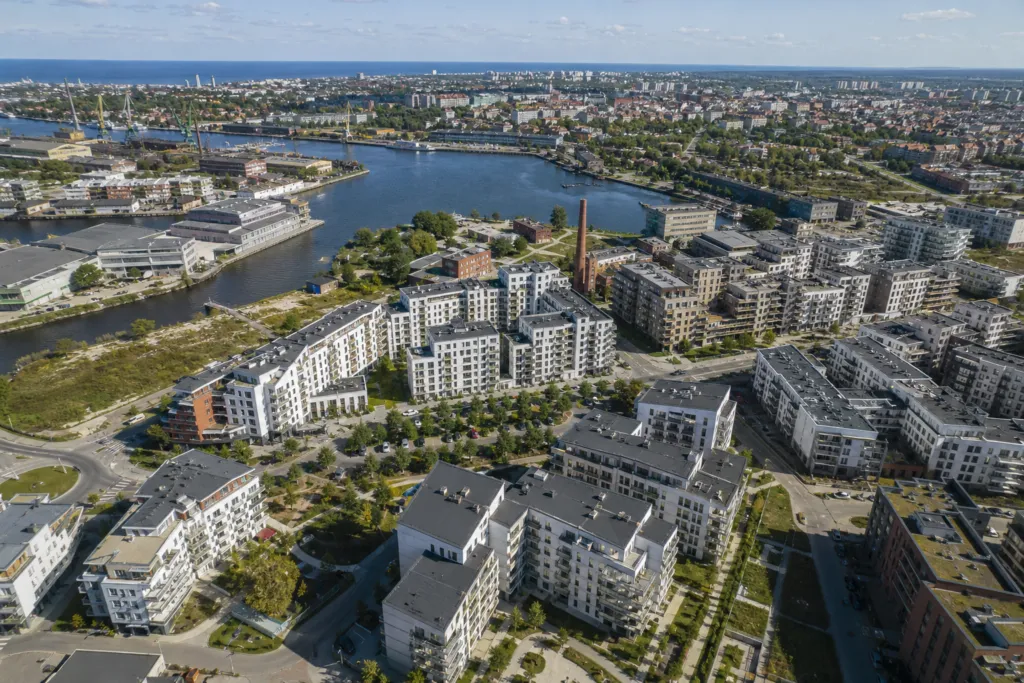
Image alt: Bratislava skyline with business handshake overlay, acquisition financing Slovakia.
The pattern is consistent: speed and flexibility tend to rise as cost rises and enforceability weakens. Seller finance often closes fastest but usually sits behind the bank; mezzanine funds the gap but prices for junior risk. What determines actual priority, however, is not the label on the instrument but the perfection of security. In Slovakia the enforceability and ranking of pledges depend on correct registration, notably in the Notarial Central Register of Pledges for movable assets and the Cadastre for real property, and on consistent Commercial Register records (ORSR, orsr. sk). Two further 2026 flags dominate every structuring conversation.
First, interest deductibility and thin-capitalisation treatment under the Income Tax Act can change the after-tax cost of debt, obtain early tax advice before committing (Ministry of Finance, mfsr. sk; Slov-Lex, slov-lex. sk). Second, run a pre-deal FDI assessment where the target is active in a strategic sector or the acquirer is foreign; the EU framework requires member states to screen and coordinate (EUR-Lex, Regulation (EU) 2019/452, eur-lex. europa. eu; Ministry of Economy, economy. gov. sk).
Senior bank debt is the workhorse of m&a financing Slovakia transactions. To move from term sheet to funding without surprises, focus your legal workstream on three areas: due diligence, security perfection and corporate authorisations. Diligence should confirm clean title to the target’s shares and key assets, the target’s corporate capacity to grant security and guarantees, and the absence of insolvency proceedings or competing charges (verify via ORSR, orsr.sk). Where the target group guarantees or secures the acquisition debt, confirm the transaction survives corporate benefit and financial-assistance scrutiny under the Commercial Code (Act No. 513/1991 Coll.) (Slov-Lex, slov-lex.sk).
A robust senior package for an acquisition loan Slovakia lenders will accept typically includes:
The single most important practical point is perfection: enforceability and ranking depend on correct registration in the relevant pledge registers (for movables, the Notarial Central Register of Pledges maintained by the Chamber of Notaries) and consistent Commercial Register records (ORSR, orsr.sk). Get registrations wrong and a “first-ranking” charge may not rank first at all.
Senior facilities in Slovakia mirror international market practice. Expect:
Draft the permitted-indebtedness and permitted-security baskets with your future capital structure in mind so that seller notes or mezzanine can slot in later without a costly waiver.
Coordinate the funds flow so that drawdown, purchase-price payment and security perfection happen in the correct sequence at completion. Purchase price is commonly held in escrow pending simultaneous share transfer and registration steps at the Commercial Register (ORSR, orsr.sk). Where notarial formalities apply to corporate resolutions or transfers, build them into the completion timetable.
Seller financing Slovakia structures shine in owner-led exits, sales of private companies, and bridge situations where bank money will follow but is not yet in place. The seller effectively becomes a lender by deferring part of the purchase price, which reduces the buyer’s day-one cash need and can bridge a valuation gap through an earn-out. The trade-off: without an intercreditor agreement, the seller’s claim will usually sit behind senior bank debt, and the seller carries buyer credit risk until the note is repaid.
Deferred consideration raises timing and deductibility questions. Interest on a vendor note may be restricted for the buyer depending on structure, and the timing of income recognition can turn on how the deferral is characterised. Because tax rules on how and when consideration and interest are recognised may change, obtain written tax advice before signing where the amounts are material (Ministry of Finance, mfsr.sk; Slov-Lex, slov-lex.sk). For deeper documentation guidance, see our supporting article on seller financing and security packages in Slovakia.
Corporate bonds make sense for larger corporates and refinancings that bring in new institutional investors. The threshold question is whether you must publish a prospectus or can rely on a private-placement exemption. A public issuance triggers the full prospectus regime and a longer, more disclosure-heavy process; a private placement to qualified investors is faster but demands robust investor due diligence.
Prospectus approval and capital-market supervision in Slovakia sit with the National Bank of Slovakia, which acts as the competent authority for the securities market (NBS, nbs.sk). Public offers engage the EU Prospectus Regulation regime (EUR-Lex, Regulation (EU) 2017/1129, eur-lex.europa.eu). As an indicative benchmark, a private placement can take roughly 4–8 weeks and a full public issuance with prospectus approval commonly runs several months; confirm current NBS timelines before you plan. A bond issuance acquisition Slovakia strategy should therefore start early if a prospectus is on the critical path.
Bonds can be secured or unsecured. Secured notes can rank alongside senior bank debt where the security package is identical and the intercreditor position is agreed. Pari passu and cross-default clauses need to be aligned with any existing bank facilities to avoid inadvertent defaults. For private placements, tailor the subscription and disclosure documents to the sophistication of your investor base. Our supporting article on using corporate bonds to fund acquisitions in Slovakia covers prospectus-versus-placement mechanics in detail.
Mezzanine finance Slovakia providers step in when senior debt will not stretch to the full purchase price and the sponsor prefers subordinated debt to equity dilution. Typical features include subordination to senior debt, payment-in-kind (PIK) interest to preserve cash, and an equity kicker such as warrants or conversion rights. Because mezzanine sits between senior lenders and equity, an intercreditor agreement is essential, it governs payment blockages, standstills and enforcement rights between the senior and junior creditors.
An LBO layers senior bank debt, mezzanine and sponsor equity into a single acquisition of a Slovak target, with a defined priority waterfall: senior debt first, mezzanine next, equity last. Sponsors should scope debt pushdown carefully, moving acquisition debt onto the target must respect corporate benefit and financial-assistance limits under the Commercial Code (Slov-Lex, slov-lex.sk), and expect consolidated, group-wide security packages and cross-guarantees.
PE sponsors focus on covenants that protect leverage and preserve exit flexibility: distribution stops tied to leverage, equity-cure rights, permitted-disposal baskets and change-of-control protection. Structure sale-of-business and exit covenants so a future trade sale or secondary buyout is not frozen by the debt documents. In 2026 the interaction of interest deductibility limits, thin-capitalisation and transfer pricing makes early tax modelling of the whole leveraged buyout Slovakia structure indispensable (Ministry of Finance, mfsr.sk).
Every acquisition financing Slovakia transaction in 2026 should clear the following workstreams before completion:
The EU framework requires member states to operate and coordinate investment screening, and national rules build on it (EUR-Lex, Regulation (EU) 2019/452, eur-lex.europa.eu). Slovakia operates a national FDI screening regime administered by the Ministry of Economy of the Slovak Republic (economy.gov.sk). Where the target operates in a sensitive sector or the acquirer is a non-EU investor, treat FDI clearance as a condition precedent and build the review period into your timetable; confirm current thresholds, sector lists and procedures before assuming a deal is out of scope.
Because effective dates and thresholds may change, verify each point against the Ministry of Finance and Slov-Lex before relying on it (mfsr.sk; slov-lex.sk).
Use the timings in the comparison table as your benchmark: seller finance can close in roughly 2–8 weeks, mid-market bank loans in roughly 6–12 weeks, private placements in roughly 4–8 weeks, and full LBOs or public bond issuances typically take several months (all indicative). Legal fees vary with complexity, expect a modest fee band for a simple seller-financed deal rising to substantial ranges for a layered LBO with multiple security packages and intercreditor arrangements. Budget separately for registration fees at the Commercial Register and pledge registers, notarial costs where required, and tax filing costs (ORSR, orsr.sk). These are estimates; confirm current fee schedules at drafting stage.
This is the section deal teams should print. Match your situation to the strongest signals below.
Choose bank loans when:
Choose seller financing when:
Choose bonds when:
Choose mezzanine when:
Choose an LBO when:
Fall-back, hybrid structures. Most real deals combine routes: senior bank debt plus a seller note, or senior plus mezzanine in an LBO. Whenever two or more debt layers coexist, put a clear intercreditor agreement in place to govern ranking, payment blockages and enforcement.
The right acquisition financing Slovakia structure in 2026 is rarely a single instrument, it is a deliberate layering of senior bank debt with seller notes, mezzanine or bonds, chosen against a sharper tax and FDI backdrop. Our clear recommendation: start with senior bank debt as the cost-efficient core, layer additional routes only where deal economics demand, obtain tax advice on interest deductibility, and run FDI screening before you fix the capital stack. Get security perfection and intercreditor terms right and the structure will hold up on enforcement; get them wrong and priority evaporates. This article is general information and not legal advice, consult local counsel for any specific acquisition financing Slovakia transaction.
To take the next step, explore the corporate and M&A resources for Slovakia and speak with an expert on M&A, refinancing, bond issuances and leveraged deals.
This article was produced by Global Law Experts. For specialist advice on this topic, contact Peter Marcis at Nitschneider & Partners, a member of the Global Law Experts network.

posted 2 minutes ago
posted 15 minutes ago

posted 20 minutes ago

posted 20 minutes ago

posted 39 minutes ago

posted 56 minutes ago

posted 1 hour ago

posted 2 hours ago

posted 2 hours ago

posted 2 hours ago

posted 2 hours ago

posted 3 hours ago
No results available
Find the right Legal Expert for your business

Send welcome message