

Author
No results available
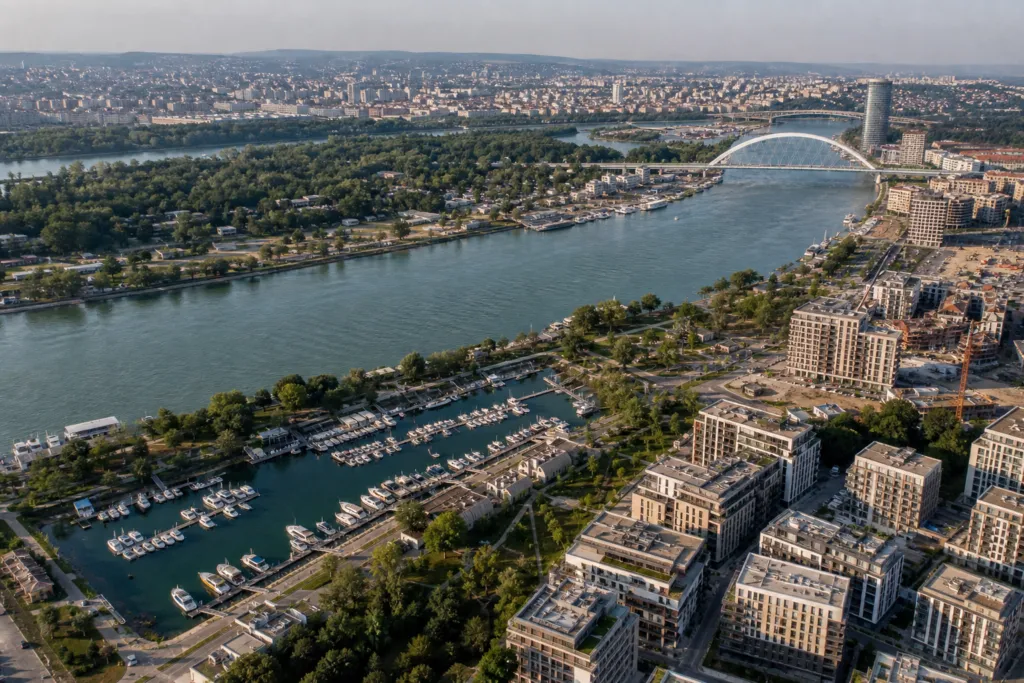
If you are searching for an English-speaking lawyer in Serbia, specifically in Belgrade, who can handle corporate legal matters remotely, the short answer is that most transactions can be completed without you ever boarding a flight. Serbia’s Business Registers Agency (APR) supports electronic registration of companies, and a properly drafted power of attorney allows a local attorney to act on your behalf at every procedural stage. At NCR lawyers, I work with foreign founders, investors, diaspora members and multinational teams who need company formation, due diligence, residency assistance, property acquisition or recognition of foreign judgments handled entirely in English and delivered through secure remote channels.
This guide sets out exactly how each of those processes works, what documents you will need, and what to expect in terms of timelines and costs.
My clients generally fall into four groups: entrepreneurs launching a Serbian entity from abroad, corporate investors acquiring or restructuring local businesses, members of the Serbian diaspora managing property or citizenship matters, and multinational companies that need a reliable Belgrade lawyer in English for ongoing compliance and dispute-resolution support.
The remote engagement model I use follows a straightforward path. After an initial video consultation, I prepare a tailored document checklist, agree on a fee structure, and set up a secure file-sharing workspace. You provide the required documents, apostilled or legalised as needed, and I handle filings, notarisations and registry submissions on your behalf through a notarised power of attorney or, where available, a qualified electronic signature.
In my experience, physical presence in Serbia is only strictly necessary in a handful of situations:
For company formation, property closings, tax registration, and most corporate governance actions, a power of attorney for a foreign principal is the standard remote solution.
Yes, foreign businesses can complete company formation remotely in Serbia. The APR’s e-registration system allows a registered attorney or notary to file an incorporation application electronically on behalf of a non-resident founder. Below is the step-by-step process I follow for clients who need to form a company in Serbia remotely.
| Document | Who Issues It | Authentication Required |
|---|---|---|
| Certified passport copy | Issuing government / notary | Apostille (Hague Convention states) or full legalisation |
| Power of attorney | Notary or Serbian consulate | Apostille + certified Serbian translation |
| Founding act / Articles of incorporation | Drafted by attorney; signed by founder(s) | Notarised signatures (or consular verification) |
| Bank confirmation of capital deposit | Serbian bank | None (issued locally) |
| Proof of registered office (lease or ownership) | Landlord / property owner | Notarised lease agreement |
| Director’s acceptance statement | Appointed director | Notarised or consularly verified signature |
| Entity Type | Key Advantages | Typical Formation Timeline |
|---|---|---|
| Limited Liability Company (d.o.o.) | Most popular for SMEs; limited liability; simple governance; minimum capital RSD 100 | 3–10 business days (remote with POA) |
| Joint Stock Company (a.d.) | Suitable for capital-market access or public offerings; heavier compliance and reporting requirements | 4–8 weeks |
| Branch or Representative Office | No separate legal personality (branch); representative office limited to market research and promotional activities | 2–4 weeks (varies) |
For the vast majority of foreign founders I advise, the d.o.o. is the right choice. It combines speed, low minimum capital, and full limited-liability protection. A foreigner can own 100% of a Serbian d.o.o., there is no requirement for a local partner or local shareholder.
| Stage | Typical Duration | Indicative Cost Range (EUR) |
|---|---|---|
| POA execution and apostille (abroad) | 3–7 days | 50–200 (notary and apostille fees vary by country) |
| Certified translation of documents | 1–3 days | 80–250 |
| APR registration (official fee) | 3–5 business days | Approx. RSD 6,500 (~EUR 55) |
| Professional legal fees (full-service remote formation) | Included in total timeline | 800–2,000 (depends on complexity) |
| Tax / VAT registration | 1–5 business days after APR registration | Included in legal fees or minor additional charge |
Timelines can vary if documents need to be sent by courier or if complex shareholding structures require additional notarisations. In straightforward cases, I have completed the entire process, from initial consultation to issued APR registration decision, within two weeks.
Registration is only the beginning. Serbian law imposes ongoing compliance obligations, and missing a deadline can result in fines or even forced liquidation. The good news is that most of these filings can be managed remotely by your English-speaking lawyer in Serbia.
| Obligation | Applicable Entity | Deadline / Frequency |
|---|---|---|
| Annual financial statements (APR filing) | All entities | By 30 June for the previous year |
| Corporate income tax return | d.o.o., a.d. | Within 180 days of the fiscal year-end |
| VAT returns | VAT-registered entities | Monthly or quarterly (depending on turnover) |
| Beneficial owner register update | All entities | Within 15 days of any change |
| Transfer-pricing documentation | Entities with related-party transactions | Filed with the annual tax return |
I typically recommend that foreign-owned companies engage a local bookkeeper alongside legal counsel. I coordinate with your accountant to ensure filings are timely and accurate, and I review corporate governance documents, shareholder resolutions, board minutes, amendment filings, on an ongoing basis.
Serbia residency for foreigners is governed primarily by the Law on Foreigners. Foreign founders, executives and employees of Serbian companies can apply for a temporary residence permit, which is typically granted for a period of up to one year and is renewable. The Ministry of Interior (MUP) administers the process.
The main categories relevant to business clients are:
Key documents for a temporary residence application include a valid passport, proof of health insurance, evidence of sufficient funds or employment, a criminal-record certificate from the applicant’s home country (apostilled), and proof of accommodation in Serbia. The initial application must be submitted in person or through a Serbian consulate before entering Serbia, though renewals can often be managed locally with counsel’s assistance.
Permanent residence generally becomes available after five years of continuous lawful temporary residence. In my practice, I guide clients through the entire sequence, from the first temporary permit through to permanent residence, ensuring that each renewal is filed on time and that the documentation trail supports the eventual permanent-residence application.
Serbia citizenship by descent is a separate process administered under the Law on Citizenship, and it does not require residency. Diaspora members with Serbian ancestry should seek specific advice on eligibility criteria, as the evidentiary requirements can be complex.
Foreigners can own property in Serbia, subject to a reciprocity condition: nationals of countries that allow Serbian citizens to own property on their territory enjoy the same right in Serbia. In practice, this covers most EU and Western countries, the United States, Canada, and many others. I always verify reciprocity status at the outset of every property purchase Serbia due diligence engagement.
The remote property purchase process typically follows these steps:
Red flags I watch for in due diligence include unresolved restitution claims, discrepancies between cadastral and actual boundaries, undisclosed co-ownership interests, and environmental liabilities on commercial plots. A thorough English-language due diligence report is a standard deliverable I provide to every foreign buyer.
If you hold a court judgment from another jurisdiction and need it enforced in Serbia, the process is governed by the Law on Resolution of Conflicts of Laws with Regulations of Other Countries and by bilateral or multilateral treaties to which Serbia is a party. The Ministry of Justice coordinates international legal assistance, including mutual legal assistance requests and rogatory letters.
The recognition of foreign judgments in Serbia generally requires:
The application is filed with the competent Serbian court. In my experience, straightforward recognition proceedings take between three and six months, though contested cases can take longer. I handle the entire process remotely, from document preparation to court filings and representation at hearings.
Transparency in fees matters, especially when you are engaging a Belgrade lawyer in English from thousands of kilometres away. I offer three pricing models depending on the matter:
A typical remote engagement follows this path: (1) initial video consultation and scope definition, (2) fee proposal and engagement letter, (3) document checklist issued, (4) documents received and verified, (5) filings and registrations completed, (6) final deliverables and handover. Every step is documented and communicated in English, with status updates at agreed intervals.
Tech startup formation (UK founder). A London-based software entrepreneur needed a Serbian d.o.o. to hire local developers. Using a POA executed at the Serbian Embassy in London, I completed the entire formation, APR registration, tax number, bank account, within 12 days. The client never visited Serbia during the process.
Property acquisition (German buyer). A German national purchased a residential property in Vojvodina. I conducted full cadastral due diligence, identified and resolved a minor boundary discrepancy, drafted the sales contract, and attended the notarisation on the client’s behalf under a consularly verified POA. The transaction closed in under five weeks.
Residency permit for an investor (US national). An American investor who had established a Serbian company needed temporary residence to manage operations locally. I prepared the complete application package, coordinated the biometric appointment at the local police station during the client’s brief visit, and secured the residence permit within the standard processing window.
Serbia offers a business-friendly registration framework, full foreign-ownership rights and a growing economy that continues to attract international investment. Whether you need company formation in Serbia remotely, residency permits, property due diligence or enforcement of a foreign judgment, the vast majority of these matters can be managed end-to-end by an English-speaking lawyer in Belgrade without requiring you to travel. In my practice, I have built a remote legal services model that delivers the same rigour and responsiveness you would expect from an in-person engagement, with the convenience of handling everything from wherever you are in the world.
I invite you to explore the Serbia, corporate lawyers directory for more information on qualified practitioners, and to reach out for an initial consultation tailored to your specific needs.
For specialist advice on this topic, contact Nemanja Curcic at NCR lawyers.

posted 30 minutes ago

posted 31 minutes ago
posted 51 minutes ago

posted 1 hour ago

posted 1 hour ago
posted 2 hours ago
posted 2 hours ago

posted 2 hours ago
posted 3 hours ago

posted 3 hours ago
posted 3 hours ago
posted 4 hours ago
No results available
Find the right Legal Expert for your business

Send welcome message