
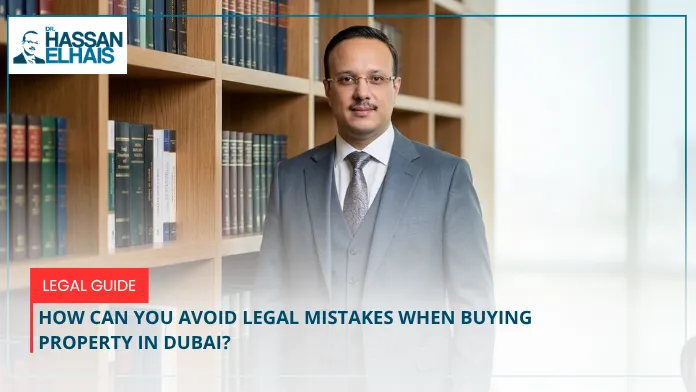
Author
To be successful in real estate investment, it is essential to have knowledge of the property laws of Dubai. This will ensure you stay within the legal framework and avoid the expensive mistakes, and loss of your capital.
Dubai is an ideal location to invest when you understand the rules. A clear legal system and tax-free status signify excellent opportunities and the right legal advice can help you when you’re dealing with complicated deals.
Navigating Dubai property laws can be overwhelming, especially when one legal mistake could cost you thousands of dirhams. Without doubt, understanding the rules for buying property in Dubai, and Dubai property rental laws is crucial, before making any investment decision.
In this guide, we’ll explain the laws for buying the property in Dubai, your rights as an investor, and when you need to consult lawyers in Dubai. If you are looking for a good lawyer in Dubai, or want to know about the legal framework, we’ve got you covered.
Dubai’s property market is regulated through a dual regulatory system. This is administered by the Dubai Land Department (DLD) and the Real Estate Regulatory Agency (RERA). The DLD was established in May 1960 and is responsible for registering all real rights over property including freehold title, usufruct, musataha and long-term leases. RERA is the regulatory authority that monitors market development, licenses agents and developers and resolves tenancy disputes.
The basis of the Dubai property laws are Law No. (7) of 2006 concerning Real Property Registration in the Emirate of Dubai. This legislation governs the property ownership, by individuals, and companies, establishing the clear frameworks that protect investor rights, through transparent enforcement mechanisms. Dubai is unique compared to many global markets as it welcomes international investors, by offering designated freehold zones with no citizenship requirements, or local partnership mandates.
Dubai also offers a tax-free environment, with no annual property tax, or personal income tax on rental income. The tax benefits combined with the strong legal safeguards make Dubai, one of the most attractive real estate destinations for foreign capital in the world.
Understanding ownership classifications prevents costly mistakes when investing in Dubai real estate. Here are the main property rights, recognized in Dubai property laws, in brief:
Freehold: Complete ownership of the property, and the land which is built, without any time restrictions. Foreign nationals are able to own freehold property in specified areas with the same rights as UAE nationals. Freehold owners are entitled to sell, lease or transfer property without any limitations other than the usual regulatory requirements.
Leasehold: Right to ownership for a term not exceeding 99 years, without the land ownership. The land is owned by a UAE national or government entity. The freeholder owns the property when the lease expires.
Usufruct: The right to use and profit from another party’s property, for a specified period of time, usually 10 to 99 years. This is appealing to international investors looking for long term yield without the issues of ownership.
Musataha: The right to use, develop and change land for a period of up to 50 years. This is in relation to the land parcels, not the completed units.
Ownership of freehold property must be registered with the DLD to be valid. The Land Department issues title deeds, as conclusive legal proof of property rights.
The eligibility of ownership is specified in Article 4 of Law No. 7 of 2006. UAE and GCC nationals and companies incorporated in the UAE and wholly owned by UAE or GCC nationals can own freehold title to real estate anywhere in Dubai. This privilege is also given to public joint stock companies listed in Dubai, United Arab Emirates or GCC countries.
Under Regulation No. 3 of 2006, foreign individuals and corporations are allowed to own freehold title, long lease, or usufruct rights for up to 99 years in areas designated for foreign ownership. These designated areas are Dubai Marina, Downtown Dubai, Palm Jumeirah, Business Bay, Jumeirah Beach Residence and over 60 communities across the emirate.
Minors can own property in Dubai, but any transaction involving minors will be subject to applicable guardianship, and legal representation requirements. Notably, there is no maximum age to buy property in Dubai. Applicants of any nationality can purchase property and there is no requirement to be a resident of the UAE before purchasing or owning property.
Foreign companies or legal entities can buy property in freehold zones or leasehold zones where ownership by companies is allowed by DLD regulations. However, companies incorporated in the UAE with non-UAE or GCC shareholders will not be considered UAE or GCC nationals for the purposes of ownership.
The Dubai Land Department process requires foreign buyers to produce a valid passport to verify their identity. Merely owning property does not automatically make you a resident but there are residency visas available based on property investment (where the property value exceeds qualifying thresholds specified in the UAE immigration rules).
Dubai property transactions are governed by clearly defined rules that protect both buyers, and sellers. If you know these rules before you start buying, it will save you time, and a lot of headaches later on.
Freehold ownership means you own the property, and the land it’s built on completely. The DLD registers the name of the buyer as the landowner in the official registry, and issues a title deed. This ownership is valid forever, and can be passed on to heirs. Freehold owners have the right to sell, lease or renovate the property, without having to seek further approvals from a freeholder.
Leasehold entitles you to the property, for a set period of time (usually up to 99 years). The buyer does not own the land and when the lease expires the ownership reverts to the freeholder. Changes to the structure need to be approved by the landowner in general. The leasehold is regulated by Dubai Law No. 26 of 2007, which stipulates the conditions regarding duration, payments and renewal.
Foreign investors can purchase freehold properties in the specific zones, designated under the Regulation No. 3 of 2006. These areas include Dubai Marina, Palm Jumeirah, Downtown Dubai, Business Bay, Jumeirah Beach Residence, Emirates Hills, Dubai Hills Estate, Jumeirah Lake Towers, Jumeirah Village Circle, and Arabian Ranches. Decision No. 6 of 2021 expanded the list to include plots on Sheik Zayed Road, and Al Jaddaf. The DLD maintains the authoritative register of designated areas, and confirmation can be obtained, through the Dubai REST application.
Individual buyers must present valid passports with at least six months validity. UAE residents will have to carry their Emirates ID, and non-residents can carry their passport as their primary ID. Other documents are the original title deed, a No Objection Certificate from the developer, not older than 30 days at the time of transfer, Form F (Memorandum of Understanding) duly signed by the parties, establishing out the terms of sale, and the payment proof in the form of receipts from the bank transfer or manager’s cheques.
Financial Documents Salary Certificate Supporting financial statements for the last two years and six months’ bank statements. Usually, it requires a valuation report for mortgage financing. But it’s not always required for all property purchases, especially for cash transactions. Documents in foreign languages should be attested and submitted with certified Arabic translations.
Companies purchasing property must have a valid trade license, Memorandum and Articles of Association, Board resolution for the purchase and authorized signatory documents. For companies incorporated outside UAE, all corporate documents should be attested by the UAE Embassy in the country of incorporation and then attested by the Ministry of Foreign Affairs at UAE.
The DLD fee is 4% of the purchase price. Payment responsibility shall be determined by agreement of the parties. There are other charges to be paid, which are AED 250 for title deed certificate issuance, AED 225 for unified map under Dubai Municipality and AED 10 for knowledge and innovation fees each. Service partner fees AED 4,000 plus VAT Sale value AED 500,000 or more AED 2,000 plus VAT Sale value less than AED 500,000
The transfer has to be done in the office of the registered trustee with both parties present. The buyer pays the full balance as per the MOU and the title deed is issued in the name of the buyer.
When the buyer buys property in Dubai, there is a step-by-step process from choosing a property to the transfer of ownership. Each step is a foundation for the next one. skipping steps or rush through due diligence, creates unnecessary legal exposure.
After identifying a property that meets your investment criteria, verification becomes your immediate priority. Ensure the seller’s name on the title deed is the same as in his/her passport, to verify that they have legal title to the property. The Dubai REST app allows you to instantly access property records, and check for any existing disputes, or legal issues attached to the unit.
Any transfer must be made after all service charges, and utility bills are paid in full. A licensed agent, or lawyer can do this background check, and make sure the property does not have any hidden liabilities. You can also use the bank valuation reports in your negotiations, particularly if the valuation comes in lower than the asking price.
Market research gives you great strength in negotiations. Websites such as Property Finder and Bayut display recent transaction data which can help you identify overpriced listings. Timing is all that matters, in the summer months there is likely to be lower demand from buyers and sellers become more flexible with pricing.
Cash buyers have significant negotiating power, as they are not subject to delays caused by financing and issues with bank valuation. You can negotiate who pays for the DLD transfer fee in addition to the purchase price, and developer NOC fee waivers. Letters of mortgage pre-approval demonstrate that you are serious and make a seller want to consider your offer first.
Both parties sign a Memorandum of Understanding, that outlines the agreed price payment methods, and the specific conditions. The buyer pays a 10% deposit at this stage. The legally binding Sales and Purchase Agreement follows enforcing all terms agreed upon in the MOU.
For off-plan properties, the developer registers the sale through the Oqood portal within 90 days of signing. The buyer pays 2%, and the seller pays 2% of the property price as registration fees, plus AED 1,000 for developers, and AED 10 each for knowledge, and innovation fees.
Developer issues a No Objection Certificate, to certify all dues have been cleared. The fee for NOC varies depending on the developer, and it can range from AED 500 to AED 5,000. Both parties proceed to a DLD Trustee Office where the buyer presents manager’s cheques for the final payment. The appointment is usually less than an hour if all documentation is in order.
After DLD processes the transfer, the new title deed is emailed as an electronic certificate. The buyer receives the e-Certificate of Title and e-map shortly. An Oqood certificate is issued to buyers of off-plan properties until the project is completed and the final title deed is issued.
Rental properties can be a source of income, but they also bring with them legal responsibilities that every investor should understand. Law No. 26 of 2007 establishes the legal framework, governing the landlord-tenant relationship, in Dubai. It contains the clear provisions that safeguard the interests of both parties.
Tenants have the right to occupy the premises for the entire term of the agreement without any arbitrary termination. Any changes to the contract (including rent increases) must be given 90 days written notice, from the landlords. Except in specific breach situations as defined by law, tenants are protected from eviction during the term of the lease.
Landlords are responsible for providing and maintaining properties in habitable condition throughout the tenancy. Landlord’s obligations the landlord has to do repairs to fix problems, defects or wear and tear, unless the contract says otherwise. Also, a landlord can’t make changes to the premises that prevent the tenant from using the premises as intended.
No rent increases can happen before the original contract date for two years. If a landlord wishes to change a contract, they must give tenants at least 90 days’ notice of any change in rent. Decree No. 43 of 2013 establishes limits for all increases based on strict formulas, and contractual clauses cannot overrule these limits.
The Dubai Smart Rental Index identifies the average market values based on location, type of property, size and number of bedrooms. Allowed increases depend on the difference between present rent and market average. No increase if current rent is within 10% below market rate. Landlords can increase rent by 5% if current rent is 11-20% below market average, 10% if 21-30% below, 15% if 31-40% below and 20% if it is more than 40% below market.
Eviction for breach (non-payment, unauthorized subletting, illegal use, or damage to property) requires 30 days written notice. If the lease is about to end and the landlord wants to evict you for his/her own use of the apartment or to demolish or do major renovations, they have to give you 12 months’ notice, in writing. The notice has to be served by a notary public or by registered mail. Landlords can’t rent to other tenants for two years for residential properties and three years for commercial units if they evict a tenant for personal use.
Despite robust regulations, the investors still encounter legal complications that threaten their capital, and the returns. Recognizing when professional legal assistance becomes necessary protects your investment from costly mistakes.
Off-plan delays are the most common dispute in Dubai’s property market. Delays in construction, funding, and permits affect the expectations for rental income and the commitments for mortgages. Quality disputes occur when the properties delivered do not match the sales specifications, for example, they are smaller in floor area, have lower quality finishes, or lack amenities. Service charge disputes occur when charges are higher than expected, or when increases are made without explanation. Buyers can’t sell, or mortgage properties, due to unpaid payments, or lack of developer approvals, which leads to title deed delays. Encumbrances can be unexpected liabilities like undisclosed mortgages or contractor liens.
Property lawyers conduct extensive due diligence prior to purchase – researching property’s legal status, identifying liens, and verifying sellers’ rights. They look at Sales and Purchase Agreements, find bad clauses and negotiate protective terms. The lawyers make sure that all the requirements of DLD and RERA are met to avoid penalties and invalid contracts. Indeed, early legal intervention frequently results in negotiated resolutions without the expense of protracted litigation.
The Dubai Rental Disputes Center is the competent judicial authority, for all the rental disputes between the landlords, and tenants. Its decisions are final and binding. Mediation is a cost-effective alternative to formal proceedings.
So, you have all the information you need to invest in Dubai property without legal headaches. We’ve gone over the type of ownership, buying process, rental rules and your rights as an investor. Most importantly, you know when it is necessary to consult lawyers in Dubai to protect your capital.
Dubai’s real estate sector offers excellent potential, along with a transparent legal framework and tax-free environment. Start with good research, verify all data, and don’t hesitate to get legal advice from professionals if you are involved in complex transactions.
Keep these rules in mind, make smart decisions and your Dubai property investment will give you the returns you’re aiming for.

posted 1 hour ago

posted 5 hours ago

posted 5 hours ago

posted 6 hours ago

posted 9 hours ago

posted 12 hours ago

posted 12 hours ago

posted 12 hours ago

posted 12 hours ago

posted 13 hours ago

posted 13 hours ago

posted 13 hours ago
No results available
Find the right Legal Expert for your business
Sign up for the latest legal briefings and news within Global Law Experts’ community, as well as a whole host of features, editorial and conference updates direct to your email inbox.
Naturally you can unsubscribe at any time.
Global Law Experts is dedicated to providing exceptional legal services to clients around the world. With a vast network of highly skilled and experienced lawyers, we are committed to delivering innovative and tailored solutions to meet the diverse needs of our clients in various jurisdictions.
Global Law Experts is dedicated to providing exceptional legal services to clients around the world. With a vast network of highly skilled and experienced lawyers, we are committed to delivering innovative and tailored solutions to meet the diverse needs of our clients in various jurisdictions.

Send welcome message