
Author
No results available
Real estate is frequently the largest single asset in a high-net-worth individual’s portfolio — and it is also the asset class that creates the most complexity in estate planning. Property is sited. It is tangible. Its succession is governed by the law of the country where it sits. And transferring it — either during your lifetime or on death — can trigger significant transaction costs, taxes, and legal complexity depending on the jurisdiction.
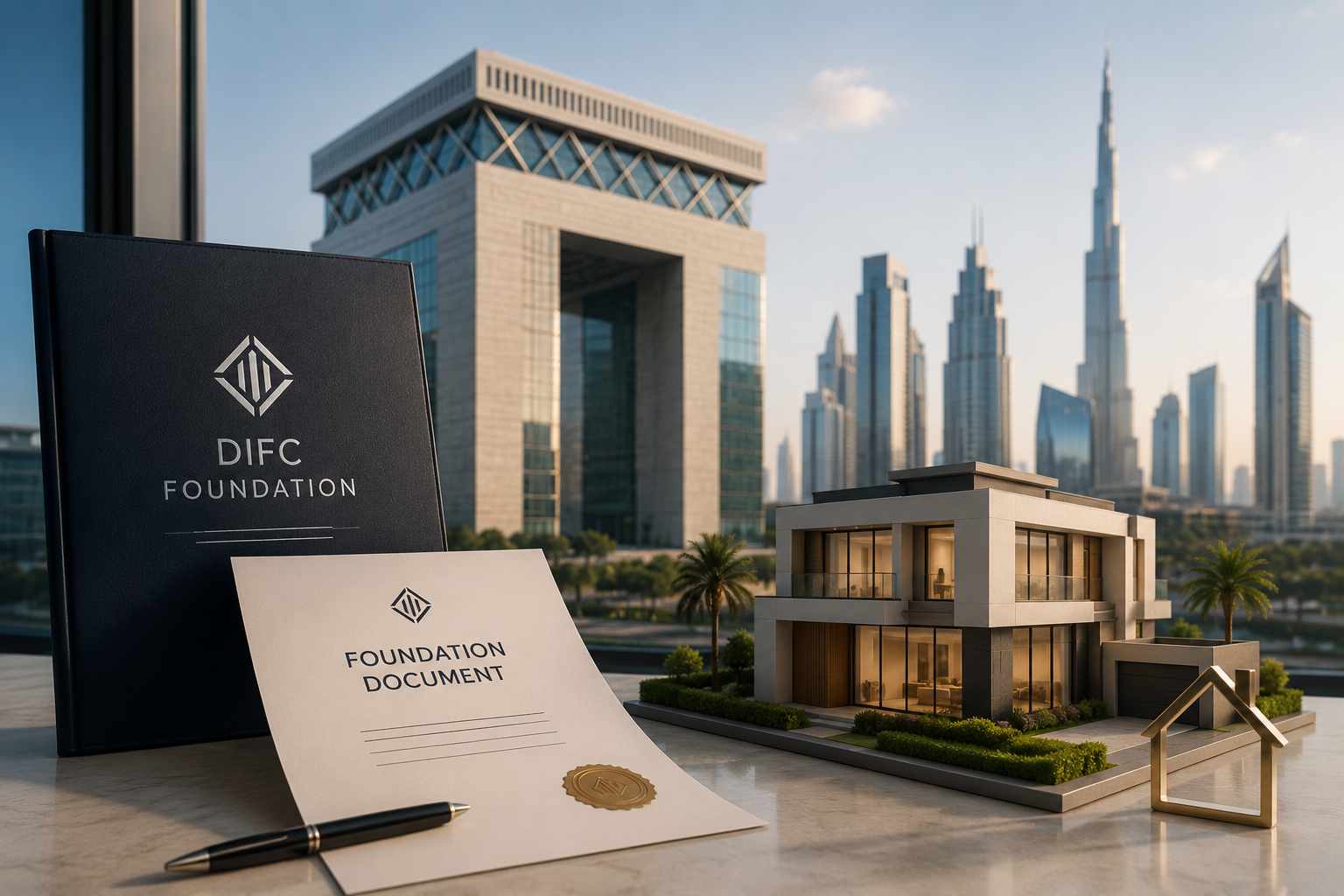
For investors with property in the UAE and internationally, the question of whether a DIFC Foundation can hold real estate — and whether it should — is an important one.
This is where the answer requires some nuance. DIFC is a financial free zone within Dubai. UAE real estate ownership rules — particularly for property in Dubai and Abu Dhabi — are governed by local emirate laws that specify who can own property and in what form.
In Dubai, freehold property in designated areas can be owned by UAE nationals, GCC nationals, and foreign nationals and companies in a variety of structures. Companies registered in Dubai mainland, UAE free zones, and offshore jurisdictions can own property in designated areas, subject to Dubai Land Department requirements.
A DIFC Foundation, as a legal entity incorporated in DIFC, can generally own Dubai real estate, subject to DLD registration requirements and payment of applicable transfer fees. The Foundation’s title to the property would be registered with the Dubai Land Department in the Foundation’s name.
However, the practical process of transferring property into a DIFC Foundation — and the costs involved — should be carefully assessed before proceeding. There are transfer fees, potentially a mortgage liability to manage, and in some cases consent requirements from developers or mortgagees.
For property held outside the UAE, the position depends on the law of the country where the property is located. In many jurisdictions, real property can be held by a foreign legal entity, and a DIFC Foundation would qualify as such. However, several important caveats apply.
First, some jurisdictions restrict foreign ownership of real property, either generally or in specific categories. These restrictions need to be checked before transferring property into the Foundation.
Second, the transfer of property into a Foundation may trigger stamp duty, land transfer tax, or capital gains tax in the property’s jurisdiction. In the UK, for example, transferring property to a company or foundation can trigger Stamp Duty Land Tax, and there may be capital gains tax implications if the property has appreciated in value.
Third, in some jurisdictions, holding property through a foreign legal entity triggers annual charges or surcharges. The UK’s Annual Tax on Enveloped Dwellings (ATED) applies to UK residential property held by companies and may apply to structures involving foreign foundations.
Despite these complexities, holding real estate through a DIFC Foundation can make excellent sense for succession planning purposes — particularly for investors with multiple properties or with family members in different countries.
On the Founder’s death, property held in the Foundation does not need to go through probate in the property’s jurisdiction. The Foundation continues, the Council continues to manage the assets, and distributions to beneficiaries occur according to the By-Laws. This can save years of delay and significant legal costs compared with property that sits in the deceased’s personal name and must be probated locally.
For a Dubai investor with properties in Dubai, the UK, and Portugal, the difference between holding all three personally (three separate probates, three sets of inheritance taxes and succession rules to navigate) and holding them through a DIFC Foundation (one structure, one document governing distribution, and a significant reduction in probate exposure) can be measured in years of delay and potentially hundreds of thousands of dirhams in legal and tax costs.
If you are considering using a DIFC Foundation to hold real estate, the analysis must happen property by property and jurisdiction by jurisdiction. Each property needs to be assessed for transfer cost, ongoing tax implications, mortgage implications, and local legal restrictions. In many cases the result is a mixed strategy: some properties transferred into the Foundation, others held personally but covered by carefully drafted jurisdiction-specific wills.
To speak with a Knightsbridge adviser about your situation, contact us at knightsbridge.ae or call our Dubai office for a confidential consultation.

posted 12 minutes ago

posted 49 minutes ago

posted 1 hour ago

posted 1 hour ago

posted 2 hours ago

posted 2 hours ago

posted 2 hours ago

posted 3 hours ago

posted 3 hours ago

posted 3 hours ago

posted 3 hours ago

posted 4 hours ago
No results available
Find the right Legal Expert for your business

Send welcome message