
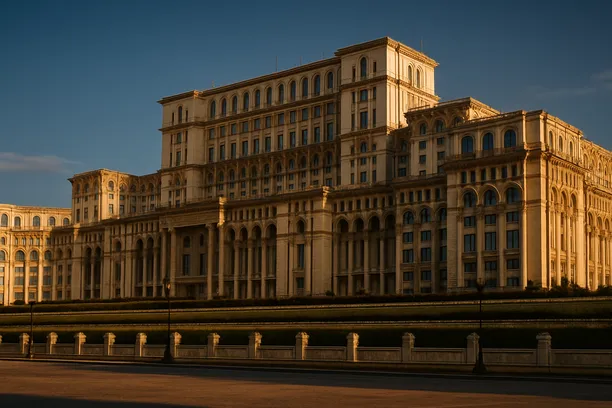
Our Expert in Romania
No results available
Knowing how to prepare evidence for patent litigation in Romania is the single most consequential pre‑trial task a patent owner or defendant will face. Romania’s national courts adjudicate infringement and validity disputes under Law No. 64/1991 on patents, with the State Office for Inventions and Trademarks (OSIM) serving as the national patent register. At the same time, the Unified Patent Court (UPC) now offers a parallel route for European patents with unitary effect, and its 2025–2026 provisional‑measures practice demands even more rigorous early‑stage evidence than many national litigants are accustomed to preparing.
This guide walks in‑house counsel, patent owners, R&D managers and instructing litigators through the exact sequence of steps, documents, deadlines and costs involved in assembling a court‑ready evidence bundle and expert reports in 2026.
Patent litigation in Romania can proceed before the specialised civil courts (typically the Bucharest Tribunal for first‑instance patent matters) or, where a European patent with unitary effect or a classic European patent validated in Romania is at issue, before the UPC. Regardless of the forum, both claimants and defendants need a structured evidence bundle patent litigation strategy before the first hearing date.
This guide covers the full evidence life‑cycle: pre‑litigation preservation, interim injunction packets, expert technical reports, damages evidence, and hearing preparation. It applies to any party that holds or is accused of infringing a Romanian national patent, a validated European patent (EP), or a unitary patent (UP) designating Romania. The same principles apply to supplementary protection certificates (SPCs) and utility models, with minor procedural variations.
The governing statute is Law No. 64/1991, as republished in the Monitorul Oficial (most recently on 27 June 2024). Practitioners should always check the consolidated text on the Romanian legislative portal before filing, because periodic republications may renumber articles or update procedural references. OSIM maintains the patent register, publishes the Official Bulletin of Industrial Property, and issues certified copies of patent specifications required by the courts.
For parties considering or already engaged in cross‑border IP protection strategies, aligning the Romanian evidence package with UPC evidentiary expectations from the outset is now regarded as best practice.
Before assembling a single exhibit, confirm that the prerequisites for a valid infringement or revocation action are in place.
Standing to sue. Under Law No. 64/1991, the patent owner, an exclusive licensee (unless the licence restricts litigation rights), or a non‑exclusive licensee acting with the owner’s consent may bring proceedings. Verify ownership by obtaining a current extract from the OSIM register. Where the patent was assigned, include notarised assignment deeds in the evidence bundle.
Patent validity checks. Search the OSIM register and, for EP/UP patents, the EPO register and Espacenet to confirm grant status, maintenance‑fee payments and any pending opposition or limitation proceedings. Conduct a prior‑art sweep covering Romanian and international databases, weaknesses in validity are routinely raised as a counterclaim and must be anticipated in the evidence strategy.
PCT/UPC flags. If the patent is a European patent that has not been opted out of UPC jurisdiction, or a unitary patent, identify whether the UPC may be a preferable or concurrent forum. This decision shapes the evidence format, language and expert‑report structure from the start.
Romanian courts may appoint a judicial expert from the official list maintained by the Ministry of Justice, or the parties may submit reports from party‑appointed experts. Party experts need not be on the official list, foreign experts are admissible provided their statements are properly authenticated and translated. Before any expert accesses confidential product samples or trade secrets, execute a confidentiality and non‑disclosure agreement (NDA) and, where appropriate, apply for a protective order from the court.
The following numbered steps represent the typical chronological workflow. Adapt the sequence to your case posture, claimant or defendant, with or without interim relief.
Act immediately upon identifying suspected infringement. Preservation should begin within 24–72 hours to prevent spoliation.
If speed is critical, an application for interim measures should be filed alongside or shortly after the substantive claim. Romanian courts can hear urgent injunction requests within 2–6 weeks, and ex parte emergency relief may be available in exceptional circumstances.
Expert reports are often the decisive evidence in Romanian patent trials. The two main routes are:
| Step | Who Does It | Typical Duration |
|---|---|---|
| Pre‑litigation evidence preservation & chain‑of‑custody | Client (with counsel) + forensic lab | Immediate, preserve within 24–72 hours |
| Interim injunction packet preparation | Claimant counsel + technical advisor + party expert | 1–2 weeks (accelerated) |
| Filing claim and serving evidence bundle | Claimant counsel / judicial executor | Filing: day 0; service: 2–7 days after filing |
| Court appointment of judicial expert / party expert exchange | Court / parties | Court expert appointment: 2–6 weeks; party report exchange: 2–8 weeks per timetable |
| Injunction hearing (if requested) | Court | 2–6 weeks from application (accelerated track) |
| Merits hearing & judgment | Court | Several months to 18+ months (complexity‑dependent) |
The table below sets out every document typically needed for a patent suit in Romania, together with notes on who issues it, the required format, and practical validity considerations. Assembling this evidence bundle early, before filing, prevents avoidable adjournments and strengthens both interim and final applications.
| Document | Notes (Who Issues / Format / Validity) |
|---|---|
| Patent specification, claims and grant decision (Romanian national patent or EP/UP bundle) | Source: OSIM (national) or EPO (EP/UP). Provide a certified copy or official printout. Include translations into Romanian if the patent was granted in a foreign language. Check unitary‑effect dates for UP. |
| Assignment / ownership evidence or licence agreements | Signed and, if required, notarised copies. Proves standing to sue. |
| Chain‑of‑custody log for sample products | Prepared by forensic lab or instructing counsel; signed, dated and continuous. Demonstrates preservation integrity. |
| Technical comparison matrix (claim chart) | Prepared by technical team or party expert. Maps each claim element to the accused product feature with annotated figures and measurements. |
| Expert technical report (party expert) | PDF format; include signed declaration of independence, CV, methodology, raw data appendices and conclusions. See expert‑report checklist below. |
| Court‑ordered expert appointment documents / judicial expert report | Court order appointing the expert; expert’s report filed directly with the court. |
| Sales data, invoices, distribution records | Company‑issued records (electronic + print); include declarations on authenticity. |
| Market analysis, lost profits / reasonable royalties | Prepared by economics or accounting expert; include methodology and data sources. |
| Laboratory test reports, raw data & methods | Lab certificate, test protocol, raw datasets, timestamps, operator logs. Use accredited laboratories where possible. |
| Witness statements / affidavits | Signed and dated; notarised where required. Identify each witness and their role. |
| Prior art documents and publications | Dated copies with proof of public availability. Translations if not in Romanian or English. |
| Certified translations | Required for any non‑Romanian documents to be relied on at court. |
Every party‑appointed expert report should contain the following elements. Courts and judges expect this structure, and omitting any element risks the report being given reduced weight or excluded.
| Element | Required / Notes |
|---|---|
| Expert’s CV | Education, professional practice, publications and specific experience with patent‑related technical disciplines. |
| Statement of independence | Signed declaration disclosing instructions received and payments made or agreed. |
| Questions answered | Numbered list of precise legal/technical questions posed by instructing counsel. |
| Methodology section | Clear, reproducible methodology and protocols, with references to recognised standards (ISO, ASTM, etc.). |
| Results & raw data appendices | Full raw data, calibration certificates, and chain‑of‑custody records for any samples tested. |
| Conclusions & limitations | Conclusions tied explicitly to the evidence reviewed; an honest statement of limitations and assumptions. |
| Signature and date | Expert’s signature, date of completion, and contact details for cross‑examination. |
For a deeper discussion of broader international intellectual property strategy, including how evidence standards differ across jurisdictions, see our dedicated guide.
Timing is often the decisive factor in patent cases, particularly for claimants seeking to block a product launch or halt ongoing infringement. The table below sets out the typical timeframes for an expedited interim‑measures track versus the full merits process.
| Phase | Key Deadlines / Typical Timeframe | Practical Tips |
|---|---|---|
| Seek preservation / evidence seizures | Immediate, apply within 24–72 hours to prevent spoliation | Preserve devices and products; request expedited police or forensic seizure if there is a risk of destruction. |
| Interim injunction application | Hearing often within 2–6 weeks from application; emergency ex parte relief sometimes faster | File a clear infringement mapping and provisional expert memo with the application. |
| Court expert appointment | Court may order appointment within 2–6 weeks; expert delivers report in the period fixed by the court (often 2–8 weeks) | Consider filing a party expert report in parallel to present a competing technical narrative. |
| Expert report exchange & rebuttal | Court timetable, exchange and rebuttal cycles typically run 2–6 weeks per round | Plan for at least one rebuttal round; propose jointly agreed experiments where practical. |
| Merits hearing & judgment | Several months to 18+ months depending on complexity and court workload | Consolidate all technical evidence early to enable efficient trial preparation. |
Industry observers note that 2025–2026 UPC case law has raised the bar for interim relief across Europe: UPC local divisions are conducting more detailed early merits scrutiny before granting provisional measures. The likely practical effect for Romanian litigants is that evidence assembled for a national interim application should already meet UPC standards of detail and reproducibility, in case the strategic decision is later made to pursue UPC relief in parallel.
Costs vary significantly with case complexity, the technical discipline involved and whether cross‑border enforcement is anticipated. The table below provides indicative ranges to assist with budgeting. All figures should be verified against the current official fee schedule before filing.
| Item | Typical Amount (Guidance) | Notes |
|---|---|---|
| Court filing fee for civil patent action | Varies by claim value, consult official fee schedule | Filing fees for patent actions are set by national regulations; verify against the current fee law published in the Monitorul Oficial. |
| Expert fees (technical expert) | €3,000 – €30,000+ | Depends on discipline and scope of testing. Laboratory costs are invoiced separately. Request an itemised estimate before instructing. |
| Laboratory testing (accredited lab) | €1,000 – €50,000+ | Includes protocols, travel, sample preparation. Prefer accredited facilities (e.g., ISO/IEC 17025). |
| Accountancy / economic damages expert | €5,000 – €40,000 | Methodology‑intensive; includes data acquisition, lost‑profit modelling and reasonable‑royalty analysis. |
| Enforcement (seizure / injunction enforcement) | €500 – €10,000+ | Court bailiff (executor judecătoresc) and enforcement costs; variable for cross‑border enforcement. |
| Translation & notarisation | €200 – €5,000 | Certified translations of non‑Romanian documents; notarisation for witness statements where required. |
Expert invoices from foreign‑resident experts may be subject to Romanian VAT and withholding‑tax obligations. Seek specialist tax advice before agreeing payment terms, particularly where cross‑border services are involved.
Three developments shape how practitioners should prepare evidence for patent litigation in Romania during 2026:
Knowing how to prepare evidence for patent litigation in Romania is not a one‑time exercise, it is an iterative, deadline‑driven process that begins the moment infringement is suspected and continues through trial and enforcement. The 2026 landscape adds an extra layer of complexity: UPC‑readiness, republished statutory texts and rising evidentiary expectations for interim relief all require practitioners to plan further ahead and document more rigorously than ever before. By following the step‑by‑step procedure, completing every item on the evidence bundle and expert‑report checklists, and adhering to the timeline benchmarks set out in this guide, claimants and defendants alike can enter the courtroom, whether in Bucharest or before a UPC local division, with the strongest possible evidentiary foundation.
Consult the Global Law Experts lawyer directory to identify specialist patent litigators practising in Romania.
This article was produced by Global Law Experts. For specialist advice on this topic, contact Raluca Vasilescu at Cabinet M. Oproiu, a member of the Global Law Experts network.

posted 19 minutes ago

posted 37 minutes ago
posted 40 minutes ago
posted 54 minutes ago

posted 1 hour ago

posted 1 hour ago

posted 2 hours ago

posted 2 hours ago

posted 3 hours ago
posted 3 hours ago

posted 3 hours ago

posted 3 hours ago
No results available
Find the right Legal Expert for your business

Send welcome message