
Our Expert in China
No results available
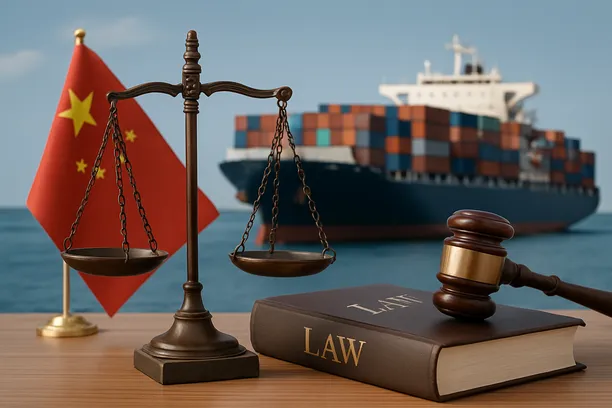
China’s revised Maritime Code, adopted by the Standing Committee of the 14th National People’s Congress on 28 October 2025 and effective 1 May 2026, is the most extensive revision of the country’s maritime legislation since the original Code took effect in 1993. For carriers, shippers, freight forwarders and insurers, the practical message is twofold: the changes are material, but they build on rather than replace the existing framework. The core carriage-of-goods regime in Chapter IV remains anchored in the Hague-Visby Rules — a proposed shift toward a Rotterdam-Rules-style system was dropped after industry resistance — so this is better understood as modernisation and clarification than as a wholesale restructuring of risk. That said, several changes demand action before any voyage touching a Chinese port. Chapter IV now applies mandatorily wherever loading or discharge occurs in China (Article 295), overriding a foreign choice of law in the bill of lading. The one-year cargo-claim time bar can now be interrupted by a written demand alone (Article 294), without commencing proceedings.
Moreover, the carrier’s duty of care expands to “receipt” and “delivery,” and the “actual carrier” definition widens to capture terminal operators and stevedores. Domestic coastal carriage is brought within Chapter IV but on stricter terms, and tonnage-limitation amounts rise to 1996 LLMC Protocol levels, making large claims costlier. The Code also grants statutory recognition to electronic transport records aligned with the UNCITRAL MLETR, adds a dedicated oil-pollution-liability chapter, and reallocates the cost and risk of unclaimed cargo — to the shipper where no one takes delivery, or to the consignee where it has exercised its contractual rights but then delays or refuses. This guide sets out the operational and contractual steps stakeholders should take now to stay compliant.
The revised Maritime Law 2026 China is not a cosmetic update. It restructures risk allocation across the entire carriage-of-goods chain and introduces entirely new chapters, including provisions on oil pollution liability and digital transport documents. Every party with exposure to China carriage of goods by sea in 2026 and beyond must take action before loading or discharging at a Chinese port.
Priority actions this week:
China’s original Maritime Code dated from 1992 and, despite periodic judicial interpretations, had not undergone a comprehensive legislative revision until now. The revised law was adopted on 28 October 2025 by the NPC Standing Committee, with promulgation notices published shortly afterwards. The revised Code comes into force on 1 May 2026, applying to all voyages and contracts of carriage from that date.
| Date | Event | Practical Impact |
|---|---|---|
| 28 October 2025 | NPC Standing Committee adopts the revised Maritime Law | Formal legislative adoption; triggers industry briefings and internal contract reviews |
| Late October 2025 | Government and trade bodies publish guidance and P&I club circulars | P&I clubs and legal advisors release early FAQs and implementation guidance |
| 1 May 2026 | Revised Maritime Code enters into force | All carriers, shippers and insurers must be fully compliant, contracts, claims procedures and e-document processes updated |
The Code applies to maritime activities within Chinese territorial waters and to contracts of carriage where the port of loading or discharge is in China. Critically, the revised law contains provisions on foreign-related matters that may apply even where the governing law of the contract is not Chinese law, provided a Chinese port or Chinese party is involved. Industry observers expect Chinese maritime courts to assert jurisdiction more readily under these broadened provisions, making it essential for all foreign carriers and shippers to review their contractual arrangements.
The amendments touch virtually every aspect of maritime commerce. Below is a quick-reference summary of the most consequential changes, each expanded in the sections that follow.
| Subject Area | Nature of Change | Primary Impact On |
|---|---|---|
| Unclaimed cargo liability | Reallocation of costs and risks for non-delivery from consignee to shipper; new notice and disposal framework | Carriers, terminals, shippers |
| Limitation periods | Revised time bars; new long-stop period for general average; interruption and suspension rules updated | All claimants and defendants |
| Electronic transport records | Formal legal recognition of e-B/Ls adopting MLETR principles; statutory requirements for validity | Carriers, shippers, freight forwarders, banks |
| Carrier lien rights | Expanded lien provisions; clarification that lien may extend beyond goods owned by the debtor | Carriers, FOB shippers, cargo interests |
| General average | New long-stop limitation period running from end of common maritime adventure | Carriers, cargo insurers, P&I clubs |
| Oil pollution liability | Dedicated new chapter (Chapter XII) on liability for oil pollution damage | Tanker owners, P&I clubs, coastal authorities |
| Mandatory application of Chapter IV | Carriage-of-goods provisions apply mandatorily where loading or discharging is in China | Foreign carriers, NVOCCs, freight forwarders |
One of the most significant China Maritime Code 2026 changes for foreign operators is the mandatory application of Chapter IV (Contracts of Carriage of Goods by Sea) where loading or discharging occurs at a Chinese port. This provision operates regardless of the contractual choice of law, meaning that a bill of lading governed by English law, for example, may still be subject to the mandatory provisions of the Chinese Code when the voyage touches China.
Foreign carriers face several immediate risks under the revised framework. Chinese maritime courts may apply the Code’s liability rules, including its carrier-liability regime, limitation periods and unclaimed-cargo provisions, even where the contract designates a foreign forum. The likely practical effect will be that carriers must comply with two parallel regimes: the contractual governing law and the mandatory Chinese provisions. Early indications suggest that arbitration clauses (particularly those specifying London or Singapore) will remain enforceable in principle, but that Chinese courts may refuse to stay proceedings where mandatory Chinese provisions are engaged.
The following model wording may be adapted for bills of lading and service agreements where China carriage of goods by sea 2026 is anticipated:
“This contract shall be governed by and construed in accordance with [English law / the laws of Singapore]. The parties acknowledge that, to the extent that the port of loading or the port of discharge is situated in the People’s Republic of China, the mandatory provisions of the Maritime Law of the People’s Republic of China (as amended and effective 1 May 2026) shall apply to the carriage and shall prevail in the event of conflict with the governing law of this contract.”
Industry observers expect this dual-acknowledgement approach to become standard practice for voyages touching Chinese ports, as it reduces the risk of unenforceability in Chinese proceedings.
The revised Code changes the bearer of costs and risks arising from non-delivery of goods at the port of discharge. Under the previous regime, the consignee largely bore the financial consequences of failing to collect cargo. The 2026 amendments reallocate or clarify these responsibilities, placing greater obligations on the shipper and introducing structured notice and disposal procedures.
Handling unclaimed cargo liability in China now follows a more formalised sequence. While procedures may vary between individual port authorities, the general operational flow at major terminals such as Shanghai and Shenzhen typically involves these steps:
The following template may be adapted to meet the notice requirements under the revised Code:
“To: [Consignee name and address] / [Shipper name and address] Re: Unclaimed cargo, B/L No. [●], Vessel [●], Voyage [●] Date: [●] We hereby notify you that the above-referenced cargo arrived at [Port name] on [date] and remains uncollected as at the date of this notice. Pursuant to the Maritime Law of the People’s Republic of China (effective 1 May 2026), you are requested to take delivery of the cargo within [●] days of this notice. Failure to do so will result in [storage charges accruing to the shipper / application for court-ordered disposal], in accordance with the applicable provisions of the Code.
All costs, risks and liabilities arising from non-collection shall be borne by the [shipper/consignee] as provided by law.
Where cargo remains unclaimed, P&I clubs China 2026 should expect earlier notification obligations from carrier members. Clubs should update their claims-handling protocols to address the following: prompt security assessment for potential disposal applications; confirmation of whether the claim falls within cargo-policy or P&I-policy cover; and coordination with local correspondents for port-authority liaison. The shift of cost risk to shippers may also affect subrogation rights and recovery prospects.
The revised Code introduces material changes to maritime limitation periods in China. These changes affect the calculation of time bars for cargo claims, personal-injury claims and general-average contributions, and introduce new interruption and suspension mechanisms that alter established claims-handling practice.
| Claim Type | Previous Limitation Period | Revised Limitation Period (from 1 May 2026) |
|---|---|---|
| Cargo claims (loss, damage, delay) | One year from delivery or expected delivery date | One year from delivery or expected delivery date, with new interruption provisions |
| Claims against the actual carrier | Same as contracting carrier | Aligned with contracting carrier, with clarified commencement date |
| General average contributions | One year from end of common maritime adventure | Subject to a six-year long-stop limitation period running from the end of the common maritime adventure |
| Oil pollution claims | Governed by separate regulations | Now addressed in new Chapter XII with specific limitation rules |
The introduction of a six-year long-stop for general-average claims is particularly significant. Under the previous regime, general-average adjustments that extended beyond the one-year limitation period created uncertainty for all contributing parties. The new long-stop provides a definitive outer boundary, while the one-year primary period continues to run from the date that the adjustment is completed or the contribution becomes payable.
The Code also introduces time-bar interruption provisions. A written claim submitted by the claimant to the carrier now interrupts the running of the limitation period, a departure from the previous position where only the commencement of legal proceedings or arbitration could achieve interruption. This change gives cargo claimants more flexibility, but it also means that carriers must implement more rigorous diary systems to track potential interruptions and avoid inadvertent exposure to stale claims.
Claims-handling checklist for limitation periods:
Among the most forward-looking China Maritime Code 2026 changes is the formal legal recognition of electronic transport records. The Code adopts core principles derived from the UNCITRAL Model Law on Electronic Transferable Records (MLETR), stipulating that electronic transport records meeting statutory requirements have the same legal effect as their paper equivalents. This makes China one of the largest trading nations to embed MLETR-aligned provisions directly in its maritime legislation.
For an electronic transport record to function as a negotiable document under the Code, it must satisfy several conditions:
Carriers and shippers adopting digital transport documents in China should conduct due diligence on e-B/L platform providers. Key questions include: Does the platform satisfy the exclusive-control test? Is the audit trail tamper-proof and independently verifiable? Does the provider hold relevant certifications or accreditations? Are data-localisation requirements under Chinese cybersecurity law addressed?
Insurer checklist for digital transport documents:
The revised law demands that contract templates, standard bills of lading and NVOCC service agreements be updated. Below are model clauses addressing four critical areas, together with a quick-reference table of recommended approaches.
“The parties agree that an electronic transport record issued through [Platform name], or any platform meeting the requirements of the Maritime Law of the People’s Republic of China (effective 1 May 2026) for electronic transport records, shall have the same legal effect as a paper bill of lading. Each party shall maintain the technical capability to issue, receive and transfer electronic transport records through the agreed platform.”
“Where the consignee fails to take delivery of cargo at the port of discharge within [●] days of the vessel’s arrival, the shipper shall bear all storage charges, disposal costs and associated liabilities arising from non-collection, in accordance with the Maritime Law of the People’s Republic of China. The carrier shall be entitled to exercise its lien rights over the cargo and to apply for court-ordered disposal of unclaimed goods.”
Contracting Do’s and Don’ts:
| Do | Don’t |
|---|---|
| Include an express acknowledgement of Chinese mandatory provisions for China-port voyages | Rely solely on a foreign governing-law clause to exclude Chinese mandatory rules |
| Insert a specific e-B/L acceptance clause referencing the Code’s requirements | Accept electronic records without verifying platform compliance with statutory standards |
| Specify which party bears unclaimed-cargo costs and cross-reference the Code | Leave unclaimed-cargo allocation to default rules without contractual clarity |
| Include an arbitration clause with a carve-out for Chinese mandatory provisions | Assume that a London or Singapore arbitration clause will override all Chinese law requirements |
| Review limitation-period language to reflect new interruption rules | Use pre-2026 limitation waivers or extensions without checking compatibility with the revised Code |
The China maritime liability carriers now face under the revised Code has direct consequences for the insurance market. P&I clubs, hull-and-machinery underwriters and cargo insurers all need to reassess their risk exposure for China-related voyages.
P&I club operational checklist:
For carriers and terminal operators, the following phased implementation plan provides a structured approach to full compliance with the China Maritime Code 2026 changes.
Days 1–30: Immediate priorities
Days 31–60: Systematic updates
Days 61–90: Verification and refinement
The China Maritime Code 2026 changes are now in effect, and compliance is not optional for any participant in the China shipping trade. The revised law fundamentally alters how liability, risk and documentation are handled across the carriage chain. The following six actions should be treated as immediate priorities:
The revised Maritime Law 2026 China represents a deliberate and comprehensive recalibration of the legal framework for carriage of goods by sea involving Chinese ports. Proactive compliance, starting with the actions outlined above, is the most effective way to manage the transition and avoid costly exposure gaps.
This article was produced by Global Law Experts. For specialist advice on this topic, contact Hongkai Xu at All Bright Law Office, a member of the Global Law Experts network.

posted 1 minute ago

posted 9 minutes ago

posted 32 minutes ago

posted 52 minutes ago
posted 1 hour ago

posted 2 hours ago

posted 2 hours ago

posted 2 hours ago

posted 2 hours ago

posted 2 hours ago

posted 2 hours ago

posted 3 hours ago
No results available
Find the right Legal Expert for your business

Send welcome message