
Our Expert in Denmark
No results available
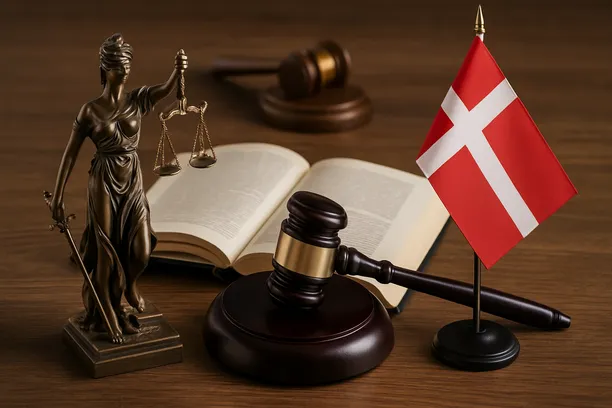
Denmark is poised to become one of the first countries in the world to grant individuals a copyright‑like right over their own face and voice, a direct legislative response to the explosion of AI‑generated deepfakes. The Denmark deepfake law 2026 package comprises two distinct but interconnected changes: a proposed amendment to the Danish Copyright Act that would create new civil rights over personal likeness, and a set of fee increases at the Danish Patent and Trademark Office (DKPTO) that took effect on 1 January 2026. Together, these reforms compel every business that creates, distributes or hosts AI‑generated content in Denmark to revisit contracts, content pipelines and intellectual property budgets.
This guide sets out the exact compliance steps that in‑house counsel, platform operators, creators and IP managers need to take, and when to take them.
Two developments define Denmark’s 2026 IP landscape. First, the Danish government has tabled a draft amendment to the Copyright Act that would grant every natural person an exclusive, transferable right to control AI‑generated reproductions of their face, voice and other identifiable personal features. Second, the DKPTO adjusted fees for patents, trademarks and designs, effective 1 January 2026, increasing the cost of maintaining IP portfolios across the board.
The central compliance question for every affected organisation is: What exact changes must we make to contracts, workflows and IP calendars to comply with Denmark’s 2026 deepfake/likeness reforms and DKPTO fee changes?
Decision‑makers should prioritise four immediate actions:
The draft amendment, which the European Parliament’s think‑tank has characterised as the “Danish approach to copyright and deepfakes,” proposes inserting a new neighbouring right into Denmark’s Copyright Act. This right is civil in nature and is distinct from existing criminal prohibitions on fraud, identity theft or defamation. Its core mechanism gives every identifiable natural person the exclusive right to authorise or prohibit the creation, reproduction and making‑available of AI‑generated depictions of their likeness, including facial features, voice and other biometric identifiers.
According to analysis published by the European Parliament and commentary from Danish law firm Plesner, the proposed right has several defining features:
Some academic and practitioner commentators, notably in analysis published by Wolters Kluwer, have questioned whether the copyright framework is the right legal vehicle for these protections, arguing that a standalone personality‑rights statute might better fit the policy objective. Industry observers expect this debate to continue during parliamentary consideration.
| Date | Event | Implication for Businesses |
|---|---|---|
| 1 January 2026 | DKPTO fee changes take effect (patent, trademark and design fees) | Update renewal budgets and calendars; consider prepayments where allowed |
| Mid‑2026 (expected) | Parliamentary adoption or finalisation of Denmark’s draft likeness/deepfake amendment | Begin compliance programme for new rights: consent capture, content labelling, licence templates |
| August 2026 / EU AI Act implementation windows | Article 50 transparency obligations roll out (implementation phases and codes of practice) | Ensure labelling and metadata are compatible with Article 50 requirements |
As of April 2026, the draft has not yet received final parliamentary adoption. The likely practical effect, however, is that businesses should treat compliance preparation as urgent: retroactive enforcement once the law passes could catch organisations that delayed action.
Denmark’s proposed likeness right does not exist in a vacuum. The EU AI Act, Regulation (EU) 2024/1689, imposes its own transparency obligations on deployers of AI systems. Article 50 specifically requires that persons deploying AI systems which generate synthetic audio, image, video or text content must ensure that outputs are marked in a machine‑readable format and disclosed as artificially generated or manipulated. These obligations apply regardless of national copyright or personality‑rights frameworks.
The critical distinction for compliance teams is that the Danish draft and Article 50 impose different, cumulative obligations:
Obtaining consent from a subject does not discharge the labelling obligation under Article 50, and labelling content as AI‑generated does not satisfy the consent requirement under the Danish proposal. Deployers must satisfy both.
Where Danish law and EU regulation overlap, EU law takes precedence on matters within its scope (transparency and labelling). The Danish neighbouring right, however, operates in a space the AI Act does not directly regulate, the individual’s right to control their own likeness. Early indications suggest that compliance teams should build parallel but co‑ordinated workflows: one track for Article 50 labelling and metadata embedding, and a separate track for obtaining and recording individual consent under the Danish rules.
Waiting for final adoption is not a defensible strategy. The operational changes required are substantial enough that a head start is essential. The following checklist is prioritised by risk.
The Danish reform will reshape standard contract language across the creative and technology sectors. Every agreement involving the creation, licensing or distribution of AI‑generated content depicting identifiable persons should be reviewed and, in most cases, amended. The following sample clauses are provided for discussion purposes only, they are non‑binding examples and should be adapted with qualified legal counsel.
“The Talent hereby grants to [Company] a non‑exclusive, revocable licence to use the Talent’s likeness (including facial features, voice and other biometric identifiers) in AI‑generated or AI‑manipulated content, solely for the purposes described in Schedule [X]. This licence is limited to [specified media/channels/territories] and shall expire on [date] unless renewed in writing. The Talent retains the right to withdraw consent upon [notice period] written notice, whereupon the Company shall remove all affected content within [timeframe].”
“All AI‑generated content produced under this Agreement shall be clearly labelled as artificially generated in accordance with Article 50 of Regulation (EU) 2024/1689 and any applicable Danish legislation. The Producer shall embed machine‑readable provenance metadata at the point of creation and shall not distribute AI‑generated content depicting any identifiable person without documented evidence of valid consent held in the Consent Register.”
When negotiating or reviewing any licence involving AI‑generated content and personal likeness, verify that the following elements are addressed:
Alongside the deepfake reforms, the DKPTO adjusted its fee schedule effective 1 January 2026. The fee changes affect patents, trademarks and designs and represent the second consecutive annual adjustment following the 2025 patent fee revision. IP portfolio managers should treat this as an operational priority: failing to update renewal calendars and budgets risks missed deadlines or unexpected cost overruns.
The DKPTO published a comprehensive fees schedule covering all patent, trademark and design actions. Key areas of increase include patent annual renewal fees (which escalate by year of patent life), trademark application and renewal fees, and design registration fees. The full schedule is available in the DKPTO’s official fees PDF.
Operational steps for patent renewal fees Denmark 2026:
For organisations holding more than 20 Danish patents, the cumulative effect of escalating annual fees warrants a formal cost‑benefit review. Early indications suggest that some rights‑holders are using the fee increase as a trigger to prune low‑value patents from their portfolios, reducing maintenance costs while concentrating resources on strategically important filings.
Understanding who can bring a claim, against whom and for what remedies is essential for risk assessment. The Denmark deepfake law 2026 reforms create a layered enforcement landscape.
Content hosted outside Denmark but accessible to Danish users may still trigger liability. Platforms relying on non‑Danish hosting as a shield should note that the Brussels Regulation (for civil claims within the EU) and the EU AI Act’s cross‑border enforcement mechanisms may both apply. Industry observers expect Danish courts to assert jurisdiction where the depicted individual is domiciled in Denmark and the content is targeted at or accessible within the Danish market.
The following scenarios illustrate how the reforms could play out in practice.
The following resources consolidate the guidance above into ready‑to‑use operational tools. These are provided as starting points and should be tailored to each organisation’s specific circumstances with qualified legal advice.
Takedown and Consent Flowchart (summary):
Compliance checklist (condensed):
This article was produced by Global Law Experts. For specialist advice on this topic, contact Kim Larsen, a member of the Global Law Experts network.

posted 19 minutes ago

posted 39 minutes ago

posted 39 minutes ago

posted 1 hour ago

posted 1 hour ago

posted 2 hours ago
posted 2 hours ago

posted 2 hours ago

posted 2 hours ago

posted 2 hours ago

posted 3 hours ago
posted 3 hours ago
No results available
Find the right Legal Expert for your business

Send welcome message