
Our Expert in Kenya
No results available
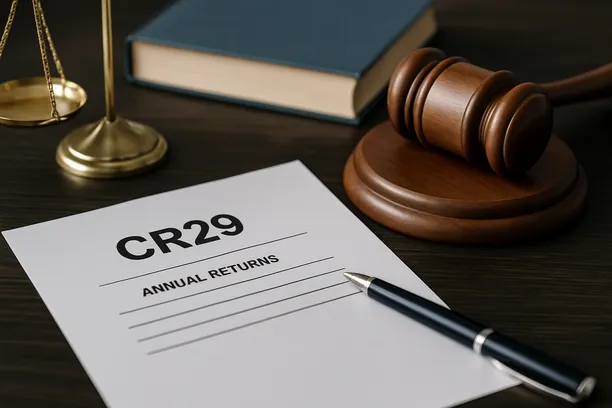
Understanding how to avoid company deregistration in Kenya in 2026 has become an urgent priority for every director and company secretary following the Registrar of Companies’ gazette notice dated January 2, 2026, which earmarked more than 300 non-compliant companies for removal from the register beginning April 2026. The enforcement wave targets entities that have failed to file CR29 annual returns, maintain a registered office, or respond to earlier compliance correspondence through the Business Registration Service (BRS). This guide sets out the legal basis for strike-off, the exact steps directors must take to file overdue returns on eCitizen, how to respond to a show-cause notice, and the process for restoring a company that has already been removed.
Whether you run a dormant SME or an active limited company, the window to act is narrow, and the consequences of inaction are severe.
The Registrar’s January 2, 2026 gazette notice represents the most significant enforcement action against non-compliant companies in recent years. Widely reported in Kenyan media, the notice signals a deliberate shift from warnings to removals, with the first batch of deregistrations scheduled to take effect from April 2026.
Companies at risk include those with overdue CR29 annual returns, those that have not responded to previous Registrar correspondence, and those with no functional registered office on file. The notice applies regardless of whether a company is actively trading or dormant.
If you are a director or company secretary, the question is not whether the Registrar will act, early indications suggest that enforcement is already underway. The question is whether your company’s filings are current.
Do this in the next 7 days:
The Registrar of Companies derives the power to remove a company from the register under the Companies Act, 2015 (Kenya). This power is not arbitrary, it follows a structured administrative process that gives companies an opportunity to demonstrate compliance before being struck off.
The typical workflow proceeds in stages. First, the Registrar identifies companies that have failed to meet statutory filing obligations. Second, the Registrar issues a notice, usually published in the Kenya Gazette and communicated to the company’s registered address, requiring the company to show cause why it should not be removed. Third, if no satisfactory response is received within the specified period, the Registrar proceeds with deregistration and publishes a final gazette notice confirming the company’s removal.
The show-cause period provides a critical window, generally ranging from 30 to 90 days depending on the nature of the notice. Companies that respond with evidence of compliance or ongoing business activity during this window can prevent removal. Those that fail to respond, or whose responses are inadequate, face being struck off the register.
Understanding the common triggers is essential to knowing how to avoid company deregistration in Kenya in 2026:
| Trigger | Statute or Notice | Typical Timeline |
|---|---|---|
| Failure to file CR29 (annual return) | Companies Act, 2015, annual return provisions; Registrar’s gazette notices | Notice issued → 30–90 days to respond; removal if no show-cause received within the period |
| No registered office or no response to correspondence | Companies Act, 2015, registered office requirements; Registrar administrative powers | 60–120 days (varies depending on the number of notices served) |
| No annual tax filing / KRA compliance issues | KRA public notices on deregistration and cancellation of tax obligations | KRA actions may run in parallel, tax deregistration can trigger or compound company removal |
| Voluntary deregistration application | Companies Act, 2015 / BRS voluntary strike-off process | 1–3 months (if documentation is complete and no objections are raised) |
The key takeaway is that the Registrar’s power is procedural, not instantaneous. Every company receives notice before removal. The challenge is that many directors never see the notice, because their registered address or email is outdated, or because they have disengaged from the company entirely.
The moment you become aware of the Registrar’s enforcement notice, or suspect your company’s filings are not current, the following steps should be completed within 14 days. Delay compounds risk, because any ongoing show-cause period continues to run regardless of whether you are aware of it.
Begin by logging in to the eCitizen portal and navigating to the Business Registration Service. Search for your company by name or registration number. The system will display the company’s current status (active, dormant, or flagged for removal) and list any outstanding filings.
If the system shows overdue CR29 returns, note which financial years are missing. If the company’s status shows a compliance flag or a pending show-cause notice, treat this as a priority requiring immediate professional attention.
Directors of multiple companies should check each entity individually. The Registrar’s enforcement action targets companies, not individuals, so each registered entity must be separately compliant.
If your company is actively trading, compile documentation that proves ongoing operations. This evidence is critical for responding to a show-cause notice and for demonstrating to the Registrar that the company should remain on the register. Relevant documents include:
For dormant companies, the approach differs. If the company has genuinely ceased trading and you intend to keep it registered, you must still file annual returns (including nil returns) and maintain a registered office. If you no longer need the company, voluntary deregistration through BRS may be more appropriate than waiting to be struck off.
A show-cause response is a written submission to the Registrar explaining why your company should not be removed from the register. The response should be addressed to the Registrar of Companies and include:
Industry observers expect show-cause responses filed promptly, with supporting documentation, to be accepted by the Registrar in most cases, particularly where the company demonstrates a genuine intention to bring its filings up to date. Where filings are significantly overdue (multiple years), engaging a qualified company secretary or lawyer to prepare the response is strongly advisable.
The CR29 form is the prescribed annual return that every company registered in Kenya must file with the Registrar through the Business Registration Service portal on eCitizen. Filing annual returns in Kenya in 2026 follows a digital-first process, with all submissions made online. The steps below outline the standard filing procedure.
The documents required alongside the CR29 form depend on the size and type of company. As a general guide, prepare the following:
The standard CR29 filing fee is set by the Business Registration Service and is payable through eCitizen at the time of submission. Companies with overdue returns will face penalty fees in addition to the standard filing fee. Penalties accrue for each year that returns remain unfiled, so the cost of compliance increases significantly with delay.
Directors should budget for both the base filing fee and accumulated penalties when bringing multiple years of returns up to date. The exact fee amounts are published on the BRS portal and are subject to periodic revision, confirm the current schedule on eCitizen before filing.
After payment is processed, eCitizen generates a submission receipt and a confirmation reference number. Verify that your filing status on the BRS portal updates to reflect the submitted return. If the status does not update within a reasonable period (typically 48–72 hours), follow up with BRS directly. Retain all receipts and confirmation numbers, they serve as evidence of compliance in the event of any future dispute with the Registrar.
For companies that have already received a final removal notice, or that have been struck off the register, the situation is serious but not necessarily irreversible. Kenya’s legal framework provides two principal routes to restore a deregistered company: administrative restoration and court-ordered restoration.
Administrative restoration is the simpler and less costly route. It involves applying directly to the Registrar of Companies to have the company restored to the register. The grounds for administrative restoration typically include:
The application is filed through BRS on eCitizen and must include evidence that the grounds for restoration are met. This typically means attaching all overdue CR29 returns, paying outstanding filing fees and penalties, and providing a letter explaining the circumstances that led to non-compliance.
The likely practical effect is that administrative restoration takes several weeks to process, depending on BRS workload and the completeness of the application. Incomplete applications are a common cause of delay.
Where administrative restoration is not available, for example, because the company was struck off more than a specified period ago, or because the Registrar has refused administrative restoration, the alternative is to petition the High Court for an order restoring the company to the register.
Court restoration is more complex, more expensive, and takes longer. The process involves:
Court restoration timelines vary widely, from a few weeks in straightforward cases to several months where objections are raised. Legal fees for court restoration petitions also vary based on complexity, but industry observers expect costs to range from tens of thousands to hundreds of thousands of Kenyan shillings, particularly where contested.
Restoration does not end with the court order or BRS confirmation. Once restored, the company must immediately:
One frequently overlooked compliance trigger is the failure to file changes in company directorship or company secretary details with the Registrar. Under the Companies Act, 2015, every change in the appointment, resignation, or removal of a director or company secretary must be notified to the Registrar within the prescribed statutory period using the appropriate forms, typically CR8 (for appointment or change of directors) and CR9 (for appointment or change of company secretary).
Director changes are filed through the same BRS portal on eCitizen used for annual returns. The process involves completing the relevant form, attaching a board resolution authorising the change, and uploading identification documents for the incoming director or confirmation of the outgoing director’s departure. Processing on eCitizen is generally prompt once all documents are uploaded correctly.
Director removals typically require an ordinary resolution passed at a general meeting (AGM or EGM), with proper notice given to all shareholders in accordance with the company’s articles of association. Resignations, by contrast, take effect upon written notice to the company and must be filed with the Registrar promptly.
Failure to file director changes is a compliance default that can compound other filing failures. A company that has not updated its director records, and has simultaneously failed to file CR29 returns, presents a profile that the Registrar is more likely to flag for enforcement action. Keeping director and secretary filings current is a fundamental part of how to avoid company deregistration in Kenya in 2026.
Preventing deregistration is ultimately a matter of consistent, ongoing compliance, not a one-time fix. The following checklist assigns responsibilities and timelines to the key compliance tasks that keep a company in good standing with the Registrar and KRA.
Monthly tasks:
Quarterly tasks:
Annual tasks:
A downloadable one-page compliance checklist consolidating these tasks is available as a companion resource. Printing and displaying this checklist in the company’s registered office, or sharing it digitally with all directors, is a practical measure to embed compliance culture.
The consequences of deregistration extend far beyond the administrative inconvenience of losing a company registration number. When a company is struck off the register, it ceases to exist as a separate legal entity. The practical risks include:
These consequences underscore why preventative compliance, filing annual returns in Kenya in 2026 on time, maintaining accurate director records, and responding promptly to Registrar correspondence, is always less costly than restoration after the fact.
While straightforward CR29 filings can be handled by a qualified company secretary, certain situations demand professional legal assistance:
Costs for legal services vary depending on complexity. Administrative restoration, including legal fees, outstanding filing penalties, and BRS fees, may cost in the range of tens of thousands of Kenyan shillings. Court restoration is significantly more expensive, potentially reaching hundreds of thousands of shillings in contested matters.
For directors and company secretaries seeking qualified legal guidance on company compliance, the Global Law Experts lawyer directory provides access to vetted company law practitioners in Kenya who can assist with filings, show-cause responses, and restoration applications.
This article was produced by Global Law Experts. For specialist advice on this topic, contact Fredrick Ouma Adhoch at Ameli Inyangu & Partners Advocates, a member of the Global Law Experts network.

posted 4 minutes ago

posted 21 minutes ago

posted 22 minutes ago

posted 39 minutes ago

posted 58 minutes ago

posted 1 hour ago

posted 1 hour ago

posted 1 hour ago

posted 1 hour ago

posted 1 hour ago

posted 1 hour ago

posted 1 hour ago
No results available
Find the right Legal Expert for your business

Send welcome message