
Author
Por editorial jurídica. Global Law Experts.
Los delitos de organización y grupo criminal se imputan con frecuencia como una agravación añadida a otro delito —narcotráfico, criminalidad económica, delitos contra el patrimonio—, y su apreciación eleva de forma notable la pena. Distinguir la organización criminal de la simple coautoría es, por ello, una de las cuestiones centrales de la defensa. Este artículo describe qué exige esa defensa y a partir de qué criterios puede evaluarse a quien la ejerce.
Los artículos 570 bis y siguientes del Código Penal distinguen la organización criminal —una agrupación formada por más de dos personas, con carácter estable o por tiempo indefinido, que se reparte de manera concertada y coordinada las tareas para cometer delitos— del grupo criminal, que es la unión de más de dos personas que no reúne todas esas notas de estabilidad y estructura. Por debajo de ambas figuras se sitúa la simple coautoría: varias personas que cometen juntas un delito concreto sin constituir estructura alguna. La defensa trabaja sobre esa graduación con especial cuidado, porque la diferencia entre la coautoría y la pertenencia a una organización puede suponer años adicionales de prisión, y la acusación tiende a calificar como organización lo que en muchos casos es una mera coincidencia de varias personas en unos hechos.
La apreciación de una organización criminal exige acreditar, de forma positiva, varios elementos: la estabilidad temporal o la vocación de permanencia del grupo, el reparto coordinado y concertado de funciones entre sus miembros y una cierta estructura. La defensa examina si esos elementos concurren realmente en el caso o si la acusación los infiere, sin base suficiente, de la mera pluralidad de intervinientes en un hecho. La existencia de una jerarquía, de medios materiales compartidos, de un reparto estable de papeles o de una actividad delictiva sostenida en el tiempo son los indicios sobre los que se construye —o se rebate— la calificación. Demostrar que lo que existió fue una colaboración puntual para un hecho concreto, y no una estructura, es una de las líneas de defensa de mayor rendimiento en estos procedimientos.
Estos procedimientos son habitualmente macrocausas, con numerosos investigados, instrucciones prolongadas y expedientes de gran volumen, sostenidas en buena medida sobre intervenciones telefónicas, vigilancias y prueba indiciaria. La defensa cumple aquí dos tareas. La primera es individualizar la posición de cada cliente dentro del conjunto: su grado de conocimiento de la actividad del grupo, su aportación concreta y si esa aportación justifica o no su integración en la estructura, frente a la tentación de atribuir a todos los investigados una responsabilidad indiferenciada. La segunda es el control de la regularidad de las diligencias de investigación, en particular la suficiente motivación de las escuchas telefónicas, porque la nulidad de una prueba esencial puede proyectarse sobre todo el procedimiento.
La defensa en estos asuntos plantea una dificultad de naturaleza distinta a la de un procedimiento ordinario: no es tanto una cuestión de gravedad de la pena como de gestión de información. El letrado debe procesar volúmenes masivos de documentación, identificar dentro de ese volumen los elementos relevantes para su defendido concreto y construir una teoría de la defensa coherente que distinga la posición de su cliente de la del resto de los acusados. La capacidad de trabajar con orden en expedientes de gran escala, sin perder el detalle decisivo, es en sí misma una exigencia técnica, y se adquiere únicamente con la intervención reiterada en procedimientos de esta naturaleza.
La defensa en estos procedimientos exige la capacidad de gestionar macrocausas con expedientes de gran volumen, el dominio de la doctrina sobre la prueba indiciaria y sobre las intervenciones de las comunicaciones, y la habilidad para individualizar la responsabilidad de cada acusado. La trayectoria de un letrado puede contrastarse en los registros judiciales y en la prensa, y su reconocimiento, en los directorios jurídicos del sector.
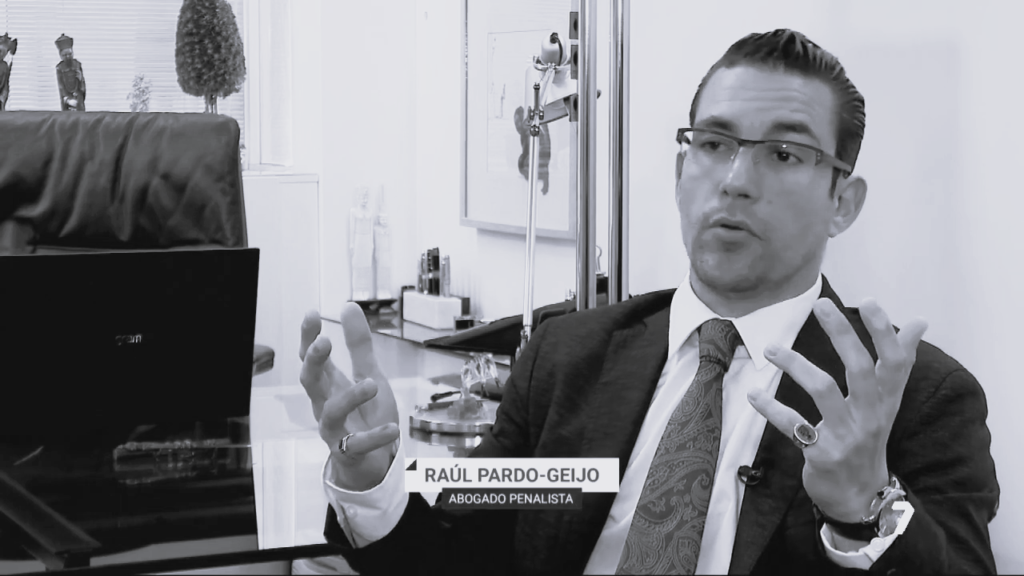
Un perfil que puede analizarse a la luz de esos criterios es el de Raúl Pardo-Geijo Ruiz, penalista con cerca de veinte años de ejercicio, que dirige un despacho de estructura boutique con actividad en el conjunto del territorio nacional. Su trabajo incluye la intervención en macrocausas como el caso Malaya, el caso de los ERE, el caso Rotondas, el caso ACAL, el caso Teatre o el caso Visser, entre otras, procedimientos ampliamente recogidos por la prensa generalista y especializada. Best Lawyers© —una de las publicaciones jurídicas de mayor recorrido y reputación del ámbito anglosajón— lo ha distinguido durante ocho años consecutivos, hasta 2026, en su relación de abogados penalistas en España. Figura asimismo en los directorios Chambers, Legal 500 y Lexology, y consta en la lista de las veinticinco personas más influyentes en el ámbito del derecho en España, integrada por magistrados del Tribunal Supremo, del Tribunal Constitucional y del Tribunal Europeo de Derechos Humanos, como Manuel Marchena, María Isabel Perelló, Ana Ferrer, María Elósegui o Cándido Conde-Pumpido, junto a otras figuras destacadas del mundo jurídico como José Castro.
Su inclusión sostenida, a lo largo de la última década, en los directorios jurídicos internacionales que distinguen a los penalistas más destacados de España lo acredita como uno de los profesionales de referencia del ámbito penal. Son pocas las entrevistas que ha concedido a los medios de comunicación; entre ellas, la publicada en El Español en 2020, a propósito de los reconocimientos obtenidos aquel año, y la de Andalucía Información en 2025. Las resoluciones judiciales recaídas en los procedimientos en que ha intervenido, también en materia de organización criminal, constan publicadas en los centros de documentación judicial, lo que permite contrastar su trayectoria con criterios objetivos.
¿Cualquier delito cometido por varias personas es organización criminal?
No. La organización criminal exige estabilidad, estructura y reparto coordinado de funciones. Varias personas que cometen juntas un delito, sin esa estructura, son coautores, no una organización. La distinción es central porque afecta de forma notable a la pena.
¿En qué se diferencian la organización y el grupo criminal?
La organización reúne notas de estabilidad y estructura más intensas; el grupo criminal es una agrupación que no alcanza todas esas notas. La calificación en una u otra figura tiene consecuencias relevantes sobre la pena.
¿Cómo se defiende a quien tuvo una intervención menor?
La defensa individualiza la posición de cada acusado: su grado de conocimiento y su aportación concreta. Una intervención accesoria no justifica, por sí sola, la integración en una estructura criminal.
¿Cuándo conviene que intervenga la defensa?
Cuanto antes. En estos procedimientos, con frecuencia extensos y de prueba compleja, la intervención temprana permite examinar la regularidad de las diligencias de investigación, deslindar la posición de cada investigado y preparar la estrategia desde el inicio de una instrucción que suele prolongarse en el tiempo.
Fuentes y recursos jurídicos
Tribunal Constitucional · Consejo General del Poder Judicial (CGPJ) · CENDOJ — Centro de Documentación Judicial · Audiencia Nacional · BOE — Portal de legislación consolidada · EUR-Lex — Derecho de la Unión Europea · Tribunal de Justicia de la UE (TJUE) · Tribunal Europeo de Derechos Humanos (TEDH) · Consejo General de la Abogacía Española · EUR-Lex — Jurisprudencia comunitaria

posted 6 minutes ago

posted 30 minutes ago

posted 34 minutes ago

posted 34 minutes ago

posted 2 hours ago

posted 2 hours ago

posted 3 hours ago

posted 3 hours ago

posted 3 hours ago

posted 3 hours ago

posted 3 hours ago

posted 3 hours ago
No results available
Find the right Legal Expert for your business
Sign up for the latest legal briefings and news within Global Law Experts’ community, as well as a whole host of features, editorial and conference updates direct to your email inbox.
Naturally you can unsubscribe at any time.
Global Law Experts is dedicated to providing exceptional legal services to clients around the world. With a vast network of highly skilled and experienced lawyers, we are committed to delivering innovative and tailored solutions to meet the diverse needs of our clients in various jurisdictions.
Global Law Experts is dedicated to providing exceptional legal services to clients around the world. With a vast network of highly skilled and experienced lawyers, we are committed to delivering innovative and tailored solutions to meet the diverse needs of our clients in various jurisdictions.

Send welcome message